
Upselling is one of the most reliable ways to increase revenue without expanding your client base. When done well, it strengthens relationships, raises the value of every transaction, and rewards customers with genuine improvements to the product or service they already trust. This guide covers what upselling is, how it differs from cross selling, proven upselling techniques for every industry, and how platforms like InvestGlass can help you orchestrate a structured approach.
What is Upselling?
Upselling is a sales strategy encouraging customers to buy a better version of a product or service than the one they originally considered. At its core, it persuades existing customers to choose a higher-value option, a larger quantity, or a premium service at the moment of purchase. Upselling encourages customers to choose a higher-value product that better fits their needs, rather than simply spending more.
In everyday sales language, you will encounter terms such as upsell, up selling, and add ons. While there are subtle distinctions, they all aim to boost revenue while delivering more value to the customer. An add on might be a small supplementary feature, whereas an upsell typically moves the customer to a higher pricing tier or an upgraded version of the same product.
Common upsell formats include:
- Plan upgrades (e.g., moving from a 2024 SaaS “Starter” plan to “Pro” with automation and advanced features)
- Larger package sizes or a larger quantity of the same product
- Premium materials or finishes (e.g., a hotel room upgrade from standard to sea-view)
- Extended warranties and protection plans
- Service bundles at a discounted rate (e.g., gym membership upgrade with personal training sessions)
Upselling enhances customer satisfaction by introducing features that solve problems the customer may not have fully addressed with their initial purchase. This is a common technique that many businesses use across sectors, from hospitality to software.
Importantly, upselling existing customers is 68% more cost-effective than acquiring new ones. Upselling can increase average order value by 10-30%, making it one of the most efficient levers for increasing sales within your current customer base.
Upselling vs. Cross Selling
Upselling and cross selling are often discussed together, but they serve different purposes. Upselling encourages buying a more expensive version of a product the customer is already considering, representing a “vertical” expansion of the sale. Cross selling suggests related products to enhance the original purchase, adding breadth rather than depth. Upselling is often simpler than cross selling in execution, because it builds directly on the customer’s existing intent.
- Smartphone example: A salesperson suggests a new smartphone with more storage, a better camera, and a faster processor instead of the basic smartphone the customer was evaluating. That is an upsell to a more expensive product at a higher price. In contrast, cross selling would involve recommending a phone case, a screen protector, or earbuds alongside the purchase. Cross selling can double or triple earnings in a single transaction when complementary relevant products are well matched.
- B2B CRM example: An upsell would be upgrading a CRM plan from five seats to twenty with automation and additional features. A cross sell would be adding an email marketing module or an onboarding package from the same company.
Cross selling and upselling are most powerful when combined in a single customer journey, but should never feel pushy. Sales professionals can script both offers into one conversation by first asking about the customer’s goals, then introducing the upsell as a direct solution, and finally suggesting a cross sell only if it genuinely adds value. This approach to cross selling upselling ensures the customer buying experience remains consultative rather than transactional.
Why Upselling Matters for Revenue Growth
Upselling and cross selling directly boost revenue and customer lifetime value. Effective upselling can improve customer lifetime value substantially, especially in subscription and service businesses where recurring relationships allow multiple opportunities to increase the value exchanged.
- Acquiring a new customer costs five to six times more than retaining an existing one. Businesses can use upselling to drive sales towards higher-margin items without incurring the heavy expense of new customer acquisition.
- In B2B SaaS, approximately 27% of total revenue now comes from expansion motions such as upsell, cross sell, and usage growth. 72% of sales professionals report that upselling contributes 1-30% of their company’s revenue.
- Upselling increases average order value by offering premium options. Even small upticks in average order value compound across hundreds or thousands of orders per month, generating significant additional revenue over a financial year.
- Successful upselling can lead to a 75% increase in customer retention rates. Customers who adopt a higher pricing tier or richer service bundle are more engaged, perceive more value, and are less likely to churn.
Upselling can increase average order value (AOV) significantly, and this compounding effect is why upselling important for any business with a recurring revenue model. Platforms like InvestGlass help document upsell conversations in the CRM and track incremental revenue per segment, making it straightforward to measure the financial impact.
Upselling Ideas by Industry
Upselling tactics must adapt to each industry’s buying cycle, ticket size, and level of customer involvement. Below are practical ideas, with data points from 2024 to 2026 where available, including how vertical-specific CRMs such as InvestGlass CRM for dental practices can support structured upsell workflows.
Travel and Hospitality
Room upgrades generate 23.8% of ancillary hotel revenue. Breakfast packages convert at 17-22% among leisure and family segments. Other effective upsells include late check-out, spa add ons, and airport transfer bundles. 74% of travelers prefer brands offering personalised upselling recommendations, making customer data essential for relevant suggestions. Sales professionals in hospitality can identify upselling opportunities through booking history, loyalty status, and lead time using a CRM like InvestGlass.
Food and Beverage
Starbucks uses size upgrades to increase sales by 50 cents per transaction, a textbook example of effective upselling at scale. Other tactics include combo meals, premium ingredients, and tasting menus. Utilising strategic product placement at the point of sale can capture customer attention for upselling and encourage upgrades to higher-margin items.
E-commerce and Retail
“Complete the look” recommendations, bulk discounts, subscription refills, and premium shipping at a discounted rate are all proven tactics. Well-designed upsell and cross sell programmes can lift AOV by 10-30%. Behavioural signals such as browsing history, basket size, and repeat orders for consumables indicate strong upselling opportunities for the sales team.

Automotive
Higher trim levels, winter tyre packages, service plans, and connected-services subscriptions represent key upsell paths. A salesperson suggests a vehicle with a faster processor for its infotainment system, or an upgraded version with advanced safety features, as a way to motivate customers towards a higher transaction value.
Software and Technology
Tiered SaaS plans, additional seats, security add ons, and onboarding or training services are the standard upsell levers. Customers approaching plan limits or showing high current usage are prime targets. Upsell conversion rates for existing customers often sit around 20-30%, far above new business close rates, particularly when relationship managers in private banks using specialised CRM platforms proactively monitor usage and portfolio complexity.
Professional Services and Real Estate
Higher-value properties, premium advisory packages, and staging or photography add ons are all effective. CRM data showing client budgets, remaining retainer hours, and previous upgrade behaviour helps identify who is ready to move to a more expensive product or service tier.
How to Identify Upselling Opportunities
Effective upselling starts with understanding customer context, goals, and timing. Using data for personalised recommendations can enhance upselling efforts and ensure the right offer reaches the right person.
- Mine CRM data: In InvestGlass, segment existing customers by plan usage, product mix, and engagement to identify upselling opportunities. Customer data on feature consumption, login frequency, and support interactions reveals who is ready for an upsell, especially in regulated segments using a Swiss financial-services CRM.
- Watch for signals: Usage caps frequently hit in a SaaS tool. Current customers repeatedly asking support for a feature only available in higher tiers. High open rates on product-update emails covering premium features. Retail purchase histories showing repeat buying of entry-level products. Customer feedback mentioning a wish for additional features.
- Map the customer journey: Mark key “upsell zones” at onboarding completion, first success milestone, contract renewal date, or seasonal peaks such as Q4 budget flush. This is how you identify upselling opportunities systematically rather than relying on instinct.
In 2025, a fintech startup used InvestGlass to track current usage across its “Wealth” tier. The system flagged accounts hitting data processing limits and triggered alerts for account managers. Those managers reached out offering “Wealth Plus” at a discounted rate for the first three months. The result was a 25% increase in average revenue per user.
In hospitality, one hotel group deployed pre-arrival upsell offers for breakfast packages 48-72 hours before guest arrival. The conversion rate reached 17-22% in the family and leisure segment, all driven by behavioural data captured in their CRM.
Upselling Techniques for Sales Professionals
This section is a practical toolkit for sales professionals, account managers, and founders looking to implement upselling techniques that deliver results.
Use tiered options. Present three clear plan or product levels (good, better, best) with transparent feature differences. This approach lets customers “upsell themselves” by comparing what each tier unlocks. When a customer sees the premium version alongside the basic, the value gap becomes self-evident.
Focus on outcomes, not features. Describe how the upgraded option solves bigger problems. Instead of listing specifications, explain that the higher tier saves three hours per week on manual work or delivers 99.9% uptime. Successful upselling requires strategic timing and value positioning, and solving problems for the customer is where the value sits.
Offer relevant add ons. Suggest only tightly related products that genuinely elevate the original purchase. For instance, an analytics add on for a CRM, or a battery pack for a camera. Bundling related products can increase average order value while offering perceived value that the customer recognises immediately.
Use discounted rate bundles. Position upsells as value deals. Annual billing that effectively discounts extra features, or bundles that save 15-25% versus buying individually, give the customer a clear financial incentive. This is a proven sales technique for increasing transaction value.
Make it easy to say yes. One-click upgrades, pre-filled order forms, trial periods, or “upgrade now, pay in 30 days” for B2B clients all reduce friction. Training staff to understand product value helps improve upselling effectiveness across the entire sales team.
Showing testimonials can highlight the benefits of premium product versions. Reference time-bound offers to create urgency. For example, “Upgrade before 31 December 2026 and lock in current pricing.” Implementing time-sensitive upsell offers can create urgency for customers and accelerate decision-making.
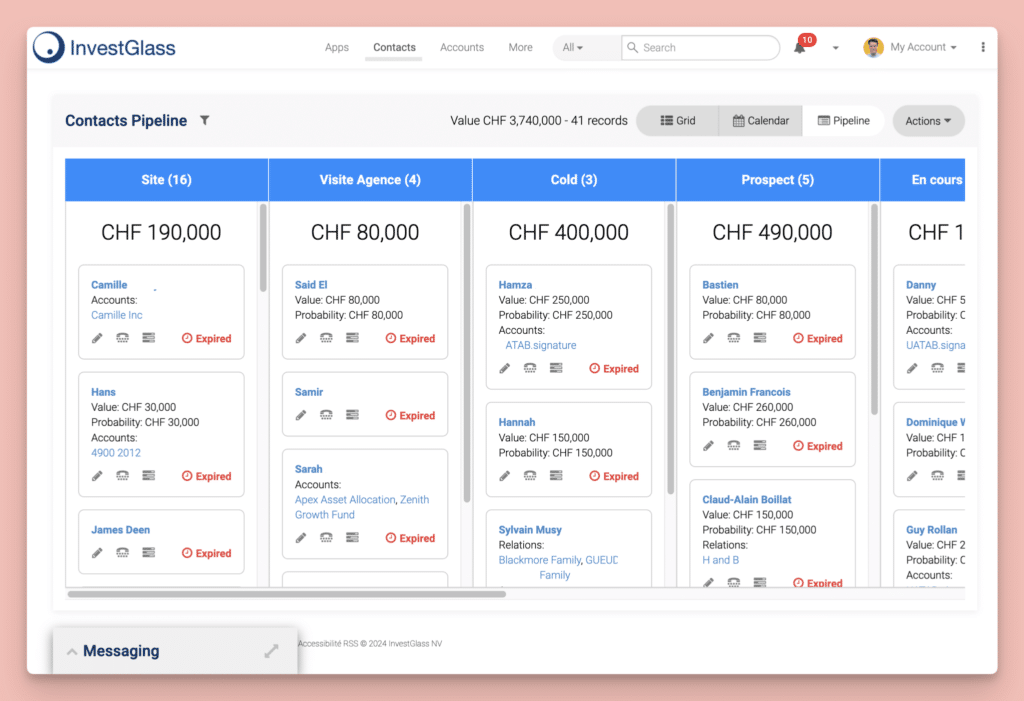
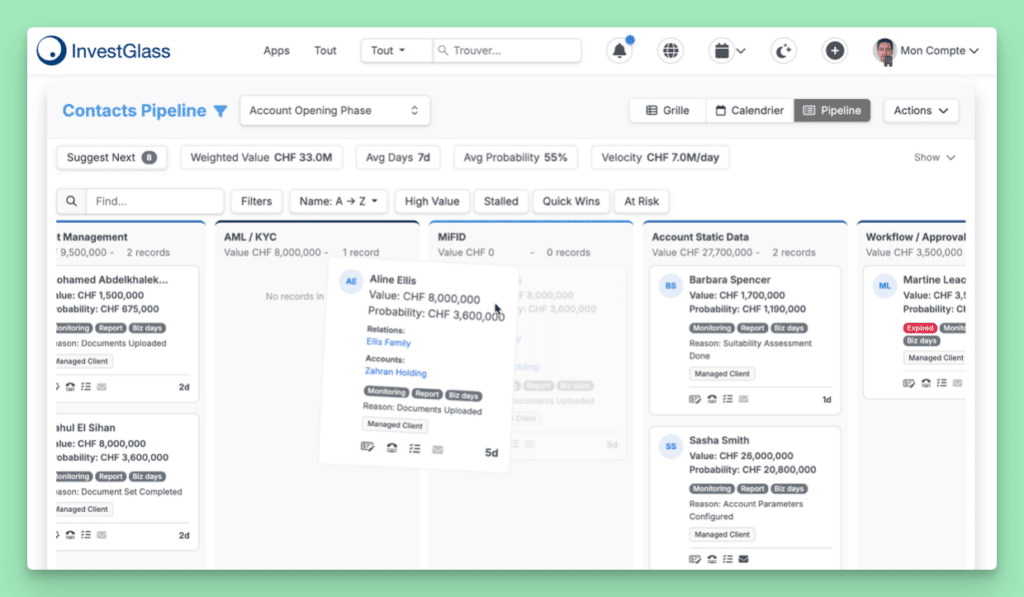
InvestGlass can automate upsell workflows by setting task reminders for account managers, triggering in-app prompts when a customer’s profile matches upsell criteria, and deploying prebuilt email sequences for upgrade campaigns within an all-in-one Swiss sales automation platform.
Timing: When to Start Upselling
Upselling and cross selling work best when aligned with customer readiness, not the seller’s quota. Successful upselling requires strategic timing and value positioning at each stage of the customer relationship.
Pre-sale. During discovery calls, comparison pages, and demos, plant seeds for higher tiers. Use “most popular” plan markers and explore the customer’s future needs. This is where the salesperson can position a higher-cost plan as the natural fit without making a hard sales pitch.
Checkout. At the cart or contract stage, present add ons and modest upgrades with clear benefits and no pressure. Keep upsell suggestions within 25-50% of the original purchase price to avoid sticker shock. A B2C example: an e-commerce retailer offering a one-click upgrade from a basic smartphone to a new smartphone with a better camera at checkout. This is where you start upselling most naturally.
Post-purchase. After onboarding, at adoption milestones such as 90 days after go-live, and during renewal moments when satisfaction is highest. A B2B example from 2025: a client shifting from a basic advisory retainer to full portfolio management during year-two renewal, generating more revenue for the same company after a smooth, automated KYC verification process reduced friction at initial sign-up.
InvestGlass timelines and tasks help sales teams schedule upsell outreach at the right moment for each account, ensuring no opportunity is missed.
Best Practices (and Mistakes to Avoid)
Ethical, customer-centric upselling protects long-term relationships and brand reputation. Personalised upsells are 75% more effective than generic offers, so relevance is the foundation.
Best practices:
- Keep the upsell relevant. Align upgrades and add ons strictly with stated customer goals and budget. Relevant suggestions tied to actual needs improve customer experience.
- Respect price anchors. Keep upsell suggestions within 25-50% of the original purchase price to avoid sticker shock.
- Be a guide, not a pusher. Use consultative questions and education. Position yourself as an adviser, not a hard closer. If a customer declines, respect that decision and revisit at a later stage.
- Personalise offers. Use name, industry, and past behaviour data from a CRM like InvestGlass to tailor each suggestion. This is what separates effective upselling from generic noise.
- Test and iterate. A/B test upsell copy, position, and incentives. Track conversion rate, AOV, and churn impact to refine your approach.
Common pitfalls:
- Irrelevant or overcomplicated bundles that confuse customers and diminish the customer experience.
- Aggressive pressure during the sales pitch, causing reactance and distrust. Upselling can increase customer retention rates by 75%, but only when the approach respects the buyer’s autonomy.
- Hiding real costs or downgrade paths, leading to buyer’s remorse and cancellations. Transparency about a higher cost or what happens if the customer declines is essential.
Using InvestGlass to Structure Cross Selling and Upselling
InvestGlass is a Swiss CRM and automation platform that helps financial institutions, fintechs, and other businesses systematically manage upselling and cross selling. It provides the infrastructure to move from ad hoc upsell attempts to a repeatable, data-driven process.
- Centralise customer data. InvestGlass consolidates interaction history, product holdings, and behavioural signals to help identify upselling opportunities across existing customers and current customers.
- Segment and target. Segment customers by portfolio size, product mix, or usage pattern to trigger targeted upsell and cross sell campaigns. This ensures relevant suggestions reach the right audience.
- Automate workflows. Set tasks for relationship managers and sales professionals, such as reviews of upgrade potential before renewals. Automated email sequences, SMS, and in-app messages can be deployed based on customer segments.
Concrete scenarios:
- A wealth management firm in 2025 used InvestGlass to propose premium discretionary mandates and ESG add ons to mass-affluent clients whose assets surpassed a defined threshold.
- A digital lender used InvestGlass pipelines to offer credit-line increases or insurance cross sells to low-risk borrowers at a discounted rate, generating additional revenue with minimal manual effort, similar to how therapists in Switzerland can use InvestGlass CRM to time and track value-added service upgrades for their patients.
InvestGlass connects with marketing tools to send personalised upsell emails, SMS, or in-app messages, while maintaining the compliance audit trails that regulated industries require.
Frequently Asked Questions about Upselling
Below are answers to the questions sales teams and founders most frequently ask about upselling and cross selling.
What is the difference between upselling, cross selling, and add ons? Upselling means encouraging a customer to choose an expensive version of the same product or a higher pricing tier. Cross selling means offering complementary relevant products alongside the main item. Add ons are smaller optional extras that may fall under either category. For example, upgrading a CRM plan is an upsell; purchasing an email marketing module is a cross sell; adding premium support is an add on.
How much more expensive should an upsell be compared to the original purchase? A reasonable upsell sits within 25-50% of the original purchase price. Larger jumps require very strong value differentiation. An upsell from a basic plan to a premium version at 40% more will generally convert well.
When is the best time to start upselling a new customer? After the customer has experienced enough value to trust the product or service. Post-onboarding milestones, first success points, and renewal dates are the strongest windows.
How do I upsell without sounding pushy on calls or in emails? Use a consultative approach. Ask about goals and current constraints. Position the upsell as solving problems the customer has already expressed. Showing testimonials from similar clients helps build confidence. If the customer declines, respect the decision.
What tools do I need to track upselling performance? A CRM that logs usage and customer data, automation for workflows and reminders, and reporting dashboards for metrics such as conversion rate, AOV uplift, and churn impact. InvestGlass offers all of these in a single platform.
How can InvestGlass help manage and automate upselling campaigns? InvestGlass triggers workflows when customers reach upsell thresholds, sends targeted campaigns, provides task lists for account managers, and tracks campaign performance while ensuring compliance.
Does upselling work for small businesses and startups, or only large enterprises? It works for both. For startups, upselling might mean moving users from free to paid tiers or introducing feature bundles. The scale is smaller, but because acquiring new customers is far more expensive than expanding existing ones, even modest upsell programmes deliver meaningful returns.
Conclusion
Upselling and cross selling are fundamentally about helping existing customers access more value, not simply pushing a higher price. The benefits are clear: higher average order value, stronger customer retention, and more predictable revenue from your current customer base. Structured processes, data-driven targeting, and the right CRM make effective upselling simpler and more scalable for sales professionals across every industry. Audit your current customer base today, map two or three upsell paths against your customer journey, and consider using InvestGlass to orchestrate those strategies in 2026 and beyond.

