
Selecting the right Customer Relationship Management (CRM) system is a pivotal decision for any financial institution. A well-chosen CRM can revolutionise client relationships, streamline operations, and drive significant growth. However, the market is saturated with options, each claiming to be the perfect fit. How do you cut through the noise and identify the solution that truly aligns with your unique needs? The answer lies in a well-crafted Request for Information (RFI). RFIs (Requests for Information) are formal inquiries often referred to as rfi rfis used to seek clarification and gather information from vendors, helping to resolve ambiguities and ensure you have all the details needed for an informed decision.
An RFI is your first formal step in the procurement process, a crucial tool for gathering high-level information from potential vendors and to seek clarification on their capabilities and solutions. The insights and documentation you collect during the RFI process can also serve as a valuable reference for your next project, helping to streamline vendor selection and improve outcomes. It allows you to cast a wide net, understand the landscape of available solutions, and shortlist the most promising candidates for a more detailed Request for Proposal (RFP). This guide will walk you through the process of creating a comprehensive RFI for a financial services CRM, ensuring you gather the right information to make an informed decision.
What You’ll Learn
In this comprehensive guide, you will discover the strategic importance of a well-structured RFI in the CRM selection process. We will provide a detailed breakdown of the essential sections to include in your RFI document, such as the ‘information requested’ section where vendors must provide detailed answers about their services and solutions, and the importance of a clear response section to ensure vendors can provide clear and comparable answers. We will also cover the key questions to ask vendors across critical domains like functional capabilities, security, and implementation. You will also learn how to tailor your RFI to the specific needs of the financial services industry and receive practical tips for evaluating vendor responses and shortlisting candidates for the RFP stage.
The Strategic Importance of the RFI Process in Financial Services
In the complex world of financial services, a CRM is more than just a contact database. It’s a central hub for managing client interactions, ensuring regulatory compliance, and driving sales. Therefore, the selection process cannot be taken lightly. The RFI serves several strategic purposes that are essential for a successful procurement outcome.
Firstly, the RFI provides a structured way to learn about the latest CRM technologies and trends in the financial services sector. The technology landscape is constantly evolving, and an RFI allows you to stay informed about new features, deployment models, and best practices. This market education is invaluable for making a well-informed decision.
Secondly, the RFI helps you quickly identify which vendors have the experience and capabilities to meet your core requirements. By asking targeted questions, you can screen out vendors that are not a good fit early in the process, saving valuable time and resources. This vendor screening is a critical step in narrowing down the field.
Thirdly, the process of creating an RFI forces you to clarify your own business needs and priorities. By articulating your requirements in a formal document, you can ensure that all stakeholders are aligned and that you have a clear understanding of what you are looking for. The project engineer plays a crucial role in this phase by ensuring that RFI documentation is clear and that project requirements are communicated effectively to all parties involved. Collecting critical information through the RFI helps ensure all stakeholders are aligned and project requirements are clearly understood, which improves visibility, reduces errors, and streamlines communication throughout the process. This requirement refinement is a key benefit of the RFI process.
Finally, a well-executed RFI process prevents you from wasting time on detailed evaluations of unsuitable vendors. By shortlisting only the most promising candidates, you can focus your efforts on the vendors that are most likely to meet your needs. This leads to significant time and cost savings in the long run.
Understanding the Difference Between RFI, RFP, and RFQ
Before diving into the structure of an RFI, it’s important to understand how it fits into the broader procurement process. There are three main types of procurement documents: the Request for Information (RFI), the Request for Proposal (RFP), and the Request for Quotation (RFQ).
The RFI is the first step in the process. It is used to gather general information about vendors and their solutions. The goal is to understand the market and identify potential candidates for further evaluation. An RFI typically asks high-level questions about the vendor’s experience, capabilities, and solution overview. A well-structured RFI should clearly outline the requested information to ensure vendors address your specific needs. It is also essential to include an RFI number in each RFI document, as this unique identifier facilitates tracking, organization, and efficient communication throughout the procurement process.
The RFP is the next step. It is a more detailed document that asks vendors to provide a specific proposal for how they would meet your requirements. The RFP typically includes detailed functional and technical requirements, and vendors are expected to provide a comprehensive response that addresses each requirement.
The RFQ is used when you already know what you want and are primarily focused on getting the best price. It is typically used for commodity purchases where the specifications are well-defined.
For a complex purchase like a CRM, the typical process is to start with an RFI to shortlist vendors, then issue an RFP to the shortlisted vendors to get detailed proposals, and finally negotiate with the preferred vendor to finalise the contract.
The Procurement Process
The procurement process is your competitive advantage a strategic powerhouse that smart organizations leverage to secure the best goods and services through three game-changing stages: planning, sourcing, and contract management. At the core of this winning approach sits the Request for Information (RFI), your secret weapon for gathering intel from potential vendors and setting the foundation for procurement success. An effective RFI process doesn’t just collect data it empowers your team to cast the widest net possible, ensuring you capture comprehensive insights on every available solution before you advance to more detailed vendor conversations.
Transform your procurement game with RFI templates the ultimate efficiency booster that will revolutionize how your team operates. These powerful templates standardize your information requests, making vendor comparison a breeze while eliminating the risk of missing those critical details that can make or break your deals. You’re not just saving time you’re minimizing costly errors and freeing your team from the tedious work of building RFIs from scratch. For procurement teams ready to win, a well-structured RFI process becomes your strategic advantage for evaluating potential vendors with precision, ensuring only the best candidates who truly align with your organization’s requirements advance to the next level. By wielding the request for information (RFI) as your strategic tool, you gain the power to make smarter decisions, slash procurement risks, and ultimately partner with vendors that drive your business goals forward.
Structuring Your Financial Services CRM RFI
A successful RFI is clear, concise, and logically structured. It should provide vendors with enough context to understand your needs while guiding them to provide the specific information you require. Be sure to add context to clarify your business needs and project goals, helping vendors fully understand your requirements and expectations. Here’s a detailed breakdown of the essential sections to include:
1. Introduction and Project Overview
Start by introducing your institution and the purpose of the RFI. Provide a high-level overview of your organisation, your business objectives, and the challenges you are trying to solve with a new CRM. Be sure to include more detail about your industry, target audience, and company values, as this will help vendors understand your needs more thoroughly. Providing additional details about your business context will enable vendors to better tailor their solutions and responses accordingly.
In this section, you should include a brief introduction to your financial institution, covering its history, size, and the markets it serves. You should also explain the strategic goals of the CRM project, such as improving client retention, increasing operational efficiency, or enhancing compliance. Finally, outline the key business drivers for implementing a new CRM and any specific challenges you are facing with your current systems.
2. RFI Objectives
Clearly state what you aim to achieve through the RFI process. This helps to manage vendor expectations and ensures that their responses are focused on your goals. Be specific about the outcomes you are looking for.
Typical objectives for a financial services CRM RFI include understanding the range of CRM solutions available for the financial services industry, evaluating vendors’ experience and expertise in implementing CRMs for banks and other financial institutions, assessing the functional and technical fit of different CRM solutions with your requirements, gathering indicative information on pricing, licensing models, and implementation timelines, and exploring potential solutions offered by vendors to address your specific business challenges.
3. Vendor Information
This section is designed to gather basic information about the vendors themselves. This information will help you assess their stability, experience, and suitability as a long-term partner. A CRM is a significant investment, and you need to be confident that the vendor will be around to support you for years to come.
Key questions to ask in this section include the company name, website, and headquarters location. You should also ask about the number of years in business and number of employees, as this gives an indication of the vendor’s stability. Request a brief overview of the company’s history and mission, and ask for details of their experience in the financial services sector, including reference clients. It is particularly valuable to get references from institutions within your jurisdiction, as they will have similar regulatory requirements. Additionally, request that vendors include supporting documentation, such as case studies or certifications, to substantiate their experience and claims.
4. Solution Overview and Delivery Options
This is where you start to dig into the details of the proposed CRM solution. Ask for a high-level overview of the platform and its key features. Request that vendors provide detailed information about the platform’s features, deployment options, and differentiators to ensure you have comprehensive data for effective decision-making. This section should give you a good understanding of what the vendor is offering and how it might fit your needs.
Ask for a brief description of the CRM solution and its core value proposition. What problems does it solve? Who is it designed for? You should also ask about the key differentiators of the solution compared to competitors. What makes it unique? Finally, ask about the available deployment models, such as SaaS, private cloud, and on-premises. For a financial institution, data sovereignty is a critical consideration. You might want to inquire about Swiss sovereignty and data hosting options to ensure your data is protected by the strictest privacy laws.
5. Functional Capabilities
This is the heart of your RFI. This section should be tailored to the specific functional requirements of your financial institution. You are requesting detailed information from vendors about their capabilities in each functional area to ensure you gather comprehensive data for better decision-making. Break down your requirements into logical categories and ask vendors to confirm their capabilities in each area. Be as specific as possible to get meaningful responses.
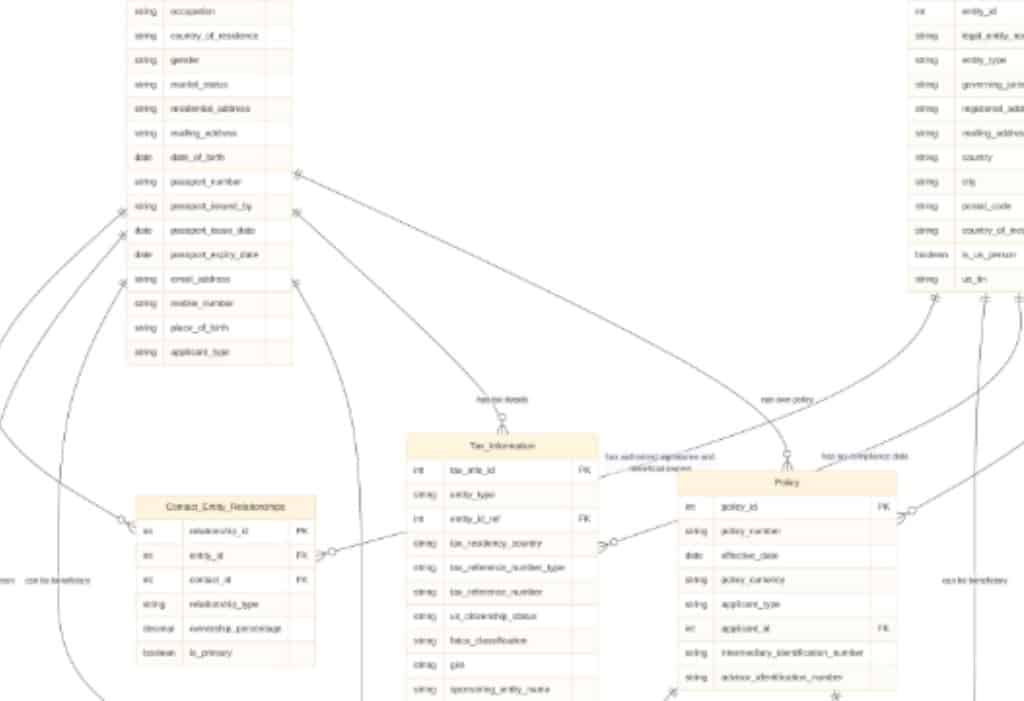
Relationship Management: A core function of any CRM is managing client relationships. For financial institutions, this includes both individual and corporate clients. Ask whether the solution supports the management of both types of clients and whether it can model complex relationships and ownership structures, such as Ultimate Beneficial Owners (UBOs). The ability to visualise these relationships through hierarchies and relationship maps is a valuable feature for compliance and client understanding.
Integration Capabilities: A CRM does not operate in isolation. It needs to integrate with your other systems, such as core banking systems, portfolio management systems, and marketing automation platforms. Ask whether the solution offers standard APIs and connectors for integration with other systems. A platform like InvestGlass provides a comprehensive API for seamless integration.
Workflow Automation: Manual processes are inefficient and error-prone. A modern CRM should allow you to automate key workflows, such as client onboarding, loan origination, and compliance checks. Ask whether business users can configure workflows without custom development. Automation is a key feature of modern CRMs like InvestGlass, allowing you to streamline your operations and reduce manual effort.
Client Communication: Managing client interactions across multiple channels is essential for providing a great client experience. Ask whether the solution provides tools for managing client interactions across email, phone, and meetings. A consolidated view of all client interactions is a valuable feature for relationship managers.
Marketing and Campaigns: A CRM can be a powerful tool for marketing. Ask whether the solution supports targeted marketing campaigns and provides tools for tracking their effectiveness. Marketing automation is a powerful tool for financial institutions looking to grow their client base.
Calendar and Appointments: Efficient scheduling is important for client-facing staff. Ask whether the solution supports calendar synchronisation with popular tools like Google Calendar and Outlook. Customer self-service booking of available time slots is a valuable feature that can save time for both staff and clients.
6. Reporting and Analytics
A modern CRM should provide powerful reporting and analytics capabilities to help you gain insights from your data. Data-driven decision-making is essential for success in the financial services industry.
Ask vendors about their standard reports and dashboards. What reports are included out of the box for sales, marketing, and service? You should also ask about custom reporting capabilities. Can business users create their own custom reports and dashboards without needing technical assistance? Finally, ask about integration with external BI tools. Does the solution support data export and integration with tools like Tableau or Power BI?
7. Security, Compliance, and Data Governance
For financial institutions, security and compliance are non-negotiable. This section of your RFI should be detailed and specific, covering all relevant regulatory and security requirements. A data breach or compliance failure can have devastating consequences for a financial institution.
Data Protection and GDPR Compliance: Ask how the solution supports compliance with regulations like GDPR and the Swiss FADP. Does it provide tools for managing consent and data subject requests? A comprehensive audit trail of all data processing activities is essential for demonstrating compliance.
Regulatory Alignment: Ask whether the vendor’s organisation and platform align with applicable regulatory expectations for financial institutions regarding outsourcing and data governance. This is particularly important for institutions regulated by authorities like FINMA or the MFSA.
Information Security Certifications: Ask whether the vendor holds relevant information security and privacy certifications, such as ISO 27001 or ISO 27701. These certifications provide independent assurance that the vendor has implemented robust security controls.
Data Hosting and Residency: Ask where the data is hosted and processed. Can the vendor guarantee data residency within a specific jurisdiction, such as the EU/EEA or Switzerland? For many financial institutions, keeping data within a specific jurisdiction is a regulatory requirement.
Encryption: Ask whether data is encrypted at rest and in transit. What encryption standards are used? Industry-standard encryption, such as AES-256 for data at rest and TLS 1.3 for data in transit, is essential for protecting sensitive client data.
Backup and Disaster Recovery: Ask whether the vendor maintains documented backup, disaster recovery, and business continuity arrangements. What is the recovery time objective (RTO) and recovery point objective (RPO)? These are critical considerations for ensuring business continuity.
Data Ownership: Confirm that your institution retains ownership of all customer data. Ask the vendor to describe their data export, migration, and bulk upload capabilities. You need to be confident that you can get your data out of the system if you ever decide to switch vendors.
Access Control: Ask whether the platform supports multi-factor authentication (MFA) and role-based access control (RBAC). These are essential security features for protecting access to sensitive data.
Audit Logging: Ask whether the platform provides audit logging and monitoring of user and system activities. A comprehensive audit trail is essential for security monitoring and compliance.
8. Implementation and Support
The best CRM in the world will fail if it’s not implemented correctly and supported effectively. Use this section to understand the vendor’s implementation methodology and support model.
Implementation Timeline: Ask about the typical implementation timeline for a financial institution of your size. What are the key phases of the implementation? A vendor with experience in the financial services sector should be able to provide a realistic estimate.
Implementation Methodology: Ask the vendor to describe their implementation process. Do they use an agile or waterfall methodology? What are the key milestones and deliverables? A clear and well-defined implementation process is a sign of a mature vendor.
Process Design and Optimisation: Ask whether the vendor provides support for process design and optimisation as part of the implementation. A good vendor will help you to streamline your workflows and maximise the benefits of the platform.
Support Model: Ask what is included in the standard support package. Does it include training, helpdesk, and future upgrades? What are the support hours and response times? Request that vendors specify their typical response time for support inquiries, as a fast response time is crucial for minimizing disruptions and ensuring efficient issue resolution. A comprehensive support model is essential for ensuring that you get the most out of your CRM.
Extensibility: Ask whether the solution supports extension or configuration for new financial products or workflows. Your business needs will evolve over time, and you need a CRM that can adapt: for example, to automate your KYC.
AI and Analytics: Ask whether the platform leverages AI or analytics for customer insights or risk assessment. AI-powered features can provide valuable insights and automate routine tasks.
Product Roadmap: Ask about the vendor’s product roadmap. Does it include enhancements for regulatory or ESG-related requirements? A vendor with a clear roadmap demonstrates a commitment to continuous improvement.
9. Commercial Overview
While the RFI is not the place for detailed price negotiations, it’s important to get an indicative understanding of the vendor’s pricing model and cost components. This will help you to budget for the project and compare vendors on a like-for-like basis.
Ask for a high-level overview of the pricing model. Is it user-based, module-based, or an enterprise license? What are the typical cost components, including licenses, implementation, and support? Are there any hidden costs you should be aware of, such as charges for data storage or API calls?
10. Submission Guidelines
Finally, provide clear instructions on how vendors should respond to your RFI, including the response deadline. Clearly state the response deadline to ensure timely submissions and enable efficient tracking and follow-up. Outline the preferred method for submitting RFIs, such as email or through your designated portal, and specify any required documentation or formats (e.g., PDF or Word document). Remind vendors that submitting RFIs promptly and with complete, clear information helps avoid delays and ensures smooth communication. Provide the contact person for any questions, and include a confidentiality statement to protect the information shared in the RFI.
Adding Context to an RFI
When you’re crafting your RFI document, providing context isn’t just important it’s absolutely crucial for getting responses that truly deliver value. You need to give vendors the complete picture: your company background, your project scope, and the specific challenges you’re determined to solve. This context doesn’t just help vendors understand what you need it empowers them to tailor solutions that hit the mark every single time, ensuring you get exactly what you’re looking for.
Your RFI document should be a powerhouse that clearly spells out your project objectives, defines the problem or opportunity you’re seizing, and establishes the evaluation criteria that will guide your decision-making process. When you add this level of detail, you enable vendors to deliver targeted, insightful responses that make your evaluation process smoother and more effective. Whether you’re driving a large-scale construction project forward or upgrading your project management system, providing this context ensures everyone stays aligned and the information you receive directly serves your success.
Company Information in an RFI
Including detailed company information in your RFI is absolutely essential for helping potential vendors truly understand your organization’s unique needs and deliver exceptional solutions tailored to your success. This powerhouse section should showcase your company’s industry landscape, target audience dynamics, core values that drive decisions, and strategic objectives that fuel growth. By sharing this valuable intelligence, you empower vendors to craft outstanding RFI responses that align perfectly with your business context, dramatically increasing your chances of discovering a partner who genuinely understands and champions your goals.
A stellar RFI response from top-tier vendors will demonstrate deep understanding of your company information and showcase exactly how their cutting-edge solutions align with your ambitious objectives. This approach doesn’t just streamline your selection process it transforms conversations with potential vendors into productive, results-driven partnerships. When vendors gain access to relevant details about your organization’s DNA, they can propose solutions that are perfectly suited to accelerate your success, ultimately leading to more impactful and lasting collaborations that deliver real value.
Project Team Management
Effective project team management is the game-changer for construction project success especially when it comes to mastering the RFI process that can make or break your timeline. In today’s fast-paced construction industry, managing RFIs efficiently doesn’t just keep your team informed it transforms how information flows, eliminates bottlenecks, and turns potential project-killers into resolved issues. The right robust project management system doesn’t just enhance this process it revolutionizes it with real-time collaboration that keeps everyone connected, automated notifications that never let critical items slip through the cracks, and centralized tracking that puts every RFI at your fingertips.
Streamline your RFI process and watch delays disappear, communication barriers crumble, and team alignment skyrocket from project managers to engineers, and especially the design team, everyone operates on the same winning playbook. Involving the design team in the RFI process ensures accuracy and effective communication of project requirements, leading to better project outcomes. This isn’t just coordination it’s the critical advantage that keeps construction projects racing toward on-schedule, on-budget success. When you leverage cutting-edge technology for project team management, you don’t just improve efficiency you gain crystal-clear records of every RFI interaction, dispute-proof documentation, and ironclad accountability that protects your project from start to finish.
Creating an Effective RFI Questionnaire
The questions you ask in your RFI are critical to getting the information you need. Here are some tips for creating an effective questionnaire:
Be Specific: Vague questions will get vague answers. Be as specific as possible about what you are looking for. Instead of asking “Does your CRM support reporting?”, ask “Does your CRM provide standard reports for sales pipeline, activities, and performance monitoring?”
Use a Consistent Format: Use a consistent format for your questions to make it easy for vendors to respond and for you to compare responses. A table format with columns for the question, the vendor’s response, and any supporting evidence works well. Consider using an RFI form to standardize the way questions are presented and responses are collected, especially in construction projects or procurement processes.
Prioritise Your Questions: Not all questions are equally important. Prioritise your questions so that vendors know which areas are most critical to you. You can use a weighting system to indicate the relative importance of each question.
Allow for Open-Ended Responses: While structured questions are important, also allow for open-ended responses where vendors can provide additional information or highlight their unique strengths.
Evaluating Vendor Responses
Once you’ve received the responses to your RFI, it’s time to evaluate them and shortlist the vendors you want to invite to the RFP stage. Here’s a detailed process you can follow:
Initial Screening: Quickly review each response to ensure it meets your basic requirements. Eliminate any vendors that are clearly not a good fit. This might include vendors that don’t have experience in the financial services sector, or vendors that don’t offer the deployment model you require.
Detailed Evaluation: Create a scoring matrix based on the key criteria in your RFI. Assign a weight to each criterion based on its importance to your organisation. Score each vendor against these criteria to create a quantitative comparison. This will help you to objectively compare vendors and identify the strongest candidates.
Qualitative Assessment: In addition to the quantitative scoring, conduct a qualitative assessment of each vendor. Consider factors like the quality of their response, their understanding of your needs, and their overall professionalism. A good RFI response should be clear, complete, and timely, with thorough documentation and effective communication these qualities make it easier to evaluate vendors and ensure project continuity. It is also important that vendors reference the original plans or initial requirements in their responses to ensure clarity and avoid potential legal or project issues. These factors can be just as important as the quantitative scores.
Shortlisting: Based on the scores and your qualitative assessment, select the top 3-5 vendors to invite to the RFP stage. This shortlist should include the vendors that are most likely to meet your needs and provide the best value for money.
Expert Insights on RFI Management
Industry experts agree that a well-structured RFI process is your secret weapon for construction project success. When you adopt a standard RFI format and use clear, concise RFI forms, you’re positioning yourself to effortlessly gather the information you need from vendors and subcontractors. Establishing crystal-clear evaluation criteria from day one ensures that you can assess all responses fairly and consistently, dramatically reducing the risk of misunderstandings and those costly errors that keep project managers up at night. If you’re interested in how innovative technologies can drive similar efficiencies in other industries, explore Agentic AI in banking and its role in transforming financial operations.
Your RFI management game-changers include using standardized templates, maintaining a detailed RFI log, and ensuring that every single project participant understands your streamlined process. By following these proven guidelines, you’ll minimize unnecessary RFIs, avoid those frustrating delays caused by incomplete plans or unclear requests, and keep your projects moving forward with incredible efficiency. The bottom line? Expert RFI management delivers better decision-making, improved project outcomes, and stronger relationships with your vendors and stakeholders giving you the competitive edge you’ve been looking for.
Common Mistakes to Avoid
When creating your RFI, there are several common mistakes you should avoid:
Being Too Vague: As mentioned earlier, vague questions will get vague answers. Be as specific as possible about your requirements.
Asking Too Many Questions: While it’s important to be thorough, asking too many questions can overwhelm vendors and lead to lower-quality responses. Focus on the most important questions and save the detailed questions for the RFP stage.
Not Providing Enough Context: Vendors need to understand your organisation and your needs to provide a relevant response. Make sure you provide enough context in the introduction and project overview sections.
Ignoring the Vendor’s Experience: A vendor’s experience in the financial services sector is a critical factor. Make sure you ask about their reference clients and their track record of successful implementations.
Focusing Only on Features: While features are important, don’t forget to evaluate the vendor’s support model, implementation methodology, and long-term viability.
Not Streamlining the Process: Failing to streamline your RFI process can make it unnecessarily time consuming, which may lead to project delays and increased costs.
Conclusion
Crafting a comprehensive RFI is a critical first step in selecting the right CRM for your financial institution. By taking the time to create a well-structured and detailed RFI, you can ensure that you gather the information you need to make an informed decision and find a CRM partner that will help you achieve your business goals. A thorough RFI process equips you with the information needed to make a confident final decision when selecting your CRM vendor.
InvestGlass offers a powerful, all-in-one CRM solution designed specifically for the financial services industry. With its focus on Swiss sovereignty, flexible deployment options, and comprehensive feature set, InvestGlass is the ideal partner for financial institutions looking to drive growth and enhance client relationships. The platform combines CRM for retail banking with portfolio management, digital onboarding, and marketing automation in a single, integrated solution.
To learn more about how InvestGlass can help your institution, request a demo today.
Frequently Asked Questions (FAQ)
- What is the difference between an RFI and an RFP?
An RFI (Request for Information) is used to gather general information about vendors and their solutions. It is typically the first step in the procurement process and is used to shortlist vendors for further evaluation. An RFP (Request for Proposal) is a more detailed document that asks vendors to provide a specific proposal for how they would meet your requirements. The RFP is typically issued to the shortlisted vendors from the RFI process.
- How long should our RFI be?
The length of your RFI will depend on the complexity of your requirements. However, it’s best to keep it as concise as possible while still covering all the essential areas. A typical RFI for a financial services CRM might be 5-10 pages long. Focus on the most important questions and save the detailed questions for the RFP stage.
- How many vendors should we send our RFI to?
It’s a good idea to send your RFI to a wide range of vendors (e.g., 10-15) to get a good overview of the market. You can then shortlist the most promising candidates (typically 3-5) for the RFP stage. Sending the RFI to too few vendors might mean you miss out on a good solution, while sending it to too many can create unnecessary work.
- What are the most important things to look for in a financial services CRM?
The most important things to look for are strong relationship management capabilities, robust security and compliance features, and a flexible platform that can be adapted to your specific needs. Integration capabilities are also critical, as the CRM needs to work seamlessly with your other systems. Finally, consider the vendor’s experience in the financial services sector and their support model.
- Why is Swiss sovereignty important for a CRM?
For financial institutions, data privacy and security are paramount. A CRM with Swiss sovereignty ensures that your data is hosted in a jurisdiction with some of the strictest data protection laws in the world. Switzerland is known for its neutrality and its strong commitment to privacy, making it an ideal location for hosting sensitive financial data.
- Can a CRM help with regulatory compliance?
Yes, a modern CRM like InvestGlass can help with regulatory compliance by providing tools for managing client data, tracking interactions, and generating audit trails. Features like consent management, data retention policies, and role-based access control are essential for meeting regulatory requirements like GDPR and MiFID II.
- What is the typical implementation time for a CRM in a financial institution?
The implementation time will vary depending on the complexity of the project. However, with a platform like InvestGlass that offers pre-built templates and a “build” mindset, the implementation can be completed in as little as 4-8 weeks for a small or mid-sized institution. Larger or more complex implementations may take longer.
- What kind of support should we expect from our CRM vendor?
You should expect comprehensive support, including training, a helpdesk, and regular software updates. InvestGlass provides a dedicated success coach to all its clients, ensuring that you get the most out of the platform. Look for a vendor that offers ongoing support, not just implementation support.
- How can a CRM help us improve our sales process?
A CRM can help you improve your sales process by providing tools for managing leads, tracking opportunities, and automating sales tasks. The sales tools in InvestGlass are designed to help you close more deals by providing a complete view of the sales pipeline and automating routine tasks like follow-up emails.
- How can we ensure a high user adoption rate for our new CRM?
The key to high user adoption is to choose a CRM that is easy to use and provides real value to your employees. It’s also important to provide comprehensive training and support. InvestGlass is known for its user-friendly interface and dedicated support, which helps to ensure high user adoption rates. Involving end-users in the selection process and gathering their feedback can also help to ensure that the chosen CRM meets their needs.
- What should be included in an RFI document?
When structuring your RFI, always include the project name at the top of the document. This helps with clarity and tracking, especially when managing multiple projects or communicating with several vendors. Including the project name ensures all parties are aligned and documentation is organized.
Best Practices for RFI Distribution and Follow-Up
Once you have crafted your RFI, the next step is to distribute it to potential vendors and manage the follow-up process. Here are some best practices to ensure a smooth and effective process.
Identify the Right Vendors: Before sending out your RFI, take the time to research potential vendors. Look for vendors with experience in the financial services sector and a track record of successful implementations. Industry reports, peer recommendations, and online reviews can all be valuable sources of information.
Provide a Reasonable Timeline: Give vendors enough time to prepare a thorough response. A typical timeline for an RFI response is 2-3 weeks. If your RFI is particularly complex, you may need to allow more time. Be clear about the deadline and any consequences for late submissions. Emphasize the importance of receiving timely responses from vendors to keep the process on track and avoid unnecessary delays.
Be Available for Questions: Vendors may have questions about your RFI. Be available to answer these questions promptly and fairly. Consider hosting a Q&A session where all vendors can ask questions and receive the same information. This ensures a level playing field.
Acknowledge Receipt: When you receive a vendor’s response, acknowledge receipt promptly. This is a professional courtesy and helps to build a positive relationship with the vendor.
Evaluate Vendors: When reviewing vendor responses, conduct due diligence by thoroughly checking vendor qualifications and references to ensure they meet your requirements and mitigate potential risks.
Communicate Next Steps: After you have evaluated the responses and shortlisted vendors, communicate the next steps to all participants. Thank the vendors who were not shortlisted for their participation and let them know that they were not selected. For the shortlisted vendors, provide clear information about the RFP process and timeline.
By following these best practices, you can ensure a professional and effective RFI process that sets the stage for a successful CRM selection.
Statement of Need
A powerhouse statement of need is your secret weapon for an unstoppable RFI process. This game-changing section of your RFI template should boldly outline your specific requirements, objectives, and expectations for your project, giving potential vendors the critical intel they need to determine if they’re the perfect match. By spelling out your project scope, anticipated timelines, budget parameters, and any unique constraints or requirements, you empower vendors to assess their ability to deliver the right solution and craft their RFI responses that hit the mark every time.
Including a comprehensive statement of need ensures your company receives laser-focused and targeted information from vendors: making it effortless to evaluate potential solutions and compare offerings head-to-head. This crystal-clear approach streamlines your vendor selection process like never before and slashes the risk of misunderstandings or misaligned expectations down the road. Whether you’re hunting for a new CRM for your financial institution or launching a complex construction project, a well-defined statement of need sets the stage for RFI success and ultimately delivers better project outcomes that exceed expectations.
Finalizing the RFI
Finalizing your RFI is the game-changing moment that transforms ordinary vendor responses into high-quality, actionable proposals that drive real business value. Before unleashing your RFI into the marketplace, invest the time to refine and perfect your document for maximum clarity, completeness, and consistency. Ensure your rfi template delivers comprehensive coverage of all critical company requirements and objectives, with language so clear and compelling that vendors across the construction industry or any sector can’t help but respond with their best solutions.
Smart organizations leverage the power of internal testing by engaging select stakeholders and trusted vendors to identify opportunities for enhancement and clarification. This strategic feedback approach allows you to optimize your RFI for maximum impact, eliminate information gaps, and create a final document that’s both comprehensive and results-driven. By finalizing your RFI with this level of precision and care, your company unlocks the potential for receiving exceptional, targeted responses that make vendor evaluation effortless and solution selection crystal clear whether you’re delivering a construction project or implementing a transformative project management system that scales your success.
Implementing the RFI
Implementing the RFI is where your strategic planning transforms into competitive advantage. This critical stage of the rfi process involves distributing your perfectly-crafted RFI template to a meticulously-selected list of potential vendors and managing the entire response workflow with maximum efficiency. Choose the distribution method that delivers outstanding results for your company’s unique needs whether it’s email, a secure online portal, or a cutting-edge procurement platform to ensure that your RFI reaches the right vendors with unmatched speed and precision.
Establish a crystal-clear timeline for the RFI process, including response deadlines and key milestones, to keep your project moving at lightning pace. Deploy a world-class project management system to track submissions, monitor response times, and facilitate seamless communication between your team and the vendors. Keeping all stakeholders informed and fully engaged throughout the process is absolutely essential for maintaining momentum and ensuring that your company receives timely, comprehensive responses that exceed expectations. By implementing the RFI with surgical precision, you dramatically streamline the vendor selection process, eliminate risks and costs, and set your project be it a construction project or a technology implementation up for guaranteed success.
Construction Industry Comparison
The construction industry is where RFI processes truly shine and where you can unlock massive project success! Construction companies, project engineers, and design teams don’t just use RFIs; they leverage them strategically to gather critical information, clarify requirements, and ensure every single detail gets nailed down before breaking ground. Unlike other industries, your construction projects demand complex technical specifications, rock-solid safety plans, and lightning-fast deadlines which is exactly why you need a tailored rfi template that captures everything that matters.
Here’s where the magic happens: A powerful construction rfi doesn’t just ask for information it demands detailed, comprehensive responses from vendors covering everything from building code compliance and environmental regulations to your engineering team’s qualifications and the specifics of their proposed solution. Your project managers and procurement teams use smart evaluation criteria and thorough background information to assess each rfi response, ensuring only vendors who meet your project’s contractual obligations and safety requirements make the cut. When you maintain a standard rfi format, detailed rfi log, and crystal-clear response deadlines, you eliminate unnecessary rfis, close information gaps fast, and keep your project momentum unstoppable.
The bottom line? By providing context, rock-solid supporting documentation, and a clear information template, you’re not just managing construction projects you’re making informed decisions, minimizing risks, and delivering every construction job on time and within budget. Whether you’re a general contractor, an educational institution, or a project manager overseeing large-scale builds, mastering the RFI process is your secret weapon for gathering critical information, seeking clarification, and achieving outstanding project outcomes in the construction industry and beyond.

