
As nations worldwide awaken to the critical importance of digital sovereignty, Costa Rica finds itself at a pivotal crossroads. The Central American nation, known for its stability and environmental leadership, is now charting an ambitious course to become a regional technology powerhouse. However, this journey is fraught with challenges, from crippling cyberattacks to a deep-seated dependence on foreign technology platforms. This article explores Costa Rica’s path to digital independence and presents a powerful, sovereign alternative to the dominant US tech giants: InvestGlass, the Swiss-hosted CRM and automation platform.
What You’ll Learn
•Costa Rica’s ambitious digital transformation goals for 2026.
•The profound impact of the 2022 ransomware crisis on the nation’s psyche and policy.
•The hidden risks of relying on US-based cloud providers like Salesforce and Microsoft.
•How the US CLOUD Act undermines data sovereignty for nations globally.
•Why a Swiss-hosted platform like InvestGlass offers a truly sovereign solution.
•The specific features that make InvestGlass the ideal choice for governments and regulated industries seeking digital independence.
The Pura Vida Paradox: Ambition Meets Vulnerability
Costa Rica is not just dreaming of a digital future; it is actively building it. The government has laid out a comprehensive “Digital Transformation Strategy 2023-2027,” a roadmap designed to propel the nation into the digital age. The plan is ambitious, focusing on achieving nationwide 5G coverage, expanding fibre optic connectivity to underserved communities, and fostering domestic innovation in artificial intelligence, semiconductors, and cybersecurity. This strategy, led by the Ministry of Science, Innovation, Technology and Telecommunications (MICITT), aims to align Costa Rica with global standards and leverage technology for inclusive growth.
However, this ambition was met with a brutal reality check in 2022. A devastating series of ransomware attacks, orchestrated by the notorious Conti and Hive syndicates, brought the nation to its knees. Over 30 government agencies were paralyzed, from the Ministry of Finance to the country’s public health service. The crisis was so severe that President Rodrigo Chaves declared a national emergency, a first for any country in response to a cyberattack. The event was a stark wake-up call, exposing the profound vulnerabilities inherent in the nation’s digital infrastructure and the catastrophic consequences of inadequate data security.
Compounding this vulnerability is a deeply entrenched reliance on foreign technology. A study by the Costa Rica Chamber of Commerce revealed a startling statistic: almost nine out of ten companies use WhatsApp for sales, and 86% rely on at least one social network. This has created what the Chamber calls a **
dangerous dependency”** on a handful of US-based digital platforms. While these platforms offer convenience, the 2021 global outage of Facebook, Instagram, and WhatsApp served as a chilling reminder of the economic paralysis that can result from such over-reliance.
This combination of ambitious digital goals and exposed vulnerabilities creates a paradox. How can Costa Rica build a truly sovereign digital future when its foundational infrastructure and commercial activities are so heavily reliant on foreign entities that operate beyond its legal and regulatory control? The answer lies in fundamentally rethinking its approach to technology procurement, prioritizing digital sovereignty not as a luxury, but as a cornerstone of national security and economic stability.
The Elephant in the Cloud: Why US Tech Giants Are a Sovereignty Risk
For many governments and businesses in Costa Rica, the default choice for CRM and cloud services has been the American tech behemoths: Salesforce and Microsoft. Their platforms are ubiquitous, powerful, and backed by massive marketing budgets. However, beneath the glossy surface lies a significant and often overlooked risk to national sovereignty: the US CLOUD Act.
The Clarifying Lawful Overseas Use of Data (CLOUD) Act grants US authorities the power to compel American technology companies to hand over data stored on their servers, regardless of where in the world that data is located. This means that even if Salesforce or Microsoft stores Costa Rican government or citizen data in a data centre within Latin America, it remains subject to US jurisdiction. A warrant issued by a US court could force the disclosure of sensitive information, bypassing Costa Rican law and judicial oversight entirely.
This is not a theoretical threat. The conflict between the CLOUD Act and international privacy laws like the EU’s GDPR is a major point of contention. In fact, Switzerland’s own data protection authority, Privatim, took the decisive step in December 2025 to restrict the use of US cloud providers for government agencies, citing these very risks. The message is clear: for any nation that values its sovereignty, entrusting its data to US-based cloud providers is an untenable position.
As one European minister starkly put it in a conversation with the Council on Foreign Relations, “We’ve always known our dependence on the American companies was a risk. We never thought the United States would be a threat.” This sentiment is growing globally as nations recognize that commercial dependence can quickly become a strategic vulnerability.
| Risk Factor | Salesforce / Microsoft (US Cloud Providers) | InvestGlass (Swiss Sovereign Platform) |
| Jurisdiction | Subject to US CLOUD Act; data accessible by US authorities. | Exclusively under Swiss jurisdiction; protected by Swiss privacy laws. |
| Data Location | Data may be replicated to US for disaster recovery (e.g., Microsoft in Brazil). | Guaranteed data residency in Switzerland or on-premise in your country. |
| Government Access | Legally compelled to comply with US warrants for data, bypassing local laws. | No automatic compliance with foreign subpoenas. |
| Sovereignty | Undermines national data sovereignty and control. | Strengthens and guarantees national data sovereignty. |
| Customization | Generic platforms requiring extensive, costly customization for specific regulations. | Purpose-built for regulated industries with pre-built compliance workflows. |
The Swiss Alternative: True Sovereignty with InvestGlass
In the face of these challenges, Costa Rica has a unique opportunity to leapfrog the legacy systems of dependency and embrace a truly sovereign digital future. The solution lies not in attempting to build a national cloud from scratch a herculean task but in partnering with a technology provider that shares the nation’s commitment to neutrality, security, and sovereignty. That partner is InvestGlass.
InvestGlass is not just another CRM. It is a 100% Swiss sovereign platform, built and hosted in Geneva, a city synonymous with privacy and international law. As a Swiss company, InvestGlass operates under the protection of some of the world’s most robust data privacy laws, including the revised Swiss Data Protection Act (nFADP). Crucially, it is not subject to the US CLOUD Act. This provides an ironclad guarantee that your data remains your data, subject only to the laws of your chosen jurisdiction.
This is the core of digital sovereignty: the power to choose. With InvestGlass, Costa Rican government agencies and businesses can choose to have their data hosted in hyper-secure, ISO 27001-certified data centres in Switzerland. Or, for the ultimate level of control, they can deploy InvestGlass on-premise within their own data centres in Costa Rica. This flexibility is something US cloud giants simply cannot offer. It provides a clear, unambiguous answer to the question of data residency and control.
A Platform Built for Governance and Trust
Beyond its sovereign architecture, InvestGlass is uniquely suited for the needs of governments and regulated industries. Unlike generic CRMs from Salesforce or Microsoft that require extensive and expensive customization, InvestGlass is purpose-built with the workflows and compliance tools needed for sensitive operations.
For government agencies, this means a platform designed for citizen-centric services. Features include:
•Digital Onboarding: Securely and efficiently onboard citizens for new services with digital forms and e-signatures, reducing bureaucracy and improving the citizen experience.
•Citizen Portal: Provide a secure, centralized portal for citizens to interact with government agencies, access documents, and manage their information.
•Automation & AI: Harness the power of automation to streamline routine tasks, generate insightful reports, and enable intelligent, data-driven decision-making, freeing up public servants to focus on high-impact work.
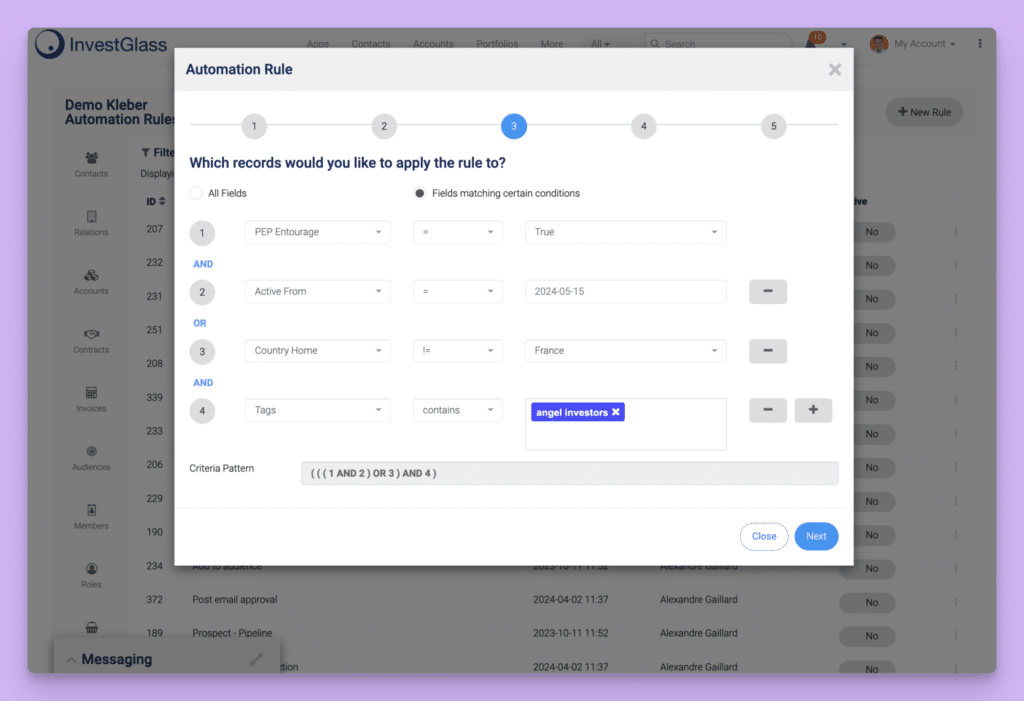
•Secure Scheduling: A shareable online calendar allows for the efficient management of citizen appointments and meetings, enhancing transparency and accessibility.
For regulated industries like finance and insurance, InvestGlass offers a comprehensive suite of tools that includes a powerful Portfolio Management System (PMS), KYC automation, and compliant marketing tools, all within the same sovereign ecosystem. This integrated approach eliminates the need for a patchwork of disconnected systems, reducing complexity and strengthening security.
Charting a Sovereign Course
Costa Rica’s path to digital sovereignty is clear. The 2022 cyber crisis was a painful but necessary lesson in the importance of resilient and secure digital infrastructure. The nation’s continued reliance on US tech platforms represents a ticking time bomb, exposing it to the jurisdictional overreach of foreign governments and the volatility of global politics.
By choosing a Swiss sovereign tool like InvestGlass, Costa Rica can take a decisive step towards reclaiming control over its digital destiny. It can build a future where citizen and government data is protected by the world’s strongest privacy laws, not exposed by them. It can foster innovation on a platform that is secure, flexible, and aligned with its national interests.
InvestGlass offers more than just a technology platform; it offers a partnership in sovereignty. It is a tool for building a more resilient, independent, and prosperous digital nation. For Costa Rica, the time to choose sovereignty is now.
Frequently Asked Questions (FAQ)
1. What is digital sovereignty?
Digital sovereignty is the ability of a nation to have control over its own digital destiny, including its data, hardware, and software. It means that a country’s data is subject to its own laws and governance, free from the control or jurisdiction of foreign powers.
2. Why is the US CLOUD Act a risk for Costa Rica?
The US CLOUD Act allows US law enforcement to demand data from US-based technology companies, such as Microsoft and Salesforce, regardless of where that data is stored globally. This means sensitive Costa Rican government or citizen data could be accessed by US authorities without the oversight of Costa Rican courts, undermining the nation’s sovereignty.
3. How is InvestGlass different from Salesforce and Microsoft?
The key difference is sovereignty. InvestGlass is a Swiss company, and its platform is hosted in Switzerland or can be deployed on-premise in your own country. This means it is not subject to the US CLOUD Act. Your data is protected by Swiss privacy laws, which are among the strongest in the world, or by the laws of your own nation if deployed on-premise.
4. Can InvestGlass be used by government agencies?
Yes, absolutely. InvestGlass has a specific solution designed for governments and NGOs. It includes features for digital onboarding of citizens, secure portals, automation of public services, and robust security to protect sensitive state and citizen data, positioning it as an ideal “Swiss neutral solution.
5. What does “on-premise deployment” mean?
On-premise deployment means the InvestGlass software is installed and runs on servers located within your own physical data centres in Costa Rica. This gives your organization the absolute maximum level of control over your data and infrastructure, ensuring it never leaves the country.
6. Is migrating from a platform like Salesforce to InvestGlass difficult?
InvestGlass is designed to make migration as smooth as possible. The platform includes migration tools specifically designed for financial services and other regulated data structures. The InvestGlass team works with new clients to audit, map, and import data from legacy systems like Salesforce, ensuring a structured and secure transition.
7. What are the benefits of a Swiss-hosted solution?
Switzerland has a long-standing global reputation for neutrality, stability, and privacy. Its strong data protection laws (nFADP), which are aligned with GDPR, provide a robust legal framework for data security. Choosing a Swiss-hosted solution ensures your data is protected by this legal and cultural commitment to privacy.
8. Does InvestGlass integrate with other systems?
Yes, InvestGlass is designed as a flexible, API-first platform. It can be integrated with a wide range of other business systems, including core banking systems, custodians, and ERP systems, to create a unified and efficient operational environment.
9. How does InvestGlass help with compliance?
InvestGlass has compliance built into its core. It features pre-built workflows for regulations like MiFID II and FINMA circulars, automated KYC and AML screening, and comprehensive audit trails for every action taken on the platform. This makes regulatory reporting and audits significantly more efficient.
10. Is a sovereign solution like InvestGlass more expensive?
When considering the Total Cost of Ownership (TCO), InvestGlass is often more cost-effective. It consolidates the functions of multiple disconnected systems (CRM, PMS, Onboarding, Marketing, Portal) into one license, eliminating multiple subscription fees and costly integration projects. The cost of a data breach or non-compliance fine due to using a non-sovereign platform can far exceed the investment in a secure solution like InvestGlass.
A Global Movement Towards Digital Self-Determination
The conversation around digital sovereignty is not happening in a vacuum. Across the globe, from the European Union’s ambitious Gaia-X project to India’s push for data localisation, nations are increasingly seeking to reclaim control over their digital infrastructure. This global movement is a direct response to the rise of what the Council on Foreign Relations has termed an “ad hoc American empire” in digital infrastructure, where a few US-based hyperscalers Amazon Web Services, Microsoft Azure, and Google Cloud control nearly two-thirds of the global cloud market. This concentration of power creates significant risks, as demonstrated when US sanctions against Russia effectively unplugged a nation from the digital economy, a stark illustration of how commercial dependence can be weaponized.
For Costa Rica, a nation that prides itself on its neutrality and autonomy, this global trend resonates deeply. The country’s leaders are recognizing that true independence in the 21st century requires not just political and economic autonomy, but technological self-determination as well. The question is no longer if Costa Rica should pursue digital sovereignty, but how.
The 2022 Cyber Onslaught: A Nation Held Hostage
The abstract threat of digital dependence became terrifyingly real for Costa Ricans in April 2022. The Conti ransomware group, a sophisticated cybercrime syndicate, launched a coordinated assault on the nation’s government, encrypting critical data and demanding a multi-million dollar ransom. The attack was unprecedented in its scale and audacity, targeting the very heart of the state’s operations. The Ministry of Finance was crippled, halting tax collection and international trade. The chaos was so profound that the newly inaugurated President, Rodrigo Chaves, declared a state of national emergency, stating, “We are at war and this is not an exaggeration.” The attackers themselves echoed this sentiment, threatening to “overthrow the government by means of a cyber attack.” This was not just a data breach; it was a direct assault on the sovereignty of the nation.
A second wave of attacks by the Hive ransomware group followed, targeting the Costa Rican Social Security Fund, further paralyzing essential public services. The crisis laid bare the fragility of the country’s digital foundations and the catastrophic cost of underinvestment in cybersecurity. It served as a powerful catalyst, forcing a national reckoning on the urgent need for a more resilient, secure, and sovereign digital infrastructure.
The Hidden Chains of the CLOUD Act
In the wake of the 2022 cyberattacks, the immediate focus for Costa Rica is, rightly, on bolstering its defences. However, a more insidious and long-term threat to its sovereignty lies within the very tools it might choose to rebuild with. The dominance of US-based cloud providers like Microsoft and Salesforce in the Latin American market presents a critical challenge. While these platforms offer powerful capabilities, they come with a significant, non-negotiable caveat: they are subject to the US CLOUD Act.
This piece of US legislation has profound implications for any foreign government or entity that uses American cloud services. It gives US authorities the legal power to demand access to data stored by US-based tech companies, regardless of where in the world that data is physically located. This means that sensitive data belonging to the Costa Rican government tax records, citizen information, healthcare data, state secrets could be legally accessed by a foreign power, completely bypassing Costa Rica’s own legal system and judicial oversight. The promise of a data centre located in Brazil or another Latin American country becomes a hollow assurance when the ultimate legal authority resides in Washington D.C.
This is not a hypothetical scenario. The tension between the CLOUD Act and data protection regimes like the EU’s GDPR is a major source of international legal friction. It was this very conflict that led Switzerland’s own privacy regulator, Privatim, to take the landmark step of banning American cloud services for government use in December 2025. The Swiss, paragons of neutrality and privacy, recognized that true data sovereignty is impossible when your data is subject to the laws of a foreign superpower. For Costa Rica, a nation that cherishes its neutrality, this precedent should be a clear warning signpost.
InvestGlass: A Blueprint for a Sovereign Digital Infrastructure
Amidst this complex landscape of threats and dependencies, InvestGlass emerges not merely as a product, but as a strategic blueprint for achieving genuine digital sovereignty. As a 100% Swiss-owned and operated company, its very DNA is encoded with the principles of neutrality, privacy, and independence that Costa Rica aspires to. Unlike the US tech giants, InvestGlass is not beholden to the CLOUD Act. Its legal and operational framework is anchored firmly in Swiss law, renowned for being one of the most stringent and protective data privacy regimes in the world.
This fundamental jurisdictional advantage is the cornerstone of the InvestGlass offering. It provides Costa Rica with a clear and unambiguous path to data sovereignty. The choice is simple and powerful: host your data in state-of-the-art, ISO 27001-certified data centres on Swiss soil, protected by Swiss law, or deploy the entire InvestGlass platform on-premise within Costa Rica’s own borders for the ultimate expression of data control. This is a level of choice and control that US hyperscalers, by their very nature and legal obligations, cannot and will not offer.
An Integrated Platform for a Modern State
What truly sets InvestGlass apart is that its sovereign architecture is coupled with a platform that is deeply and specifically designed for the complex needs of governments and regulated industries. It is an all-in-one solution that replaces the typical, fragmented patchwork of disconnected software a CRM from one vendor, a portfolio management system from another, a separate tool for marketing, and yet another for client portals. This fragmentation is not just inefficient; it is a massive security risk, creating multiple points of failure and data silos that are difficult to manage and secure.
InvestGlass consolidates these critical functions into a single, cohesive, and secure ecosystem:
•Customer Relationship Management (CRM): At its core, InvestGlass provides a powerful CRM to manage all interactions with citizens, businesses, and other stakeholders. It provides a 360-degree view that is essential for delivering effective and personalised public services.
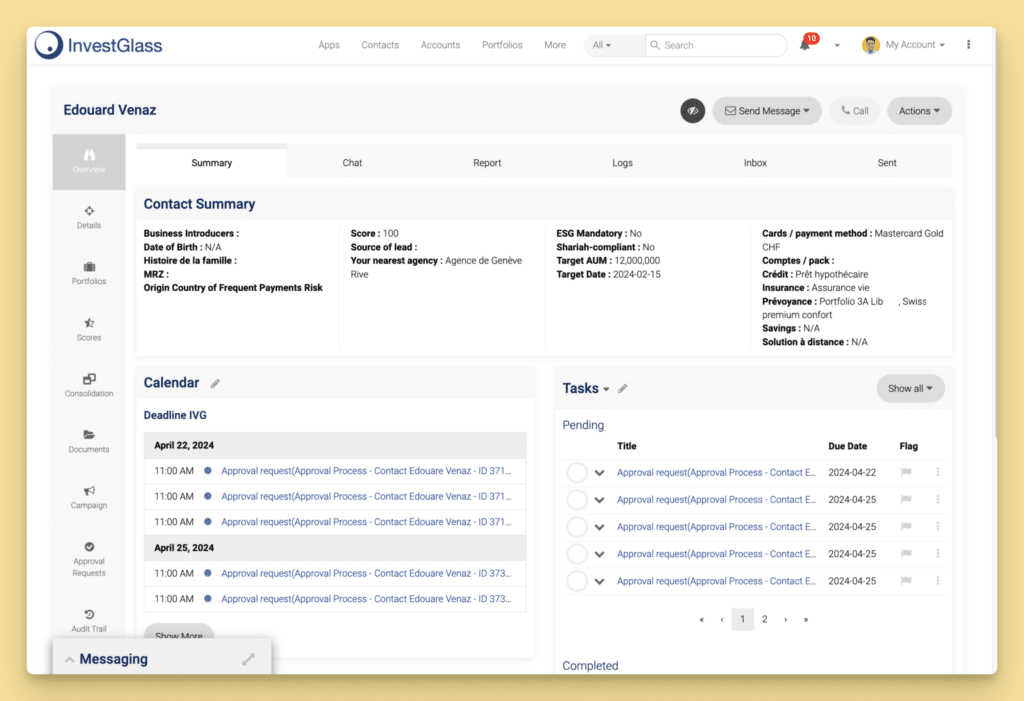
•Digital Onboarding: In an era of digital-first government, the ability to securely and efficiently onboard citizens for services is paramount. InvestGlass’s digital onboarding module allows for the creation of streamlined, user-friendly digital forms with integrated e-signature capabilities, drastically reducing paperwork and administrative friction.
•Portfolio Management System (PMS): For government agencies managing public funds, investments, or pension schemes, the integrated PMS provides real-time insights into financial data, enabling informed decision-making within the same secure environment as all other citizen data.
•Citizen & Employee Portals: Transparency and accessibility are key to modern governance. InvestGlass enables the creation of secure portals where citizens can access their information, interact with government agencies, and track the status of services. Similarly, employee portals streamline internal communication and task management.
•Automation & AI: Governments are constantly under pressure to do more with less. The platform’s powerful automation engine, which includes Robotic Process Automation (RPA) and AI-driven insights, can automate routine tasks, generate intelligent reports, and help public servants make better, faster decisions, freeing them to focus on more complex, high-value work.
•Compliant Marketing & Communication: For public information campaigns, emergency alerts, or regular citizen communication, the marketing automation module ensures that all outreach is targeted, effective, and compliant with data privacy regulations.
By integrating these capabilities, InvestGlass not only enhances efficiency but also dramatically strengthens the security posture. With a single point of data entry, robust access controls, and a comprehensive audit trail for every action, it provides the traceability and accountability that is essential for public trust and regulatory compliance.
The On-Premise Imperative: Ultimate Control
For a government truly committed to digital sovereignty, the on-premise deployment option offered by InvestGlass is the ultimate solution. It allows the Costa Rican government to run the entire platform on its own servers, within its own data centres, under the exclusive control of its own IT and security personnel. The data never leaves Costa Rican soil. The software is managed by Costa Rican hands. This is the highest level of digital sovereignty attainable, transforming the nation from a mere consumer of foreign cloud services into the master of its own digital domain.
This model directly addresses the risks highlighted by the 2022 cyberattacks. It allows Costa Rica to implement its own bespoke security protocols, to conduct its own independent security audits, and to ensure that its data is completely insulated from the legal and political machinations of other nations. It is a declaration of digital independence, powered by Swiss technology.
Conclusion: A Partnership for a Sovereign Future
Costa Rica stands at a defining moment in its history. The nation’s ambitious digital transformation agenda holds the promise of a more prosperous and connected future, but this ambition is threatened by the persistent specter of cyber threats and the subtle but significant erosion of sovereignty by foreign technology dependence. The path forward requires bold decisions and a strategic shift away from the convenient but compromised ecosystem of US cloud providers.
InvestGlass offers Costa Rica a unique and powerful alternative. It is a partnership grounded in shared values of neutrality, security, and self-determination. It provides not just a suite of advanced digital tools, but a technologically robust and legally sound framework for building a truly sovereign digital state. By embracing a Swiss sovereign solution, Costa Rica can protect its citizens’ data, secure its critical infrastructure, and ensure that its digital future is built and controlled by Costa Ricans, for Costa Ricans. The choice is clear. The time for digital independence is now.
The Geopolitical Chessboard of Data
The 21st century is defined not by land, but by data. Data is the new oil, the new currency, and the new territory over which global powers are vying for control. In this new geopolitical reality, the concept of digital sovereignty has moved from the fringes of academic discourse to the forefront of national security agendas. It represents a nation’s fundamental right to control its own digital destiny, to govern its data according to its own laws, and to protect its citizens and critical infrastructure from foreign interference. For a nation like Costa Rica, celebrated for its long-standing tradition of peace, neutrality, and democracy, the fight for digital sovereignty is a modern-day declaration of independence.
This struggle is playing out against the backdrop of a digital world dominated by a handful of American “hyperscalers.” Companies like Amazon, Microsoft, and Google have built a global digital empire, controlling not just the cloud where data is stored, but the vast undersea cables through which it flows. While this has driven innovation and efficiency, it has also created an unprecedented concentration of power and a new form of digital colonialism. Nations that become dependent on this infrastructure find themselves entangled in a web of legal and political obligations that can directly conflict with their own national interests. The US CLOUD Act stands as the most potent symbol of this conflict, a piece of legislation that projects American legal power across the globe, asserting jurisdiction over data regardless of where it resides. This creates a direct challenge to the sovereignty of every nation that relies on US cloud services, turning a simple technology choice into a profound political statement.

