
In 2026, artificial intelligence is no longer a side experiment for banks, wealth managers, insurers, asset managers, and public bodies. To build your ai roadmap well, you need a structured plan that connects innovation with compliance, sovereignty, measurable value, and operational control.
Key Takeways
- An ai roadmap is a strategic guide that breaks down an organization’s AI vision into practical steps for deployment, ensuring a structured and scalable approach to AI integration.
- A structured AI strategy roadmap links AI initiatives to business value, risk controls, data privacy, auditability, and regulatory compliance from day one.
- A phased approach helps avoid wasted resources, scattered pilots, and disconnected ai projects that do not support business objectives.
- Regulated institutions must align ai systems with data sovereignty, ai governance, model risk, data management, and clear human oversight.
- InvestGlass provides a Swiss sovereign CRM and automation platform to host, orchestrate, and control AI use without relying on American or Chinese clouds.

What Is An AI Roadmap In 2026?
An ai roadmap is a time-phased strategy roadmap that turns an ai vision into prioritised initiatives, budgets, controls, and milestones. It explains what the organisation will do, when it will do it, who owns it, and how it will track progress.
Unlike a technical backlog, an ai strategy roadmap covers strategy, use cases, data strategy, talent, technology stack, governance, compliance, and change management. It is not simply a list of ai models or tools. It provides strategic alignment between business goals, risk appetite, and long term business goals.
For regulated organisations, the roadmap must include regulatory compliance, data residency, model documentation, and audit trails from the outset. The EU AI Act, which entered into force in August 2024, is being phased in through 2028 and creates obligations around high-risk AI systems, transparency, and human oversight. The European Commission AI Act resources provide useful regulatory context.
For example, a mid-sized Swiss private bank might start in Q4 2026 with AI-assisted email classification and document routing, then move in Q1 to Q4 2027 towards AI-assisted KYC review, suitability checks, and fully digital onboarding inside a sovereign CRM such as InvestGlass.
Why Your Organisation Needs An AI Strategy Roadmap
Executives are under pressure to “do something with AI”, yet unstructured ai adoption often stalls. Without a clear ai strategy, teams launch isolated ai implementations, duplicate platforms, and create operational risk before demonstrating tangible value.
Common risks include:
- Fragmented pilots across departments
- Inconsistent customer experience and client communication
- Compliance concerns around opaque decision making
- Duplicated infrastructure, licences, and wasted resources
- Weak accountability for model performance, security risks, and system failures
A well-defined AI roadmap helps organizations avoid scattered projects and ensures that AI initiatives are aligned with business objectives, thereby driving real value across the organization. Organisations should define clear objectives and success metrics for AI initiatives, ensuring that these align with overall business goals to demonstrate the value of AI adoption.
For regulated institutions, the strategic importance is also supervisory. A roadmap gives boards and regulators evidence of control, auditability, ownership, and predictable change management. InvestGlass supports this by combining CRM, digital onboarding, portfolio management, and marketing automation, compliance workflows, and a secure client portal in one Swiss sovereign environment.
Step‑By‑Step: How To Build Your AI Roadmap
The following step by step method is designed for regulated institutions starting or restructuring their ai journey over the next 12 to 18 months.
Step 1: Define Vision, Scope, And Business Value
AI strategy starts with “why”, not “which model”. An effective AI strategy requires a clear understanding of organizational goals and the specific business problems that AI can address, ensuring that AI initiatives are aligned with overall business objectives.
Leadership should define a 2 to 3 year desired future state, such as augmented relationship management, automated compliance support, or a fully digital client lifecycle. Scope matters. A bank may begin with Swiss retail banking before expanding to EEA branches, while an insurer may prioritise claims triage before client engagement.
Translate the long term vision into 3 to 5 measurable outcomes, for example:
- Reduce onboarding time by 40 per cent by December 2027
- Cut manual document review time by 30 per cent
- Improve customer satisfaction scores by 10 points
- Reduce compliance exceptions in KYC files
- Increase net new revenue through better advisory timing
InvestGlass helps connect these business objectives to CRM records, onboarding forms, client portal activity, and portfolio workflows.
Output: an ai vision statement, scope definition, and business value map.
Step 2: Assess AI Readiness, Data, And Infrastructure
Assessing AI readiness involves conducting a structured audit of current capabilities to identify gaps that need to be addressed for successful AI adoption. Establishing an AI strategy involves assessing the current AI maturity of the organization and identifying initiatives to bridge the gap between the current and desired state of AI capabilities.
Review existing ai use, analytics, robotic automation, and pilot ai systems already in production. Then examine data quality, lineage, ownership, residency, access controls, and retention rules. AI relies on clean, organized, and secure data to function effectively. High-quality data is essential for AI models to operate effectively and should be properly audited.
Data privacy is central. Establishing data privacy involves ensuring compliance with regulations like GDPR and CCPA. AI initiatives must comply with data privacy regulations to protect brand reputation and ensure ethical use. Swiss and European institutions should also assess hosting, sub-processors, encryption keys, and exit rights. The SwissBanking Cloud Guidelines are relevant for cloud risk evaluation.
Organisations should identify gaps in team skills related to data engineering, machine learning, and product management when developing an AI strategy. They should also review prompt engineering, model risk, compliance knowledge, and company culture. Assessment of company culture is essential to determine the willingness to adopt automated workflows.
Output: an AI readiness report, data quality audit, infrastructure map, and skills map.
Step 3: Identify And Prioritise AI Use Cases
Use workshops with business experts, compliance, IT, risk, and operations teams to gather ai initiatives across the client lifecycle. Identifying high-value AI use cases involves assessing specific business pain points and determining where AI can provide the most value, such as improving operational efficiency or enhancing decision-making processes.
Relevant use cases include:
- AI-assisted KYC review and verification
- Automated document classification
- Suitability check support
- Portfolio rebalancing suggestions with AI
- Regulatory reporting assistance
- AI-assisted communication templates in the CRM
- Client service response automation
AI can automate repetitive tasks, allowing employees to focus on more strategic activities, which can lead to improved productivity and reduced operational costs for organisations. Automating repetitive tasks is often low hanging fruit because it creates early wins without changing core decision rights.
Score each use case with a simple Value × Effort matrix:
Factor | Question |
|---|---|
Business value | Does it reduce cost, increase revenue, or lower risk? |
Feasibility | Is the data available and reliable? |
Regulatory complexity | Does it affect client rights or financial decisions? |
Effort involved | How much integration, training, and governance is needed? |
Organisations can choose between off-the-shelf AI tools for ease of deployment and custom development for competitive advantage. In regulated settings, a hybrid approach often works best: standard workflows in InvestGlass, with controlled custom logic where differentiation matters most. |
Output: a prioritised backlog of ai initiatives.
Step 4: Design Your Governance, Risk, And Compliance Framework
AI governance turns ambition into accountable practice. Create an AI steering committee with risk, compliance, IT, legal, security, and business units. Cross functional teams help prevent isolated decision making and support smoother adoption.
Each AI initiative needs an owner, documented purpose, data inputs, approval process, security controls, and escalation route. Organizations should define accountability by assigning ownership of model performance, security risks, and system failures. Bias mitigation requires processes to check data inputs and model outputs for fairness.
High-stakes decisions require human-in-the-loop controls. InvestGlass workflows and history logs can help record approvals, exceptions, user actions, and client communication, which supports auditability and supervisory review.
Output: an ai governance charter, model risk controls, and operating guardrails.
Step 5: Build A Structured AI Roadmap With Phases And Timelines
Creating an AI roadmap involves setting clear goals, assessing resources, and implementing the roadmap in phases to ensure manageable and effective AI integration. A successful AI strategy should include a phased approach to implementation, starting with quick wins to build confidence and gradually scaling to more complex initiatives as the organization learns and adapts.
The implementation of an AI roadmap typically involves three main phases: quick wins, scaling and growing infrastructure, and enterprise-wide deployment and optimization.
- Phase 1: quick wins. Phase 1 of AI implementation focuses on achieving quick wins through proof-of-concept projects that are self-contained and low-risk, allowing organizations to test their rollout strategy.
- Phase 2: scale and integration. In Phase 2, organizations scale their AI initiatives by moving from departmental pilots to broader, organizational-level projects, which requires formalizing approaches and integrating across multiple systems.
- Phase 3: enterprise-wide optimisation. The final phase of AI implementation involves enterprise-wide deployment and optimization, where the focus shifts to ensuring reliability, managing risks, and continuously improving AI models to adapt to changing conditions.
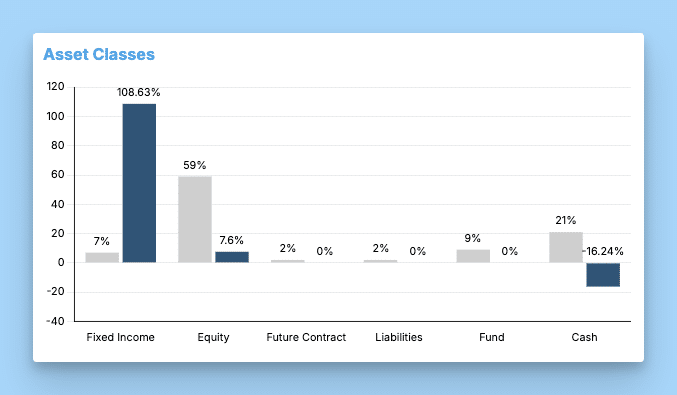
Visualise the roadmap by quarter and domain, such as onboarding, CRM, AI-enhanced portfolio management, compliance, and customer support. InvestGlass can act as the central environment for orchestration, reducing integration risk and consolidating sensitive data in a sovereign repository.
Output: a one-page structured roadmap for executives and teams.
Step 6: Execute, Measure, And Iterate
An ai roadmap is a living artefact. As regulations, ai models, data, and business priorities change, the roadmap must adapt.
Set KPIs for every initiative. Companies should track technical metrics such as model accuracy, latency, and system uptime. Measuring business ROI involves tracking time saved, processing cost reductions, or net new revenue from AI initiatives. Also measure customer satisfaction, compliance exceptions, manual review time, and client portal engagement.
Use feedback loops to gather feedback from relationship managers, compliance officers, operations teams, and clients. Change management is crucial for preparing employees to trust and use new AI tools. Dashboards inside InvestGlass can support monitoring, alerts, and performance review across CRM, onboarding, and portfolio workflows.
Output: quarterly roadmap reviews, operational dashboards, and annual strategy refreshes.
Core Components Of A Strong AI Strategy Roadmap
A strong ai strategy roadmap should include:
- AI vision: the desired future state and strategic intent
- Capability map: current maturity, skills, systems, and risks
- Prioritised use cases: quick wins and strategic initiatives
- Data and infrastructure plan: data management, hosting, residency, security, and scalable pipelines
- Governance model: ownership, documentation, audit trails, bias controls, and human oversight
- Change management plan: training, adoption, communication, and leadership support
- Investment plan: ai investments, licences, internal resources, and ongoing support
A European insurer, for instance, might map claims triage, client communication, marketing automation, and compliance reviews into one roadmap. With InvestGlass, these initiatives can connect to client records, workflow history, documents, and portal interactions, differentiating their digital offering in a competitive banking and insurance market and helping the entire organization work from a trusted source of data.
Linking AI Systems To Business Value And Client Experience
AI success is measured in outcomes, not the number of models deployed. Each AI initiative should link to value drivers such as cost savings, revenue growth, risk reduction, operational resilience, and customer experience.
Examples of measurable impact include:
- Lower onboarding abandonment rates
- Faster suitability checks
- Reduced manual file review
- Improved cross-sell ratios
- Faster response times in client service
- Better decision making through new insights
AI can significantly enhance customer experience by automating responses to inquiries, personalising interactions, and providing timely support, which can lead to increased customer satisfaction and loyalty, while agentic AI in banking also strengthens fraud detection and real-time decisioning.
A practical journey could start with a prospect entering the InvestGlass portal, continue with AI-assisted document classification, proceed to compliance review, and finish with portfolio activation. If the workflow works consistently, the institution can deploy ai at scale while maintaining oversight, especially when using a Swiss CRM for financial services with digital onboarding and automation.
Choosing Sovereign Platforms To Execute Your AI Journey
Data sovereignty and digital independence are now board-level matters. Reliance on American or Chinese hyperscale platforms can introduce concerns around extraterritorial access, geopolitical risk, contractual dependency, supply chain exposure, and uncertainty over where sensitive client data is processed.
InvestGlass provides a Swiss sovereign alternative. It can be hosted in Switzerland or deployed on-premise under the institution’s control. Sensitive CRM, KYC, portfolio, and client portal data can remain in a protected environment, while controlled connectors can access external models where appropriate.
Area | Sovereign AI stack with InvestGlass | Cloud-only AI stack |
|---|---|---|
Control | Swiss or on-premise deployment | External provider dependency |
Compliance | Audit-ready workflows and logs | More contract and sub-processor review |
Data | Sensitive data stays controlled | Higher data residency complexity |
Trust | Stronger client sovereignty | More geopolitical exposure |
This approach helps institutions create an ai operating model that protects client sovereignty while preserving innovation. |
From Roadmap To Execution With InvestGlass
A roadmap only creates value when it becomes daily practice. InvestGlass helps regulated institutions move from plan to execution by configuring AI-driven workflows inside CRM, onboarding, compliance, portfolio management, marketing automation, and the secure client portal.
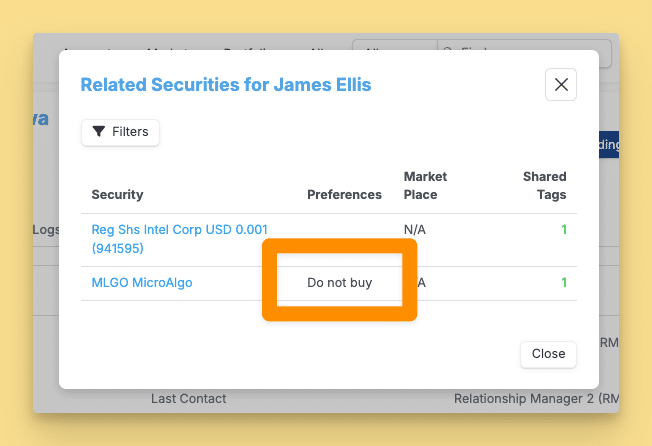
Teams can create an ai workflow for document classification, client communication templates, relationship prompts, or onboarding checks. Relationship managers and compliance teams work in one interface, using AI suggestions while maintaining human oversight and full audit trails.
Because InvestGlass supports Swiss hosting and on-premise deployment, banks, wealth managers, insurers, and public agencies can invest in artificial intelligence without surrendering control of sensitive client data to American or Chinese software ecosystems, including central banks exploring AI for policy and digital currencies.
If your organisation wants to build your ai roadmap with sovereignty, compliance, and execution in mind, map your current AI initiatives onto InvestGlass and request a tailored demo of a sovereign AI roadmap.
Frequently Asked Questions
How long does it typically take to build an AI roadmap?
Most regulated institutions can create an initial ai roadmap in 8 to 12 weeks, including workshops, readiness assessment, use-case prioritisation, governance design, and executive approval. It should then be updated quarterly and refreshed annually.
Do we need a large data science team before starting our AI journey?
No. Many organisations begin with low-risk workflow use cases and a small core team from business, compliance, IT, and operations. InvestGlass embeds AI capabilities into existing CRM and onboarding processes, reducing the need for heavy custom development in the first phase.
How does an AI roadmap interact with our existing IT and digital strategies?
The AI roadmap should extend existing IT, digital transformation, data, and cyber strategies. It should align with projects such as CRM consolidation, client portal modernisation, core system integration, and compliance workflow automation.
How can we ensure AI initiatives remain compliant as regulations evolve?
Maintain a continuous regulatory monitoring process involving legal, compliance, IT, and risk teams. Keep model documentation, change logs, risk assessments, approvals, and audit evidence in controlled systems. InvestGlass workflows help evidence controls as rules change.
Is a sovereign AI platform more expensive than public cloud options?
Sovereign hosting may have a different cost profile, but the total cost is often comparable once compliance, integration, vendor risk, data residency, and potential re-platforming costs are included. A unified platform such as InvestGlass can also reduce separate licensing and integration spend.


