
As nations worldwide awaken to the critical importance of digital sovereignty, Azerbaijan is taking decisive steps to secure its digital future. With a raft of new policies and a clear vision for data control, the nation is paving the way for a new era of technological independence. In this landscape, Swiss-based InvestGlass emerges as a powerful enabler, offering a sovereign CRM and automation platform that stands in stark contrast to the data-related risks associated with US tech giants like Salesforce and Microsoft.
What you’ll learn
•The critical importance of digital sovereignty in the modern world.
•Azerbaijan’s comprehensive strategy for achieving digital independence.
•The inherent risks of relying on US-based tech giants like Salesforce and Microsoft.
•How InvestGlass provides a secure and sovereign alternative for governments and regulated industries.
•The specific ways in which InvestGlass can support Azerbaijan’s digital transformation journey.
The Global Rise of Digital Sovereignty
In an increasingly interconnected world, the concept of digital sovereignty has moved from the fringes of policy debates to the forefront of national security and economic strategy. Digital sovereignty is the right of a nation to control its own digital destiny, from the data generated by its citizens and businesses to the digital infrastructure that underpins its economy. It is a declaration of technological independence, a statement that a country will not be subject to the laws and policies of foreign powers when it comes to its most valuable digital assets.
The urgency of this issue has been amplified by the rise of cloud computing and the dominance of a few US-based hyperscalers. While these companies offer powerful tools and services, they also present a significant challenge to data sovereignty. The US CLOUD Act, for instance, allows US authorities to compel access to data held by American cloud providers, regardless of where in the world that data is stored. This has created a fundamental conflict for nations seeking to protect their data from foreign surveillance and legal overreach.
The issue is not merely theoretical. In a recent and telling move, the US administration under President Donald Trump ordered its diplomats to actively lobby against foreign data sovereignty laws. An internal diplomatic cable, signed by Secretary of State Marco Rubio, explicitly states that such laws “disrupt global data flows, increase costs and cybersecurity risks, limit AI and cloud services, and expand government control in ways that can undermine civil liberties and enable censorship.” This directive reveals a clear policy of opposing national data control in favour of maintaining the global reach of US technology firms and, by extension, US government access to data.
This aggressive stance against data sovereignty creates a clear and present danger for any nation that values its autonomy. It underscores the reality that relying on US-based cloud infrastructure is not a neutral act; it is an implicit acceptance of a foreign government’s legal and political agenda. For countries like Azerbaijan, which are charting their own course in the digital realm, this reality makes the choice of technology partners a matter of strategic national importance.
Azerbaijan’s Resolute Path to Digital Independence
Azerbaijan has not been a passive observer of these global trends. The nation has embarked on a deliberate and multi-faceted strategy to establish and enforce its digital sovereignty. This is not a single policy but a comprehensive, whole-of-government approach designed to build a secure, resilient, and independent digital future. The government’s actions demonstrate a sophisticated understanding of the challenges and a firm commitment to overcoming them.
In a landmark move on February 27, 2026, President Ilham Aliyev signed a decree establishing the Digital Development Council of the Republic of Azerbaijan. Chaired by the highly influential First Vice-President Mehriban Aliyeva, the council’s creation signals a new era of centralized, high-level strategic focus on digitalization and data sovereignty. This is not a low-level technical committee; it is a powerful body with the authority to shape national policy and drive implementation across all government sectors.
Further cementing this commitment, the President approved the “Action Plan for Accelerating Digital Development for 2026-2028.” This is not a vague statement of intent but a detailed roadmap with concrete measures. The plan, financed by the state budget and other sources, will be coordinated by the new Digital Development Council and monitored by the Center for Analysis of Economic Reforms and Communication. Key provisions include a comprehensive review of foreign currency transfer regulations and, crucially, the appointment of deputy-level digital leads within every state body by June 2026. This ensures that digital transformation and data security are embedded at the highest levels of every government institution.
These recent initiatives build upon a solid foundation of prior strategic planning. The “Digital Development Concept,” approved on January 16, 2025, laid the groundwork by defining data protection, digital literacy, and the training of ICT specialists as core national objectives. This was further reinforced by the Information Security and Cyber Security Strategy, approved by presidential decree on August 28, 2023. A critical and telling component of this strategy is the explicit prohibition placed on most state organizations from using public cloud services, mandating a preference for on-premise infrastructure. This policy, more than any other, sends an unambiguous signal: Azerbaijan is committed to data localization and will not outsource its critical data infrastructure to foreign providers.
Key Pillars of Azerbaijan’s Digital Sovereignty Strategy
| Policy / Initiative | Date | Key Objective |
| Digital Development Council | Feb 2026 | To provide high-level, strategic leadership for the nation’s digital transformation. |
| Action Plan for 2026-2028 | Feb 2026 | To accelerate digital development with a focus on security, localization, and efficiency. |
| Digital Development Concept | Jan 2025 | To establish a framework for data protection, digital literacy, and ICT workforce development. |
| Information Security & Cyber Security Strategy | Aug 2023 | To strengthen national cybersecurity and mandate on-premise data storage for state entities. |
| ASAN & myGov Platforms | Ongoing | To digitize public services and improve citizen-government interactions securely. |
This strategic framework demonstrates a clear and consistent vision. Azerbaijan is not simply digitizing for the sake of modernization; it is building a digital ecosystem that is inherently secure, resilient, and, above all, sovereign. This proactive stance sets the stage for the next phase of its digital evolution, one where the choice of technology partners will be paramount.
The Sovereignty Trap: Deconstructing the Risks of US Tech Dominance
For any nation prioritising digital sovereignty, the choice of technology partners is a decision of profound strategic importance. The global market for cloud computing and enterprise software is dominated by a handful of US-based hyperscalers, primarily Microsoft and Salesforce. While their platforms offer a vast array of features and functionalities, they come with inherent and unavoidable risks that are fundamentally incompatible with a true data sovereignty strategy.
The central and most glaring issue is the US CLOUD (Clarifying Lawful Overseas Use of Data) Act. This piece of US legislation grants American law enforcement agencies far-reaching authority to demand access to data stored by US-based technology companies, regardless of where that data is physically located. This means that even if a company like Microsoft or Salesforce hosts data within a state-of-the-art data centre in Germany, France, or even within Azerbaijan itself, that data remains subject to US jurisdiction and can be accessed via a US warrant or subpoena. This creates a direct and irreconcilable conflict with data protection regimes like the GDPR and completely undermines the principle of national data control.
This is not a hypothetical threat. Microsoft has openly admitted in a French court that it cannot guarantee that data will not be transmitted to the US government when it is legally compelled to do so. This stark admission lays bare the limitations of any data sovereignty promises made by US corporations. Their legal obligations to the US government will always supersede any contractual assurances given to foreign clients.
As Mark Boost, CEO of UK-based cloud provider Civo, bluntly stated to The Register, “You can put a data centre in Paris or London, but if the company is still governed by US law, the data ultimately sits under US jurisdiction.” This is the crucial distinction that many overlook.
The Illusion of ‘Sovereignty Washing’
In response to growing concerns from international customers, US tech giants have engaged in what critics call “sovereignty washing.” They launch marketing campaigns and new service tiers that use the language of sovereignty, such as Microsoft’s “EU Data Boundary” or Salesforce’s “Hyperforce,” which allows for data residency in specific countries. However, these initiatives often address data residency (where the data is stored) but fail to solve the core problem of data sovereignty (who has ultimate legal control over the data).
Frank Karlitschek, CEO of Nextcloud, has labelled these efforts as misleading, stating, “In Europe, sovereignty means the absence of strong dependencies on overseas third parties. The sovereign cloud from Microsoft does not deliver that.” The fundamental issue remains: as long as the parent company is headquartered in the United States, it is subject to the CLOUD Act. These so-called sovereign solutions are often little more than a veneer, creating a dangerous illusion of security while the underlying vulnerability persists.
This situation is further exacerbated by the US government’s active opposition to global data sovereignty movements. The Trump administration’s directive for diplomats to lobby against such laws is a clear indication that the US sees national data control as a barrier to its economic and intelligence interests. For a nation like Azerbaijan, which is actively building its digital independence, relying on technology providers that are extensions of a foreign government’s policy is a strategic misstep.
A Stark Comparison: The Sovereignty Deficit
| Feature | US Hyperscalers (Salesforce, Microsoft) | Sovereign Provider (InvestGlass) |
| Legal Jurisdiction | Subject to US CLOUD Act, regardless of data location. | Governed by Swiss law; not subject to US CLOUD Act. |
| Data Access | Can be compelled to provide data to US authorities. | No automatic compliance with foreign legal requests. |
| Hosting Options | Data residency offered, but sovereignty is compromised. | True sovereign hosting: Swiss cloud or on-premise. |
| Corporate Allegiance | Allegiance is ultimately to the US government. | Allegiance is to the client and Swiss legal framework. |
| Transparency | Transparency reports show thousands of government data requests. | Clear contractual framework under Swiss jurisdiction. |
This table illustrates the fundamental ‘sovereignty deficit’ inherent in using US-based cloud providers. For a government entity, the risk of sensitive citizen data, state secrets, or critical infrastructure information being accessed by a foreign power is simply unacceptable. The only viable path forward is to partner with providers who are legally and structurally aligned with the principles of true digital sovereignty.
InvestGlass: The Swiss-Built Engine for True Data Sovereignty
In this high-stakes environment, a new breed of technology provider is emerging: one that is architected from the ground up on a foundation of data sovereignty and privacy. InvestGlass, a Swiss-based company headquartered in Geneva, offers a powerful and comprehensive CRM and automation platform specifically designed to meet the stringent requirements of governments and regulated industries. It is not a US product with a European data centre; it is a genuinely European solution for a world demanding digital autonomy.
What sets InvestGlass apart is its unwavering and structurally embedded commitment to data sovereignty. As a Swiss company, InvestGlass operates under the robust protection of Swiss privacy laws, which are among the strictest in the world. It is not subject to the US CLOUD Act or similar extra-territorial legislation. This legal framework is the bedrock of its sovereign promise, providing a level of assurance that US-based providers simply cannot match.
Deployment Flexibility: The Core of Control
InvestGlass understands that for sovereign entities, control over infrastructure is non-negotiable. The platform offers a level of deployment flexibility that directly addresses the data localization mandates being implemented by nations like Azerbaijan.
1.On-Premise Deployment: For maximum security and control, InvestGlass can be deployed entirely within an organization’s own data centres. This is the ultimate expression of data sovereignty, as all data and processing remain within the nation’s physical and legal boundaries. This option aligns perfectly with Azerbaijan’s policy of mandating on-premise solutions for its state bodies, allowing them to maintain direct hardware control while benefiting from a state-of-the-art software platform.
2.Swiss Private Cloud: For organizations seeking a managed solution without compromising sovereignty, InvestGlass provides hosting in highly secure, ISO 27001-certified data centres located exclusively in Switzerland. This ensures that all data is protected by Swiss law and is physically and legally separate from the US and other jurisdictions. This option provides the benefits of a cloud model such as rapid deployment and reduced IT overhead without the sovereignty risks of US hyperscalers.
This dual-hosting model provides a clear and viable path for any organization, public or private, to achieve data sovereignty without sacrificing functionality. It replaces the compromised promises of US providers with a concrete, legally sound, and technically robust solution.
An Integrated Platform for Public Sector Transformation
InvestGlass is far more than just a secure database; it is a complete digital transformation engine. It replaces the need for multiple, disconnected systems with a single, unified platform that streamlines workflows, enhances efficiency, and improves citizen services. This integrated approach is particularly valuable for government agencies seeking to modernize their operations.
The platform’s core components include:
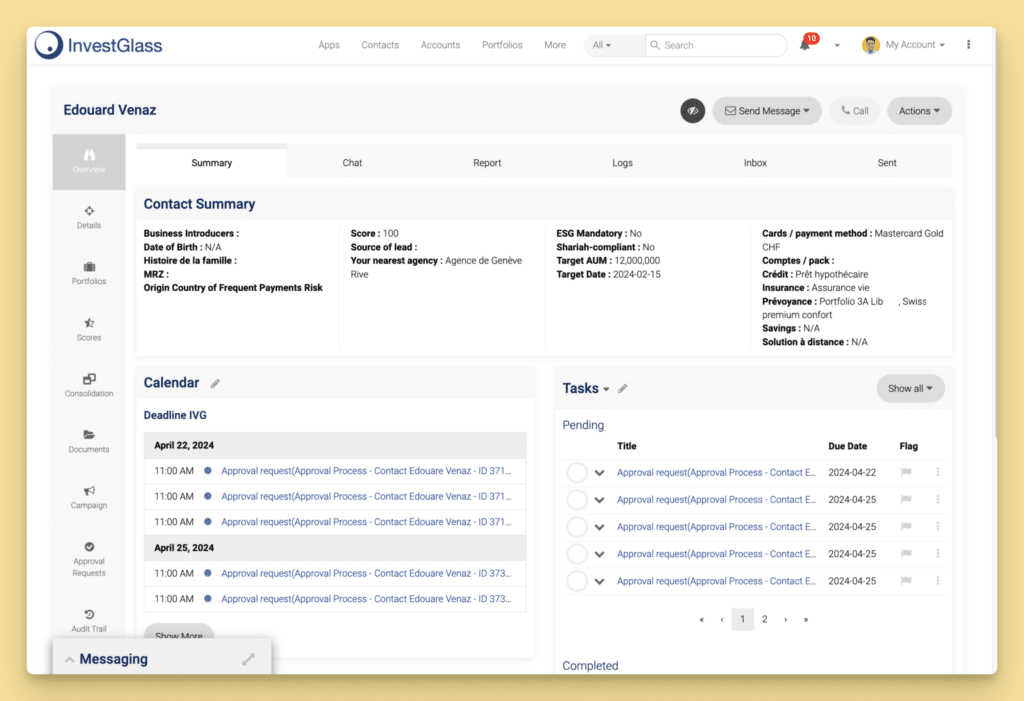
•CRM for Government: A central hub for managing all interactions with citizens, businesses, and other government agencies. It provides a 360-degree view of every entity, enabling personalized and efficient service delivery.
•Digital Onboarding & KYC: A powerful tool for automating and securing the process of onboarding new citizens for services, new employees, or new businesses seeking licenses. This is critical for streamlining public sector success and ensuring compliance.
•Portfolio Management System (PMS): While originating in finance, the PMS logic is adaptable for governments to manage and track a wide array of ‘portfolios,’ such as public assets, infrastructure projects, or social program beneficiaries.
•Marketing Automation: This module can be repurposed for sophisticated public information campaigns, emergency alerts, and targeted citizen outreach, ensuring clear and effective communication.
•Approval Automation: A flexible workflow engine that can digitize and automate complex internal government processes, from permit applications to budget approvals, reducing bureaucracy and increasing transparency.
This all-in-one architecture, built on a foundation of Swiss sovereign risk management, provides a holistic solution that addresses the dual challenges of digital transformation and data sovereignty. It empowers governments to innovate and modernize while simultaneously strengthening their control over their digital domain.
Why InvestGlass is the Strategic Enabler for Azerbaijan’s Digital Future
As Azerbaijan implements its ambitious digital development agenda, the choice of technology partners will be a critical determinant of its success. The nation’s well-defined strategy, with its emphasis on data localization and security, requires a partner that is structurally and philosophically aligned with its goals. InvestGlass is not just a vendor; it is a strategic enabler uniquely positioned to help Azerbaijan build a truly sovereign and prosperous digital future.
The synergy between Azerbaijan’s national strategy and the InvestGlass platform is undeniable:
•Direct Alignment with On-Premise Mandates: Azerbaijan’s policy prohibiting most state bodies from using public cloud services is a significant hurdle for US hyperscalers. For InvestGlass, it is a core feature. The platform’s ability to be deployed on-premise directly fulfills this government mandate, providing a clear and immediate path to compliance and security.
•Elimination of CLOUD Act and Geopolitical Risks: By choosing a Swiss provider, Azerbaijan completely insulates itself from the legal and geopolitical risks associated with the US CLOUD Act. Sensitive state and citizen data remains shielded from the reach of foreign governments, ensuring national secrets remain secret and citizen privacy is protected.
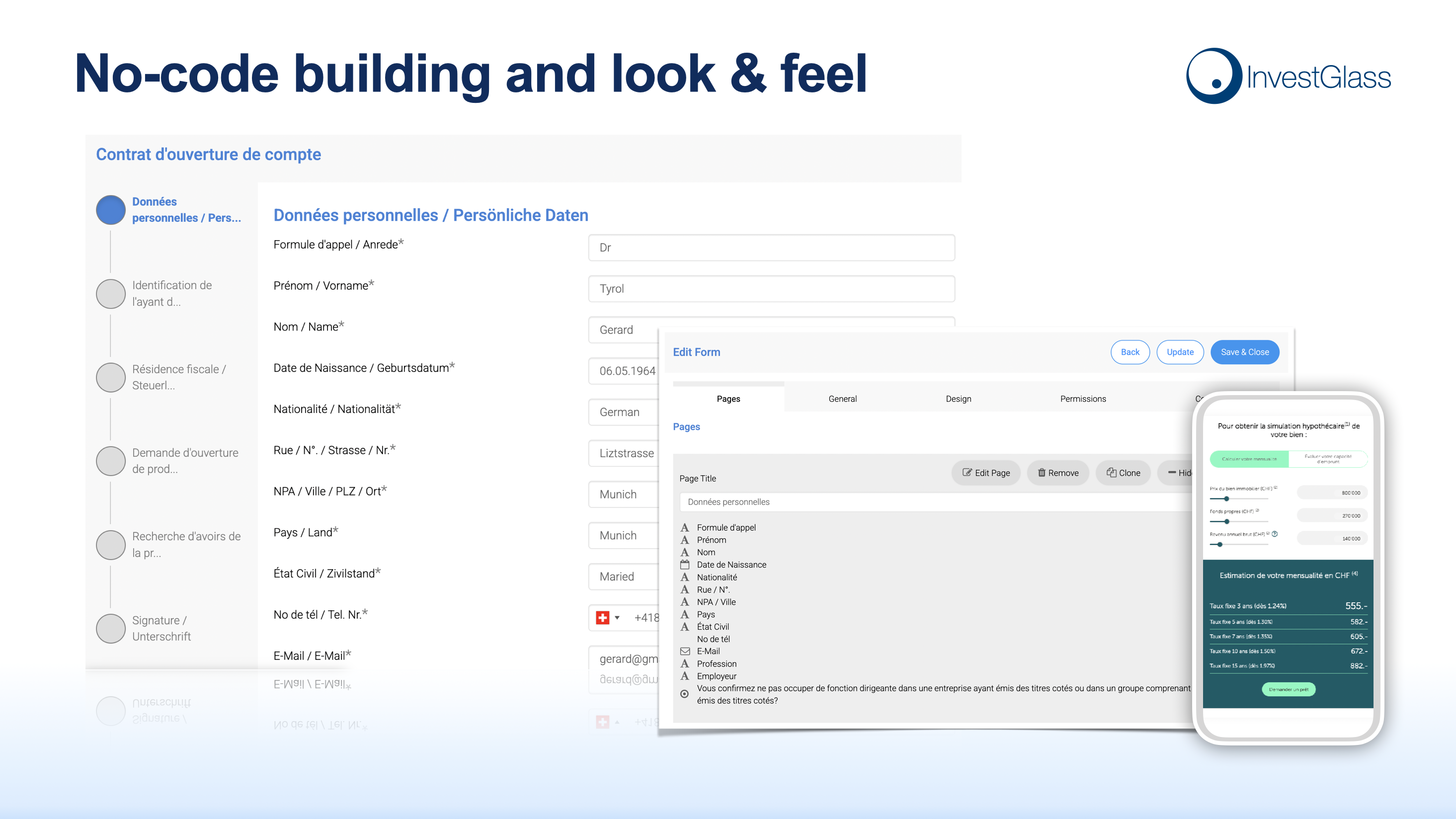
•A Foundation for a National Digital Ecosystem: InvestGlass can serve as the foundational technology for a wide range of government services. Its integrated tools for CRM, onboarding, and automation can power everything from digital citizen portals and e-licensing systems to internal case management and inter-agency collaboration platforms. This fosters the creation of a cohesive national digital ecosystem, rather than a fragmented collection of disparate, foreign-controlled applications.
•Flexibility for a Phased Approach: The flexibility of InvestGlass’s deployment model allows for a phased and pragmatic approach. Non-sensitive or public-facing services could potentially be initiated on the secure Swiss cloud for rapid deployment, while the most critical state functions are built out on-premise. This allows for agility without compromising on the ultimate goal of full sovereignty.
•Fostering Local Expertise: Deploying and managing a powerful on-premise platform like InvestGlass encourages the development of local IT expertise. This aligns with Azerbaijan’s goal of building its domestic human capital in the ICT sector, creating a self-sustaining cycle of innovation and technological independence.
In essence, InvestGlass offers Azerbaijan a path to achieve world-class digital capabilities without the sovereignty compromises demanded by the dominant market players. It is a choice that strengthens, rather than weakens, the nation’s autonomy.
Conclusion: A Sovereign Future for a Digital Nation
Azerbaijan stands at a pivotal moment. The nation’s clear-eyed commitment to digital sovereignty is a bold and necessary strategy for securing its future in an increasingly complex and contested digital world. By making astute technology choices now, Azerbaijan can build a digital ecosystem that is not only innovative and efficient but also resilient, secure, and unequivocally sovereign.
In this context, InvestGlass presents a clear and compelling alternative to the offerings of US tech giants. With its Swiss legal foundation, unwavering commitment to data sovereignty, and powerful, integrated platform, InvestGlass is the ideal partner for Azerbaijan’s journey towards digital independence. By choosing a path of technological self-determination with a partner like InvestGlass, Azerbaijan can ensure that its digital future is built on an unshakeable foundation of trust, security, and national control.
Frequently Asked Questions
1. What is digital sovereignty?
Digital sovereignty is the principle that a nation has the right to control its own digital infrastructure, data, and legal framework. It ensures that a country’s digital assets are governed by its own laws and are not subject to the extra-territorial jurisdiction of foreign powers.
2. Why is digital sovereignty particularly important for a country like Azerbaijan?
For a strategically located and rapidly developing nation like Azerbaijan, digital sovereignty is crucial for protecting national security, ensuring the privacy of its citizens’ data, fostering a competitive domestic tech industry, and maintaining autonomy in a geopolitically complex region.
3. What is the US CLOUD Act and why does it pose a risk?
The US CLOUD Act is a federal law that allows US authorities to compel US-based technology companies to provide requested data, regardless of where that data is stored globally. This poses a significant risk as it means sensitive data from other nations can be accessed by the US government, bypassing local privacy laws.
4. How does InvestGlass, as a Swiss company, avoid the risks of the CLOUD Act?
As a company headquartered and operating in Switzerland, InvestGlass is governed by Swiss law and is not subject to US jurisdiction or the CLOUD Act. It provides a legal and structural guarantee that data will not be handed over based on foreign legal demands, a promise US companies cannot make.
5. What does “on-premise” deployment mean and why is it important for governments?
On-premise deployment means the software is installed and runs on servers located within an organization’s own data centres. For governments, this is the highest level of security and sovereignty, as it keeps all data within the country’s physical and legal borders, aligning with data localization mandates.
6. Can InvestGlass be used for more than just citizen relationship management?
Yes. While it has a powerful CRM at its core, InvestGlass is an integrated platform. Its tools can be used to automate a vast range of government processes, including licensing and permits, internal approvals, case management, public asset tracking, and secure citizen communication.
7. How does Azerbaijan’s new Digital Development Council impact its sovereignty goals?
The council, led by the First Vice-President, provides high-level political and strategic authority to the digital sovereignty agenda. It ensures that this is not just a technical issue but a national priority, driving coordinated action across all government ministries and agencies.
8. What is ‘sovereignty washing’ and how can it be identified?
‘Sovereignty washing’ is a term for the marketing practice of US tech giants who claim to offer ‘sovereign’ solutions that are, in reality, still subject to US law. It can be identified by looking at the company’s country of origin and whether it is subject to the CLOUD Act, rather than just where its data centres are located.
9. How does using a sovereign platform like InvestGlass benefit a country’s economy?
By partnering with sovereign tech providers and investing in on-premise solutions, a country fosters local IT expertise, creates high-skilled jobs, and reduces long-term financial outflow to foreign tech monopolies. It helps build a more resilient and self-sufficient domestic technology sector.
10. Is it difficult to switch from a platform like Salesforce to InvestGlass?
InvestGlass is designed with open architecture and powerful APIs to facilitate data migration. While any platform change requires careful planning, InvestGlass and its partners work closely with clients to ensure a smooth transition, providing a clear path away from the sovereignty risks of US-US based providers.

