
Financial institutions today face a defining challenge: clients expect seamless digital experiences, proactive advice, and personalized service while regulators demand ever stricter compliance. A modern customer relationship management system sits at the center of this equation. With the right CRM strategy, banks and wealth managers can orchestrate every client interaction from the first KYC form to the tenth annual portfolio review, building lasting relationships that drive revenue and reduce churn.
Adopting a customer first mindset is essential for financial institutions to successfully implement CRM strategies and increase client engagement. This approach ensures that every process and interaction is designed with the client’s needs at the forefront, fostering a customer-centric culture that supports long-term loyalty.
This guide explores how to increase client engagement using CRM, with a specific focus on regulated financial institutions and how InvestGlass delivers Swiss sovereign solutions for this critical challenge.
Key Takeaways
- A modern CRM like InvestGlass can orchestrate every client interaction to increase customer engagement and retention across the entire customer journey, from first KYC form to yearly portfolio review.
- Centralising Swiss hosted client data, communications, and portfolios in one CRM timeline is the foundation for personalised, compliant engagement that meets customer expectations.
- Automation, AI, and digital onboarding in InvestGlass reduce manual work so relationship managers can spend more time in meaningful client conversations rather than repetitive tasks.
- Proactive, data driven monitoring of usage, portfolio risk, and response times helps catch disengagement early and reduce churn before it impacts customer lifetime value.
- A well implemented CRM strategy transforms a regulated financial firm from transactional provider into a long term, trusted partner with a loyal customer base.
What Is A Client Engagement Strategy In A CRM Context
Client engagement for B2B financial institutions represents the systematic management of every interaction throughout the customer lifecycle. Unlike ad hoc relationship building, a CRM operationalises engagement by tracking, scheduling, and measuring touchpoints from prospect to long term client.
A client engagement strategy is a documented sequence of planned touchpoints spanning the entire relationship. This includes first meetings, proposal delivery, onboarding milestones, renewal discussions, and expansion conversations. CRM systems document and analyze how customers interact with the institution at various touchpoints, enabling more personalized and effective engagement strategies. All activities are executed and tracked inside the CRM, creating a clear record that supports both relationship quality and regulatory requirements.
In regulated industries, client engagement encompasses far more than sales calls. It includes:
Engagement Type | Examples |
|---|---|
Regulatory Compliance | KYC refreshes, AML checks, suitability assessments |
Portfolio Management | Performance reviews, rebalancing discussions, risk updates |
Reporting | Annual statements, tax documents, regulatory communications |
Advisory | Strategic planning, succession discussions, market updates |
A CRM platform like InvestGlass replaces scattered emails and spreadsheets with measurable, repeatable workflows aligned with MiFID II, FINMA, and GDPR requirements. Financial firms with structured engagement in CRM typically see higher wallet share, more referrals, and significantly lower compliance risk.
Client Engagement Versus Traditional Customer Service
Understanding the distinction between engagement and service is essential for any successful customer engagement strategy.
Client engagement is proactive and long term. It focuses on education, portfolio insights, and strategic planning before issues arise. Relationship managers using effective customer engagement strategies anticipate client needs and reach out with relevant information, market commentary, or planning opportunities.
Customer service, by contrast, is reactive and ticket based. The customer support team typically handles these reactive, ticket-based issues, such as login problems, pricing questions, or document requests, allowing relationship managers to focus on proactive engagement. While essential, service alone does not build relationships or differentiate your institution.
A CRM timeline in InvestGlass unifies meetings, emails, portfolio notes, and support tickets so teams see the entire relationship rather than isolated incidents. Consider a Swiss wealth manager who schedules quarterly strategy calls, sends personalised market updates, and proactively discusses retirement planning versus one who simply answers account questions when they arise. The difference in customer loyalty and retention is substantial.
Core Elements Of An Effective CRM Led Engagement Strategy
Building an effective strategy requires attention to four interconnected pillars: data quality, automation, personalisation, and compliance.
Data Centralisation Clean, deduplicated records and household views form the foundation. Without accurate customer data, no advanced engagement is possible. The CRM must serve as the single source of truth for client profiles, contact preferences, and relationship history.
Personalisation Segmentation by risk profile, AUM, geography, and investment goals drives relevant messaging. Engaging customers means delivering content that matches their specific situation, not generic broadcasts. Effective personalization strengthens customer relationships by ensuring each client feels understood and valued.
Automation Follow up sequences after meetings, onboarding journeys, and review reminders built directly in the CRM ensure consistency without overwhelming relationship managers with manual work.
Governance and Measurement Approval workflows, audit trails, and KPIs are mandatory for banks and wealth managers. Every engagement must be traceable and compliant with regulatory standards.
Why CRM Driven Client Engagement Grows Revenue
Financial firms that adopt structured CRM engagement typically see retention improvements of 15 to 25 percent within the first 18 months. More importantly, a well configured CRM helps transform occasional customers into loyal customers who expand their relationship over time. Engaging existing customers through targeted CRM touchpoints fosters loyalty and supports revenue expansion.
A CRM allows firms to track engagement across the funnel, from first website form to signed mandate and ongoing cross selling of advisory services. This visibility into the customer journey reveals which touchpoints accelerate decisions and which create friction.
Consistent engagement via CRM shortens sales cycles for complex products like discretionary mandates, life insurance, or Lombard loans. When prospects receive timely, relevant follow ups and see that their needs are understood, they move faster toward commitment.
Engaged clients respond faster to KYC updates and suitability reviews, reducing operational delays. When the support team spends less time chasing documents, they can focus on advisory work that adds value.
A well configured CRM provides management with clear pipeline and retention forecasts. Revenue becomes more predictable over 12 to 24 month horizons, supporting better business planning and resource allocation.
Accelerating Onboarding, Deal Velocity And Time To Funding
The onboarding phase represents a critical moment in any customer relationship. For banks, asset managers, and fintech lenders, delays here erode trust and increase the risk of losing prospects to competitors.
Digital onboarding and eKYC in InvestGlass can cut onboarding time from several weeks of paper exchanges to a few days. Automated reminders and pre filled forms reduce no shows and missing documents for new private banking clients.
Consider how CRM workflows can trigger immediate follow ups after prospect meetings. When a potential client expresses interest in structured notes, automated sequences maintain momentum while sales reps prepare detailed proposals. This approach consistently increases conversion rates.
Automated risk profiling questionnaires keep momentum between first interest and signed investment policy statements. Rather than waiting for manual scheduling, the CRM ensures each step flows naturally into the next.
Building Strong Long Term Client Relationships
Regular CRM scheduled touchpoints build trust over five to ten year horizons. In wealth management, the initial sale is just the beginning of a relationship that may span decades. A dedicated focus on customer success, including regular check-ins and ongoing support, is key to maintaining strong long-term client relationships.
InvestGlass can schedule annual portfolio reviews, semi annual performance calls, and monthly insights emails per client segment. These touch points demonstrate commitment and keep clients engaged even during quiet market periods.
Storing all meeting notes, mandates, and suitability documents in a Swiss hosted CRM creates continuity even when relationship managers change. The communication history travels with the client, not the individual advisor.
Using CRM tags for milestones like “retirement in 2030” or “business exit in 2027” allows teams to trigger targeted planning conversations at the right moments. This proactive approach transforms one time transactions into ongoing advisory relationships that survive market volatility.
Reducing Churn Through Proactive CRM Monitoring
Early warning signs usually appear in customer behavior data before a client decides to leave. Waiting until they request an account transfer means it is already too late.
The CRM should track measurable indicators including:
- Fewer logins to the client portal
- Delayed responses to emails or proposals
- Cancelled or repeatedly rescheduled meetings
- Sudden cash withdrawals or position liquidations
- Declining engagement with regular communications
InvestGlass dashboards can flag at risk accounts to relationship managers based on configurable thresholds. When engagement metrics decline, the system creates visibility before relationships deteriorate.
An example workflow might trigger when no reply arrives within 48 hours to a proposal. The CRM automatically creates a task and reminder for a personal call, ensuring the relationship manager follows up before frustration builds.
Proactive engagement is especially important for high net worth clients and institutional mandates where a single churn event represents significant customer lifetime value lost.
Essential CRM Components For Higher Client Engagement
This section covers the practical toolkit needed inside a CRM to execute engagement strategies effectively. The focus remains on features relevant to regulated financial institutions: onboarding, KYC, portfolio data, and secure messaging.
Integrating a customer loyalty program into the CRM can incentivize repeat business and deepen engagement. By leveraging tiered, subscription-based, value-based, or points-based loyalty initiatives, firms can reward loyal customers and boost brand retention directly through their CRM platform.
Each component ties back to concrete outcomes like fewer manual emails, higher meeting attendance, or more upsell opportunities. These are not theoretical benefits but measurable improvements that relationship teams can achieve within months of implementation.
Hyper Personalisation At Scale For Financial Clients
Personalisation in finance must respect regulatory constraints while still feeling tailored to individual customer needs. Generic communications signal that you do not truly understand your clients.
InvestGlass segments based on MiFID profiles, investment themes, language, and domicile allow different content delivery to a client in Geneva versus one in Singapore. The target audience for each communication is clearly defined, and messaging adapts accordingly.
Examples of effective personalisation include:
- Sending ESG portfolio reports only to clients who indicated sustainability preferences during onboarding
- Delivering tax planning content timed to local filing deadlines
- Providing currency hedging updates to clients with significant foreign currency exposure
- Sharing sector commentary aligned with individual portfolio holdings
AI features in InvestGlass can help draft personalized messages that reference recent portfolio performance, market events, and previous meeting notes automatically. However, all personalisation remains auditable with clear records kept inside the CRM for compliance review.
Unified Omnichannel Communication In A Single Timeline
Private clients expect a seamless overall customer experience across email, portal, mobile, and in person meetings. When interactions feel disconnected, trust erodes.
InvestGlass centralises emails, call logs, meeting notes, secure portal messages, and even exported WhatsApp conversations into one chronological view. This unified timeline ensures that anyone serving the client has complete context.
When a prospect moves from a sales team to a relationship manager, no information is lost. The handover happens smoothly because all client interactions are visible. This approach helps teams avoid duplicate outreach, conflicting advice, or missed opportunities.
Swiss hosted storage ensures this communication archive remains under Swiss data protection rules, supporting institutions with strict data residency requirements.
Data Driven Decision Making With CRM Analytics
Gut feeling alone is insufficient for modern engagement in wealth management and banking. Customer feedback and engagement patterns must inform strategy.
Key KPIs to track in the CRM include:
Metric | Why It Matters |
|---|---|
Meeting frequency by client tier | Ensures high value clients receive appropriate attention |
Response time to client inquiries | Indicates service quality and team capacity |
Open rates of market commentary | Reveals content relevance and optimal timing |
Client portal adoption rates | Shows digital engagement success |
NPS or satisfaction scores | Measures customer satisfaction directly |
InvestGlass dashboards can show which campaigns generated booked meetings, net new assets, or subscriptions to new products. This visibility allows continuous optimisation of engagement strategies. Collecting additional feedback through structured channels like surveys or forms enables ongoing optimization of engagement strategies by capturing evolving client needs and preferences.
Consider a Swiss asset manager who discovers that weekly emails perform worse than monthly reports. Analytics revealed that clients felt overwhelmed by frequent communications but valued in depth analysis. Adjusting cadence improved open rates by 40 percent and enhanced satisfaction across the segment.
Analytics also help compliance evidence that clients were regularly informed about portfolio risks and changes, turning engagement tracking into regulatory documentation.
Predictive And Proactive Outreach Using CRM Signals
Predictive analytics relies on patterns inside the CRM combined with portfolio data to anticipate client needs. This moves engagement from reactive to genuinely proactive.
Engagement scores combine metrics like last contact date, AUM trends, and portal activity to rank clients requiring attention. These scores update continuously, ensuring relationship managers focus on the right relationships at the right times.
When sudden inactivity appears from a typically engaged family office, the system can trigger a high priority task for the lead relationship manager. Rather than discovering the issue weeks later, the team can intervene immediately.
InvestGlass can also schedule automatic reminders for regulatory events, such as upcoming 2025 or 2026 rule changes affecting certain products. These timely touchpoints demonstrate expertise and proactive care.
AI features serve as assistive tools, with human advisors making the final decision on outreach content and timing. Technology supports judgment rather than replacing it.
Gathering Customer Feedback For Continuous Improvement
A cornerstone of any successful customer engagement strategy is the continuous collection and analysis of customer feedback. In the context of customer relationship management, feedback serves as a direct line to understanding your customers’ evolving needs, preferences, and pain points. By actively seeking input through channels such as social media, surveys, email, and in-app feedback tools, financial institutions can gain actionable insights into the effectiveness of their engagement strategies.
Customer feedback is not just about resolving individual issues it’s about identifying trends that can inform broader improvements to your CRM strategy. For example, recurring comments about onboarding complexity or communication delays can highlight areas where automated workflows or more personalized service are needed. By integrating this feedback into your customer relationship management CRM, you can optimize client engagement, enhance satisfaction, and ensure that your services align with customer expectations.
Effective customer engagement strategies rely on a feedback loop: collect, analyze, act, and measure. This approach ensures that engagement remains dynamic and responsive, rather than static. Regularly reviewing feedback helps you adapt your engagement strategies to meet changing customer needs, ultimately building stronger, long term relationships and improving the overall customer experience. In regulated industries, this process also supports compliance by documenting how customer input shapes service delivery and risk management.
By making customer feedback a central part of your CRM strategy, you not only increase customer satisfaction but also demonstrate a commitment to continuous improvement an essential factor in building trust and loyalty in today’s competitive financial landscape.
Transforming Client Engagement Execution With AI Inside CRM
AI in CRM is a way to scale human quality conversations, not to replace advisors. The goal is to save time on routine work while preserving the personal relationships that define quality wealth management.
Practical 2024 level capabilities include drafting emails, summarising meetings, scoring leads, and detecting sentiment in messages. For regulated financial institutions, AI must work inside a secure, compliant environment like InvestGlass servers in Switzerland or on premise installations.
The following use cases represent initiatives that a relationship team could deploy in under three months, delivering measurable improvements without complex IT projects.
Automating Routine Engagement Tasks With AI Assistants
Typical repetitive tasks consume hours of advisor time: confirming meetings, sharing standard documents, sending follow up summaries. These activities matter but do not require human judgment for every instance.
InvestGlass AI can propose follow up emails after client meetings based on notes saved in the CRM. The relationship manager reviews and approves rather than drafting from scratch. This approach maintains quality while eliminating manual work.
AI can classify inbound messages by urgency or topic, routing portfolio questions to advisors and technical issues to support. This ensures customer needs reach the right team member immediately.
Automated reminders can be generated for missing KYC documents or pending signature of investment mandates. Rather than tracking these manually, the system handles follow up sequences while advisors focus on strategic discussions.
Automation through automated workflows and the ability to automate follow ups frees relationship managers to spend more time building relationships rather than managing admin.
Real Time Engagement Scoring And Risk Alerts
Engagement scoring functions as a live health indicator for each relationship. It transforms scattered data points into actionable insights that guide daily priorities.
InvestGlass can combine engagement data, support tickets, and portfolio volatility to build risk dashboards per client or segment. When multiple warning signs appear together, the system escalates automatically.
Consider a scenario where a client’s score drops after several unanswered calls and increased complaints. The CRM triggers an escalation meeting with senior relationship managers before the situation deteriorates further. This early intervention often saves relationships that would otherwise end in churn.
Such scoring can be aligned with internal risk frameworks used by Swiss banks and wealth managers. Transparent scoring logic should be documented so that compliance and management understand the triggers and can refine them over time.
Balancing Automation With Human Advice And Empathy
High net worth clients and institutional investors still value direct human contact. Technology should enhance relationships, not create barriers to meaningful conversations.
Tasks suitable for automation include:
- Regular check ins and reminder sequences
- Standardised updates and market commentary distribution
- Document collection workflows and KYC refreshes
- Meeting scheduling and confirmation
Tasks requiring human leadership include:
- Asset allocation changes and strategic planning
- Succession planning and family governance
- Complex risk discussions and scenario analysis
- Relationship recovery and complaint resolution
- Sensitive personal or business circumstances
Defining clear rules inside the CRM for when a workflow hands over from automated messages to personal outreach ensures consistency without losing the human touch.
InvestGlass is designed to support relationship managers rather than replace them, aligning technology with Swiss private banking culture where trust and discretion remain paramount.
Putting CRM Led Engagement Into Practice With InvestGlass
InvestGlass is a Swiss sovereign CRM built specifically for regulated financial institutions. It brings together the capabilities discussed throughout this guide in a single platform designed for banks, wealth managers, and other regulated entities.
Quick wins in the first 90 days typically include digitising onboarding, standardising review workflows, and consolidating client data into one accessible timeline. These foundational improvements create immediate value while building toward more sophisticated engagement strategies.
On premise and Swiss cloud hosting differentiate InvestGlass for institutions with strict data residency policies. Unlike offshore CRM solutions, InvestGlass keeps client data under Swiss jurisdiction, supporting FINMA guidance and banking secrecy requirements.
Centralising All Client Interactions And Portfolios
InvestGlass serves as the single source of truth for client profiles, KYC data, and investment positions. This centralisation eliminates the fragmented views that undermine engagement quality.
Banks can connect InvestGlass to core banking or portfolio management systems to display holdings, performance, and risk metrics alongside communication history. A relationship manager opens one screen and sees the client’s last three calls, recent portfolio changes, and pending compliance checks.
Secure document storage and e signature features keep all contracts and suitability reports attached to the correct client records. Nothing gets lost in email threads or shared drives.
Hosting in Switzerland supports FINMA guidance on data protection and banking secrecy where applicable, giving institutions confidence that their crm systems meet regulatory expectations.
Automating Engagement Workflows Without Heavy IT Projects
Relationship teams should be able to design workflows themselves without waiting for long development cycles. This agility allows rapid iteration and continuous improvement.
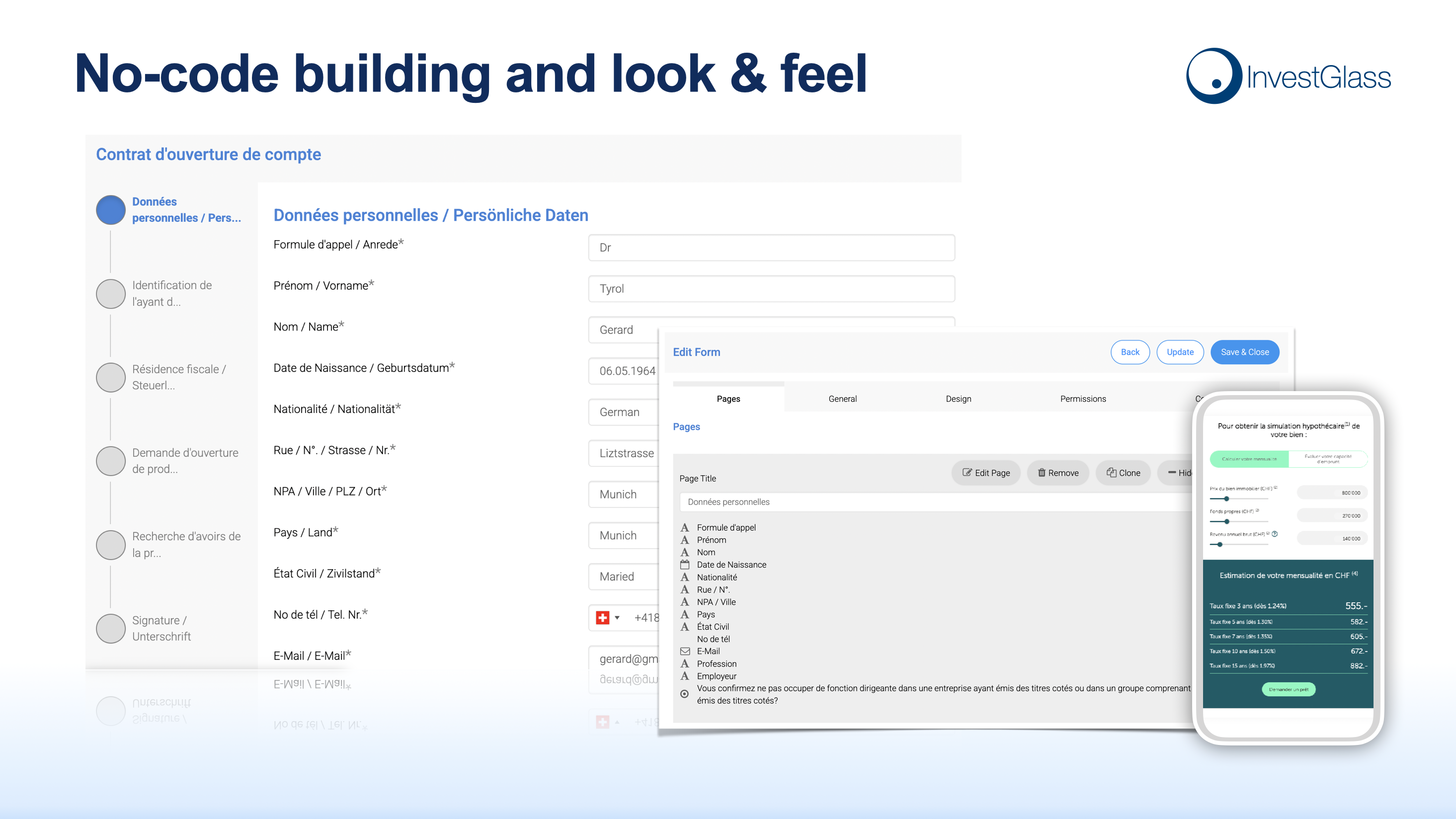
InvestGlass allows configuration of onboarding journeys, periodic KYC reviews, client birthday messages, and event invitations through visual workflow builders. A typical mid size wealth manager can standardise its quarterly review process with automated task creation and email templates within weeks.
Conditional logic can route VIP clients to senior advisors while retail clients receive portal based updates. This segmentation ensures resources focus where they create the most value.
All workflows maintain an audit trail to satisfy internal and external auditors. Every action is logged, every decision is traceable, and compliance teams have the right tools to verify adherence to internal policies.
Leveraging AI And Client Portals For Secure Digital Engagement
A secure client portal is now expected in wealth management, especially following the shift to remote interactions after 2020.
InvestGlass offers a branded portal where clients can upload documents, view reports, sign forms, and message advisors in a secure environment. This digital channel operates through proper communication channels that clients trust.
AI generated summaries can transform complex portfolio reports into concise explanations for clients inside the portal. Rather than dense tables and technical jargon, clients receive clear narratives about their financial position.
Portal usage data feeds back into the CRM, informing which clients prefer digital self service versus phone based conversations. This insight helps relationship managers tailor their approach to individual preferences.
End to end encryption and Swiss data centres support stringent privacy expectations for European and international clients.
Measuring Success Of CRM Based Client Engagement
To ensure your customer engagement strategy is delivering real value, it’s essential to measure the success of CRM-based client engagement using clear, actionable metrics. Tracking the right engagement metrics allows financial institutions to understand how well they are meeting customer expectations and where there is room for improvement.
Key performance indicators (KPIs) such as customer lifetime value, customer retention rate, and customer satisfaction scores provide a high-level view of the impact of your engagement efforts. Additionally, monitoring engagement metrics like email open rates, click-through rates, and social media engagement offers deeper insights into customer behavior and preferences throughout the customer journey.
By analyzing these metrics, you can identify which touchpoints and engagement strategies are most effective at driving client engagement and loyalty. For example, a spike in portal logins after a personalized market update may indicate that clients value timely, relevant information. Conversely, low response rates to certain communications can signal a need to adjust your approach or content.
A successful customer engagement strategy is not static it evolves based on data. Regularly reviewing engagement metrics enables you to refine your CRM strategy, automate follow-ups, and allocate resources where they will have the greatest impact on customer satisfaction and long-term customer lifetime value. This data-driven approach ensures that every client interaction is purposeful, personalized, and aligned with both customer needs and business objectives.
Ultimately, measuring the success of CRM-based client engagement empowers your team to deliver a superior customer experience, foster deeper relationships, and build a loyal customer base that drives sustainable growth.
Getting Help With CRM: Training, Support And Resources
Implementing a customer relationship management CRM system is only the first step ensuring your team can use it effectively is what drives real customer engagement and satisfaction. Comprehensive training, ongoing support, and access to the right resources are essential for maximizing the value of your CRM strategy.
Most CRM software providers offer a range of support options, including online tutorials, webinars, user guides, and community forums. These resources help sales reps and support teams stay up to date with the latest features, best practices, and industry trends. For more tailored assistance, businesses can engage CRM consultants or experts to align the system with specific engagement goals and pain points.
Effective CRM training empowers your team to automate follow-ups, deliver personalized interactions, and ensure consistency across all customer touchpoints. This not only saves time but also enhances the overall customer experience by reducing manual errors and missed opportunities. Regular workshops and refresher sessions help teams adapt to new features and evolving customer expectations, ensuring your CRM strategy remains relevant and effective.
Investing in the right tools and support infrastructure is crucial for long term success. By prioritizing CRM training and leveraging available resources, businesses can address challenges proactively, maintain high standards of customer engagement, and drive sales growth. Ultimately, a well-supported CRM initiative enables your organization to build lasting relationships, respond to customer needs efficiently, and stay ahead in a rapidly changing market.
Making CRM Based Client Engagement Your Competitive Edge
Consistent, data driven engagement differentiates financial institutions in crowded markets. When clients experience proactive service, personalized interactions, and seamless digital experiences, they become brand advocates who refer colleagues and friends.
Combining digital convenience with human advisory strength is critical for banks, asset managers, and insurers. Technology handles the routine so advisors can focus on the strategic conversations that build relationships and create loyalty.
A CRM like InvestGlass turns engagement from a collection of individual efforts into a firm wide, repeatable system. This systematisation is essential for long term success in regulated industries.
Looking ahead to 2025 and 2026, regulations will continue evolving and customer expectations will keep rising. Institutions that invest in structured engagement now position themselves to adapt smoothly rather than scrambling to catch up.
Review your current CRM setup and explore how InvestGlass could support your engagement goals. The difference between transactional relationships and trusted partnerships often comes down to the systems that enable consistent, meaningful client interactions.
Next Steps For Financial Institutions Adopting CRM Engagement
Start with a 60 to 90 day pilot focused on one segment, such as independent asset managers or private banking clients. This contained scope allows testing without overwhelming the organisation.
Map current engagement journeys and identify manual steps that can be digitised inside InvestGlass. Common starting points include:
- Automating onboarding document collection
- Standardising quarterly review scheduling
- Creating templated follow up sequences for common scenarios
- Building dashboards for engagement metrics and at risk accounts
Set clear metrics before the pilot, such as reduction in onboarding time, increase in review meetings held, or portal adoption rates. These benchmarks allow objective evaluation of results.
Involve compliance and IT early to align on data residency, access rights, and audit requirements for the CRM. Their input ensures the implementation meets all necessary standards from day one.
Book a demo or workshop to design a tailored engagement model using InvestGlass. The platform adapts to your specific processes, client segments, and regulatory requirements.
FAQ
This section addresses practical questions about CRM implementation and engagement strategy that extend beyond the topics covered above.
How long does it take to see better client engagement after implementing a CRM like InvestGlass
Firms usually see administrative time savings within the first 30 to 60 days once onboarding workflows and templates are live. Sales reps and relationship managers notice immediate reductions in manual work.
Measurable improvements in meeting frequency, portal usage, and response times tend to appear within three to six months as teams adopt new processes and clients adapt to digital touchpoints.
Deeper impacts on retention and net new assets often become clear over a 12 to 18 month period as full yearly cycles are tracked. A focused pilot on one business line helps accelerate early results and builds internal confidence for broader rollout.
How can a bank migrate existing client data and documents into InvestGlass without disrupting service
Migration typically starts with a data audit of existing CRMs, spreadsheets, and core banking exports. This assessment identifies data quality issues and mapping requirements before any transfer begins.
Data is cleaned and mapped to InvestGlass fields, including households, legal entities, and beneficial owners. Historical documents such as agreements and KYC files can be imported in batches and linked to the correct client records.
Migrations are often done in stages by segment or branch to minimise risk and allow teams to adapt gradually. This phased approach ensures service continuity while building toward complete centralisation.
Does using CRM for engagement create additional compliance risks for regulated institutions
A correctly configured CRM like InvestGlass usually reduces compliance risk by centralising records and maintaining full audit trails. Every interaction becomes traceable and reviewable.
Role based access control ensures only authorised staff see sensitive data, which is important for private banking and family offices. Permissions can be configured down to individual field level when necessary.
Hosting in Switzerland or on premise helps address data residency and banking secrecy requirements in several jurisdictions. Firms should involve compliance in defining retention periods, approval workflows, and template libraries inside the CRM.
Can smaller wealth managers or independent financial advisors benefit from CRM engagement, or is it only for large banks
Smaller firms often gain the most because they replace fragmented tools with one platform covering onboarding, KYC, portfolios, and communication. The efficiency gains are proportionally larger when starting from manual processes.
InvestGlass offers configuration that fits independent asset managers who need to demonstrate professionalism and control to regulators and clients. The platform scales to organisational size rather than requiring enterprise complexity.
Automation helps small teams maintain regular check ins with hundreds of clients without hiring additional staff. Starting with a limited feature set keeps costs and complexity manageable for boutiques while delivering immediate value.
How does a CRM based engagement strategy adapt to changing regulations and client expectations after 2024
Workflows and templates in InvestGlass can be updated centrally when regulations change, such as new KYC or suitability requirements taking effect in 2025. Updates propagate across the organisation without rebuilding individual processes.
Dashboards can be adjusted to track new compliance indicators or engagement patterns as management priorities evolve. The flexibility of a configurable CRM keeps practices aligned with both regulators and the latest trends in client service.
Customer feedback captured through surveys or portal messages can inform refinements to communication frequency and content style. This continuous optimisation ensures strategies remain effective as expectations change, supporting long term relationships and brand loyalty.

