
Customer due diligence (CDD) sits at the core of anti-money laundering obligations for banks, wealth managers, insurers and fintechs across Europe. In the UK, the Money Laundering Regulations 2017 (as amended) require firms to verify customer identities and assess associated risks before establishing a business relationship. The EU’s Fifth and Sixth Anti-Money Laundering Directives impose similar demands, while Switzerland’s AMLA mandates risk-based due diligence under FINMA supervision. Manual processes built on spreadsheets, email threads and paper files simply cannot keep pace with institutions onboarding thousands of clients each year. Automation tools help automate repetitive tasks such as updating project statuses and screening against sanctions lists, significantly improving efficiency and accuracy.
Customer due diligence automation refers to the use of digital workflows, configurable rules engines and API integrations to perform CDD, KYC and KYBチェック with minimal human intervention. This approach transforms a slow, error-prone cost centre into a controlled, auditable operation. InvestGlass is a Swiss 君主 CRM and automation platform that helps financial institutions automate customer due diligence while keeping data in Europe and outside American and Chinese cloud ecosystems. Other financial institutions, such as banks and insurers, are also leveraging automation to streamline their CDD processes. A mid-size European bank, for instance, reduced onboarding from 28 days to 3 days by deploying automated 本人確認 and risk profiling, demonstrating how automation scales regulatory compliance and also helps institutions meet data analysis and reporting needs for compliance purposes without compromising rigour.
What is customer due diligence (CDD) automation?
CDD automation is the end-to-end digitisation and orchestration of due diligence steps: data capture, identity verification, risk scoring, screening and approvals. Rather than compliance teams manually copying data between systems, modern solutions pull information from multiple data sources, such as financial records, regulatory filings, and public databases, including official registries, credit bureaus, sanctions lists and internal databases through APIs. This data collection happens in seconds rather than days.
Automated solutions can also perform initial screening of clients or vendors against global compliance lists during the onboarding process.
Configurable rules engines evaluate each case against defined thresholds. Low-risk clients can receive straight-through processing, while high-risk cases escalate for enhanced due diligence or decline outright. Automated alerts and tasks reach compliance officers only when human judgment is genuinely required. With InvestGlass, these automated workflows run directly inside a 金融サービスCRM, eliminating the silos that form when processes scatter across disconnected tools.
Why CDD automation is crucial in 2024
Regulators across the EU, UK and Switzerland have tightened expectations under frameworks like AMLD6, the UK Economic Crime and Corporate Transparency Act 2023 and FINMA Circular 2024/3. These rules demand clearer 受益権 identification, real-time monitoring and robust audit trails. Non-compliance carries serious consequences, with average fines reaching €4.2 million per violation in Europe according to Fenergo’s 2023 State of KYC report.
Client expectations have shifted too. デジタル・オンボーディング has become standard since 2020, and processes exceeding five minutes trigger abandonment rates of 40 to 60 percent per Deloitte benchmarks. For high-volume institutions, each abandoned application translates to lost revenue. Manual effort also creates inconsistent risk assessment decisions, with internal audits revealing up to 30 percent variance in how different analysts rate the same client.
Automation addresses these challenges by enabling continuous compliance at scale. For institutions seeking a sovereign alternative to American and Chinese platforms, InvestGlass delivers CDD automation within Swiss or on-premise environments that protect client data sovereignty.

Key building blocks of customer due diligence automation
Effective customer due diligence automation relies on integrating the key components of CDD within a coherent platform. The main building blocks include digital onboarding, data collection from external data sources, screening against sanctions and adverse media, risk scoring, workflow management and record keeping. These key components are designed to help institutions adhere to compliance standards and regulatory requirements.
Each component should be configurable by compliance teams without heavy IT projects, ideally through visual designers and rules engines. InvestGlass provides all core building blocks natively within its Swiss-hosted CRM, simplifying deployment and governance for regulated institutions.
Digital onboarding and data capture
Clients start the customer due diligence process through digital onboarding forms accessed via a secure web portal or mobile-friendly interface. Forms adapt dynamically based on segment, jurisdiction, client type and risk level. A retail banking client might complete a short identification questionnaire in ten minutes, while a high net worth individual faces multi-step questions probing source of wealth, tax residencies under CRS and FATCA, and beneficial ownership details.
InvestGlass digital onboarding allows firms to design these forms without coding, supporting British English and other languages as required. Automated collection covers identification documents, proof of address and UBO declarations, feeding directly into the CRM record.
Identity verification and business verification
Automated identity verification checks documents, biometrics and registry data to confirm that a person or entity is genuine. For individuals, this includes document verification using OCR, liveness checks to prevent spoofing, and database verification with local population registers where available.
For businesses, KYB processes retrieve company records, directors and 受益者 from official registries such as Companies House in the UK or Zefix in Switzerland. A typical corporate onboarding flow might:
- Auto-fetch incorporation documents and director lists
- Screen shareholders holding 25 percent or more
- Flag mismatches between declared and registry data
InvestGlass orchestrates external verification providers through APIs while storing results and evidence in a sovereign CRM, maintaining a complete audit trail.
Contextual data gathering and adverse media
Robust due diligence requires going beyond identity documents to gather contextual information like past transactions, source of wealth and news coverage. Automated adverse media screening scans reputable news sources, court records and regulatory publications, applying language filters and relevance scoring to reduce noise.
Automation can pre-classify articles and present only genuinely relevant hits to compliance analysts. When a politically exposed person appears in adverse media relating to corruption allegations, InvestGlass workflows can attach summaries directly to the client record and trigger enhanced due diligence steps automatically, reducing manual review time significantly.
Watchlist and sanctions screening
Watchlist screening checks clients against sanctions, PEP lists and other high-risk databases. Key data sources include UN, EU and OFAC sanctions lists, national lists and commercial PEP databases like World-Check. Automated systems perform name matching, fuzzy matching and ongoing monitoring for list updates rather than one-time manual checks.
Consider a scenario where a common name generates a potential match. The automated workflow escalates the case to a compliance analyst with all relevant context attached. The analyst resolves the match in hours rather than days, documenting their decision within the CRM. InvestGlass centralises match results, decisions and justifications, reducing false positives through intelligent matching algorithms.
Risk scoring and customer profiling
Automated risk scoring combines multiple factors: geography based on FATF high-risk lists, product type, transaction velocity, occupation and ownership structure. Compliance teams define rule-based scoring models where, for example, a retail client in a low-risk jurisdiction scores 10 points while an offshore corporate with PEP connections scores 80 or higher, triggering EDD processes.
More advanced deployments incorporate machine learning models to refine the customer’s risk profile over time while maintaining human oversight and override capabilities. InvestGlass lets institutions configure scoring models aligned with their risk appetite and local regulations, with full auditability of every calculation.
Workflow orchestration and approvals
Automated workflows route cases for review, EDD or approvals based on risk scores and screening outcomes. Tasks are assigned to front office, compliance or senior management based on role and jurisdiction. Service level agreement timers, reminders and escalation rules ensure that initial onboarding or periodic reviews complete on time.
For complex offshore structures involving multiple jurisdictions, automated escalation paths route the case through specialist compliance reviewers before final approval. InvestGlass provides a visual workflow builder so compliance leaders can adjust steps quickly when regulatory requirements change.
Audit trails, reporting and record keeping
Regulators expect complete, accessible records of CDD and EDD decisions, including data sources consulted and reasoning applied. Automation logs every action, document, screening result and risk score change with timestamps and user information.
Configurable reports and dashboards cover metrics like reviews overdue, alerts resolved and risk distribution across the client portfolio. When European regulators request evidence of compliance, InvestGlass stores all documentation within a sovereign environment, simplifying supervisory inspections and cross-border data control.
Enhanced Due Diligence (EDD) in Automated CDD
Enhanced Due Diligence (EDD) is an essential element within the automated customer due diligence (CDD) process, particularly when dealing with high-risk customers. EDD goes beyond standard due diligence by requiring a deeper investigation into a customer’s financial activities, geographic exposure, and ownership structures. Automated EDD leverages advanced analytics and machine learning models to process and analyse vast amounts of data from multiple sources, including external data sources such as sanctions lists, politically exposed person (PEP) databases, and adverse media screening.
By integrating EDD into the automated CDD process, compliance teams can more effectively identify potential risks associated with money laundering and financial crime. Automated customer due diligence systems can flag high-risk customers for further review, ensuring that enhanced due diligence steps are triggered when necessary. This approach not only strengthens risk assessment processes but also helps financial institutions maintain regulatory compliance by providing a robust audit trail and consistent application of due diligence standards.
The use of machine learning and advanced analytics in EDD processes enables financial institutions to continuously monitor customer activity, adapt to emerging threats, and respond swiftly to changes in a customer’s risk profile. As a result, automated CDD platforms can deliver a more comprehensive and proactive approach to managing customer due diligence, reducing the likelihood of regulatory breaches and supporting a strong compliance culture.
Advanced Analytics and Machine Learning in CDD Automation
Advanced analytics and machine learning models are transforming the way financial institutions approach customer due diligence (CDD) automation. These technologies empower compliance teams to analyse large volumes of customer data, transaction histories, and information from external data sources with unprecedented speed and accuracy. By applying machine learning algorithms, institutions can detect unusual patterns and anomalies in customer behaviour that may indicate potential risks or suspicious activity.
Risk assessment processes benefit significantly from the ability to aggregate and interpret data from multiple sources, enabling a more holistic view of each customer’s risk profile. Advanced analytics tools can help reduce false positives by distinguishing between genuine threats and benign anomalies, streamlining the CDD process and allowing compliance teams to focus on cases that truly require attention.
Furthermore, machine learning models can be continuously trained and refined as new data becomes available, ensuring that risk monitoring remains effective in the face of evolving regulatory requirements and emerging financial crime typologies. By integrating advanced analytics into the CDD process, financial institutions can ensure compliance, enhance their ability to identify and mitigate risks, and improve the overall efficiency of their compliance operations.
Managing False Positives in Automated CDD
False positives are a common challenge in automated customer due diligence (CDD) processes, often resulting in unnecessary investigations and delays for customers who do not pose a genuine risk. These occur when automated systems incorrectly flag a customer as high-risk based on incomplete or ambiguous data. To address this, compliance teams can deploy machine learning models that analyse customer data and behaviour in greater depth, refining risk profiles and reducing the likelihood of false positives.
Advanced analytics play a crucial role in distinguishing between legitimate alerts and those that do not warrant further action. By leveraging data from multiple sources and applying sophisticated algorithms, automated CDD systems can provide a more accurate assessment of customer risk. Additionally, incorporating multiple review stages within the automated customer due diligence process allows for human oversight, ensuring that potential risks are evaluated appropriately and that genuine customers are not unduly impacted.
By adopting these strategies, financial institutions can minimise the operational burden of false positives, improve the customer experience, and maintain the integrity of their customer due diligence CDD processes.
From periodic reviews to continuous monitoring
Traditional CDD operated on fixed periodic review cycles, perhaps annually for high-risk customers and every three years for standard clients. Modern automation shifts this paradigm toward ongoing monitoring driven by material changes in behaviour or external data.
Automated systems monitor transactions, ownership changes, sanctions list updates and adverse media in near real-time. Risk scores recalculate automatically when new information appears. If an existing client is added to an OFAC sanctions list, daily API syncs detect the change and trigger immediate account review or freezing.
InvestGlass supports both scheduled reviews and event-driven recalculations based on configurable triggers. This continuous monitoring approach catches the 70 percent of risk events that occur post-onboarding, according to Deloitte research, rather than waiting for the next periodic review.
Compliance, regulation and policy alignment
CDD automation must align with local and cross-border regulations including EU AML directives, UK Money Laundering Regulations and FINMA guidance. Policies translate into configurable rules, decision trees and checklists within the platform.
Institutions can maintain different workflows and thresholds for different entities, branches or countries while using one central system. When a new Swiss regulatory circular tightens requirements for digital assets, InvestGlass rule updates can deploy within days rather than months. This agility helps institutions stay ahead of regulatory expectations rather than scrambling to catch up.
Data sovereignty and security in automated CDD
Automated CDD involves processing highly sensitive identity, financial and behavioural data. This raises sovereignty and privacy concerns, particularly when using American or Chinese cloud providers subject to extraterritorial laws like the US CLOUD Act.
GDPR Articles 44-50 impose strict rules on transferring personal data outside the EU. Swiss data protection law adds further requirements for financial institutions. A European bank evaluating a global American CRM for CDD automation might face 30 percent higher sovereignty audit costs and ongoing legal uncertainty about data access.
InvestGlass is built as a Swiss sovereign CRM and automation platform, offering Swiss hosting and on-premise deployments so institutions retain full control over client data. This sovereignty-focused approach is particularly relevant for European private banks, public sector organisations and institutions reluctant to place KYC data on foreign hyperscale clouds.
Benefits of customer due diligence automation
The measurable benefits of automated CDD span efficiency, consistency and client experience. Institutions report reducing manual effort by up to 80 percent, cutting onboarding from weeks to days, and achieving straight-through processing rates of 85 percent for low-risk cases. AI-driven screening reduces false positives by 50 percent through fuzzy matching and relevance scoring.
Consistent risk decisions improve audit pass rates, with some deployments reaching 98 percent compliance on internal reviews. Client abandonment drops by 45 percent when onboarding completes in minutes rather than weeks. Perhaps most importantly, automation frees compliance specialists to focus on complex, high-risk cases and intelligent automation of repetitive tasks rather than data entry.
With InvestGlass, these benefits combine with sovereign hosting, integrated CRMとポートフォリオ management capabilities, reducing vendor sprawl and total cost of ownership.
Challenges of Implementing CDD Automation
While the benefits of automated customer due diligence (CDD) are clear, implementing these solutions presents several challenges for financial institutions. One of the most significant hurdles is ensuring the quality and completeness of data, particularly when relying on external data sources that may vary in accuracy and reliability. High-quality data is essential for effective risk assessment and for the successful deployment of machine learning models and advanced analytics.
Another challenge lies in the investment required for technology and infrastructure. Building and maintaining automated CDD processes demands resources, including skilled personnel to manage machine learning models and ensure ongoing compliance with regulatory requirements. Compliance teams must also ensure that automated systems are designed to meet both current and future regulatory expectations, with the flexibility to adapt as rules evolve.
Human error remains a risk, especially if automated workflows are not properly configured or monitored. To mitigate this, financial institutions can partner with managed services providers who specialise in designing and implementing automated CDD solutions tailored to specific regulatory and operational needs. By addressing these challenges proactively, institutions can unlock the full potential of automated customer due diligence, ensuring robust compliance and effective risk management across their operations.
導入のベストプラクティス
Implementing automated customer due diligence (CDD) processes successfully requires a strategic approach that balances technology, regulatory compliance, and operational efficiency. One of the most important best practices is establishing ongoing monitoring of customer risk profiles. By continuously tracking changes in customer behaviour and external risk indicators, organisations can respond swiftly to potential risks and ensure that their risk assessment processes remain robust.
Data quality is another cornerstone of effective CDD automation. Accurate and reliable data collection, supported by multiple data sources, is essential for verifying customer identities and conducting thorough due diligence. Leveraging a risk-based approach allows compliance teams to focus resources on high risk customers and transactions, using machine learning models to identify patterns and potential risks that may otherwise go undetected.
Empowering compliance teams with the right training and tools is vital. Teams must be equipped to interpret automated customer due diligence results, oversee the cdd process, and make informed decisions when manual review is required. Automated workflows should be implemented to streamline the due diligence process, reducing manual effort and minimising the risk of human error.
Continuous testing and validation of automated CDD systems is also essential. Regularly reviewing and updating machine learning models and automated workflows ensures that the system remains effective in identifying potential risks and meets evolving regulatory requirements. By adhering to these best practices, organisations can build a resilient and compliant automated CDD framework that supports effective risk management and helps prevent money laundering and financial crime.
Implementing CDD automation with InvestGlass
A pragmatic implementation starts with process mapping: document current CDD workflows, identify manual bottlenecks and review policy alignment with regulatory obligations. InvestGlass consultants help configure digital onboarding forms, screening integrations and risk scoring models tailored to each institution.
Best practices include piloting with one business line, perhaps retail banking, before expanding to wealth management or insurance. User training for リレーションシップ・マネージャー and compliance staff takes approximately one day per module. Iteration based on feedback refines workflows before full rollout.
A European wealth manager might phase implementation over six months, achieving 70 percent automation by the second quarter. InvestGlass deploys in Swiss data centres or on-premise, allowing tight integration with existing core banking and document management systems.
Use cases for automated CDD in regulated industries
Private banks serving high net worth individuals use automated CDD to streamline source of wealth verification and politically exposed person screening. Multi-step questionnaires capture complex ownership structures while adverse media monitoring runs continuously in the background.
Retail banks processing high volumes of initial onboarding applications benefit from straight-through processing for standard risk profiles. Insurance distributors automate policyholder KYB checks, verifying corporate beneficial owners against commercial registers. Asset managers screen fund investors across multiple jurisdictions, maintaining consistent risk assessment processes regardless of location.
Fintechs embedding financial services into their platforms use automated customer verification to meet regulatory requirements without building compliance infrastructure from scratch. Public sector development finance institutions, which require strict data sovereignty, benefit from InvestGlass’s Swiss-hosted solution that keeps sensitive data within controlled environments.
How InvestGlass differentiates from global CDD and CRM platforms
Many CDD automation tools tie into American or Chinese cloud ecosystems, creating sovereignty and governance concerns for European institutions. Data stored with hyperscalers may be subject to foreign government access requests, complicating compliance obligations and client trust.
InvestGlass offers Swiss ownership and hosting, an on-premise option, financial services specialisation, integrated CRM plus portfolio management, and strong compliance workflow capabilities. The platform avoids data mining business models and serves organisations that want strict control over customer data and configurations.
Unlike generic CRMs that require extensive customisation for financial services, InvestGlass provides native building blocks for the CDD process, risk management, and ongoing customer monitoring. Institutions can customise automation using no-code and low-code tools without relying on external development teams, reducing implementation time and maintaining data quality throughout.
Future of CDD Automation
The future of customer due diligence automation is set to be shaped by rapid technological advancements, shifting regulatory requirements, and evolving customer expectations. Machine learning and artificial intelligence will play an increasingly central role in CDD automation, enabling more sophisticated risk assessment and faster, more accurate decision-making. These technologies will allow compliance teams to analyse vast amounts of customer data and transaction histories, enhancing the detection of financial crime and unusual patterns.
Real-time monitoring and analysis of customer risk profiles will become the norm, as regulatory expectations demand more proactive and dynamic risk management. Automated workflows will continue to evolve, becoming more integrated and seamless, with minimal manual intervention required. This will not only improve operational efficiency but also ensure that compliance teams can focus on high-value tasks and complex cases.
Data quality and management will remain a top priority, with organisations investing in robust data collection and validation processes to support reliable customer due diligence. As regulatory requirements become more stringent, the importance of maintaining compliance and meeting audit standards will drive further innovation in CDD automation.
By embracing these trends, financial institutions can ensure that their automated CDD processes remain effective, efficient, and fully aligned with regulatory expectations, positioning themselves at the forefront of risk assessment and financial crime prevention.
Next steps: starting your customer due diligence automation journey
Review your current CDD processes to identify where manual processes create bottlenecks and compliance issues. Map your regulatory obligations under applicable AML frameworks and define clear requirements before selecting technology.
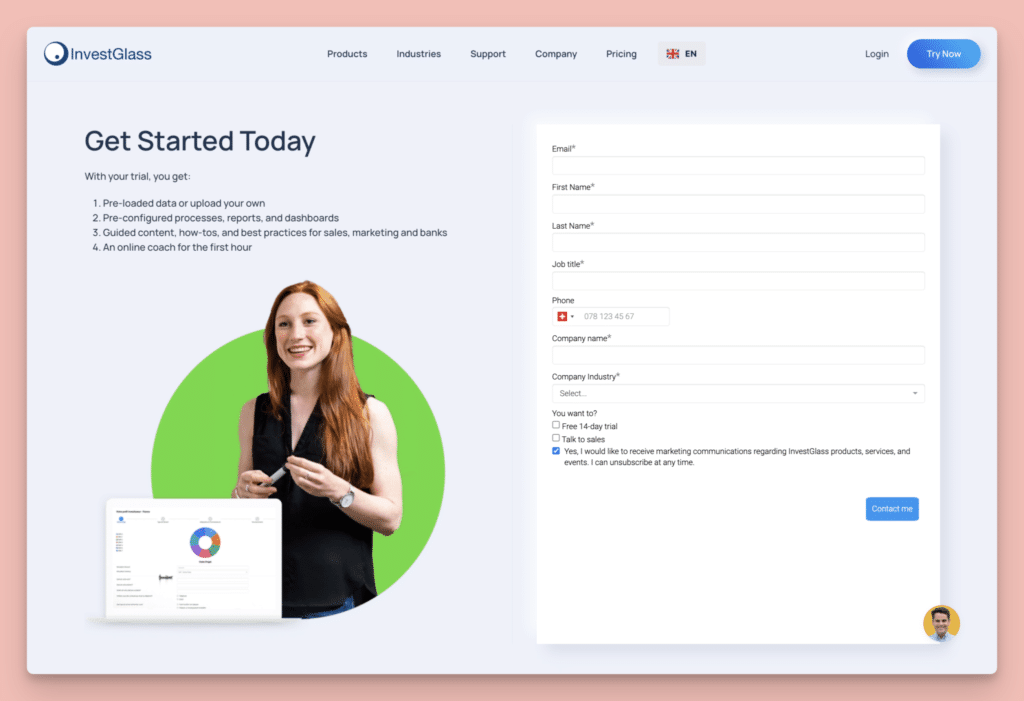
Book a discovery session or demo with InvestGlass to see digital onboarding, screening orchestration and risk scoring in a live environment. The team can provide a proof of concept using anonymised or synthetic data, allowing compliance teams to validate workflows, analyze data outputs and test reporting capabilities.
CDD automation implemented thoughtfully on a sovereign Swiss platform reduces potential risks while protecting the sovereignty of client data. For financial institutions seeking a modern solution outside American and Chinese ecosystems, InvestGlass delivers the unique business capabilities required for effective customer due diligence CDD in a rapidly evolving regulatory landscape.
結論
Automated customer due diligence (CDD) is now an indispensable element of any robust anti-money laundering (AML) programme. By leveraging automation, organisations can conduct thorough risk assessment, maintain ongoing monitoring, and ensure compliance with ever-evolving regulatory requirements. Automated CDD processes significantly reduce manual effort and the risk of human error, while enabling compliance teams to focus on complex due diligence cases and strategic risk management.
Key components such as data quality, automated workflows, and the expertise of compliance teams are essential for building a reliable customer due diligence cdd framework. Ensuring that these elements are in place allows organisations to meet their compliance obligations, protect against money laundering and financial crime, and maintain the integrity of their customer risk profiles.
As the regulatory landscape and customer expectations continue to evolve, it is crucial for organisations to invest in and refine their CDD automation strategies. By doing so, they can safeguard their operations, protect their reputation, and contribute to a safer financial system. Automated CDD is not only a compliance necessity but also a strategic advantage in the ongoing fight against financial crime.


