
Closing turns potential into reality and prospects into customers. Yet many sales reps have trouble closing because they rely on instinct rather than a structured approach. This article walks through ten practical close examples with scripts you can adapt today, explains when each technique helps most, and shows how InvestGlass can track and optimise every closing attempt across your sales pipeline.
What Is a Sales Close? (Quick Definition With a Concrete Example)
A sales close is the moment a prospect commits. In a modern B2B context, think of a French fintech company in Paris that has moved through lead qualification, discovery calls, and a product demo. On 19 June 2026, the head of operations sends a signed order form for a 12-month SaaS contract. That signature is the close. Closing is the final step in the sales process, and without closing, there are no sales and no revenue.
A sales closing technique is not a single question thrown at the end of a meeting. It is a repeatable framework that guides prospects from interest to decision. The idea is to combine preparation, value framing, and a clear ask into a sequence that feels natural rather than forced. A closing should always direct the prospect toward a clear next step, whether that is a signed contract, an approved purchase order, or a confirmed start date.
Here is a concrete close example in dialogue form:
Sales rep: “Based on our demo, you preferred the team dashboard and regulatory audit module. If we prepare the 12-month InvestGlass agreement, would you prefer to begin on 1 July or 1 August?”
This fits into a modern sales pipeline that typically moves from lead to qualified lead, then to opportunity, proposal, and finally the closing stage where the deal is either won or lost. In the past, the dominant philosophy was “Always Be Closing,” a high-pressure motto that treated every conversation as a chance to push for a yes. Today, 84% of business buyers expect sales reps to be trusted advisors, not aggressive pitch machines. The shift is toward “Always Be Helping,” where empathy and value drive the conversation and closing emerges from trust rather than coercion.

10 Close Examples: Core Sales Closing Techniques That Still Work in 2026
This section lists ten named closing techniques, each with a brief definition, a sample script, and a scenario showing how to use it. Effective closing techniques help guide prospects to a decision, but no single method works universally. The best sales reps combine approaches and test them systematically.
These techniques can be combined and A/B tested inside a CRM workflow. In InvestGlass, for example, you can log which technique was used on each deal and compare win rates across your team over 60 to 90 days. Whether you favour the assumptive close, summary close, scale close, puppy dog close, or empathy close, the key is to match technique to buyer.
Average B2B close rates sit around 22 to 30 percent depending on vertical, and roughly 80 percent of deals require at least five follow-up touches. Knowing your techniques inside out gives you the edge.
1. The Assumptive Close (Presuming the Yes)
The assumptive close assumes the prospect will buy. You speak and act as if the decision has already been made, moving the conversation toward logistics rather than deliberation. Offering a clear choice can frame the agreement as a natural next step.
Close example:
“Since you preferred quarterly reporting in last week’s demo, I’ll set your InvestGlass workspace to quarterly dashboards. Should we start the subscription on 1 July or 1 August?”
This technique works best after strong buying signals: budget confirmed, decision-maker present, and positive feedback on ROI. It suits fast-moving founders and buyers who have already walked through multiple demos and voiced enthusiasm.
Avoid using the assumptive close too early in the conversation. With sceptical or highly analytical buyers, presuming the yes before discovery is complete can sound close to arrogant. If you sense hesitation, switch to a softer approach.
Reps should log assumptive close attempts as a custom field in InvestGlass to track win rate by technique. Over time, this data reveals whether the technique is a sound close for your particular buyer segments.
2. The Summary Close (Recap Before You Ask)
The summary close recaps benefits before asking for the sale. Summarising discussed points is essential when closing conversations because it reassures the buyer that you have listened and understood their priorities.
Close example:
“You told me your team loses 10 hours a week reconciling Excel. With InvestGlass automations, you cut that to 2 hours and stay MiFID II compliant. At €1,200 per month under a 12-month plan, are you ready to move forward?”
This technique shines in complex sales cycles of three to six months, especially with multiple stakeholders. Risk-averse CFOs and compliance officers feel reassured when all the points they care about are restated clearly before the ask.
Be careful not to summarise in generic terms. Each recap must mirror the specific pains the prospect raised. InvestGlass pipelines make it straightforward to attach a written summary in the opportunity notes, ensuring every member of your team sees the same narrative before the final step.
3. The Scale Close (1 to 10 Readiness Check)
The scale close asks prospects to rate their readiness to buy, typically on a scale from 1 to 10. It measures deal temperature and surfaces hidden objections.
Close example:
“On a scale from 1 to 10, how ready are you to roll out InvestGlass to your relationship managers this quarter?”
How you respond depends on the number:
- 1 to 6: Significant misfit or missing information. Return to discovery.
- 7 to 8: One or two lingering concerns. Address them directly.
- 9: Ask, “What would make this a 10?”
- 10: Move to contract.
In InvestGlass, map that score to a custom numeric field so your pipeline dashboard displays readiness scores visually. This technique is especially powerful in remote selling, where utilising non-verbal cues can reinforce closing remarks in person but is simply not possible over a video call. The number gives you a proxy for body language.
4. The Puppy Dog Close (Let Them “Take It Home” First)
The puppy dog close offers a trial to encourage purchase. The name comes from pet shop logic: let a family take the puppy home for a weekend, and they will rarely bring it back. In SaaS, the equivalent is giving the prospect genuine access to the product.
Close example:
“Let’s activate a 21-day InvestGlass trial connected to your real client list. If it doesn’t save your advisors at least five hours a week by 10 July, we’ll close the account. No card needed.”
The psychology behind the puppy dog close rests on loss aversion and habit formation. Once a team integrates a tool into daily workflows, the cost of reverting often feels greater than the cost of subscribing. Research suggests that free-trial approaches can increase close rates by approximately 34 percent.
This technique fits best with subscription services, tools that deliver visible ROI within days, and buyers who need to see the product in their own space before committing. InvestGlass can automatically convert a trial to a live account with pre-built workflows once engagement crosses a defined threshold.
5. The Empathy Close (Lead With Understanding)
The empathy close validates the prospect’s feelings and constraints before proposing a way forward. It is not about lowering the price first but about lowering emotional risk and building trust.
Close example:
“I understand signing a three-year InvestGlass contract during a volatile stock market feels risky. Several Swiss private banks felt the same in 2024, so they started on a 12-month plan with an opt-out clause. Would a similar step-by-step approach make this easier for you?”
This technique helps most in high-ticket deals over €50,000, long contracts, and situations where the buyer has had bad vendor experiences in the past. Acknowledging the prospect’s feelings shows you see them as more than a revenue target.
Record personal concerns such as “previous CRM rollout failed” in InvestGlass contact records. This enables consistent empathetic follow up from any rep or manager who touches the account, and it ensures that close ties with the client are maintained across your organisation, from wealth managers to Swiss therapy practices using specialised CRM workflows.
6. The Question Close (Let Them Close Themselves)
The question close uses pointed, open-ended questions to guide prospects toward articulating their own reasons to buy. Instead of telling, you ask. The buyer draws their own conclusions.
Close examples:
“If we could reduce manual KYC checks by 60 percent with InvestGlass, how would that change your team’s workload in Q4 2026?”
“What would change for your auditors once MiFID II-compliant reports are generated automatically?”
This technique is especially effective with analytical buyers and decision committees who resist direct pressure. When someone sat close to the head of the table in a boardroom meeting verbalises the value themselves, the commitment runs deeper than anything a sales pitch could achieve.
The SAT Method, which stands for Summarise, Acknowledge, and Thank, helps acknowledge input and express gratitude when closing conversations. Pair a question close with this method: summarise what they said, acknowledge its importance, and then ask the next question. Reps should prepare a written list of five to seven high-impact closing questions and store them in InvestGlass email templates.
7. The Now-or-Never Close (Legitimate Urgency)
The now-or-never close uses a time-bound or quantity-bound incentive that is genuinely limited. Creating urgency in sales can anchor the process to a specific timeline.
Close example:
“Our 15 percent implementation discount for early adopters of the new InvestGlass AI scoring module ends on 30 June 2026. Would you like to secure that pricing this week?”
This technique works at quarter-end, during new feature launches, or when finance has approved temporary incentives. Artificial scarcity, however, destroys trust. If a buyer in town discovers the same “expiring” offer is still available two months later, your credibility is finished.
InvestGlass can timestamp offer expirations and trigger automated reminders, keeping follow-ups honest and consistent.
8. The Takeaway Close (Reverse Psychology)
The takeaway close involves suggesting that the solution, or certain features, may not be the right fit. This removes pressure and lets serious buyers argue for the purchase themselves, revealing true intent.
Close example:
“Given that your team is only three people and has no plans to scale beyond five advisors in 2026, a full InvestGlass enterprise licence might be overkill. We could start smaller, or it may be better to wait 12 months. What do you think?”
Use this technique sparingly. It only makes sense when you genuinely suspect a misfit. If the prospect pushes back and explains why they do need the full package, you have a much stronger signal than any assumptive close could provide.
If the takeaway confirms a genuine misfit, reps should mark the opportunity as “disqualified, timing” in InvestGlass rather than “lost.” This keeps the door opened for future re-engagement.
9. The Direct Close (Just Ask for the Sale)
The direct close is the simplest: a straightforward, respectful question. An effective sales pitch closes with confidence, and sometimes the most confident thing you can do is simply ask.
Close example:
“We’ve aligned on price, scope, and onboarding for InvestGlass. Are you comfortable signing the order form this week so we can start migration on 3 July?”
Ideal conditions include clear value demonstrated, objections handled, decision-maker in the room, and positive buying signals. Providing a polite closing signal like a direct ask can prevent awkward silences that often kill momentum. Sales pitches eliminate uncertainty using a direct, value-driven question, and avoiding the ask often leads to stalled deals.
InvestGlass can automatically trigger a contract e-sign link when an opportunity reaches a “verbal yes” stage, making the direct close frictionless.
10. The Ben Franklin Close (Pros and Cons on Paper)
Named after the mother of all decision-making methods attributed to Benjamin Franklin himself, this technique involves collaboratively listing pros and cons with the prospect to reach a rational, shared decision.
Close example: The sales rep shares their screen and creates a two-column list for “InvestGlass vs keeping spreadsheets”:
InvestGlass | Status Quo (Spreadsheets) |
|---|---|
Automated MiFID II reports | No extra licence cost |
8 hours saved weekly per advisor | Familiar to existing team |
Audit trail for regulators | No migration required |
Scalable across offices | Manual errors accepted |
This technique works well with analytical decision-makers and committees deciding on three-to-five-year technology commitments. Do not hide cons. Show them honestly and let the weight of pros speak for itself. The finished close document should be stored as an attachment in the InvestGlass opportunity for later reference during renewal discussions. |
How to Choose the Right Closing Technique for Each Prospect
No single closing technique works for every buyer, product, or market climate. The world of B2B sales is too diverse for one-size-fits-all scripts. Consider three dimensions when selecting your approach:
- Buyer personality: Analytical buyers respond to summary and Ben Franklin closes. Relational buyers value empathy closes. Decisive buyers appreciate direct and assumptive closes.
- Deal size: Deals under €10,000 can tolerate faster, more direct techniques. Enterprise deals over €50,000 usually require summary closes, empathy closes, and committee-oriented approaches.
- Sales stage: A scale close is useful early to gauge temperature. A direct close makes sense only when objections are resolved and you are drawing closer to a final decision.
Here are personas mapped to techniques:
- Analytical CFO: Summary close combined with Ben Franklin close.
- Fast-moving founder: Assumptive close followed by direct close.
- Budget-conscious buyer with past vendor failures: Empathy close paired with puppy dog close.
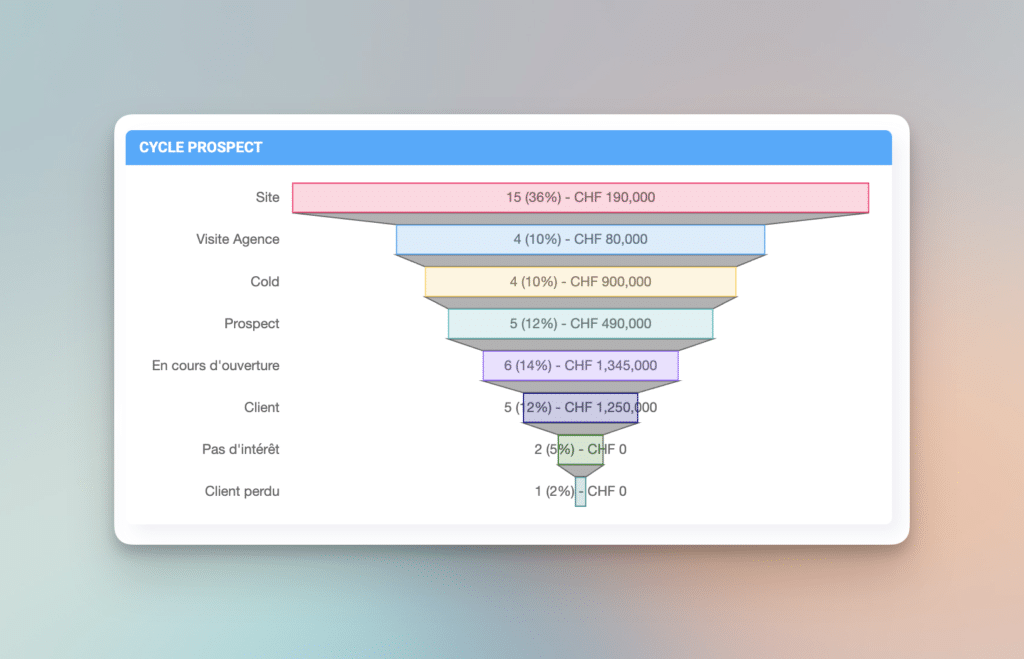
Build a closing playbook where reps pick two to three default techniques per persona and refine them over time. Use InvestGlass reports to compare win rates by logging a custom field for “primary closing technique used.” Over 60 to 90 days, patterns emerge that tell you which close example works best for each segment of your business.
Best Practices That Make Any Closing Technique More Effective
Discovery, value framing, objection handling, follow up, and the right technology multiply the impact of any formal closing technique. A great salesperson does not rely on scripts alone. These fundamentals make the difference between a close call that slips away and a deal that crosses the finish line.
Closing a conversation professionally means respecting both parties’ time. Setting upfront expectations at the start of a call can prevent long conversations that drift without purpose.
Know the Customer’s Real Problem Before You Close
Effective sales closing techniques start with accurate discovery. Before any close attempt, you should know the budget, authority, need, timeline, and hidden fears. Pay close attention to concerns about data migration, vendor lock-in, or regulatory compliance. Many deals lost late in the funnel trace back to poor discovery, where the rep tried an assumptive close while the buyer was still uncertain about implementation risks, an issue that also appears when deploying CRM for dental practices in Switzerland or other specialised vertical solutions.
Questions to answer in your CRM before any final close:
- What is the budget or financial limit?
- Who will approve the purchase?
- What must be true for this project to succeed?
- What risks concern you most?
- What timeline are you targeting?
InvestGlass allows reps to standardise discovery fields, ensuring no close is attempted without complete context. When you pull up a deal at the closing stage, every relevant detail is visible inside a Swiss-designed CRM for financial services and the bestes CRM für Privatbanken.
Frame Value, Not Just Features or Discounts
Every closing technique works better when the buyer sees ROI in concrete numbers. Your value proposition must translate features into outcomes.
Beispiel: “InvestGlass saves eight hours per week at an average cost of €60 per hour per advisor. That equals €1,920 monthly saved versus a €1,200 monthly subscription.”
Avoid closing via discounts alone. Discounts set a precedent and erode margins. Instead, focus on risk reduction, strategic fit, and quantifiable returns. Prepare a short value summary slide or email to use right before a summary close. InvestGlass can store per-account ROI calculators and reuse them in follow-ups before the final step.
Handle Objections Before You Ask for the Signature
Objections about price, timing, and implementation are signals, not rejections. Roughly 65 percent of objections relate to price, but often the real concern is value or risk rather than the number itself. A close look at what the buyer is actually saying reveals whether the objection is about budget, authority, or fear.
Use a three-step pattern:
- Listen without interrupting.
- Acknowledge with empathy: “I understand that concern.”
- Respond with evidence (case study, numbers, reference client) and then ask a closing question.
InvestGlass can trigger templates with relevant case studies based on industry tags when a specific objection is logged. Keep an internal objection library in your CRM so reps can prepare faster during close quarters negotiation.
Master Follow Up Without Becoming Annoying
Many deals are won on the fifth or sixth follow up, not the first closing attempt. According to industry research, 80 percent of sales require at least five follow-ups before closing. The key is to stay close to the prospect without becoming a nuisance.
A sample cadence:
Tag | Aktion | Zweck |
|---|---|---|
0 | Summary email | Recap value and next steps |
2 | Short value reminder | Share one new data point |
5 | Case study or benchmark | Social proof |
9 | Direct ask | “Is this still a priority for Q3?” |
Subject lines should reference the prospect’s timeline: “Next steps before your 1 July go-live?” Every follow up should add new value, not simply “bump this up.” InvestGlass can automate follow-up sequences triggered by key events such as a proposal being viewed or trial activity crossing a threshold. Sequences pause automatically when the prospect replies or books a call, so you stay warm without over-contacting. |
Use the Right Technology to Support Your Closing Techniques
Modern closing relies on timely data. Email opens, trial usage, stakeholder engagement, and pipeline health all inform which technique to use and when. A CRM like InvestGlass centralises contacts, tracks opportunities, and timestamps every interaction.
Consider this use case: InvestGlass sends an alert when a prospect repeatedly visits the pricing page. The rep sees the notification and places a scale close or direct close call the same day. That kind of responsiveness can mean the difference between a successful sale and a lost opportunity that walked away in the night.
Closing dashboards in InvestGlass show stalled deals, for instance those sitting at “Proposal Sent” for more than 14 days, so managers can keep a close watch and coach reps on which specific technique to try next.
How InvestGlass Enhances Your Sales Closing Techniques
InvestGlass is not simply a CRM. It is a full sales automation and client portal platform built for financial institutions and B2B teams that prioritise data sovereignty, compliance, and control. Here is how it improves closing in practice.
Centralized Pipeline View With Close Probability and Examples
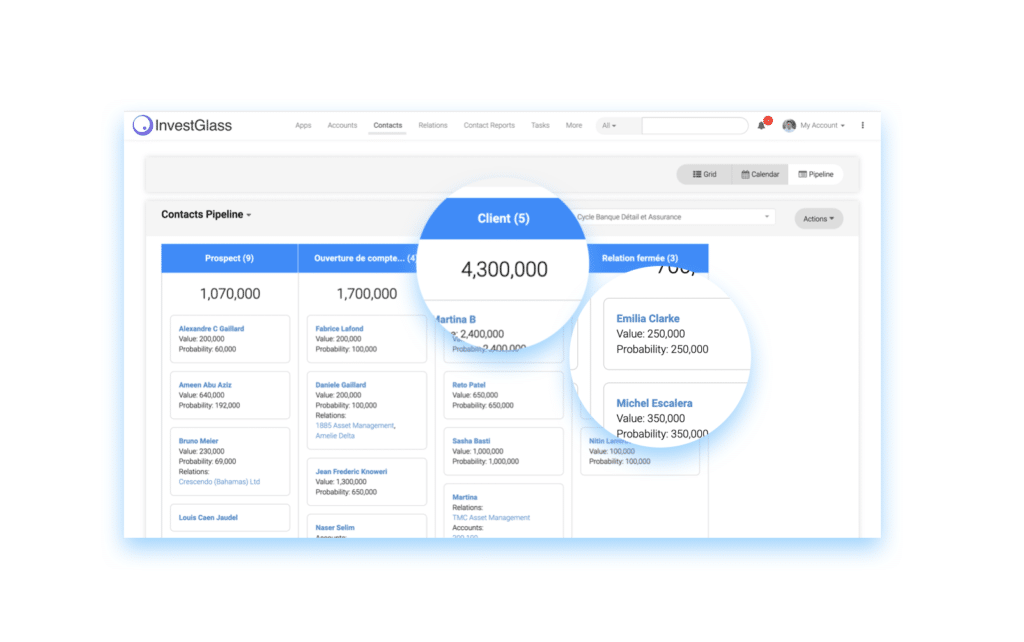
InvestGlass Dashboards display all opportunities by stage, amount, and expected close date. A relationship manager can see at a glance that three €30,000 deals are stuck at “Proposal Sent” for more than 14 days. From this view, the manager can decide whether to apply a summary close, an empathy close, or a direct ask on each deal.
Custom fields such as “closing technique used” and “scale close score” feed into reports. Over time, the company identifies its highest-converting close examples and coaches the rest of the team accordingly.
Automated, Context-Aware Follow Up Sequences
InvestGlass can automatically schedule tasks and emails after key events. Here is a step-by-step close example:
- Proposal sent triggers a 24-hour check-in email using a summary close.
- Day 3: an empathy close message addressing typical concerns.
- Day 7: a direct close asking for a decision.
Automation keeps follow up consistent while allowing reps to personalise each message. When a prospect replies or books a call, the sequence pauses to avoid over-contact. This right technology approach prevents promising opportunities from silently expiring after a good demo. Expressing gratitude in each touchpoint leaves a lasting positive impression when ending conversations and keeps the door open for future engagement.
Client Portals, Compliance, and Trust at the Close
InvestGlass client portals allow prospects to securely review proposals, contracts, and KYC documents in one space. A wealth management prospect can log into the portal, sign an onboarding agreement, and upload identification documents, all triggered by a direct close email, supported by automatisierte KYC-Prüfung Arbeitsabläufe.
For regulated industries, InvestGlass automates compliance workflows such as MiFID II and LSFin checks, reducing friction at the closing stage. When a buyer in close proximity to a decision worries about regulatory risk, being able to show a compliant audit trail inside a secure portal makes the empathy close considerably easier to handle. A smooth, professional closing experience builds trust and reduces buyer’s remorse after the deal is done.
FAQ: Close Examples, Sales Closing Techniques, and InvestGlass
What is an example of a closing technique in sales?
One widely used example is the assumptive close. A rep might say, “I’ll prepare your InvestGlass workspace for a 1 July start. Would you prefer monthly or annual billing?” This presumes the yes and moves the conversation to logistics. A close second in popularity is the summary close, which recaps agreed benefits before asking for a commitment.
How do I know which sales closing technique to use?
Consider three factors: the buyer’s personality (analytical, relational, decisive), the deal size (small or enterprise), and the sales stage (early demo versus final negotiation). Use data from your CRM to refine choices. In InvestGlass, custom fields capture buyer persona, deal attributes, and readiness scores, giving you a data-driven basis for selecting the right approach.
What is a puppy dog close in sales?
The puppy dog close offers a free trial to encourage purchase. The name originates from pet shop owners who let families take a puppy home for a weekend, knowing they would rarely return it. In SaaS, the equivalent is a time-limited trial. InvestGlass automation can track trial engagement and convert accounts once usage thresholds are met, making the technique systematic rather than ad hoc.
How can the right technology help me close more deals?
Technology like InvestGlass provides pipeline visibility, automated follow-up sequences, readiness scoring, and secure client portals. Together, these features ensure that no deal slips through the cracks. Research shows that 40 to 60 percent of lost deals result from buyer indecision rather than outright rejection. Timely, data-driven follow up addresses that indecision head-on.
What is an empathy close?
The empathy close acknowledges the prospect’s concerns and constraints before proposing a flexible path forward. For example: “I understand that switching CRM providers feels daunting after your last experience. Would a 12-month contract with an opt-out clause at month six give you the confidence to move forward?” It is not about conceding on price but about reducing emotional risk.
Does closing still matter when buyers do their own research?
Yes. Even though buyers arrive at meetings with extensive knowledge, someone must still guide them to a clear decision. A successful close transforms conversations into conversions. Without that final step, even the most informed buyer may defer action indefinitely. A great salesperson recognises that closing is not about pressure. It is about clarity.
Conclusion: Turn Close Examples Into a Repeatable Closing System
Mastering a handful of core closing techniques is far more valuable than memorising dozens you never practise. Whether you favour the assumptive close, summary close, scale close, puppy dog close, or empathy close, the principle is the same: combine each technique with thorough discovery, clear value framing, respectful follow up, and a reliable technology platform. It makes sense to focus deeply on the approaches that match your buyers rather than spreading your attention thin.
Choose two to three sales closing techniques from this article. Document your preferred close examples as scripts your team can adapt. Track results inside InvestGlass for 60 to 90 days. With custom fields for technique used, readiness scores, and deal outcomes, you will soon see which methods deliver the highest conversion in your specific company and market.
If you have not yet experienced InvestGlass first-hand, consider your own puppy dog close: start a guided trial focused on improving your closing rate. With eyes closed to distractions and your head focused on measurable outcomes, blending human empathy with smart automation is how the best teams will close more deals in 2026 and beyond.


