
The AES cryptosystem stands at the centre of modern data protection. For Banken, wealth managers, insurers, and public sector organisations handling sensitive data, understanding AES is not optional. It is fundamental to protecting financial data, meeting regulatory requirements, and maintaining client trust. The AES cryptosystem is essential for securing sensitive data in modern organisations, ensuring confidentiality and integrity through robust cryptographic features.
This guide explains how the advanced encryption standard works, why it remains the global benchmark for symmetric encryption, and how platforms like InvestGlass use AES to protect souverän client data within Swiss and on-premise infrastructure.
Introduction to the AES Cryptosystem
The Advanced Encryption Standard (AES) is a symmetric block cipher standardised by the National Institute of Standards and Technology (NIST) in 2001 through Federal Information Processing Standard (FIPS) 197. It was specifically designed to replace the ageing Data Encryption Standard (DES), which had become vulnerable to brute force attacks with modern computing power.
AES works with a fixed block size of 128 bits and supports key lengths of 128, 192, or 256 bits. The cipher performs 10, 12, or 14 rounds of transformation respectively, providing robust security for protecting sensitive data across all major industries.
Für Finanzinstitute, the AES algorithm represents more than a technical standard. It underpins the encryption process that secures financial transactions, client records, and regulatory submissions. The US National Security Agency approved AES for protecting classified information, with AES-128 sufficient for SECRET level data and AES-256 required for TOP SECRET classification.
InvestGlass relies on AES based encryption to protect sovereign client data in its Swiss hosted and on-premise deployments. This approach ensures that banks, wealth managers, and public sector entities can secure data without dependency on American or Chinese cloud platforms.
AES is a symmetric encryption algorithm, meaning it uses the same key for both encryption and decryption. In contrast, asymmetric encryption methods such as RSA use a public-private key pair, which is commonly employed for secure key exchange and communication protocols.

Historischer Hintergrund und Standardisierung
The original Data Encryption Standard, standardised by NIST in 1977, suffered from a fundamental weakness. Its 56 bit key length became practically crackable by the late 1990s. In 1998, the Electronic Frontier Foundation built a specialised machine called the DES Cracker that broke a DES key in just 56 hours using hardware costing approximately 250,000 US dollars.
This demonstration made clear that a stronger successor was essential. In 1997, NIST launched a public competition soliciting algorithms with a mandatory 128 bit block size and support for 128, 192, and 256 bit keys. Fifteen candidates were submitted from cryptographers worldwide.
After rigorous evaluation by twelve international teams over three years, NIST narrowed the field to five finalists: Rijndael, Serpent, RC6, Twofish, and MARS. In October 2000, Rijndael was selected. Created by Belgian cryptographers Joan Daemen and Vincent Rijmen, the Rijndael algorithm offered an excellent balance of security against differential cryptanalysis and linear cryptanalysis, software speed up to five times faster than DES, and a compact hardware footprint.
FIPS 197 was published on 26 November 2001, officially defining AES with fixed 128 bit blocks. By 2004, US federal systems mandated AES use, and the encryption standard was integrated into ISO/IEC 18033-3:2010 and other international frameworks. Triple DES, a workaround using 168 bit keys, became obsolete by the mid-2000s.
Core Structure of the AES Cipher
AES operates as a substitution permutation network on a four by four data matrix of bytes known as the state. This state represents a 128 bit data block, where each byte is treated as an element in the finite field GF(2^8).
The cipher always processes fixed 128 bit blocks regardless of key length. The number of rounds depends on the key size:
Key Length | Number of Rounds | Common Name |
|---|---|---|
128 Bits | 10 rounds | AES-128 |
192 Bit | 12 rounds | AES-192 |
256 Bit | 14 rounds | AES-256 |
Each round applies four main transformations to achieve confusion and diffusion: SubBytes (non-linear byte substitution), ShiftRows (cyclic row shifting), MixColumns (column mixing), and AddRoundKey (bitwise XOR operation with the round key). The round keys used in each round are generated through a process called key expansion, which derives multiple round keys from the original encryption key using a key schedule algorithm. The final round omits MixColumns.
AES operates efficiently on both general purpose CPUs and dedicated hardware. Modern processors from Intel and AMD include AES-NI instructions that compute full rounds in approximately ten cycles per block, enabling throughputs suitable for real-time financial transactions and disk encryption.
High Level Encryption and Decryption Process
The encryption process begins with an initial AddRoundKey step. The plaintext state is combined with the first round key derived from the original encryption key using a bitwise XOR operation.
For rounds one through Nr-1 (where Nr is the total round count), each round performs:
- SubBytes replaces each corresponding byte using a non-linear S box lookup table
- ShiftRows cyclically shifts the second row by one position, the third row by two, and the fourth row by three
- MixColumns multiplies each column by a fixed polynomial in GF(2^8)
- AddRoundKey XORs the state with the current round key
The final round skips MixColumns and proceeds directly from ShiftRows to AddRoundKey. This design choice simplifies certain implementation optimisations.
The decryption process applies inverse operations in reverse order. Starting with AddRoundKey using the final round key, each round performs InvShiftRows, InvSubBytes, InvMixColumns, and AddRoundKey. Both encryption and decryption maintain the same overall structure, operating on the same four by four state but with inverse transformations. Due to the complexity of the AES cryptosystem and its vast key space, it is computationally infeasible for attackers to decrypt data without the correct key.
Key Schedule and Round Key Generation
The key schedule algorithm expands the original secret key into a set of round keys, one for each cipher round plus the initial key addition. For AES-128, this produces 44 four-byte words (11 round keys of 128 bits each).
The schedule combines several operations to prevent simple relationships between round keys:
- RotWord rotates a four-byte word left by one byte position
- SubWord applies the S box substitution to each byte
- Rcon adds round constants that differ for each round
For AES-192 and AES-256, the key schedule generates 52 and 60 words respectively, reflecting the additional rounds. AES-256 applies an extra SubWord transformation every eighth word to increase complexity.
Correct implementation of the key schedule is critical for security and interoperability. Flaws such as weak randomness in key generation can undermine the entire encryption process. Standards mandate using approved random number generators for cipher keys, and validated modules must demonstrate compliant key schedule implementation.
Mathematical Components of AES
All the data operations in AES rely on finite field arithmetic over GF(2^8), using the irreducible polynomial x^8 + x^4 + x^3 + x + 1. In this field, addition is performed as XOR, while multiplication uses a technique called xtime that handles polynomial reduction.
The S box used in SubBytes is constructed from two operations. First, each input byte is transformed to its multiplicative inverse in GF(2^8), with zero mapping to itself. Second, a fixed affine transformation is applied. This construction ensures high non-linearity and resistance to both differential and linear cryptographic attacks.
MixColumns treats each column as a polynomial of degree three over GF(2^8). The transformation multiplies this polynomial by a fixed polynomial, producing an invertible linear transformation. After just two rounds of ShiftRows followed by MixColumns, each output byte depends on all sixteen input bytes of the original block.
These mathematical structures were carefully chosen to balance security margins with efficiency on 1990s hardware. The designers achieved approximately 2^128 operations for a theoretical full break of AES-128.
SubBytes and the AES S Box
The SubBytes transformation replaces each byte in the state using a 256 entry lookup table known as the S box. This table is carefully designed with specific cryptographic properties.
Key properties of the AES S box include:
- No fixed points exist where S(a) equals a
- No opposite mappings exist where S(a) equals the complement of a
- Maximum differential probability of 4/256 for any input difference
- Non-linearity score of 112 out of 128
An inverse S box exists for the InvSubBytes step during decryption. Software implementations typically store precomputed S boxes as 256 byte tables, enabling fast substitution in approximately one cycle per byte. Hardware implementations may embed the mathematical transformation directly, avoiding table storage entirely.
ShiftRows und MixColumns
ShiftRows permutes the state by cyclically shifting each row leftward by a different offset. Row zero remains unchanged, row one shifts by one byte, row two by two bytes, and row three by three bytes. This operation spreads byte dependencies from rows into columns, preparing for the mixing step.
MixColumns linearly combines each column of four bytes into a new column. Using fixed multipliers in GF(2^8), the transformation ensures that each output byte depends on all four input bytes within that column. The specific multipliers (values like 02 and 03 in hexadecimal) are implemented efficiently using the xtime operation.
Performing ShiftRows followed by MixColumns creates strong diffusion. A single bit flip in the input affects approximately fifty percent of output bits per round, reaching full diffusion across all 128 bits by round three. The final encryption round omits MixColumns as part of the standard AES design.
Security Properties and Known Attacks
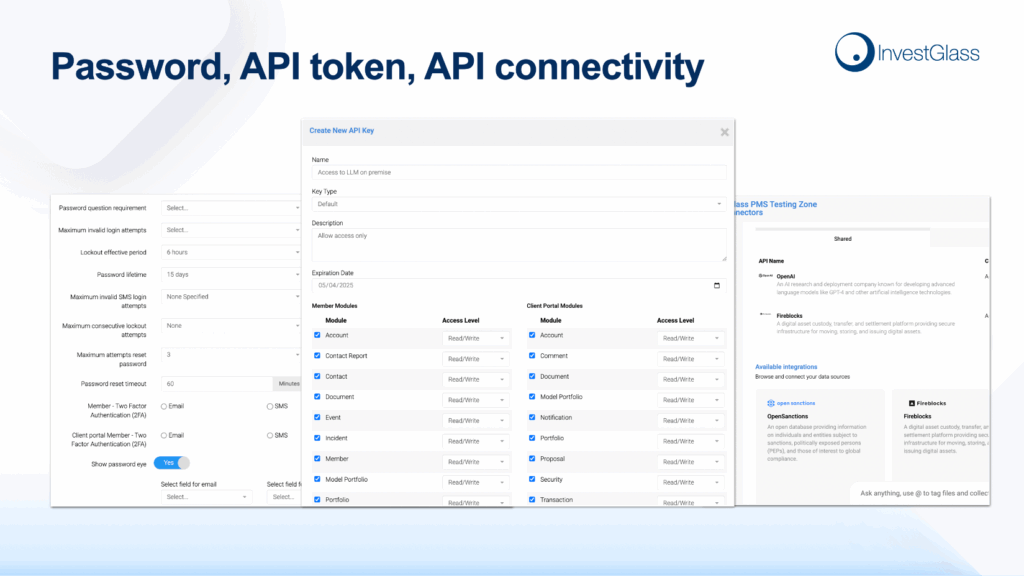
Full round AES with properly managed keys resists all practical cryptographic attacks. The security margin for AES-128 exceeds 2^126 operations, while AES-256 provides margins beyond 2^254 operations.
Academic research has produced theoretical attacks on reduced round variants. A related key attack on seven-round AES-128 requires approximately 2^39 operations but remains impractical. Related key attacks exploit relationships between different encryption keys and have been analysed for AES-192 and AES-256, though these attacks are largely theoretical and impractical for full-round AES. The best known attack on full AES-256, biclique cryptanalysis, reduces the brute force requirement from 2^256 to 2^254.4 operations. This negligible improvement does not threaten real-world deployments.
Key length determines security margins for long-term data protection. AES-128 remains secure for most applications through 2030 under classical computing assumptions. For multi-decade retention of financial records and government data, AES-256 provides additional margin.
Quantum computing introduces new considerations. Grover’s algorithm theoretically halves effective key strength, reducing AES-256 to approximately 128 bits of security and AES-128 to 64 bits. NIST post-quantum guidance therefore favours AES-256 for systems requiring long-term confidentiality against future quantum threats.
Side Channel Attacks and Implementation Risks
Most practical compromises of AES arise from implementation flaws rather than weaknesses in the cipher itself. Side channel attacks exploit observable characteristics of the encryption process.
Common attack vectors include:
- Timing attacks that measure variations in encryption duration based on key-dependent table lookups
- Cache attacks that monitor memory access patterns to infer secret key material
- Power analysis that correlates power consumption with internal operations
- Fault injection that induces errors to recover keys from faulty ciphertexts
The 2005 Bernstein attack on OpenSSL demonstrated practical cache timing vulnerabilities in table-based AES implementations. Modern CPUs with AES-NI instructions eliminate these leaks by avoiding lookup tables entirely, processing data in constant time regardless of key values.
Hardware devices face additional risks from simple and differential power analysis. Countermeasures include masking (randomising intermediate values), shuffling round execution order, and constant-time implementations. FIPS 140-3 validated modules must demonstrate resistance to such attacks through rigorous testing.
Organisations should select AES implementations that have undergone security evaluation, particularly hardware-accelerated modules in financial and government infrastructure.
Validation, Certification, and Compliance
The NIST Cryptographic Algorithm Validation Program (CAVP) tests AES implementations against FIPS 197 test vectors. This validation is a prerequisite for the Cryptographic Module Validation Program (CMVP) that issues FIPS 140-3 certifications.
Key compliance frameworks include:
Standard | Umfang | Relevanz |
|---|---|---|
FIPS 197 | AES algorithm specification | Required for US federal systems |
FIPS 140-3 | Cryptographic module security | Hardware and software validation |
ISO/IEC 18033-3 | Block cipher standards | International interoperability |
PCI-DSS | Payment card security | Financial transaction protection |
Regulators including FINMA in Switzerland and data protection authorities across Europe mandate use of strong encryption for personal and financial data. GDPR Article 32 explicitly requires appropriate technical measures including encryption.
European and Swiss institutions often prefer solutions meeting international standards while avoiding dependency on American or Chinese cloud providers. The CLOUD Act and similar legislation create legal risks for organisations storing encrypted data on platforms subject to foreign jurisdiction.
Modes of Operation and Practical Use
AES as a block cipher encrypts exactly 128 bits at a time. To encrypt data larger than a single block, AES must be combined with a mode of operation that defines how multiple blocks are processed.
Common modes include:
- CBC (Cipher Block Chaining) chains blocks together using an initialisation vector, suitable for data at rest
- CTR (Counter) converts AES into a stream cipher, enabling parallel processing
- GCM (Galois/Counter Mode) provides authenticated encryption with integrity verification
- XTS designed specifically for disk encryption, using tweakable block cipher techniques
In some systems, AES is combined with asymmetric encryption methods such as RSA to increase security, particularly for secure key exchange and layered protection.
GCM has become the default mode for TLS 1.3, providing both data confidentiality and integrity through a 128 bit authentication tag. This authenticated encryption with associated data (AEAD) approach is now standard for secure communications.
Correct initialisation vector management is critical. Nonce reuse in GCM or CTR modes can catastrophically compromise security, potentially leaking authentication tags or enabling decryption. Financial systems must implement strict nonce generation procedures.
Key Management and Operational Best Practices
The security of AES depends entirely on proper key management. Even perfect cryptographic implementation fails if keys are weak, exposed, or improperly stored.
Key generation must use cryptographically secure random number generators with entropy equal to or exceeding the key size. NIST SP 800-90A specifies approved deterministic random bit generators such as CTR_DRBG.
Best practices for key storage include:
- Hardware security modules (HSMs) rated FIPS 140-2 Level 3 or higher
- Dedicated key management services with strict access controls
- Separation of keys by data classification and regulatory sensitivity
- Complete audit logging of all key access events
Key rotation policies should align with regulatory expectations. NIST SP 800-57 recommends periodic rekeying every one to two years or immediately following potential compromise. Organisations processing data under GDPR or FINMA circulars should maintain documented rotation schedules.
Multi-tenant environments require additional care. Each tenant should use separate keys, with clear segregation preventing cross-tenant access. Sovereign alternatives to US cloud key management services help organisations avoid legal exposure under foreign access laws.
Benefits and Advantages of AES
The advanced encryption standard AES offers a range of compelling benefits that have made it the preferred encryption standard for protecting sensitive data across industries. One of the most significant advantages of AES is its robust security, which is achieved through its symmetric key algorithm and flexible key length options. By supporting key lengths of 128, 192, and 256 bits, AES allows organisations to select the appropriate level of security for their needs, with longer key lengths providing greater resistance to brute force attacks. This adaptability is particularly valuable for financial institutions and regulated sectors, where the protection of sensitive data is paramount.
AES is also renowned for its efficiency as an encryption algorithm. Unlike older standards, AES operates on entire bytes rather than individual bits, which reduces computational overhead and enables rapid encryption and decryption of large volumes of data. This makes AES ideally suited for high-speed data transmission, real-time financial transactions, and large-scale data processing environments.
Another key advantage of the advanced encryption standard AES is its widespread acceptance and interoperability. As a globally recognised encryption standard, AES is supported by a vast array of software and hardware solutions, ensuring compatibility across different platforms and devices. This broad adoption simplifies the integration of AES into existing systems, making it easier for organisations to implement strong data protection measures without sacrificing performance or usability.
Ultimately, the combination of strong security, operational efficiency, and universal acceptance makes AES an essential tool for protecting sensitive data, securing financial transactions, and ensuring compliance with regulatory requirements in today’s digital landscape.
Applications of AES in Financial and Regulated Industries
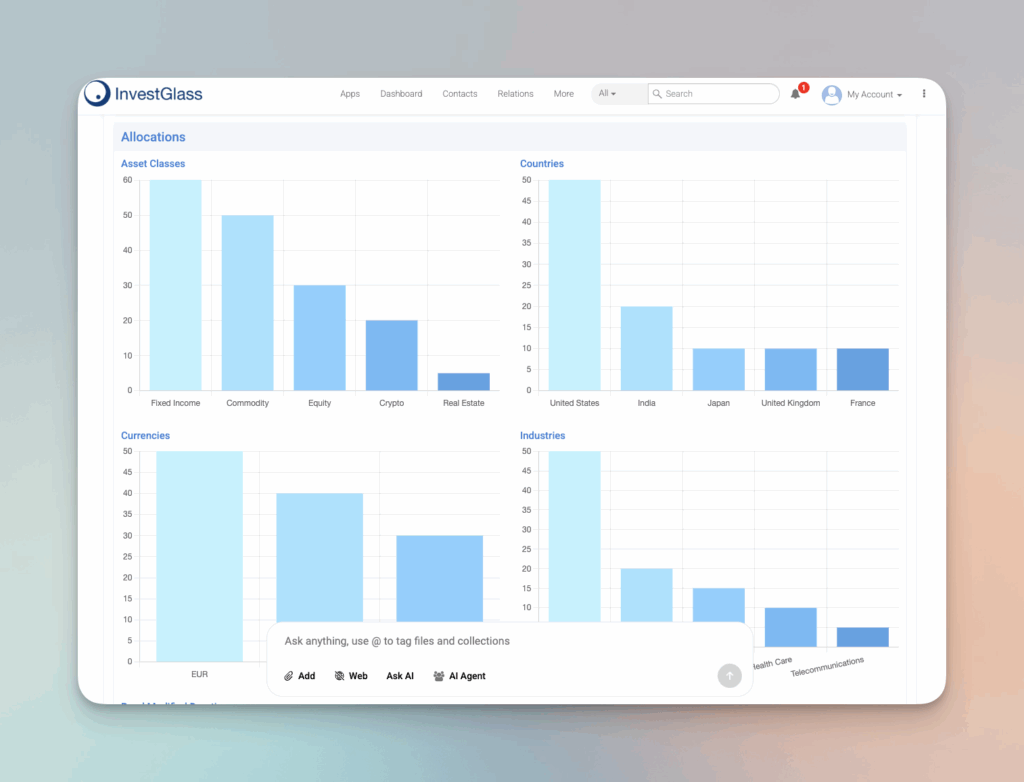
Banks, asset managers, and insurers rely on AES to protect data at rest and in transit across their operations. The cryptographic algorithm secures databases, file systems, and backup archives containing financial records and client information.
Common implementations include:
- Database encryption using Transparent Data Encryption (TDE) with AES-256-XTS
- TLS 1.3 connections for client portals, APIs, and interbank messaging using AES-GCM cipher suites
- Endpoint protection through BitLocker and FileVault disk encryption on staff devices
- Sicheres Messaging for trading systems and regulatory reporting channels
AES supports compliance with frameworks requiring encryption of electronic data. GDPR fines have exceeded four billion euros since 2018, underscoring the consequences of inadequate data protection. Swiss Federal Data Protection Act requirements apply to cross-border transfers of client information.
For wireless networks and mobile access, AES provides wireless security through WPA3 protocols, protecting Beziehungsmanager communications from interception.
Case Focus: AES in Wealth Management Workflows
Private banks and wealth managers handle exceptionally sensitive information. Client statements, investment proposals, suitability assessments, and performance reports all require strong protection throughout their lifecycle.
In practice, wealth managers use AES in several workflows:
Client communications are secured through AES-protected portals where statements and proposals are delivered. Documents remain encrypted at rest and are transmitted over TLS connections using AES-GCM.
Mobiles Beziehungsmanagement requires secure offline storage. When relationship managers travel, client notes stored on laptops and tablets must remain protected even if devices are lost. AES-XTS disk encryption ensures data remains unreadable format to unauthorized users.
Document vaults for KYC materials, contracts, and confidential correspondence use AES encryption. Audit requirements expect evidence of encryption at multiple points, from onboarding document collection through periodic review storage.
Suitability documentation under MiFID II and equivalent regulations must demonstrate secure handling. AES encryption of completed risk questionnaires and investment recommendations satisfies regulatory expectations for protecting data throughout the client relationship.
How InvestGlass Uses AES to Protect Sovereign Client Data
InvestGlass ist ein Schweizer Staatsunternehmen CRM and automation platform designed for banks, wealth managers, insurers, and public sector entities requiring strict control over client data. The platform combines CRM, digitales Onboarding, Portfoliomanagement, compliance workflows, and a sicheres Kundenportal within a single integrated environment.
InvestGlass uses AES based encryption to secure data at rest within Swiss data centres or on-premise installations. Data in transit between browsers, mobile applications, and backend services is protected through TLS connections using AES cipher suites.
By hosting in Switzerland or within client-controlled infrastructure, InvestGlass enables organisations to benefit from AES encryption while avoiding reliance on American or Chinese cloud platforms. This approach addresses concerns about the US CLOUD Act and similar legislation that could compel foreign access to encrypted data.
AES integrates throughout the InvestGlass feature set. Digital onboarding captures and encrypts identification documents. Portfolio management protects positions and performance data. The secure client portal delivers encrypted reports and statements. Marketing automation and AI-driven workflows process data that remains encrypted at rest and in transit.
Data Sovereignty, Compliance, and Infrastructure Control
The Swiss data sovereignty approach of InvestGlass ensures that AES encrypted data remains within Swiss jurisdiction or inside client infrastructure for on-premise deployments. This model supports compliance with European and Swiss regulations without exposure to foreign access laws.
Key sovereignty features include:
- Segregated tenant environments with independent encryption keys
- Strict access controls limiting data access to authorised personnel
- Comprehensive audit logging of all operations on protected data
- Infrastructure choices that satisfy central bank and securities regulator expectations
For organisations subject to FINMA supervision or European data protection requirements, InvestGlass offers an alternative to hosting sensitive financial data on platforms that may be subject to compelled disclosure. The same key management principles that secure data also protect the sovereignty of client information.
Risk, legal, and security teams can verify encryption practices through documentation and audit reports, ensuring alignment with internal policies and external regulatory frameworks.
Integrating AES with CRM, Onboarding, and Portfolio Management
AES protected storage secures all CRM records within InvestGlass. Contact details, suitability profiles, risk questionnaires, and interaction histories remain encrypted at rest using AES-256.
Digital onboarding workflows handle particularly sensitive input data. Uploaded identification documents, source of wealth evidence, and signed agreements are encrypted immediately upon receipt. The decryption process occurs only when authorised users access records through authenticated sessions.
Portfolio management features protect positions, transaction histories, and generated client reports. Performance data and analytics are stored encrypted, with the client portal delivering reports over AES-protected connections.
Marketing automation, AI-driven workflows, and compliance rule engines all operate on data that remains encrypted at rest. TLS connections using AES ensure that data confidentiality extends from backend processing through client-facing delivery.
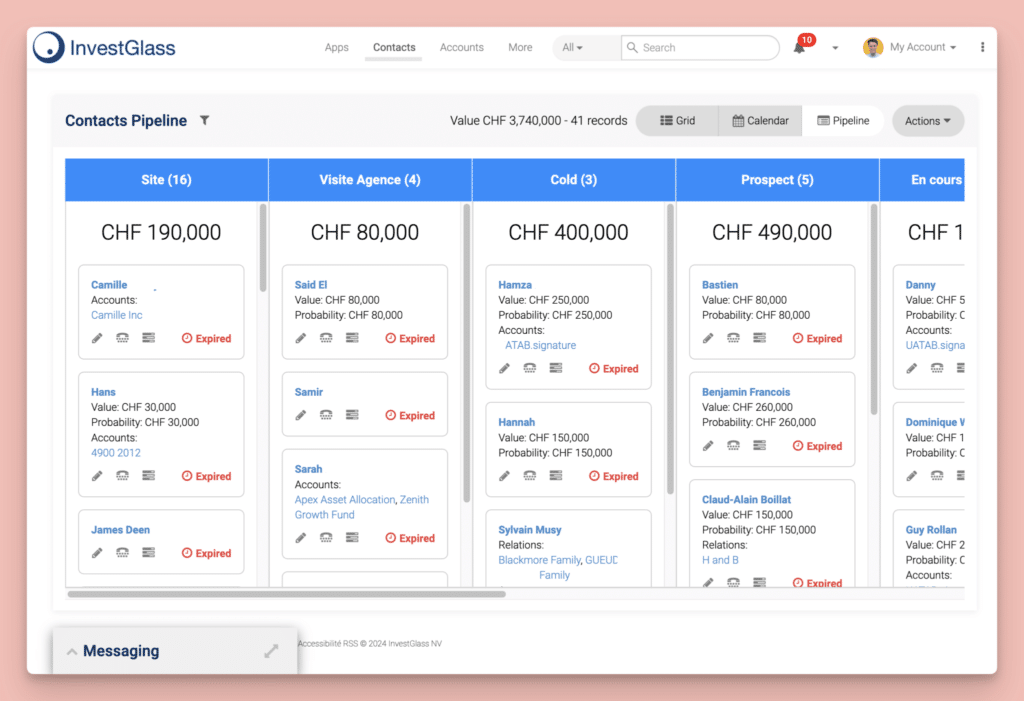
This integration means organisations can manage the entire Kundenlebenszyklus within a platform where AES encryption is embedded at every layer, from first contact through ongoing relationship management.
Quantum Computing and AES
Quantum computing represents a significant shift in the landscape of data security, prompting organisations to re-evaluate the resilience of their encryption standards. While quantum computers have the potential to undermine many traditional cryptographic algorithms, the advanced encryption standard remains a robust choice for protecting sensitive data, particularly when configured with an appropriate key length.
The security of AES against quantum threats is closely tied to its key length. AES-128 and AES-192, while highly secure against classical brute force attacks, are theoretically more vulnerable to quantum algorithms such as Grover’s, which can reduce the effective security of these key sizes. However, AES-256 stands out for its quantum resistance, as the sheer number of possible key combinations makes it impractical for even a quantum computer to perform a brute force attack within a reasonable timeframe.
Proper key management is essential to maintaining the security of AES in a quantum computing era. This includes generating strong, random keys, securely storing them, and ensuring that only authorised users have access. As research into post-quantum cryptography continues, organisations are advised to monitor developments in new encryption standards designed to withstand both classical and quantum attacks. In the meantime, deploying AES-256 with rigorous key management practices remains a highly effective strategy for safeguarding sensitive information against both current and emerging threats.
Future Outlook for the AES Cryptosystem
AES has withstood over twenty-five years of academic scrutiny without practical compromise. The cipher remains a core building block of modern cryptography, deployed in critical systems from cloud storage to embedded systems.
Hardware support continues to advance. ARMv8 processors include AES instructions achieving approximately one cycle per block. Dedicated accelerators in servers and mobile devices enable AES-GCM throughput exceeding ten gigabits per second.
The post-quantum cryptography landscape will introduce new algorithms for key exchange and digital signatures. However, symmetric encryption using AES will likely remain central, with longer key length configurations providing adequate margins. NIST post-quantum standardisation explicitly assumes continued use of AES-256 for symmetric encryption.
Organisations should monitor guidance from NIST and European bodies to ensure AES configurations remain aligned with evolving recommendations. Current deployments using AES-256 with proper key management provide strong foundations for long-term data protection.
Strategic Considerations for Regulated Organisations
Banks, wealth managers, and public sector bodies should review encryption policies to ensure appropriate key lengths and modes of operation. Data retention periods and sensitivity classifications should guide the choice between AES-128 and AES-256.
Recommendations for strengthening AES based security:
- Audit current deployments to verify key lengths, modes, and implementation sources
- Combine AES with layered controls including identity management, access controls, and comprehensive logging
- Select sovereign platforms that deliver AES protection within controlled infrastructure
- Planen Sie regelmäßige Überprüfungen including penetration tests targeting side channel exposure
- Document compliance with applicable frameworks including FIPS, GDPR, and sector regulations
Encryption alone does not constitute complete data security. Defence in depth requires proper key management, secure key generation, and protection against implementation vulnerabilities. Organisations should select validated AES modules and prefer hardware-accelerated implementations where possible key combinations of performance and security matter.
InvestGlass provides a sovereign platform combining AES based encryption with regulatory alignment and infrastructure control. For organisations seeking to protect sovereign client data while meeting compliance requirements, the platform offers an alternative to American or Chinese technology providers.
Review your encryption configurations, consider your data sovereignty requirements, and ensure your AES implementations are positioned for both current threats and future developments in quantum computing. Strong encryption practices established today will protect financial institutions and their clients for decades to come.
Conclusion and Summary
The advanced encryption standard AES continues to set the benchmark for data security in financial services, regulated industries, and beyond. Its combination of high security, efficiency, and broad adoption makes it the encryption standard of choice for protecting sensitive data, whether in financial transactions, wireless security, or cloud storage environments. By supporting multiple key lengths, AES allows organisations to tailor their encryption to the sensitivity of their data, with AES-256 offering strong protection even in the face of quantum computing advancements.
To maximise the security of AES-encrypted data, it is crucial to implement robust key management practices. This includes generating and storing keys securely, using secure protocols for data transmission, and keeping encryption software up to date. By adhering to these best practices, organisations can ensure that their sensitive data remains protected from unauthorised access, maintaining data confidentiality and integrity.
As technology evolves and cyber threats become more sophisticated, the importance of strong encryption and data security will only increase. AES encryption, when combined with proper key management and secure implementation, provides a reliable foundation for protecting sensitive information in the digital age. For financial institutions and regulated organisations, investing in advanced encryption standards like AES is not just a technical requirement, but a strategic imperative for long-term data protection and regulatory compliance.


