Hvad du vil lære
- What CRM tools for customer service are and their primary functions
- How to identify and select the best CRM tools for customer service
- How customer support tools transform customer service operations
- The core benefits of implementing InvestGlass CRM, customer relationship management software, and related systems
- Understanding the role of customer relationship management software in enhancing customer service
- Real-world examples and analysis of CRM-driven customer service success
Introduction to CRM Tools for Customer Service
CRM tools for customer service are specialised software solutions designed to optimise how businesses manage interactions with their customers. These tools provide a centralised platform to track, manage, and resolve customer inquiries, complaints, and support requests efficiently. At the core, customer relationship management (CRM) refers to the strategies and technologies that businesses use to manage customer relationships, enhance sales processes, streamline lead nurturing, and provide critical customer context for support and service. The purpose of a customer service CRM is not only to streamline support operations but also to build stronger, more personalised customer relationships that drive loyalty and retention.
For instance, a global telecommunications company using a helpdesk CRM can consolidate all customer queries from emails, calls, social media, and live chat into a single interface. As customer service software, CRM platforms centralise support functions and integrate seamlessly with other business systems. This holistic view enables support agents to respond faster with more accurate information, significantly improving customer satisfaction rates.
CRM tools support managing customer relationships by offering integrated features such as automation, analytics, and personalised engagement, ensuring ongoing connection and satisfaction across every stage of the client lifecycle.
How CRM Tools Transform Customer Service Operations
The transformation brought by CRM-software in customer service is profound. Traditional customer support often suffers from siloed information, slow response times, and inconsistent service quality. CRM platforms eradicate these issues by centralising customer data and automating key processes, while also helping to standardise and streamline business processes in customer service.
Centralised Customer Information
A fundamental advantage of Styring af kunderelationer systems is that they aggregate all customer interactions in one place. These systems also maintain accurate customer records, enabling teams to update and utilise client information efficiently for better service. This centralisation allows support teams to access the entire history of a customer’s interactions instantly. For example, when a customer calls back with a recurring issue, the agent can review previous tickets, past resolutions, and product purchase history without asking the customer to repeat themselves.
This comprehensive access improves first-contact resolution rates, reducing customer effort and increasing satisfaction. A case study from a financial services firm showed a 30% reduction in repeat calls after implementing a CRM tool that unified their customer data.

Automatisering af rutineopgaver
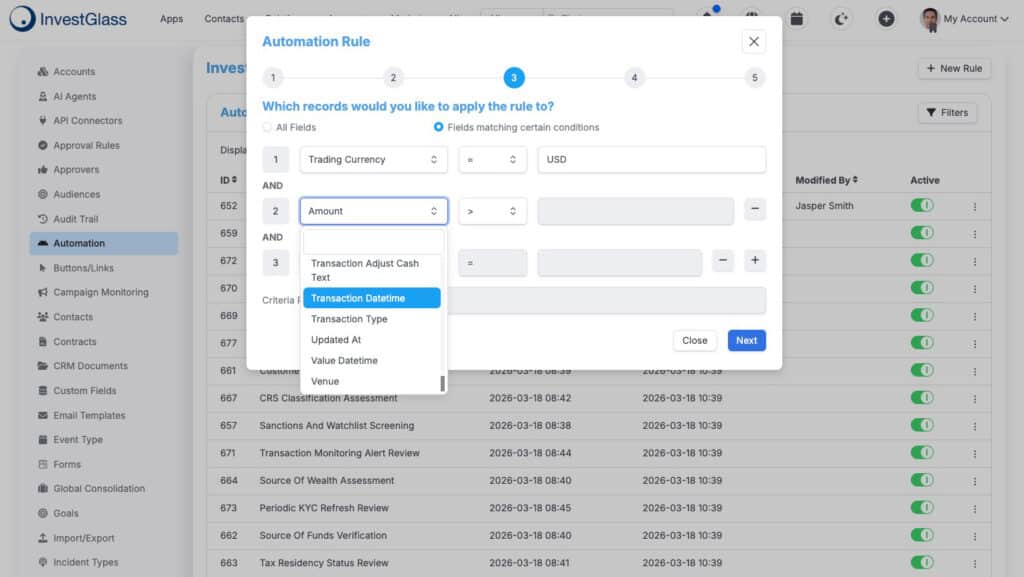
Customer support tools integrated within CRM software automate repetitive tasks such as ticket routing, follow-up reminders, and status updates. Automation frees up agents to focus on complex queries requiring human intervention. CRM tools can also automate workflows to streamline support operations, ensuring that customer requests are efficiently managed from initial contact to resolution. For example, a software provider’s CRM automatically assigns technical support tickets to specialised teams based on issue categorisation, accelerating response times.
InvestGlass, a Swiss-based platform, offers sophisticated automation features that allow businesses to personalise customer journeys and streamline onboarding processes, with workflow automation as a key benefit for managing customer interactions and daily operations efficiently. This demonstrates how automation enhances operational efficiency.
Multichannel Integration
Modern customers expect to reach support through various channels email, phone, live chat, and social media. InvestGlass CRM systems integrate these channels into a single dashboard, enabling consistent and seamless customer experiences regardless of the contact method.
Consider an e-commerce retailer whose CRM software integrates live chat, email, and social media messages. Support agents can switch between channels without losing context, ensuring responses are timely and informed. This multichannel approach leads to higher customer satisfaction and loyalty.
Core Benefits of CRM Tools for Customer Service
Implementering CRM tools for customer service delivers numerous benefits that extend beyond operational improvements. These benefits impact customer experience, business growth, and overall brand reputation. In addition, CRM tools enhance customer engagement by enabling personalised and timely interactions, which help nurture relationships and deliver relevant content to clients.
Enhanced Customer Satisfaction and Loyalty
By providing quick, personalised, and consistent support, CRM software significantly boosts customer satisfaction. Customers feel valued when their issues are resolved efficiently and they do not need to repeat information. For example, a luxury hotel chain using CRM tools to track guest preferences and previous complaints saw a 20% increase in repeat bookings.
Satisfied customers are more likely to become loyal advocates, recommending the brand to others and generating positive word-of-mouth.
Improved Agent Productivity and Morale
CRM software equips customer service agents with the tools and information they need to perform their jobs effectively. This empowerment reduces frustration and burnout, improving job satisfaction. For example, an IT support company reported a 40% increase in agent productivity after deploying a CRM system with intuitive ticket management and knowledge base features.
Higher productivity translates to faster issue resolution and better customer experiences.
Datadrevet beslutningstagning
Styring af kunderelationer platforms collect vast amounts of data on customer interactions, preferences, and behaviour. Businesses can analyse this data to identify trends, common issues, and opportunities for service improvement. CRM analytics can also be used to monitor and improve service performance by tracking technician workload, job progress, and operational quality, enabling more informed decision-making and better resource management.
For example, a retail chain analysed CRM data to discover peak times for customer inquiries and adjusted staffing accordingly, reducing wait times and call abandonment rates. Data insights from CRM tools empower businesses to make strategic decisions that enhance customer service quality.
Skalerbarhed og fleksibilitet
As businesses grow, managing increasing volumes of customer interactions becomes challenging. CRM software scales effortlessly to handle more customers, support agents, and communication channels. Cloud-based solutions like those offered by InvestGlass provide flexible deployment options and customisable features, ensuring the CRM adapts to evolving business needs.
This scalability is particularly beneficial for small and midsize businesses seeking to scale their customer service operations, as it allows them to manage contact information, integrate with existing tools, and customise business processes as they expand. This ensures consistent service quality regardless of business size or industry.

Konklusion
CRM tools for customer service are indispensable for modern businesses aiming to deliver exceptional support experiences. By centralising customer data, automating workflows, integrating multiple channels, and providing actionable insights, these platforms transform customer service operations fundamentally.
The core benefits ranging from enhanced customer satisfaction to improved agent productivity demonstrate why customer-centric organisations prioritise Styring af kunderelationer systems. For businesses seeking to elevate their customer service, exploring InvestGlass’s innovative CRM solutions is an excellent starting point. To learn more about how CRM can enhance real-time communication, visit their Customer Messaging page.
Key Features to Look for in a Customer Service CRM
The primary features of a customer service CRM determine how effectively it can enhance customer interactions and streamline support workflows. When selecting a CRM, businesses must prioritise functionalities that directly impact response times, personalisation, and issue resolution efficiency. In addition, CRM tools for customer service also support sales and marketing teams by streamlining sales and marketing processes, enabling better lead management, workflow automation, and unified data tracking. Key CRM features are equally important for marketing teams, as they help manage customer engagement, campaign creation, and data-driven decision-making to optimise marketing activities.
- Comprehensive Customer Profiles: A CRM should offer detailed, consolidated customer profiles that aggregate data from all touchpoints. This enables support agents to access purchase history, previous interactions, preferences, and complaints in one place. For example, a financial services firm can quickly identify a client’s portfolio details alongside past support tickets, enabling tailored advice and faster resolution.
- Ticket Management and Automation: Effective ticket management is essential to track, prioritise, and resolve customer issues systematically. Automated workflows can assign tickets based on agent expertise or urgency, ensuring no query is overlooked. For instance, InvestGlass’s automation tools can route complex banking queries directly to specialised advisors while simpler issues are handled by general support. Similar CRM features are also used for deal management and tracking the sales process, enabling teams to organise sales opportunities, monitor each stage of the pipeline, and automate tasks to streamline both customer support and sales operations.
- Omnichannel Support Integration: Modern customers expect to communicate through multiple channels phone, email, chat, social media and receive a consistent experience. CRMs with omnichannel capabilities unify these interactions, allowing agents to view and respond to messages from any platform within a single interface. This reduces duplication and confusion, improving satisfaction.
- Knowledge Base and Self-Service Options: Embedding a knowledge base within the CRM empowers customers to find answers independently, reducing support volume. Effective knowledge management within CRM tools for customer service ensures that information is organised, easily accessible, and up to date, which significantly improves support efficiency and streamlines team workflows. The system can suggest relevant articles during ticket creation or chat conversations, speeding up resolutions. A telecom provider, for example, might offer step-by-step troubleshooting guides accessible via the CRM’s portal, and self service portals further empower customers by allowing them to schedule appointments, view their service status, and access information without direct assistance.
Comparison of Approaches to Customer Service CRM
Customer service CRMs vary widely in design and focus. Below is a comparison of three common approaches Traditionel CRM, Cloud-Based CRM, og AI-Driven CRM to help businesses select the right fit. Sales CRM tools are also widely used to manage sales pipelines, track deals, and maintain customer relationships, often integrating with customer service modules for a unified approach. Additionally, markedsføringskampagne management is significantly enhanced in cloud-based and AI-driven CRM platforms, enabling streamlined lead nurturing, scoring, and campaign automation. Cloud-based solutions frequently include marketing cloud platforms, such as Salesforce Marketing Cloud, to automate and manage marketing activities alongside customer service.
Feature / Approach | Traditionel CRM | Cloud-Based CRM | AI-Driven CRM |
|---|---|---|---|
Udrulning | On-premises, requires in-house IT | Hosted online, accessible anywhere | Cloud-based with AI modules |
Omkostningsstruktur | High upfront costs, ongoing maintenance | Subscription-based, scalable costs | Higher subscription with advanced features |
Tilpasning | Highly customisable, but complex | Moderate customisation, easier updates | Limited customisation, relies on AI models |
Automatisering | Basic automation, manual workflows | Advanced automation, rule-based | AI-powered automation, predictive workflows |
Omnichannel Support | Limited, often separate systems | Integrated support across channels | Deep integration with AI chatbots and sentiment analysis |
Dataanalyse | Standard reporting | Advanced analytics with visual dashboards | Predictive analytics and customer behaviour insights |
Brugeroplevelse | Can be cumbersome, requires training | User-friendly, regular updates | Intuitive, adaptive interfaces |
Sikkerhed | High control over data | Vendor-managed security, compliance certifications | Advanced security with AI threat detection |
Ideal For | Large enterprises with dedicated IT | SMBs and enterprises seeking flexibility | Businesses focused on innovation and proactive support |
Deep Analysis
Traditional CRMs offer robust customisation but require significant IT investment. For a bank with strict data control needs, an on-premises solution might be preferable despite slower innovation cycles.
Cloud-based CRMs, like InvestGlass, provide flexibility and rapid deployment. They support omnichannel customer service effortlessly and enhance collaboration via portals that connect teams internally and externally. This approach suits growing SMEs needing scalable solutions without heavy infrastructure.
AI-driven CRMs represent the future of customer service, incorporating machine learning to predict customer needs and automate complex decisions. Retailers leveraging AI chatbots can handle high volumes of routine inquiries, freeing human agents for nuanced support.
The Importance of Omnichannel Support in Customer Service CRM
Omnichannel support is no longer optional; it is a business imperative for delivering consistent, high-quality customer experiences.
Why Omnichannel Matters
Customers interact with brands across multiple platforms, often switching between channels during a single issue. Providing a seamless experience requires a CRM that unifies communication streams and maintains context.
Consider a scenario where a customer initiates a complaint on social media, follows up via chat, and finally calls the support centre. Without omnichannel support, these interactions appear disconnected, forcing the customer to repeat information and increasing frustration.
Benefits of Omnichannel Support
- Consistent Customer Experience: Regardless of the channel, customers receive personalised responses informed by their entire interaction history.
- Improved Agent Efficiency: Support agents access a single interface with complete customer context, reducing handling time and errors.
- Higher Customer Satisfaction: Quick, coherent resolutions build trust and loyalty.
- Data Consolidation: Businesses gather comprehensive insights from all channels, informing product improvements and marketing strategies.
Implementing Omnichannel Support
A CRM like InvestGlass incorporates omnichannel capabilities that integrate email, phone, chat, and social media messaging. This is complemented by collaborative portals linking support teams and customers, ensuring transparency and real-time updates. CRM tools for customer service also facilitate team collaboration, enabling staff to coordinate efficiently, share information, and resolve client issues seamlessly across channels.
For example, a financial advisor using InvestGlass’s Collaborative Portal can instantly share documents and updates with clients, while logging every interaction within the CRM. This reduces delays and enhances transparency.
Conclusion: Choosing the Right CRM Features for Superior Customer Service
Selecting a customer service CRM requires a detailed understanding of key features like comprehensive customer profiles, ticket automation, omnichannel support, knowledge bases, analytics, and integrations. The choice between traditional, cloud-based, or AI-driven CRMs depends on an organisation’s size, resources, and strategic priorities.
Omnichannel support stands out as a critical capability, ensuring customers receive seamless, personalised service across all platforms. Solutions like InvestGlass demonstrate how combining automation and collaborative portals can elevate customer service to a strategic advantage.
For businesses aiming to modernise their customer service, exploring InvestGlass’s automatiseringsværktøjer and collaborative portal options provides a practical pathway to enhanced efficiency and satisfaction.
AI Integration in Customer Service CRMs: Revolutionising Client Interactions
AI integration in customer service CRMs is transforming how businesses engage with customers by automating routine tasks, personalising interactions, and providing predictive insights. This shift enables faster resolution times, improved customer satisfaction, and more efficient use of human resources.
One of the most significant impacts of AI in customer service is the automation of routine inquiries through chatbots and virtual assistants. These tools handle common questions, such as order statuses or account information, freeing customer service agents to focus on complex issues. For example, a telecommunications company using AI-powered chatbots can instantly respond to thousands of customer queries about billing or service outages, reducing wait times dramatically.
Beyond automation, AI enhances personalisation by analysing customer data to tailor recommendations and communications. For instance, if a customer frequently contacts support about product features, the CRM can suggest targeted tutorials or follow-up offers based on their behaviour. This level of customisation not only boosts customer loyalty but also increases opportunities for upselling and cross-selling.
Predictive analytics is another game-changing AI feature. By analysing historical interactions, AI can forecast potential issues before they escalate. For example, if a customer’s activity suggests dissatisfaction such as repeated complaints or reduced engagement the CRM can prompt proactive outreach from a service agent. AI-powered CRM tools also support workforce management by optimising staffing levels, monitoring agent performance, and ensuring efficient resource allocation within customer service teams. This enables organisations to improve scheduling, maintain high service levels, and enhance overall operational efficiency. This anticipatory approach helps prevent churn and fosters stronger client relationships.
InvestGlass leverages AI to provide sophisticated digital onboarding** and CRM solutions**, particularly for sectors requiring high compliance and personalisation, such as financial services. Their platform integrates AI-driven workflows that automate KYC processes while maintaining a personalised client experience. This ensures that customers receive timely, relevant support without compromising security or regulatory adherence.
Case Study: AI in Financial Services CRM
A private wealth management firm using InvestGlass integrated AI-powered chatbots within their CRM. The result was a 30% reduction in initial client queries handled by human advisors, speeding up response times. Additionally, AI-driven insights allowed advisors to tailor investment recommendations based on evolving client needs and market trends, enhancing overall satisfaction and retention.
Future Trends in Customer Service CRMs: Preparing for Tomorrow’s Expectations
The future of customer service CRMs lies in deeper AI capabilities, omnichannel integration, and hyper-personalisation, driven by evolving customer expectations and technological advancements.
One emerging trend is the rise of omnichannel CRM platforms that unify customer interactions across multiple touchpoints phone, email, social media, live chat, and even messaging apps like WhatsApp or WeChat. These platforms are increasingly designed to manage the entire sales cycle, from initial lead capture through to post-sale support, providing comprehensive functionality and automation within a single solution. This holistic view allows agents to access complete interaction histories instantly, ensuring seamless and consistent service regardless of the communication channel. For example, a retail customer switching from a live chat inquiry to a phone call will not need to repeat their issue, improving the overall experience.
AI will further enhance these omnichannel platforms by enabling real-time sentiment analysis. By analysing the tone and language used in customer communications, AI can alert agents to frustrated or dissatisfied clients, prompting immediate intervention. This capability can be crucial in high-stakes industries like finance or healthcare, where timely resolution is critical.
Another trend is the integration of voice recognition and natural language processing (NLP) into CRMs. Virtual assistants will become more conversational and capable of handling complex tasks, such as scheduling appointments or managing account details. Imagine a customer verbally requesting their bank balance or initiating a funds transfer through a voice-enabled CRM interface this hands-free convenience will become standard.
Data privacy and security will also shape the future of CRM tools. As regulations tighten, platforms like InvestGlass are investing heavily in secure digital onboarding and data management. Their CRM tools ensure compliance with GDPR and other regulations while maintaining user-friendly interfaces, a balance crucial for maintaining trust in digital customer service.
Hypothetical Scenario: A Day in the Life of a Future Customer Service CRM
Consider a scenario where a customer contacts a utility provider about a billing discrepancy. The CRM’s omnichannel system recognises the customer’s previous interactions and automatically routes the query to a specialised agent. Simultaneously, AI analyses the customer’s sentiment from the initial chat messages, alerting the agent to potential dissatisfaction. The agent accesses personalised recommendations generated by AI, suggesting a loyalty discount to mitigate frustration. After resolving the issue, the CRM schedules a follow-up call and sends a personalised thank-you message, all automated yet highly tailored.
How InvestGlass Provides CRM Tools Tailored for Customer Service Excellence
InvestGlass offers a CRM platform specifically designed to meet the demands of customer service excellence, combining AI integration, compliance features, and customisable workflows. While leading platforms such as HubSpot CRM are recognised for their user-friendly interface, real-time data tracking, and integration of sales, marketing, and service functions, and Salesforce’s Service Cloud is valued for its specialised support features and seamless CRM-service integration, InvestGlass stands out with its focus on regulated industries and data sovereignty. Similarly, Zoho CRM is often chosen for its ease of use, customisation, automation capabilities, and suitability for businesses of all sizes, including customer support and call centre integration. InvestGlass differentiates itself by offering a suveræn, Swiss-hosted solution tailored to organisations requiring strict compliance and secure client management.
Their tools help organisations deliver consistent, efficient, and personalised service across industries, with a particular focus on financial services.
A standout feature of InvestGlass is its customisable digital onboarding, which streamlines the customer journey from initial contact to account setup. This process reduces friction and accelerates service delivery. For example, banks utilising InvestGlass can automate Identitetsbekræftelse and document collection, ensuring compliance without sacrificing client experience.
InvestGlass also excels in providing advanced customer data Ledelse, enabling service teams to maintain a comprehensive, up-to-date view of each client. This holistic perspective supports personalised communication and informed decision-making. The platform’s intuitive dashboards allow agents to quickly access relevant information, improving response times and resolution quality.
Furthermore, InvestGlass integrates AI-powered tools for automated workflows and predictive analytics. These features help customer service teams anticipate client needs and prioritise high-impact interactions. For instance, an investment advisory firm using InvestGlass can identify clients likely to require portfolio reviews based on market movements and client behaviour patterns.
For companies seeking a deep dive into InvestGlass’s capabilities, their comprehensive list of features is accessible here: InvestGlass-funktioner. This resource highlights functionalities that support customer service excellence, including CRM customisation, AI integration, compliance tools, and more.
Example: Financial Services CRM with InvestGlass
In the financial sector, where regulatory demands and client expectations are exceptionally high, InvestGlass provides a robust CRM solution. It integrates compliance checks seamlessly into customer service workflows, reducing manual effort while ensuring accuracy. Advisors can focus on delivering value-added advice rather than administrative tasks, enhancing the overall client relationship.
Their platform also supports multi-channel communication, enabling financial institutions to maintain consistent messaging across email, phone, and secure portals. This capability is crucial for maintaining trust and transparency in client interactions.
In summary, AI integration in customer service CRMs is reshaping client engagement, driving efficiency og personalisation. Future trends point to greater omnichannel support, real-time sentiment analysis, and enhanced voice capabilities. InvestGlass stands out by offering tailored CRM solutions that combine these innovations with compliance and customisation, particularly suited for sectors like financial services. Businesses adopting such advanced tools are well-positioned to exceed customer expectations and achieve service excellence. For further insights into CRM applications in finance, explore InvestGlass’s dedicated page on CRM til finansielle tjenester.
Best Practices for Implementing a Customer Service CRM
The best way to implement a customer service CRM is through a well-planned, phased approach that aligns with your organisation’s specific needs and customer service goals. Success depends on careful preparation, clear objectives, and active involvement from all stakeholders.
Needs Assessment
- Conduct a needs assessment to identify what your current customer service processes lack and what features are essential in a CRM system.
- For example, if your team struggles with tracking customer interactions across channels, prioritise CRM tools with omni-channel support.
- This ensures that the system addresses your unique pain points rather than adopting a generic solution.
Team Involvement
- Involve your customer service team early in the decision-making process.
- Setup InvestGlass
- Their frontline experience provides invaluable insights into what functionalities will genuinely improve efficiency and customer satisfaction.
- For example, agents might need real-time customer history access or automated ticket routing.
- Involving them also increases user adoption rates since they feel ownership over the new system.
Integration med eksisterende værktøjer
- Choose a CRM platform that integrates seamlessly with your existing tools.
- Setup InvestGlass
- For instance, if your company uses specific email marketing platforms or digital onboarding tools like InvestGlass, look for a CRM that supports such integrations natively.
- This avoids data silos and allows for a unified customer experience.
- Integration with digital onboarding systems is particularly crucial for industries like finance, where compliance and smooth client onboarding are vital.
Phased Implementation
- Implement the CRM in stages rather than all at once.
- Setup InvestGlass
- Begin with a pilot phase in one department or team to identify potential issues and gather feedback.
- For example, a company might start using the CRM for basic ticket management before expanding to include automated workflows and analytics.
- This phased approach reduces risks and allows iterative improvements.
Monitoring KPIs
- Regularly monitor key performance indicators (KPIs) such as first response time, resolution time, and customer satisfaction scores during implementation.
- Setup InvestGlass
- These metrics will tell you if the CRM is meeting its objectives or if adjustments are needed.
- For instance, if resolution times do not improve after deployment, it may indicate that the CRM workflows are not optimised or that additional training is required.
Continuous Support and Updates
- Ensure continuous support and updates.
- Setup InvestGlass
- CRM technology evolves rapidly, and vendors often release new features.
- Keep your system updated and provide refresher training sessions to keep your team proficient.
- This ongoing commitment ensures your investment continues to deliver value over time.
Common Pitfalls to Avoid When Implementing a Customer Service CRM
Avoiding common pitfalls during CRM-implementering is crucial til prevent costly failures og user frustration. Many organisations rush the process or overlook critical factors, which undermines the CRM’s potential benefits.
- Choosing the Right CRM for Your Organisation
- A frequent mistake is selecting a CRM based purely on features or cost without considering organisational fit.
- For example, a small business may buy an enterprise-level system with complex functionalities that their team cannot fully utilise, leading to wasted resources and low adoption.
- Conversely, a large enterprise might opt for a basic CRM that cannot scale with their needs.
- User Training and Change Management
- Inadequate user training and change management is another pitfall.
- Even the most advanced CRM is ineffective if staff do not know how to use it properly.
- Resistance to change is common, especially if employees perceive the new system as adding complexity or surveillance.
- Transparent communication about the CRM’s benefits and hands-on training help overcome this resistance.
- Data Migration Challenges
- Data migration issues also frequently derail CRM implementations.
- Transferring customer data from legacy systems without proper cleansing can result in duplicates, inconsistencies, and data loss.
- For example, if contact details are outdated or wrongly mapped, agents will struggle to provide accurate support.
- It is essential to conduct thorough data audits and mapping exercises before migration.
- Customisation Needs
- Ignoring customisation needs is another trap.
- Many CRMs offer extensive customisation options, but some companies stick to default settings.
- This “one-size-fits-all” approach may not align with specific workflows or reporting requirements.
- Customising ticket categories, automations, and dashboards to your business context enhances usability and productivity.
- Balancing Automation and Human Oversight
- Over-reliance on automation without human oversight can also backfire.
- While automations improve efficiency, complex or sensitive customer issues often require personalised attention.
- For example, an automated response might frustrate a customer experiencing a unique problem, leading to negative sentiment.
- Balance automation with options for direct human intervention.
- Post-Implementation Review
- Neglecting post-implementation review and optimisation is a common error.
- CRM adoption is not a one-off event; it requires ongoing evaluation and refinement.
- For instance, periodic surveys of customer service agents and customers can reveal pain points and opportunities for improvement.
- Addressing these continuously ensures the system evolves with your business.
How to Train Your Team Effectively on a Customer Service CRM
Effective training is fundamental to unlocking the full potential of a customer service CRM. Without comprehensive training, even the best system fails to deliver improvements in service quality and efficiency.
Developing a Training Plan
- Begin with a clear training plan that covers all user roles and skill levels.
- Different team members will require tailored content; for example, front-line agents need hands-on training on ticket management and customer interaction history, whereas supervisors might focus on reporting and analytics features.
Training Methods
- Use a combination of training methods to cater to various learning styles.
- These can include live instructor-led sessions, interactive e-learning modules, and practical workshops.
- For instance, role-playing exercises where agents simulate customer interactions using the CRM help reinforce real-world application.
Leveraging Vendor Resources
- Leverage the CRM vendor’s resources.
- Many platforms offer extensive training materials, webinars, and certification programmes.
- For example, InvestGlass provides detailed onboarding support that helps financial services teams master both CRM and digital onboarding functionalities.
- Utilising these resources accelerates learning and ensures best practices.
Hands-On Practice
- Encourage a hands-on approach from the outset.
- Enable agents to explore the system in a test environment where mistakes do not affect live data.
- This experiential learning builds confidence and reduces errors during actual use.
Løbende støtte
- Provide continuous support post-training.
- Establish “super users” or CRM champions within the team who can offer peer assistance and troubleshoot common issues.
- These champions act as a bridge between the vendor’s support team and everyday users.
Updating Training Content
- Regularly update training content to reflect system upgrades and process changes.
- Schedule refresher courses and microlearning sessions to keep skills sharp.
- For example, if new automation features are introduced, a targeted session ensures the team is aware and can leverage them effectively.
Måling af træningseffektivitet
- Measure training effectiveness through assessments, feedback surveys, and performance metrics.
- If customer satisfaction scores or resolution times do not improve, it may indicate gaps in training or system usability.
- Address these promptly to sustain CRM benefits.
Implementing a customer service CRM successfully requires strategic planning, awareness of potential pitfalls, and a robust training programme. By following these best practices, organisations can enhance customer interactions, streamline support processes, and drive customer loyalty. For firms considering a transition, understanding how to switch platforms smoothly is also vital; for example, those moving from Salesforce to InvestGlass can find helpful guidance on the Switching from Salesforce page, ensuring a seamless and effective CRM adoption journey.
Conclusion: Maximising Customer Service with CRM Tools
In today’s hyper-competitive business landscape, CRM tools for customer service have evolved from mere contact management systems into comprehensive platforms that drive customer satisfaction, loyalty, and operational efficiency. This article has explored the multifaceted benefits of CRM tools, from streamlining communication channels and personalising interactions to automating workflows and providing real-time analytics. By integrating these technologies, businesses can transform how they engage with customers, anticipate needs, and resolve issues swiftly.
The core strength of CRM in customer service lies in its ability to centralise customer data, providing agents with a 360-degree view of each client’s history, preferences, and past interactions. This level of insight enables tailored responses that not only solve problems but also deepen the relationship. Imagine a customer calling with a query about a recent purchase; with a well-implemented CRM, the agent instantly accesses previous conversations, purchase history, and even sentiment trends, allowing for a personalised, efficient, and empathetic response.
Additionally, CRM platforms support multichannel communication from email and phone to social media and live chat ensuring customers can reach support through their preferred medium. This flexibility is crucial in an era where customer expectations are shaped by seamless, omnipresent service experiences. For example, a client might initiate contact via Twitter and continue the conversation through email without needing to repeat information, thanks to the CRM’s unified interface.
Automation is another pivotal advantage. Routine tasks like ticket routing, follow-ups, and feedback collection can be handled automatically, freeing agents to focus on complex queries. This not only boosts productivity but reduces human error. Consider a scenario where a CRM automatically escalates unresolved tickets to senior staff after a set timeframe, ensuring no customer request falls through the cracks.
Moreover, CRM analytics empower managers with actionable insights. By tracking metrics such as response times, resolution rates, and customer satisfaction scores, businesses can identify bottlenecks and optimise service workflows. Predictive analytics can even forecast potential customer issues before they arise, enabling proactive interventions that enhance the overall experience.
When selecting a CRM tool, it is vital to consider factors like integration capabilities, customisation options, ease of use, and scalability. A flexible platform like InvestGlass, which offers a sovereign CRM combined with digital onboarding, exemplifies how modern solutions can be tailored to specific business needs while maintaining robust security and compliance standards. InvestGlass’s intuitive interface and comprehensive feature set make it an ideal choice for organisations aiming to elevate their customer service.
In summary, CRM tools are indispensable for any business committed to delivering exceptional customer service. They facilitate personalised, efficient, and proactive interactions that foster loyalty and competitive advantage. By harnessing the power of CRM, organisations can transform customer service from a cost centre into a strategic asset.
To explore how InvestGlass can revolutionise your customer service, consider booking a Demo eller Kom gratis i gang with their platform today.
Ofte stillede spørgsmål
1. What is a CRM tool for customer service?
- A CRM tool for customer service is a software platform designed to manage customer interactions, support requests, and service workflows. It centralises customer data, automates processes, and provides insights to improve service quality and efficiency.
2. How does CRM improve customer service?
- CRM improves customer service by providing agents with comprehensive customer information, enabling personalised and timely responses. It also automates routine tasks, supports multichannel communication, and offers analytics to optimise service delivery.
3. Can CRM tools integrate with other business systems?
- Yes, most modern CRM tools offer integration with email platforms, marketing tools, ERP systems, and social media channels. This interoperability ensures seamless data flow and a unified customer experience.
4. What are the key features to look for in a CRM for customer service?
- Look for features such as multichannel support, automation capabilities, real-time analytics, customisable dashboards, and easy integration. Security and compliance features are also critical, especially for regulated industries.
5. How does automation within a CRM benefit customer service teams?
- Automation reduces manual workload by handling routine tasks like ticket routing and follow-ups. This improves agent productivity, decreases response times, and minimises errors, resulting in faster and more reliable customer service.
6. Is a CRM tool suitable for small businesses?
- Absolutely. Many CRM solutions, including InvestGlass, offer scalable options tailored to small businesses, providing essential customer service tools without unnecessary complexity or cost.
7. How can CRM analytics enhance service quality?
- CRM analytics track performance metrics, identify trends, and highlight areas needing improvement. This data-driven approach helps managers make informed decisions to optimise processes and increase customer satisfaction.
8. What role does personalisation play in CRM-driven customer service?
- Personalisation enables agents to tailor interactions based on customer history and preferences, making the service experience more relevant and engaging. This fosters loyalty and enhances the overall customer relationship.
9. Can CRM tools support multichannel customer service?
- Yes, CRM platforms are designed to handle inquiries from various channels such as phone, email, social media, and live chat, consolidating communication into a single interface for streamlined management.
10. How secure are CRM platforms like InvestGlass?
- InvestGlass prioritises data security and compliance with stringent Swiss data protection laws. It offers sovereign CRM solutions with robust encryption and access controls, ensuring sensitive customer information remains protected.