
The regulatory landscape for sales promotion employees has shifted dramatically between 2020 and 2026. Whether you manage pharmaceutical medical reps, insurance agents or SaaS account executives, understanding how labour laws classify these roles is now essential for avoiding costly disputes and 保護 your organisation.
The absence of explicit inclusion of sales promotion employees under earlier laws, such as the ID Act, led to significant legal ambiguities regarding their status and protections. This gap necessitated the introduction of specific legislation to address the unique needs and rights of sales promotion employees.
Quick Overview: Who Are Sales Promotion Employees and Why 2024 to 2026 Matters
Sales promotion employees include field sales representatives, medical representatives, territory executives and similar roles across pharmaceuticals, FMCG, バンキング and financial services, and technology sectors. These professionals spend most of their working time away from head office, visiting customers, conducting demonstrations and building relationships that boost sales. They play a crucial role in launching a new product, using targeted promotions and incentives to ensure it reaches consumers by motivating distributors and retailers to stock and recommend the product.
Between 2020 and 2026, significant legal changes reshaped how these roles are classified:
- India’s Industrial Relations Code 2020 expressly classifies sales promotion employees as workers, removing earlier salary thresholds
- The United States saw regulatory instability with the 2024 DOL rule on worker classification, subsequently paused in 2025
- European jurisdictions tightened enforcement around gig work and commission-based selling arrangements
Job titles like “事業開発 manager” or “relationship executive” do not, by themselves, determine legal status. What matters is the employee’s primary duty and actual working patterns, especially their efforts to drive sales to end consumers.
スイスのInvestGlass社 君主 CRM platform, helps employers document roles, targets and working time to stay compliant while protecting client and employee data within European infrastructure.
Key takeaways for HR leaders and sales directors:
- Classification depends on duties and control, not job titles
- Multiple jurisdictions have strengthened protections for field sales staff
- Documentation through a secure CRM is now a compliance essential

Definition and Scope: What Counts as a Sales Promotion Employee in 2026
Sales promotion employees are staff whose primary duty involves promoting or selling goods and services, often outside the employer’s premises, through visits, presentations, demonstrations and relationship management. These employees are frequently responsible for executing various promotions, such as special offers, limited-time campaigns, or charity-driven initiatives, to drive business objectives and increase customer engagement. Sales promotions can include discounts, competitions, product bundles, flash sales, and free trials, all of which are designed to create urgency, attract new customers, and foster loyalty.
Sales promotions refer to marketing strategies that use temporary campaigns or offers to increase interest or demand for products or services.
Concrete examples of sales promotion roles in 2026 include:
- Pharmaceutical medical liaison officers conducting hospital visits
- ウェルス・マネジメント リレーションシップ・マネージャー meeting high net worth clients
- Insurance agents working on bancassurance desks
- SaaS account executives visiting enterprise customers
- Agro-chemical territory sales representatives serving rural distributors
These employees engaged in promotional activities may work on salary, commission, retainers or mixed structures. Legal classification typically depends on duties and degree of employer control rather than pay structure alone. The scope of protections or duties for sales promotion employees may be limited by specific industry regulations or company policies, which can affect their rights and responsibilities.
Many sales promotion employees operate in highly regulated sectors such as banking, insurance and healthcare where audit trails, compliance documentation and promotional materials handling are critical for regulatory inspections.
Promotion Work and Activities: What Sales Promotion Employees Actually Do
Sales promotion employees are at the forefront of driving business growth, blending strategic sales work with creative promotional activities to boost sales, build brand loyalty, and raise awareness among potential customers. Their primary duty is often classified as exempt outside sales work, meaning they spend the majority of their time making sales, securing contracts, or performing promotion work that is directly linked to increasing sales.
On a day-to-day basis, these employees engage in a diverse range of activities. They create and distribute promotional materials, organise and attend trade shows, and interact with potential customers to showcase products or services. Whether it is a medical representative educating healthcare professionals about a new pharmaceutical product, or a financial services executive presenting tailored solutions to high net worth clients, the focus remains on making sales and leaving a lasting impression.
Promotion work also involves managing inventory of marketing materials, processing sales transactions, and providing after-sales service to ensure customer satisfaction. Sales promotion employees frequently collaborate with the wider sales team to develop strategies that target new customers, analyse customer behaviour, and adapt to changing market trends. Their ability to provide valuable insights from the field helps companies refine their approach and increase sales across different industries.
Labour laws, such as the Industrial Relations Code, set out clear definitions for exempt work and outline the rights and protections afforded to sales promotion employees. These include entitlement to minimum wage, paid leave, and job security, with the labour court available to resolve disputes over contracts, standing orders, or employment terms. The Supreme Court has also clarified the definition of exempt outside sales work, particularly in cases involving medical reps and other field-based roles, ensuring that employees engaged in genuine sales and promotion activities receive appropriate legal protections.
A successful career in sales promotion requires a blend of skills, including strong communication, a deep understanding of customer needs, and the ability to adapt strategies to different markets. Many employers seek candidates with a bachelor’s degree in business, marketing, or a related field, alongside practical experience in sales or カスタマーサービス. Ongoing training is essential to keep pace with evolving compliance requirements and industry best practices.
Average salary levels for sales promotion employees vary by sector, location, and experience, but the potential for career progression and performance-based rewards remains strong. By staying informed about changes in labour laws and maintaining a focus on compliance, both employees and employers can foster a positive working environment that supports sustainable growth and brand credibility.
Ultimately, sales promotion employees play a vital role in connecting companies with customers, building trust, and driving long-term success. Their work not only increases sales but also enhances the reputation of the brand, ensuring a lasting impression in competitive markets. By investing in the right strategies, training, and compliance frameworks, organisations can empower their sales promotion teams to achieve outstanding results and contribute to the company’s ongoing success.
India: Industrial Relations Code 2020 and the Evolution of Sales Promotion Employees’ Status
Under the earlier Industrial Disputes Act 1947 and the Sales Promotion Employees (Conditions of Service) Act 1976, certain exclusions applied to SPEs earning above INR 1,600 per month. The 1994 Supreme Court Sandoz decision clarified that medical reps and similar roles should be classified as workmen entitled to statutory protections.
The Industrial Relations Code 2020, notified in September 2020, brought fundamental changes:
- Expressly classifies sales promotion employees as workers
- Removes earlier salary thresholds that created interpretative disputes
- Extends protections regardless of whether duties involve promotion work or making sales
Sectors most affected in India (2024 to 2026):
- Pharmaceuticals and medical devices
- Fast-moving consumer goods
- Banking and financial services
- Agro-chemicals
- Large direct selling organisations
Practical implications:
- Protection in industrial disputes and access to labour court mechanisms
- Standing orders and retrenchment safeguards apply
- Union membership and collective bargaining rights
- Eligibility for retrenchment compensation and statutory notice
United States: Outside Sales Employees and FLSA Exemption Basics
The Fair Labor Standards Act normally guarantees minimum wage and overtime pay for employees working more than 40 hours weekly. However, bona fide outside sales employees can be classified as exempt employees and be exempt from these provisions. To qualify as an exempt employee under the outside sales exemption, an individual must meet specific criteria regarding their primary duties and work location.
The exemption depends on duties and work location, not the job title printed on a business card. Key criteria include:
- The employee’s primary duty must be making sales or obtaining orders for services
- The employee must customarily and regularly work away from the employer’s place of business
- The outside sales exemption does not require meeting the salary threshold of 684 US dollars per week that applies to other exemptions
- Promotional work performed incidental to the employee’s own outside sales activities may still qualify as exempt work, provided it is directly related to making sales
Examples of potentially exempt outside sales work:
- Door-to-door insurance agents spending most days visiting homes
- Field medical device representatives calling on hospitals
- B2B software account executives who spend the majority of their week at client sites
When distinguishing between sales activity and other tasks, only promotional work directly related to the employee’s own sales efforts is considered exempt outside sales work.
The regulatory environment in the US remains unstable. The 2024 DOL rule introduced a six-factor economic reality test emphasising economic dependence, but enforcement was paused in 2025, with new rulemaking announced in February 2026.
Key Legal Concepts Affecting Sales Promotion Employees
Understanding core legal concepts helps organisations classify roles correctly:
Concept | 定義 | 実践的応用 |
|---|---|---|
Primary duty | The main or most important task of the employee | Assess real-world activities, not job descriptions alone |
Making sales | Contracts to sell, consignment, transfer of title, obtaining orders for services | Includes financial services, insurance, asset management |
Customarily and regularly | More than occasional but less than constant; typically every workweek | Isolated promotional campaigns do not qualify |
Away from employer’s premises | Customer homes, offices, hospitals, client sites | Telephone or online selling may not qualify unless adjunct to personal calls |
A critical distinction exists between genuine sales activity and promotion work that merely prepares the ground for sales made by others. A person who distributes promotional materials and raises awareness but does not close contracts may not qualify for outside sales exemption and may require different classification.
Misclassification Risks: Contractors, Consultants and Bogus Managerial Titles
Misclassification remains a major compliance risk. Common patterns include:
- Labelling territory sales staff as independent contractors or business partners
- Using inflated titles like “area manager” when actual duties involve routine sales calls
- Treating commission-only staff as self-employed to avoid wages obligations
Legal and financial consequences:
- Back payment of wages or overtime (potentially years of liability)
- Social security contributions owed plus penalties
- Enforcement action from labour inspectorates
- Reputational damage and brand credibility loss
Illustration: A mid-sized pharma company classified its 150 medical reps as consultants, avoiding provident fund contributions and statutory benefits. Following a labour court complaint, the company faced three years of back payments, penalties exceeding INR 2 crore, and significant legal costs.
Organisations should conduct audits of sales promotion roles using objective criteria. InvestGlass enables documentation of tasks, working patterns and routes, providing valuable insights during inspections or disputes.

Rights and Protections of Sales Promotion Employees
Sales promotion employees now enjoy substantial protections in many jurisdictions:
- Access to industrial dispute mechanisms and grievances procedures
- Protection against unfair dismissal
- Statutory notice and retrenchment pay (India, EU)
- Union membership and collective bargaining rights
- Consultation over changes to working conditions
Even where minimum wage and overtime rules do not apply due to an outside sales exemption, SPEs remain protected by:
- Anti-discrimination law
- Health and safety requirements
- Whistleblower protections
- Data protection rights
Accurate time, route and communication records held in a secure CRM help both employees and employers demonstrate compliance with local labour standards during audits or disputes.
Employer Obligations: Compliant Hiring, Performance Management and Termination
Employers relying on sales promotion employees must meet specific obligations:
Hiring and documentation:
- Issue written terms of employment and contracts
- Provide clear job descriptions aligned with actual duties
- Establish performance criteria compliant with local law
Performance management:
- Domestic enquiries and documented investigations before termination
- Fair hearing processes (essential in Asian and European jurisdictions)
- Integration of HR policies with CRM data for targets, territory changes and warnings
Practices to avoid:
- Forced resignations or pressure tactics
- Sudden removal of territories to induce exits
- Using target shortfalls as informal disciplinary action without due process
Standard operating procedures accessible via tools like InvestGlass help sales team managers follow consistent steps before issuing warnings or ending contracts, reducing litigation risk.
Optimal Avenues for Promotion: Strategies for Maximizing Impact in 2026
In 2026, the landscape of sales promotion continues to evolve, demanding innovative strategies that not only boost sales but also ensure compliance with changing labour laws. For businesses aiming to increase sales and maintain a competitive edge, identifying the optimal avenues for promotion is essential. The most successful organisations are those that blend creative promotional materials with robust sales work, all while respecting the boundaries of exempt outside sales work.
One of the most effective strategies is the integration of digital and in-person promotional activities. Digital campaigns, such as targeted email marketing and social media promotions, allow companies to reach a broad audience quickly and cost-effectively. These campaigns can be complemented by traditional outside sales work, including field visits, product demonstrations, and participation in trade shows. By combining these approaches, businesses can create a multi-channel promotion strategy that resonates with both existing and potential customers.
Promotional materials remain a cornerstone of successful sales promotion. High-quality brochures, branded merchandise, and interactive digital content help sales teams make a lasting impression during client meetings and events. When these materials are used as part of exempt outside sales work, they not only support the employee’s primary duty of making sales but also reinforce brand loyalty and awareness.
It is crucial, however, that all promotional strategies are designed with compliance in mind. Labour laws increasingly scrutinise the distinction between genuine sales work and activities that may fall outside the scope of exempt outside sales work. Employers must ensure that promotions are structured so that employees’ primary duties remain focused on making sales, rather than solely distributing materials or raising awareness. This careful alignment helps protect both the business and its employees from misclassification risks and potential disputes.
To maximise the impact of sales promotions, companies should regularly review their strategies, ensuring they are both effective and compliant. Leveraging technology, such as a secure CRM, enables organisations to document promotional activities, monitor sales work, and demonstrate adherence to labour laws. This not only supports sustainable growth but also builds brand credibility in increasingly regulated markets.
Ultimately, the optimal avenues for promotion in 2026 are those that combine innovative strategies, effective use of promotional materials, and a clear understanding of exempt outside sales work. By staying informed about legal requirements and adapting to new trends, businesses can drive sales, enhance their reputation, and achieve lasting success.
Data Sovereignty and CRM: Why Sales Promotion Employees Need Secure, Local Control
Sales promotion employees generate large volumes of sensitive data: client identities, financial information, medical details and strategic pricing. This data requires strong protection.
Banks, wealth managers and insurers across Europe, the Middle East and Asia increasingly avoid storing such data on American or Chinese clouds. Concerns include:
- Extra-territorial legislation enabling foreign government access
- Cross-border data transfer restrictions under GDPR
- Client expectations around confidentiality
InvestGlass offers a Swiss sovereign CRM that can be hosted within Switzerland or deployed on-premise. This enables organisations to maintain full sovereignty over employee and client data while automating workflows.
Practical use cases:
- Logging field visits with timestamps and GPS data
- Recording client orders and contact history
- Managing KYC documents for new accounts opened by field staff
- Tracking ポートフォリオ discussions within controlled European infrastructure
For regulated firms in 2025 and 2026, avoiding dependence on foreign technology ecosystems is a strategic priority.
How InvestGlass Supports Compliant Management of Sales Promotion Employees
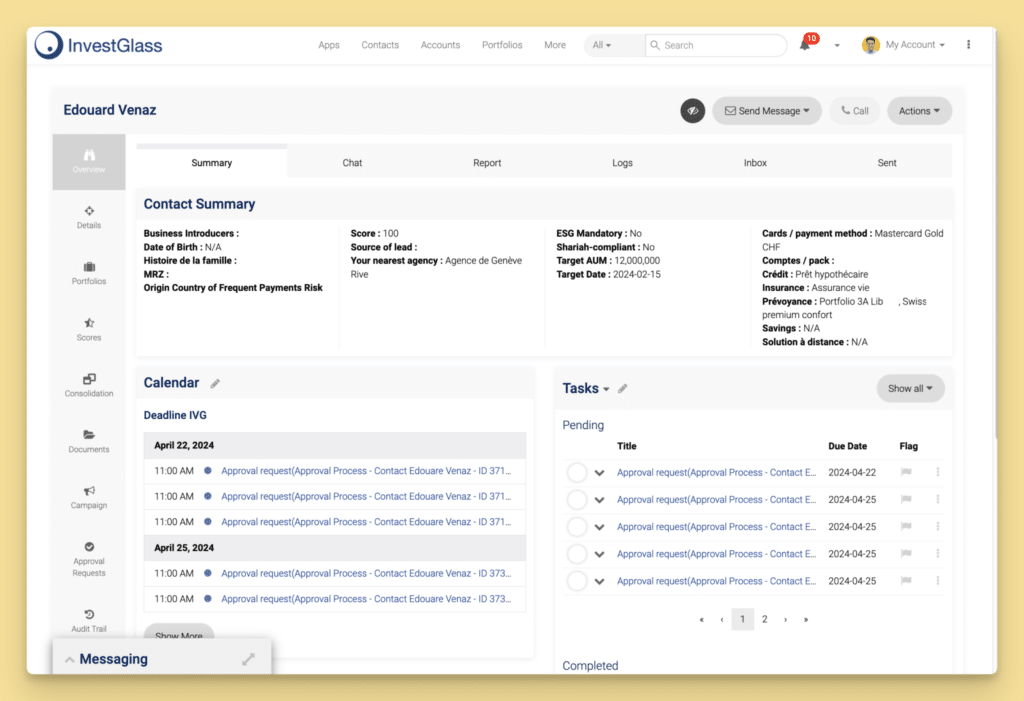
InvestGlass centralises sales promotion employee activities with full audit trails:
能力 | ベネフィット |
|---|---|
デジタル・オンボーディングとKYC | Field staff open accounts on tablets while respecting compliance policies |
ワークフローの自動化 | Approvals, expense claims, territory changes and disciplinary processes streamlined |
Activity logging | Every client interaction, visit and follow-up documented |
On-premise or Swiss hosting | Meets labour inspection and data protection requirements |
例 A mid-sized private bank uses InvestGlass to coordinate 200 field agents across multiple regions. The platform tracks client meetings, manages inventory of promotional materials, and provides HR and compliance teams with real-time visibility into sales activities. Territory changes and performance reviews flow through documented workflows, reducing disputes and ensuring consistent treatment.
Practical Steps for HR and Sales Leaders in 2026
Compliance checklist for 2026:
- Review legal classification of all sales promotion roles in each operating country
- Update contracts to reflect current provisions under the Industrial Relations Code or local equivalent
- Verify if any staff should be treated as workers or non-exempt employees
- Update standing orders and employee handbooks
- Review sales incentive plans for clauses that may encourage unlawful practices
- Implement or upgrade a sovereign CRM to document actual work patterns
- Train line managers on labour law basics and ethical performance management
- Establish clear escalation paths for grievances
Average salary structures, commission plans and cost allocations should be reviewed alongside classification to ensure sustainable growth without compliance gaps.
Future Trends: AI, Remote Selling and Evolving Rules for Sales Promotion Employees
Hybrid selling models are transforming the field. Sales promotion employees now combine in-person visits with video calls and AI-assisted 顧客開拓. This challenges traditional definitions of outside sales work and may affect exemption status in some jurisdictions.
Emerging developments:
- AI tools prioritising leads and personalising offers in wealth management and insurance
- Transparent audit trails inside platforms like InvestGlass becoming a regulatory expectation
- Tighter rules on gig work and platform-based selling potentially expanding protections for commission-based representatives
Organisations should treat 2026 as an opportunity to modernise both compliance and the employee experience for sales promotion staff. Investing in sovereign technology, clear governance and training helps build brand loyalty among potential customers and new customers alike.
Responsible treatment of sales promotion employees strengthens brand credibility, improves lasting impression with clients, and reduces regulatory risk. A successful career in sales depends on employers who understand their obligations just as much as employees who perform their duties. By combining clear classification, documented workflows and secure data management through platforms like InvestGlass, organisations can achieve sustainable growth while protecting everyone involved.
Ready to modernise your sales promotion employee management? Review your classification framework today and explore how InvestGlass can help you document compliance, protect data sovereignty and support your sales team across every jurisdiction.


