
Comprender la titularidad real se ha convertido en una de las obligaciones de cumplimiento más críticas para las instituciones reguladas en 2026, y los requisitos de información sobre la titularidad real ahora constituyen una parte fundamental de estas obligaciones. A medida que los marcos globales contra el lavado de dinero se endurecen y los registros de titulares reales se expanden en todas las jurisdicciones, entidades financieras debe identificar a las personas físicas que en última instancia poseen o controlan a sus clientes corporativos. Esta guía explica qué es un último beneficiario efectivo es, cómo las regulaciones globales definen los umbrales de propiedad y cómo los suizos soberano la tecnología puede automatizar la identificación de UBO preservando al mismo tiempo la soberanía de los datos.
¿Qué es un beneficiario final (UBO)?
Un beneficiario final es la persona o personas físicas que en última instancia poseen o controlan una entidad jurídica o que se benefician en última instancia de sus activos o transacciones. El concepto se encuentra en el centro de los marcos globales contra el lavado de dinero y contra la financiación del terrorismo, constituyendo un requisito fundamental de Conozca a su Cliente y Conozca a su empresa procesos.
En la mayoría de las jurisdicciones, un UBO es alguien que posee o controla directa o indirectamente al menos el 25 por ciento de las acciones o derechos de voto. Algunos regímenes aplican umbrales más bajos, como el 10 o el 15 por ciento, para sectores de mayor riesgo, incluidos los casinos, las industrias extractivas y los proveedores de servicios de activos virtuales.
- El propietario legal que figura en los registros mercantiles puede diferir de la persona real que se encuentra detrás de estructuras corporativas complejas, tales como sociedades holding, accionistas fiduciarios y fideicomisos.
- La titularidad indirecta debe rastrearse a través de cada nivel de la cadena de propiedad para identificar quién es el propietario final de la entidad objetivo.
- Los intereses de propiedad pueden incluir acciones, derechos de voto, participación en las ganancias, otros beneficios económicos y otros intereses de propiedad.
Considere este ejemplo concreto: un individuo posee el 60 por ciento de una sociedad de cartera suiza que posee el 100 por ciento de una filial luxemburguesa. Dicho individuo es considerado el beneficiario último de la filial incluso si su nombre nunca aparece en el registro de accionistas de Luxemburgo. Las instituciones financieras deben examinar estas estructuras para identificar con precisión a los beneficiarios reales.
Por qué importa la identificación del UBO para el cumplimiento y la gestión de riesgos
Los reguladores como el GAFI, la Comisión Europea, la Red de Control de Delitos Financieros de Estados Unidos y la FINMA en Suiza consideran que la transparencia de los beneficiarios finales es esencial para combatir el lavado de dinero, la financiación del terrorismo, la evasión de sanciones, la evasión fiscal y la delincuencia económica.
- El lavado de dinero a nivel mundial representa aproximadamente del 2 al 5 por ciento del PIB mundial, lo que equivale a entre 1,8 y 2 billones de dólares estadounidenses al año.
- Las estructuras de propiedad opacas, las empresas fantasma y los accionistas testaferros se utilizan con frecuencia para ocultar a los verdaderos responsables detrás de esquemas criminales
- Las normas sobre el beneficiario final están diseñadas para disipar esta opacidad y exponer a las personas físicas o jurídicas que ejercen el control último
No identificar y monitorear a los beneficiarios últimos reales crea riesgos graves de cumplimiento. Las instituciones se enfrentan a fuertes multas administrativas, responsabilidad penal para los funcionarios, riesgos reputacionales y la posible pérdida de corresponsalía relaciones bancarias. La reputación de la organización puede sufrir daños duraderos cuando el escrutinio regulatorio revela controles inadecuados de titularidad real.
La identificación robusta del UBO mejora la gestión de riesgo interno al revelar la exposición a personas políticamente expuestas, individuos sancionados, entidades estatales y jurisdicciones de alto riesgo. Comprender la estructura de propiedad completa de los clientes corporativos permite a las instituciones calibrar su debida diligencia y su seguimiento continuo de manera adecuada.
Legislación global sobre el beneficiario final y enfoques regionales
Las normativas sobre la titularidad real están configuradas por estándares internacionales como las Recomendaciones del GAFI y luego se implementan de manera diferente en toda la Unión Europea, el Reino Unido, los Estados Unidos, Suiza y las jurisdicciones de Asia-Pacífico. Esto crea un mapa regulatorio cada vez más complejo que exige a las instituciones comprender múltiples regímenes.

- Expectativas del GAFILos países deben mantener información precisa y actualizada sobre la titularidad real que sea accesible de manera oportuna para las autoridades competentes y las instituciones financieras obligadas.
- Unión EuropeaEl 5 y Sexta Directiva contra el Blanqueo de Capitales introdujo un umbral armonizado del 25 por ciento de propiedad o control, registros de titularidad real y un plazo hasta julio de 2026 para que los Estados miembros operen bases de datos completas sobre la titularidad de las empresas accesibles a las autoridades competentes
- Reino UnidoEl registro de Personas con Control Significativo en Companies House recopila información sobre las personas que ejercen un control significativo sobre las entidades del Reino Unido, mientras que el Registro de Entidades Extranjeras se ocupa de las empresas registradas en el extranjero que poseen propiedades en el Reino Unido. La Ley de Delitos Económicos y Transparencia Corporativa fortalece verificación de identidad y su aplicación a partir de 2024
- Estados UnidosLa Ley de Transparencia Corporativa entró en vigor el 1 de enero de 2024 y exige que las empresas informantes comuniquen la información sobre los beneficiarios reales a FinCEN. Las sanciones por incumplimiento intencional incluyen multas civiles y posible pena de prisión. Las sociedades de responsabilidad limitada y entidades similares formadas en cualquier estado deben cumplir con los requisitos de presentación de informes de BOI.
- SuizaUna combinación de derecho de sociedades, regulación de los mercados financieros y normas contra el blanqueo de capitales exige la identificación de los accionistas mayoritarios y de los titulares reales, con especial importancia para la banca privada y los gestores de patrimonios que atienden a entidades extranjeras
- Asia-PacíficoJurisdicciones como Singapur, Australia, Hong Kong y Malasia están introduciendo progresivamente registros centrales de titularidad real y normas de divulgación más estrictas, lo que crea obligaciones adicionales de presentación de informes de titularidad real para las instituciones con bases de datos internacionales de clientes.
Las normas mundiales sobre la divulgación del beneficiario final desempeñan un papel crucial para mejorar la transparencia, combatir el lavado de dinero y prevenir actividades ilícitas. La mayoría de las jurisdicciones ahora exigen que las entidades revelen información sobre la propiedad de los beneficiarios finales a través de registros públicos o presentaciones reglamentarias, lo que garantiza el cumplimiento legal y la alineación con los estándares internacionales.
Umbrales y definiciones normativas típicos
Esta subsección ofrece una referencia rápida de los umbrales de propiedad y control más comunes utilizados en los regímenes de beneficiarios finales.
- La prueba estándar del 25 por ciento de propiedad o derechos de voto se aplica en muchas jurisdicciones alineadas con el GAFI para determinar quién califica como beneficiario efectivo
- Algunos países aplican umbrales más bajos, como el 10 o el 15 por ciento, para sectores de alto riesgo, incluidos los casinos, los proveedores de servicios de activos virtuales y las industrias extractivas
- Las normativas van más allá de la mera participación accionaria para incluir a personas que ejercen una influencia significativa a través del control del consejo de administración, derechos de veto, poderes de nombramiento o beneficios económicos dominantes
- Cuando ninguna persona física cumple con los criterios de titularidad, las instituciones deben tratar a los altos cargos directivos, como el director ejecutivo o el director gerente, como el beneficiario efectivo de facto a efectos de cumplimiento.
- Tanto los mecanismos de control directo como indirecto deben ser considerados al determinar el control de gestión.
Propietario Beneficiario Final frente a Propietario Beneficiario
Muchos profesionales utilizan los términos beneficiario efectivo y beneficiario último de manera indistinta, aunque algunas regulaciones y marcos de riesgo establecen una distinción práctica entre múltiples beneficiarios efectivos y la única persona con el control último.
- Un beneficiario final es cualquier persona física que disfruta de los beneficios de la propiedad, como dividendos o la apreciación de activos, o que tiene un control significativo sobre las decisiones, incluso si no posee la participación mayoritaria
- El beneficiario final (UBO) es generalmente el individuo que se encuentra en la cima de la cadena de propiedad con el mayor nivel de control o beneficio, la persona cuyas decisiones guían efectivamente a todo el grupo
- En muchos regímenes de información, como la ley de transparencia corporativa, los reguladores no establecen una distinción jurídica entre beneficiario efectivo y beneficiario último efectivo a efectos de las obligaciones de presentación de informes, tratando a todos los que alcanzan los umbrales de manera igualitaria
- Los equipos de cumplimiento normativo todavía consideran que el concepto es útil para las evaluaciones de riesgo internas y para determinar quién merece un escrutinio regulatorio reforzado.
Considere una empresa con cuatro accionistas que poseen cada uno el 20 por ciento. Los cuatro son beneficiarios finales. Sin embargo, si un accionista también posee derechos de voto especiales y poderes de nombramiento en la junta directiva, esa persona puede ser tratada como el beneficiario final último a efectos de la debida diligencia ampliada porque ejerce el control efectivo último.
¿Quién no califica como UBO?
No todas las personas nombradas en un registro de accionistas o documento corporativo califican como beneficiario efectivo o UBO. Comprender estas exclusiones previene errores de cumplimiento.
- Los accionistas fiduciarios que poseen acciones solo de nombre para otra persona, sin recibir beneficios económicos ni ejercer un control sustancial, no son UBO
- Los fideicomisarios o proveedores de servicios corporativos que administran estructuras en nombre de fideicomitentes o beneficiarios no son beneficiarios finales a menos que también disfruten del beneficio y de dicho control de los activos
- Los padres que poseen acciones en fideicomiso para hijos menores de edad, los custodios y los fiduciarios sin poderes de gestión (bare trustees) normalmente no se consideran beneficiarios finales (UBO) según las normas contra el lavado de dinero (AML), ya que el interés beneficiario recae en el beneficiario final.
- Los intermediarios puros, como los corredores o los apoderados exigidos por las normas de cotización locales, no deben confundirse con los beneficiarios finales; las instituciones deben examinar estas capas para identificar a los propietarios humanos reales
Titular Real y Control
Un beneficiario final es la persona física que en última instancia posee o controla una empresa y ejerce una influencia significativa sobre sus operaciones, ya sea por medios directos o indirectos. En el contexto de la titularidad real, el control puede ejercerse no solo mediante la tenencia de acciones, sino también a través de derechos de voto, control de gestión u otros mecanismos que otorguen un control sustancial sobre las decisiones de la empresa. La Red de Control de Delitos Financieros (FinCEN) define a un beneficiario final como alguien que posee al menos el 25 por ciento de los intereses de propiedad de una empresa o que ejerce un control sustancial, como la capacidad de nombrar o destituir a los directores o influir en decisiones comerciales clave.
Comprender la titularidad beneficiaria y las distintas formas de control es esencial para identificar al beneficiario último, en particular en estructuras de propiedad complejas donde la influencia puede ejercerse a través de capas de entidades jurídicas o acuerdos especiales de voto. La Ley de Transparencia Corporativa y normativas similares en todo el mundo exigen a las organizaciones ir más allá de la propiedad nominal e identificar a la persona física que en última instancia posee o controla el negocio. Este enfoque refuerza la transparencia corporativa y ayuda a prevenir delitos financieros al garantizar que quienes tienen una influencia significativa o el control último estén debidamente identificados y sujetos a escrutinio regulatorio.
Cómo identificar a un beneficiario final en la práctica
La identificación de un UBO es un proceso estructurado integrado en un marco más amplio de Conozca a su Cliente y Conozca su Negocio, respaldado tanto por políticas internas como por tecnología.
- Fondo documentalRecopilar del cliente los documentos corporativos, tales como la escritura de constitución, los registros de acciones, las tablas de capitalización y los organigramas del grupo
- Mapeo de propiedadRastree la propiedad directa e indirecta a través de cada capa de la estructura, calculando los porcentajes acumulativos mediante la multiplicación de las participaciones en toda la cadena de propiedad.
- Identificación de controlesIdentificar a las personas con derechos de control significativos, tales como vetos, votos de calidad, acciones de oro o derechos contractuales, incluso cuando su participación accionaria nominal parezca limitada
- Verificación de registroContrastar con registros de titularidad real, bases de datos comerciales, registros mercantiles y presentaciones oficiales para verificar la información de propiedad obtenida de los clientes
- DocumentaciónRegistre la determinación final con una justificación clara en un expediente de Conozca a su Cliente (KYC)AUDITABLE, incluidos diagramas o gráficos que muestren la estructura de propiedad completa.
Elementos Clave de la Debida Diligencia sobre los Beneficiarios Finales
Una vez identificado un beneficiario final, las empresas deben realizar la debida diligencia basada en riesgos, proporcional a la naturaleza de la relación comercial y a los requisitos reglamentarios.
Tipo de diligencia debida | Actividades |
|---|---|
Estándar | Verificar la identidad con pasaportes o documentos nacionales de identidad, obtener comprobante de domicilio, cotejar con registros oficiales |
Mejorado | Recopilar documentación sobre el origen de la riqueza y el origen de los fondos, realizar una investigación de antecedentes más profunda para jurisdicciones de alto riesgo o personas políticamente expuestas |
Revisión periódica | Actualizar la información cada uno a tres años según la calificación de riesgo, actualizar los registros cuando se produzcan cambios de propiedad a través de adquisiciones o reestructuraciones corporativas |
Documentar las actividades comerciales, la ocupación y la relación prevista con la institución del beneficiario final (UBO) es especialmente importante en las relaciones de banca privada, gestión de activos y préstamos corporativos, donde el monitoreo continuo es intensivo.
Evaluación: PEP, Sanciones y Noticias Adversas
La verificación de los beneficiarios finales con fuentes de datos externas es una parte fundamental de un programa eficaz de cumplimiento en materia de delitos financieros que ayuda a identificar a los beneficiarios finales vinculados a otros delitos financieros.
- Investigación de personas políticamente expuestasLos UBO que son funcionarios públicos nacionales actuales o anteriores, o sus asociados cercanos o familiares, se consideran de mayor riesgo y activan medidas mejoradas
- Selección de sancionesLas instituciones deben verificar si un UBO aparece en listas como la lista consolidada de la UE, las listas de sanciones de la OFAC, la lista de sanciones del Reino Unido o las listas de la SECO de Suiza, y deben bloquear las relaciones cuando esté prohibido
- Análisis de medios adversosLas comprobaciones estructuradas de fuentes de noticias acreditadas, registros judiciales y comunicados de prensa reglamentarios revelan implicación en fraude, cohecho, delitos fiscales o delincuencia organizada, incluso cuando no existe ninguna sanción formal.
- Monitoreo continuoLos reguladores esperan que las instituciones implementen un monitoreo continuo o periódico para que las nuevas designaciones o medidas coercitivas que afecten a los UBO se detecten con prontitud de forma continua.
Información y reporte de titularidad beneficiosa
La información sobre el beneficiario efectivo abarca los detalles de las personas que finalmente poseen o controlan una empresa, incluidos sus nombres, direcciones y documentos de identificación. Las empresas informantes están obligadas por ley a revelar esta información a las autoridades reguladoras, como la Red de Control de Delitos Financieros (FinCEN, por sus siglas en inglés), como parte de sus obligaciones de cumplimiento. La presentación de informes de información sobre el beneficio efectivo es un paso fundamental para promover la transparencia y prevenir el uso indebido de las entidades corporativas para el lavado de dinero, la financiación del terrorismo y otros delitos financieros.
La presentación precisa y actualizada de la información sobre la titularidad real no es un ejercicio puntual. Las empresas deben implementar un seguimiento continuo para garantizar que cualquier cambio en la propiedad o el control se refleje rápidamente en sus registros y se comunique a las autoridades pertinentes. Esta obligación continua ayuda a mantener la integridad de la información sobre la titularidad y respalda los esfuerzos para combatir los delitos financieros. Al mantener actualizada la información sobre la titularidad real, las organizaciones pueden demostrar el cumplimiento de los requisitos regulatorios y reducir el riesgo de medidas coercitivas o daños a su reputación.
Monitoreo continuo y gobernanza de la información sobre el beneficiario final
Las comprobaciones de UBO no son una actividad puntual de incorporación, sino un proceso continuo que debe reflejar los cambios en la propiedad, los cambios en el control y las variaciones en el perfil de riesgo a lo largo del ciclo de vida del cliente.
- Establecer políticas formales que exijan a los clientes informar a la institución cuando su estructura de propiedad cambie, estableciendo obligaciones contractuales en los documentos de apertura de cuentas.
- Active las revisiones periódicas de KYC anualmente para clientes de alto riesgo y cada dos o tres años para clientes de menor riesgo para actualizar la información del UBO y reevaluar las calificaciones de riesgo
- Implementar estructuras de gobernanza como comités de KYC, procedimientos de escalamiento para estructuras corporativas complejas y flujos de trabajo de aprobación que involucren tanto a la primera línea de negocio como a los equipos de cumplimiento
- Mantener un registro preciso con control de versiones, registros con marca de tiempo y pistas de auditoría que demuestren quién validó cada determinación de UBO y cuándo
Clasificación de UBOs basada en el riesgo
No todos los UBO presentan el mismo nivel de riesgo. La clasificación basada en el riesgo respalda la diligencia debida proporcional y el monitoreo continuo mientras se gestionan los costos de cumplimiento.
Nivel de riesgo | Características | Enfoque de diligencia debida |
|---|---|---|
Bajo | Residentes de países de baja riesgo, fuentes de ingresos transparentes, propiedad directa | Verificación simplificada, revisión cada 3-5 años |
Medio | Estructuras transfronterizas, sectores de mayor riesgo, algunas deficiencias en el régimen de ALD | Debida diligencia estándar, revisión de anual a bianual |
Alta | Personas políticamente expuestas, conexiones con terceros países de alto riesgo, estructuras complejas sin una justificación económica aparente | Debida diligencia mejorada, aprobación de la alta dirección, revisión anual |
Las instituciones deben documentar los criterios de cada nivel de riesgo y vincularlos a obligaciones específicas de diligencia debida y seguimiento.
Transparencia Corporativa y la Ley de Transparencia Corporativa
La Ley de Transparencia Corporativa (CTA) representa un avance significativo en el esfuerzo global por mejorar la transparencia corporativa y combatir el uso indebido de empresas fantasma con fines ilícitos. En virtud de la CTA, las empresas informantes están obligadas a revelar información sobre la propiedad beneficiaria a FinCEN, que mantiene un registro confidencial accesible a las agencias gubernamentales autorizadas. Esta medida está diseñada para evitar que las personas se oculten detrás de empresas fantasma anónimas para participar en el lavado de dinero, la financiación del terrorismo u otros delitos financieros.
Al exigir la divulgación de información sobre la titularidad, la CTA mejora la transparencia corporativa y reduce los riesgos de cumplimiento para las instituciones financieras y otras entidades reguladas. La ley también respalda esfuerzos más amplios para fortalecer la integridad del sistema financiero al dificultar que los malhechores oculten sus identidades y actividades. Las empresas deben familiarizarse con los requisitos de la CTA, garantizar informes oportunos y precisos, and implementar procesos sólidos para mantener el cumplimiento. No hacerlo puede resultar en sanciones significativas y daños a la reputación de la organización.
Papel de las instituciones financieras en el cumplimiento del UBO
Las instituciones financieras están a la vanguardia del cumplimiento de la titularidad real, desempeñando un papel fundamental en la identificación y verificación de los beneficiarios finales de sus clientes. En virtud de las normativas contra el blanqueo de capitales, estas instituciones están obligadas a realizar una rigurosa diligencia debida con el cliente, lo que incluye la recopilación y verificación de la información sobre la titularidad real y la notificación de cualquier transacción sospechosa a las autoridades competentes.
El cumplimiento eficaz del UBO implica algo más que la identificación inicial. Las instituciones financieras deben implementar un monitoreo continuo para detectar cambios en la propiedad o el control, evaluar el perfil de riesgo de los beneficiarios finales y garantizar que sus registros sigan siendo precisos y estén actualizados. Este enfoque proactivo ayuda a prevenir el lavado de dinero, el financiamiento del terrorismo y otros delitos financieros al garantizar que quienes finalmente poseen o controlan una empresa estén sujetos al escrutinio adecuado. Los sistemas y procesos sólidos para identificar, informar y monitorear la información sobre la titularidad beneficiaria son esenciales para cumplir con los requisitos regulatorios y salvaguardar la integridad del sistema financiero.
Cómo InvestGlass automatiza UBO, KYC y KYB preservando la soberanía de los datos
InvestGlass es una plataforma suiza soberana de CRM y automatización diseñada específicamente para instituciones financieras y organizaciones reguladas que deben gestionar UBO, KYC y KYB a gran escala manteniendo al mismo tiempo el control total de los datos de los clientes.
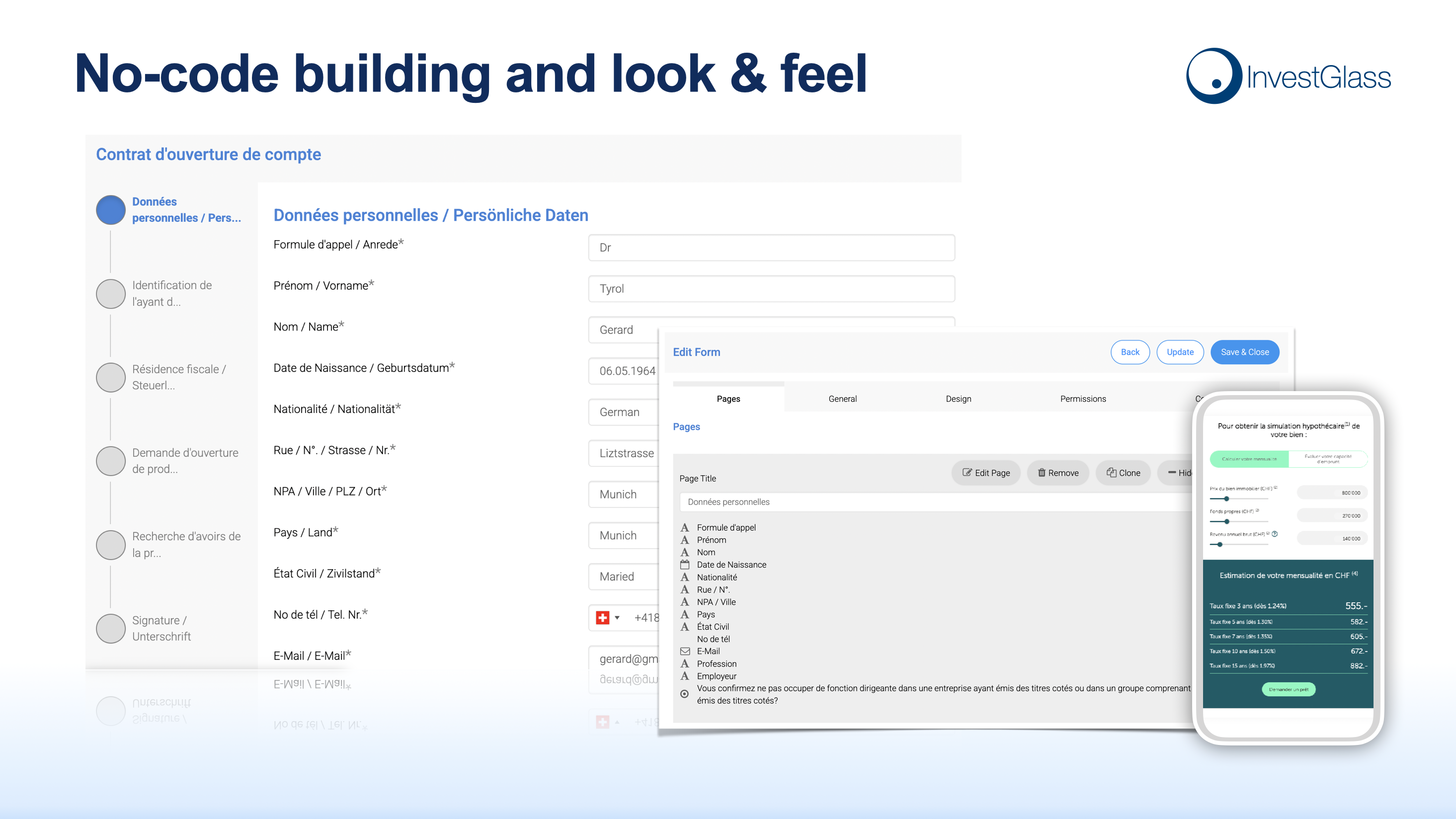
- Incorporación digital formularios recopilar información estructurada sobre la titularidad beneficiaria de clientes corporativos, incluidos directores, accionistas, porcentajes de participación y derechos de control, introduciendo los datos directamente en el CRM sin necesidad de volver a introducirlos manualmente
- Flujos de trabajo automatizados calcular la propiedad indirecta, identificar a las personas que alcanzan los umbrales reglamentarios, como el 25 por ciento de propiedad, y derivar los casos complejos a los equipos de cumplimiento para su revisión
- Flujos de trabajo de cumplimiento integrados orquestar la verificación de identidad, la gestión de documentos, la puntuación de riesgos y las comprobaciones de PEP y sanciones utilizando los proveedores de datos elegidos por la institución sin imponer la dependencia de infraestructura estadounidense o china
- Opciones de alojamiento soberano permitir el despliegue íntegramente en Suiza o en las instalaciones del propio centro de datos del cliente, dando apoyo a clientes europeos y suizos que priorizan la soberanía de los datos y la protección frente a reclamaciones de acceso extraterritorial
- InvestGlass ofrece una opción ideal para bancos, gestores de patrimonio, gestores de activos, aseguradoras e instituciones públicas que buscan una alternativa europea a los grandes actores estadounidenses o chinos. CRM en la nube mientras se beneficia de la automatización impulsada por la inteligencia artificial
Casos de uso prácticos de UBO admitidos por InvestGlass
Los siguientes escenarios ilustran cómo InvestGlass simplifica el cumplimiento de los UBO para los socios comerciales en todo el sector financiero.
- A banco privado en Ginebra incorpora a un complex family office en 2026. InvestGlass recopila datos de propiedad multijurisdiccional, visualiza la estructura, identifica al beneficiario final y activa un flujo de trabajo de diligencia debida reforzada debido a la exposición a PERSONAS políticamente expuestas (PEP)
- En gestor de activos en Luxemburgo mantiene un registro actualizado de beneficiarios finales para cientos de inversores de fondos, con recordatorios automatizados cuando los datos de UBO deben ser revisados o cuando las transferencias de acciones alteran los umbrales de propiedad
- A aseguradora regional en el Espacio Económico Europeo se basa en la implementación local de InvestGlass para cumplir con las normas locales de residencia de datos mientras realiza controles de sanciones y medios adversos sobre los beneficiarios finales antes de emitir grandes pólizas corporativas
- InvestGlass portal del cliente solicita de forma segura documentación actualizada de UBO a entidades corporativas, como nuevos registros de accionistas o escrituras de fideicomiso, adjuntando automáticamente los documentos a los registros pertinentes
Soberanía de datos e infraestructura no estadounidense y no china
InvestGlass está diseñado y alojado en Suiza, lo que ofrece a los clientes una alternativa a los ecosistemas de CRM estadounidenses y chinos, y reduce la exposición a la vigilancia de países extranjeros o a las leyes de acceso a datos extraterritoriales.
- Las instituciones pueden elegir entre el alojamiento en la nube suiza gestionado por InvestGlass o una instalación totalmente local (on-premise), manteniendo los datos de UBO y KYC bajo control exclusivo.
- La plataforma se alinea con las expectativas europeas de privacidad, incluidos los principios subyacentes al Reglamento General de Protección de Datos y a la ley suiza de protección de datos
- Este modelo de soberanía es particularmente atractivo para bancos, "family offices" y organismos del sector público que desean evitar alojar datos estratégicos de clientes en nubes públicas extranjeras.
- Para las organizaciones que buscan mejorar la transparencia corporativa mientras protegen la soberanía del cliente, InvestGlass ofrece un enfoque mesurado basado en una regla provisional final de control: la suya
Conclusión: Integración del UBO en un Marco de Cumplimiento Sostenible
La identificación de los titulares finales de los intereses económicos se ha convertido en un pilar fundamental de la lucha contra el blanqueo de capitales, la financiación del terrorismo y la transparencia empresarial en todo el mundo. Los organismos reguladores siguen ampliando sus expectativas a través de iniciativas como los registros de titulares finales de los intereses económicos de la UE, previstos para mediados de 2026, y las mejoras continuas que se están introduciendo en los regímenes de notificación de los titulares finales de los intereses económicos a nivel mundial.
- Mapee las estructuras de propiedad metódicamente, identificando a las personas que poseen o controlan en o por encima de los umbrales reglamentarios
- Lleve a cabo la debida diligencia y el filtrado proporcionados, manteniendo registros precisos durante todo el ciclo de vida del cliente.
- Trate la gestión de los UBO como un proceso de gobernanza continuo apoyado por la tecnología en lugar de un ejercicio de documentación puntual.
- El panorama regulatorio seguirá evolucionando; prepararse ahora reduce la carga de cumplimiento futuro.
InvestGlass ofrece una plataforma suiza soberana de CRM y automatización que ayuda a las instituciones a integrar la identificación de UBO, KYC y KYB en los flujos de trabajo diarios, al tiempo que preserva el control sobre los datos confidenciales de los clientes. Para las organizaciones listas para fortalecer sus procesos de titularidad real con infraestructura soberana, explorando InvestGlass ofrece un camino práctico a seguir.

