
Introducción
Welcome to your comprehensive guide to customer onboarding strategies for financial services professionals. In today’s highly regulated and competitive financial landscape, effective customer onboarding strategies are essential for building trust, ensuring compliance, and driving long-term business growth. This guide is designed specifically for banking, wealth management, and financial services professionals who want to optimise their onboarding processes, reduce churn, and deliver exceptional client experiences.
Customer onboarding is the process of guiding new users from signup to their first meaningful win inside your product. It is essential for educating customers on how to use a product effectively, which in turn boosts engagement and retention. The onboarding process starts immediately after the purchase and continues until the customer is comfortable and self-sufficient with the product or service.
Why do customer onboarding strategies matter? Because onboarding sets the tone for the entire customer experience, influences their perception of your brand, and directly impacts retention, loyalty, and revenue. Poor onboarding can lead to frustration and abandonment, while a well-designed onboarding journey can transform new customers into long-term advocates for your business.
Summary: Most Effective Customer Onboarding Strategies
The most effective customer onboarding strategies for financial services include:
- Personalized welcome emails and interactive product tours: These help new clients feel valued and guide them through their first steps.
- Personalized onboarding experiences: Tailoring the onboarding journey to each client’s goals and needs increases engagement and satisfaction.
- Automation and digital tools: Automating routine onboarding tasks reduces churn and improves customer retention.
- Clear onboarding checklists and structured flows: Breaking down the process into manageable steps helps customers understand what to do next.
- Continuous support and follow-up communication: Ongoing guidance after onboarding keeps customers confident and engaged.
- Collecting and acting on customer feedback: Regularly gathering feedback helps refine the onboarding experience and address pain points.
- Tracking key onboarding metrics: Monitoring completion rates, time-to-first-value, and feature adoption rates helps identify friction points and improve the process.
- Gamification elements: Progress bars and milestones make onboarding more engaging and motivating.
- Impact on retention and churn: Effective customer onboarding directly impacts customer retention and loyalty, while poor onboarding can lead to frustration and abandonment. Companies that focus on customer solutions during onboarding can reduce churn by a significant percentage.
By implementing these strategies, financial institutions can increase customer lifetime value, foster deeper engagement, and create a foundation for long-term business success.
What Are Customer Onboarding Strategies?
Customer onboarding strategies are structured approaches designed to welcome, educate, and integrate new clients into a business’s ecosystem. In the financial sector, this involves a delicate balance between providing a frictionless user experience and adhering to strict regulatory requirements.
Customer onboarding is the process of guiding new users from signup to their first meaningful win inside your product. It is essential for educating customers on how to use a product effectively, which in turn boosts engagement and retention. The onboarding process starts immediately after the purchase and continues until the customer is comfortable and self-sufficient with the product or service.
Customer onboarding matters because it directly impacts customer retention, satisfaction, and long-term success, influencing key business metrics such as renewal rates and reducing churn. A robust onboarding process sets the tone for the entire client relationship. It is the critical first impression that can either build trust or lead to immediate churn.
Effective strategies go beyond simple data collection. They encompass the entire customer journey from the initial sign-up to the moment the client achieves their first success with your product or service. For banks and wealth managers, this means guiding clients through complex account setups while ensuring they feel supported and valued.
A well-designed onboarding process helps customers realise the value of a product or service quickly, and customers who experience effective onboarding are more likely to become loyal advocates for the brand.
Why Is New Customer Onboarding Crucial in Financial Services?
New customer onboarding is crucial because it directly impacts client retention, operational efficiency, and regulatory compliance. A poor onboarding experience is one of the leading causes of client abandonment in the financial industry. When the process is cumbersome, requires repetitive data entry, or lacks clear communication, clients quickly become frustrated and may abandon the application altogether.

Impact on Retention and Loyalty
A streamlined and engaging onboarding process fosters loyalty and increases the lifetime value of the client. It also reduces the administrative burden on your staff, allowing them to focus on higher-value tasks. Furthermore, a well-designed process ensures that all necessary Know Your Customer (KYC) and Anti-Money Laundering (AML) checks are completed accurately, mitigating legal and financial risks.
The significance of new customer onboarding extends far beyond the initial transaction. It is the critical juncture where promises made during the marketing and sales phases are either validated or broken. In financial services, where the products are often intangible and complex, this validation is essential for building trust. If the onboarding process is smooth and professional, it reinforces the client’s decision to choose your institution.
Eficiencia operativa
The cost of acquiring a new customer in financial services is notoriously high. Campañas de marketing, sales efforts, and promotional offers all require significant investment. If a client abandons the process during onboarding, all of that investment is lost. Therefore, optimising new customer onboarding is not just about improving the client experience; it is a critical strategy for protecting and maximising your return on investment.
From an operational perspective, inefficient onboarding processes can be a major drain on resources. Manual data entry, paper-based forms, and disjointed communication channels all contribute to delays and errors. This not only frustrates the client but also increases the workload for your staff. By streamlining and automating new customer onboarding, institutions can significantly reduce operational costs and improve overall efficiency.

Cumplimiento de la normativa
The regulatory environment in financial services is another major factor driving the importance of onboarding. Institutions are subject to strict KYC and AML regulations, which require them to collect and verify extensive information about their clients. Failure to comply with these regulations can result in severe penalties and reputational damage. A robust onboarding process ensures that all necessary compliance checks are integrated seamlessly and executed accurately.
Personalisation and Engagement
New customer onboarding provides a unique opportunity to gather valuable data about the client. This data can be used to personalise future interactions, tailor product recommendations, and identify cross-selling opportunities. By capturing a comprehensive profile of the client during onboarding, institutions can lay the groundwork for a more profitable and enduring relationship.
The impact of onboarding on client retention cannot be overstated. Studies consistently show that clients who have a positive onboarding experience are significantly more likely to remain loyal to the institution over the long term. They are also more likely to recommend the institution to others, providing a valuable source of referral business. In a highly competitive market, this loyalty is a critical asset.
Conversely, a negative onboarding experience can have lasting repercussions. Clients who feel frustrated or undervalued during the initial stages of the relationship are much more likely to switch to a competitor. Even if they do complete the onboarding process, they may remain hesitant to fully engage with the institution’s products and services. This highlights the critical importance of getting new customer onboarding right the first time.
The transition from prospect to client is a delicate phase. The client is often experiencing a mix of excitement and anxiety, particularly when dealing with significant financial decisions. The onboarding process must be designed to alleviate this anxiety and reinforce the client’s confidence in the institution. This requires clear communication, empathetic support, and a transparent process.
In the context of wealth management, new customer onboarding is even more critical. High-net-worth individuals expect a premium experience, characterised by high levels of personalisation and discretion. The onboarding process must reflect these expectations, providing a seamless and sophisticated journey that aligns with the client’s lifestyle and preferences.
The Role of Technology
The role of technology in facilitating effective new customer onboarding is undeniable. Modern CRM platforms, such as InvestGlass, provide the tools necessary to automate workflows, integrate compliance checks, and deliver a highly personalised experience. By leveraging these technologies, institutions can overcome the traditional challenges of onboarding and create a significant competitive advantage.
It is also important to recognise that new customer onboarding is not a one-time event, but rather the beginning of an ongoing relationship. The strategies and processes implemented during onboarding should set the stage for continuous engagement and support. This includes providing ongoing education, proactive communication, and easy access to account information and services.
Medir el éxito
The measurement of onboarding success is essential for continuous improvement. Institutions must track key metrics, such as time-to-onboard, abandonment rates, and client satisfaction scores, to identify areas of friction and implement targeted solutions. This data-driven approach ensures that the onboarding process remains effective and aligned with the evolving needs of the client.
In summary, new customer onboarding is a critical strategic imperative for financial institutions. It impacts every aspect of the business, from client retention and operational efficiency to regulatory compliance and long-term profitability. By investing in robust onboarding strategies and leveraging advanced technologies, institutions can transform this critical phase into a powerful engine for growth and success.
With an understanding of why onboarding is so important, let’s explore how digital transformation has changed the onboarding landscape.
How Has Digital Onboarding Changed the Landscape?
Digital onboarding has revolutionised the financial services landscape by replacing manual, paper-based processes with automated, online workflows. This shift has dramatically reduced the time it takes to open an account, moving from days or weeks to mere minutes.
The Rise of Digital Convenience
Clients now expect the convenience of opening an account from their mobile devices, at any time and from anywhere. Providing clear onboarding guidance for mobile apps is essential, as it increases retention and customer satisfaction by ensuring users can easily navigate the process on their preferred devices.
Tecnología y seguridad
This digital transformation relies heavily on advanced technologies such as biometric verification, optical character recognition (OCR), and electronic signatures. These tools not only enhance the user experience but also improve the accuracy and security of data collection. Platforms like InvestGlass are at the forefront of this revolution, offering customisable digital onboarding solutions that cater to the specific needs of financial institutions.
Impact on Retention and Revenue
A well-designed onboarding journey has a direct impact on retention, adoption, and long-term revenue, making it a critical component of any customer onboarding strategy.
As digital onboarding becomes the norm, let’s examine the best practices that can help you deliver a seamless and engaging client experience.
What Are the Best Practices for Client Onboarding?
Customer onboarding best practices revolve around simplicity, transparency, and personalisation. The primary goal is to make the process as effortless as possible for the client while gathering all necessary information. Achieving quick wins early in the onboarding process can encourage customers, build confidence, and create momentum.
Key Best Practices
- Create a structured onboarding plan: Use onboarding checklists and clear onboarding materials to guide new customers through essential tasks.
- Personalized welcome emails and interactive product tours: These help customers understand how to use the product effectively and ensure they feel supported from the outset.
- Incorporate gamification elements: Progress bars and milestones motivate users during onboarding.
- Personalise the experience: Tailor the onboarding journey based on the client’s profile, needs, and preferences.
- Provide omnichannel support: Offer help across multiple channels, such as phone, email, live chat, and video conferencing.
- Collect customer feedback: Use surveys and feedback forms to capture valuable insights and improve the onboarding experience.
- Continuously test and optimise: Use A/B testing and analytics to refine the onboarding workflow and address friction points.
1. Simplify Data Collection
- Avoid asking for the same information multiple times.
- Utilise data pre-fill capabilities from existing databases or third-party integrations.
- Use intuitive, mobile-responsive forms with clear mandatory fields.
- Apply data minimisation principles only request information necessary for compliance and account setup at each stage.
- Design user interfaces with clear typography, logical grouping, and helpful tooltips.
2. Ensure Transparent Communication
- Keep clients informed about the status of their application at every stage.
- Communicate promptly if there are delays or additional information is required.
- Use automated email or SMS notifications to keep clients engaged.
- Provide a self-service portal for real-time application tracking.
- Be upfront about requirements and timelines from the beginning.
3. Personalise the Experience
- Tailor the onboarding journey based on the client’s profile, needs, and preferences.
- Use the client’s name in communications and provide relevant educational materials or product recommendations.
- Leverage data analytics to dynamically adjust onboarding steps.
- Highlight relevant investment options or features based on client interests.
4. Implement Omnichannel Support
- Offer support across phone, email, live chat, and video conferencing.
- Integrate live chat into the onboarding workflow for immediate assistance.
- Equip support teams with tools and access to client application status for contextual help.
- Maintain a dedicated customer success team for ongoing support after onboarding.
5. Continuously Test and Optimise
- Use A/B testing to identify the most effective forms, messaging, and interfaces.
- Regularly solicit customer feedback to uncover pain points.
- Track onboarding metrics to measure success and identify areas for improvement.
- Implement changes based on data and feedback to keep the process best-in-class.
By following these best practices, you can reduce churn, increase engagement, and ensure a positive onboarding experience for every client.
Now that we’ve covered best practices, let’s look at how to seamlessly integrate compliance requirements into your onboarding process.
How to Integrate KYC and AML Compliance Seamlessly?
Integrating KYC and AML compliance seamlessly requires embedding these checks directly into the digital onboarding workflow. This ensures that compliance is not an afterthought but a fundamental part of the process. The challenge is to perform rigorous checks without creating unnecessary hurdles for the client.
Steps for Seamless Compliance Integration
- Automate identity verification: Use tools that instantly cross-reference client data against global watchlists and sanctions databases.
- Utilise OCR and AI: Extract data from ID documents and populate application forms automatically.
- Real-time AML screening: Screen extracted data against PEP databases and adverse media sources.
- Apply a risk-based approach: Fast-track low-risk clients and apply enhanced due diligence for higher-risk profiles.
- Centralise compliance data: Store all onboarding and compliance data in a unified, secure system.
- Leverage APIs: Integrate best-in-class third-party verification and screening providers.
- Enable ongoing monitoring: Continuously update and monitor client data throughout the lifecycle.
By embedding compliance into the onboarding workflow, you can ensure regulatory requirements are met without sacrificing user experience.
With compliance integrated, automation becomes the next key to scaling and optimising your onboarding process.
What Role Does Automation Play in the Onboarding Process?
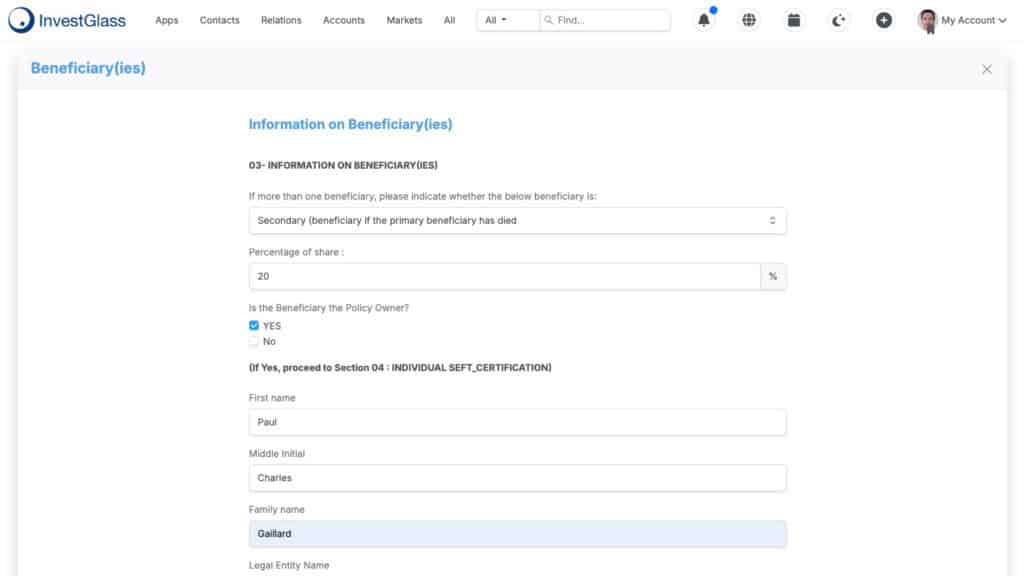
Automation plays a pivotal role in the onboarding process by eliminating manual tasks, reducing errors, and accelerating turnaround times. By automating routine processes, financial institutions can scale their operations efficiently and provide a more consistent client experience.
Key Areas of Automation
- Document Verification: Use AI and machine learning to extract and validate data from identity documents, reducing manual review and speeding up KYC.
- Workflow Routing: Automatically direct applications to the appropriate department or individual for review and approval.
- Client Communication: Trigger automated notifications at key milestones, request missing information, and send reminders.
- Data Entry and CRM Updates: Integrate onboarding platforms with core banking systems and CRMs to automatically populate client data.
The Strategic Value of Automation
Automation transforms onboarding from a back-office burden into a front-office advantage. It enables faster, smoother, and more secure onboarding, leading to higher conversion rates, increased client satisfaction, and improved profitability.
With automation in place, it’s important to measure the effectiveness of your onboarding strategies.
How Can You Measure Onboarding Success?
Measuring onboarding success is critical for identifying areas of improvement and demonstrating the ROI of your onboarding strategies. Customer onboarding metrics are essential for evaluating how effectively your onboarding process guides new users.
Métricas clave
- Time to onboard: How long it takes for a client to complete onboarding.
- Application abandonment rate: Percentage of clients who start but do not finish onboarding.
- Cost per acquisition: Total cost to acquire and onboard a new client.
- Onboarding completion rate: Percentage of clients who complete all onboarding steps.
- Time-to-first-value: How quickly clients achieve their first meaningful outcome.
- Feature adoption rate: Which features customers use during onboarding and which they skip.
- Early churn rate: Percentage of clients who cancel in the first days or weeks after signup.
- Client satisfaction scores: Gathered through feedback surveys at key milestones.
Gathering Client Feedback
- Use surveys and feedback forms to understand the client’s perspective.
- Ask about clarity of instructions, ease of use, and helpfulness of support staff.
- Collect both quantitative and qualitative data to identify pain points and opportunities for improvement.
By tracking these metrics and acting on feedback, you can continuously refine your onboarding process.
Next, let’s compare traditional and digital onboarding to highlight the benefits of modern approaches.
Comparison: Traditional vs. Digital Onboarding
Característica | Traditional Onboarding | Integración digital |
|---|---|---|
Velocidad | De días a semanas | De minutos a horas |
Conveniencia | Requires in-person visits | Anytime, anywhere access |
Data Accuracy | Prone to manual errors | High accuracy with automated capture |
Conformidad | Manual checks, higher risk | Automated, real-time screening |
Experiencia del cliente | Often frustrating and tedious | Seamless and engaging |
Coste | High operational costs | Lower cost per acquisition |
With digital onboarding offering clear advantages, let’s see how InvestGlass can help you streamline your process.
How Does InvestGlass Streamline New Customer Onboarding?
InvestGlass streamlines new customer onboarding by providing a comprehensive, customisable, and automated platform designed specifically for the financial sector. As a Swiss-based soberano CRM, it prioritises data security and compliance while delivering a superior user experience.
Características principales
- Digital onboarding module: Create tailored workflows that guide clients step-by-step.
- Built-in KYC and AML automation: Ensure regulatory requirements are met without slowing down onboarding.
- Robust API capabilities: Seamlessly integrate with existing systems for a unified ecosystem.
- Dedicated customer success and support teams: Oversee onboarding, provide personalised guidance, and offer ongoing support.
With InvestGlass, financial institutions can automate workflows, ensure compliance, and deliver a seamless digital experience that clients will love.
For wealth management professionals, onboarding requires even more advanced strategies.
Advanced Strategies for Wealth Management Onboarding
Wealth management onboarding requires a more nuanced approach due to the complexity of the services and the high expectations of the clients. The process must be highly personalised, secure, and capable of handling extensive documentation and financial profiling.
Comprehensive Financial Profiling
- Gather detailed information about assets, liabilities, income, and expenses.
- Use dynamic forms and interactive questionnaires for engagement.
- Assess risk tolerance and investment objectives with psychometric tools.
Secure Document Sharing
- Provide a secure client portal for encrypted document exchange.
- Allow clients to upload sensitive financial documents safely and easily.
- Enable secure, two-way communication between clients and relationship managers.
Multi-Party Onboarding
- Handle complex account structures (trusts, corporations, family offices).
- Allow primary applicants to invite other parties for KYC and AML checks.
- Track progress and consolidate results for all involved parties.
Integration with Portfolio Management Systems
- Seamlessly transfer client data and investment profiles to portfolio management systems.
- Ensure portfolio managers have immediate access to risk profiles and objectives.
- Eliminate manual data entry and reduce errors.
It is important to recognise that onboarding is not a one-time event but a continuous experience. Existing customers may require ongoing onboarding and education, especially when they purchase additional products or upgrades. Continuous support after onboarding, such as providing helpful resources, follow-up communication, and ongoing check-ins, ensures that all customers remain confident as they explore more features and services.
By implementing these advanced strategies, wealth managers can deliver a premium onboarding experience that meets the expectations of high-net-worth clients.
As onboarding evolves, let’s look ahead to the future of customer onboarding strategies.
The Future of Customer Onboarding Strategies
The future of customer onboarding strategies will be driven by further advancements in AI, machine learning, and data analytics. These technologies will enable even greater personalisation, predictive capabilities, and automation.
We can expect to see:
- More proactive onboarding experiences, where systems anticipate client needs and guide them accordingly.
- Increased use of onboarding data to inform sales strategies and personalise future interactions.
- Integration of banca abierta and decentralised identity solutions for faster, more secure verification.
- Regular review and development of standard operating procedures to ensure consistency and high-quality onboarding experiences.
By staying ahead of these trends, financial institutions can continue to deliver exceptional onboarding experiences.
Conclusión
Implementing effective customer onboarding strategies is no longer optional for financial institutions; it is a critical imperative for survival and growth in a competitive landscape. By embracing digital onboarding, automating compliance checks, and personalising the client journey, firms can significantly improve retention rates, reduce operational costs, and build lasting client relationships.
The key is to view onboarding not as a one-time administrative task, but as the foundation of the entire client lifecycle. Platforms like InvestGlass provide the necessary tools and infrastructure to transform your onboarding process from a necessary evil into a strategic advantage.
Preguntas frecuentes
What are customer onboarding strategies?
Customer onboarding strategies are structured plans and processes designed to welcome, educate, and integrate new clients into a business, ensuring they understand and gain value from the product or service.
Why is new customer onboarding important in banking?
New customer onboarding is vital in banking because it sets the foundation for the client relationship, impacts retention rates, and ensures compliance with strict KYC and AML regulations.
¿Qué es la incorporación digital?
Digital onboarding is the process of bringing a new client on board using online tools and automated workflows, eliminating the need for paper forms and in-person visits.
How does KYC integrate with client onboarding?
KYC (Know Your Customer) integrates with client onboarding through automated identity verification and background checks that occur seamlessly during the digital application process.
What are the best practices for onboarding process design?
Best practices include simplifying data collection, ensuring transparent communication, personalising the user journey, and automating repetitive tasks to reduce friction.
How can automation improve onboarding?
Automation improves onboarding by speeding up document verification, routing applications to the right departments automatically, and reducing human error in data entry.
What metrics measure onboarding success?
Key metrics include time to onboard, application abandonment rate, cost per acquisition, and client satisfaction scores gathered through feedback surveys.
How does InvestGlass help with onboarding?
InvestGlass helps by providing a customisable, automated digital onboarding platform with built-in compliance checks, designed specifically for the security and regulatory needs of financial services.
What is unique about wealth management onboarding?
Wealth management onboarding is unique because it requires deep financial profiling, secure handling of highly sensitive documents, and a highly personalised client experience.
What is the future of customer onboarding?
The future involves greater use of AI for predictive personalisation, seamless integration of open banking data, and the adoption of decentralised identity solutions for faster verification.
Ready to Transform Your Onboarding Experience?
Don’t let a cumbersome onboarding process cost you valuable clients. Discover how InvestGlass can automate your workflows, ensure compliance, and deliver a seamless digital experience that your clients will love. Empezar gratis today and see the difference a sovereign CRM can make.
Aligning Onboarding with Customer Goals
Aligning the customer onboarding process with customer goals is fundamental to achieving successful customer onboarding and fostering long-term customer satisfaction. In today’s competitive financial services landscape, new customers expect more than just efficient registration they require an onboarding experience that is tailored to their specific objectives and delivers immediate value from your product or service.
A robust customer onboarding strategy begins with a thorough understanding of what your customers aim to achieve. This requires gathering customer data and feedback throughout the onboarding journey, utilising tools such as surveys, interviews, and analytics to track customer engagement and behaviour. By identifying the specific goals and desired outcomes of each client, the onboarding team can personalise the onboarding process, ensuring that every step remains relevant and meaningful.
An effective customer onboarding programme leverages key onboarding metrics to measure progress and success. Metrics such as onboarding completion rate, time-to-first-value, and feature adoption rate provide valuable insights into how well the onboarding process supports customer goals. These key performance indicators help identify areas where the onboarding experience can be optimised, ensuring that customers are guided efficiently towards their first meaningful outcome.
Structured onboarding flows and clear onboarding checklists are essential components of a successful onboarding process. By breaking down the onboarding journey into manageable steps, organisations can guide customers through each stage, providing helpful resources and ongoing communication to address any questions or concerns. This structured approach not only improves retention but also encourages customers to engage more deeply with the product or service.
Ongoing support represents another critical element of a customer-centric onboarding strategy. The onboarding team should maintain regular communication with customers, offering assistance and reviewing feedback to ensure that expectations are being met throughout the entire relationship. By proactively managing expectations and responding to customer input, organisations can continuously refine the onboarding programme and enhance the overall customer onboarding experience.
Prioritising customer goals and feedback leads to a more effective customer onboarding process, driving customer engagement, satisfaction, and loyalty. When customers feel that their needs are understood and addressed from the outset, they are more likely to remain engaged, achieve their desired outcomes, and realise the full value of the product or service. This approach not only reduces churn but also increases customer lifetime value and supports sustainable revenue growth.
Ultimately, aligning onboarding with customer goals transforms the onboarding journey from a routine administrative task into a strategic opportunity for customer success. By focusing on what matters most to customers, providing structured guidance, and offering ongoing support, financial organisations can create a successful onboarding experience that establishes the foundation for long-term customer success and business growth.
Artículos relacionados
Swiss Sovereign CRM: Construido sobre IA.
Listo para actuar.


