
Introduction: why AI for customer due diligence now?
Instituciones financieras face a stark reality. Despite billions invested in compliance infrastructure annually, only an estimated 2% of global illicit cash flows are currently detected. This figure, representing roughly $2 trillion in undetected financial crime each year, reveals a fundamental failure of traditional due diligence processes to keep pace with criminal sophistication.
The post-pandemic surge in incorporación digital, rising AML fines running into billions of euros, and intensifying regulatory pressure from authorities such as FINMA, the FCA and ESMA have created urgency around technological transformation. Anti money laundering (AML) measures are central to compliance processes, helping institutions verify customer identities, evaluate risk levels, and monitor transactions for suspicious activities. Banks, wealth managers, insurers and fintechs are moving from manual, document-heavy customer due diligence to AI-assisted, workflow-driven reviews that can analyze vast amounts of data within minutes rather than weeks.
InvestGlass ofrece un suizo soberano CRM and automation platform that embeds artificial intelligence into CDD, enhanced due diligence and perpetual KYC while keeping all sensitive data in Swiss or on-premise infrastructure. Organisations seeking a non-American, non-Chinese solution can use InvestGlass to maintain full sovereignty over client data and AI models. This article explores how ai for customer due diligence works, the benefits it delivers, and how to implement it responsibly.

Customer due diligence today: concepts, history and regulation
Customer due diligence forms the foundation of AML compliance, counter-terrorist financing controls and sanctions programmes for banks, wealth managers and insurers. CDD involves verifying customer identity, understanding the nature of business relationships, and assessing risk to detect potential money laundering, fraud or sanctions evasion.
Enhanced due diligence applies deeper scrutiny to higher-risk customers, including politically exposed persons, complex corporate structures and clients from high-risk jurisdictions. Typical CDD steps include:
- Verificación de identidad using passports, driving licences and other official documents
- Beneficial ownership checks to identify ultimate owners behind corporate structures
- Source of funds and source of wealth analysis
- PEP y detección de sanciones against UN, EU, OFAC and SECO lists
- Initial risk scoring based on customer type, jurisdiction and product usage
The regulatory framework has evolved significantly since early KYC obligations emerged in the 1970s. Key milestones include the FATF Recommendations from 1989 onwards, the USA PATRIOT Act in 2001, and successive EU AML Directives through to AMLD6 and the 2024 EU AML package. The EU AI Act adopted in 2024 now adds requirements for explainability and human oversight when ai systems influence compliance decisions. Swiss institutions must also meet specific FINMA requirements for client onboarding and suitability assessments.
Recent enforcement actions, including multi-billion euro fines against major European banks, demonstrate why rigorous due diligence processes remain central to preventing regulatory breaches and reputational risks.
Main operational and compliance challenges in traditional CDD
Traditional due diligence creates heavy manual workloads. Compliance teams gather documents from emails, portals and branches, then rekey data into multiple systems before writing narrative risk assessments. This data collection and document review process consumes significant analyst time.
Key challenges include:
- Fragmented information across CRM, core banking, screening tools and external data providers, leading to inconsistent customer risk profiles
- Regulatory complexity requiring firms to track evolving AML, sanctions and data privacy rules across multiple jurisdictions, languages and regulators
- High false positive rates in sanctions and PEP screening, creating investigation backlogs
- Long onboarding times for complex clients with cross-border structures
- Poor audit trails that create difficulties during regulatory inspections
- Periodic rather than continuous monitoring, meaning changes in customer behavior or ownership structures are detected late
These pain points explain why financial institutions are turning to ai powered solutions to automate tasks and reduce manual burden.
How AI transforms customer due diligence
AI for CDD uses machine learning, natural language processing and agentic ai systems to automate data collection, screening, risk scoring and ongoing monitoring. Rather than replacing human analysts, ai tools support them by handling repetitive tasks and surfacing higher-risk cases for expert review.
Professional-grade ai solutions can ingest internal data, external watchlists, corporate registries and adverse media in real time to build a richer risk picture. The core shifts from manual to ai powered due diligence include:
- Automated document verification and data extraction
- Real-time screening against sanctions lists and negative media sources
- Dynamic risk scoring that adjusts to new data and behavior changes
- Continuous monitoring replacing periodic reviews
- AI-generated audit trails and compliance documentation
Emerging AI governance requirements under the EU AI Act establish risk categories for financial services use cases and mandate explainability and human oversight for higher-risk applications.
Key AI technologies used in CDD
Several ai technologies underpin modern due diligence processes:
Machine learning models detect anomalies in transaction patterns and perform behavioural analytics, identifying unusual flows or counterparty relationships that deviate from established baselines. These machine learning models can also identify risk factors that human analysts might miss when analyzing data across large customer populations.
Natural language processing nlp reads passports, company filings, shareholder registers, court documents, financial statements, legal documents and news articles to extract names, addresses, roles and risk indicators. This enables ai systems to process bank statements, financial reports and corporate filings at scale.
Generative ai and agentic ai systems can orchestrate multi-step workflows. An agente ai might collect required documents, call APIs for sanctions checks, draft an initial risk narrative and suggest a preliminary risk rating. These large language models handle complex decision trees autonomously.
Graph analytics maps ownership structures and relationships between customers, beneficiarios efectivos, intermediaries and jurisdictions. This deeper analysis helps with uncovering hidden risks and connections that traditional screening misses.
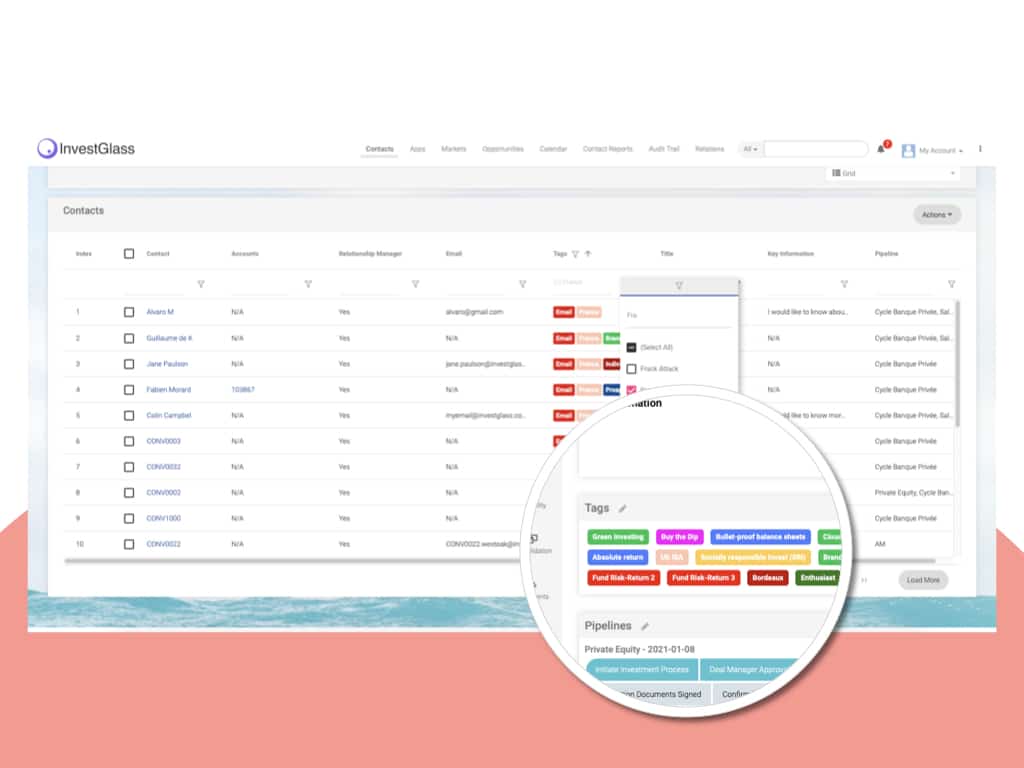
AI use cases for CDD, EDD, and ongoing monitoring
Concrete ai due diligence applications include:
- Automated identity verification using document capture and biometric matching
- Real-time screening against UN, EU, OFAC and SECO sanctions lists, PEP databases and adverse media sources
- KYB enrichment that automatically pulls corporate registry data, validates company status and identifies ultimate beneficial owners
- AI-assisted enhanced due diligence for high-risk customers, including open-source intelligence gathering, litigation checks and ESG controversy screening
- Predictive analytics to assess risk based on historical data and customer patterns
Consider a cross-border wealth client with multiple layers of trusts spanning several jurisdictions. Traditional due diligence might take weeks to establish beneficial ownership and source of wealth. AI can map the structure, cross-reference registries in multiple countries, flag potential risks from adverse media and generate an initial risk assessment within hours.
The shift from periodic reviews to perpetual KYC uses continuous monitoring of transactions, triggers such as address changes, and real-time matching against new sanctions or regulatory events.
Adverse media screening with AI
Adverse media screening is an essential part of modern due diligence processes, enabling organisations to identify reputational risks that may not be visible through traditional due diligence methods. AI tools, particularly those leveraging natural language processing (NLP) and machine learning, can analyse vast amounts of news articles, social media posts, blogs, and other public data sources in real time. By automating the review of adverse media, compliance teams can quickly detect patterns, red flags, and potential risks associated with individuals or companies.
Natural language processing nlp allows AI-powered systems to interpret context, sentiment, and relationships within unstructured data, making it possible to uncover hidden risks such as undisclosed connections or suspicious activities. Unlike traditional due diligence, which often relies on manual searches and limited data points, AI-powered adverse media screening provides a more comprehensive and timely view of reputational risks. This deeper analysis helps compliance teams make informed decisions and strengthens overall diligence processes by ensuring that potential risks are identified early and addressed proactively.
AI agents for due diligence
AI agents are intelligent software programs designed to automate and streamline specific tasks within due diligence processes. In the context of compliance, AI agents can handle repetitive tasks such as data collection, reviewing financial statements, and analysing legal documents, freeing up compliance teams to focus on more strategic activities. These agents use artificial intelligence to process large language models, identify patterns, and detect anomalies that may signal hidden risks or potential risks within customer profiles.
By integrating AI agents into due diligence workflows, organisations benefit from ongoing monitoring and real-time updates, ensuring that any changes in customer behaviour or risk factors are promptly flagged. AI agents can also generate reports, summarise findings, and provide actionable insights, enhancing the efficiency and accuracy of compliance teams. This automation not only reduces the risk of human error but also supports continuous compliance by keeping diligence processes up to date with the latest data and regulatory requirements.
Automated document review in CDD
Automated document review is transforming customer due diligence by enabling compliance teams to efficiently analyse large volumes of documents, such as identification records, financial statements, and business licences. AI tools equipped with natural language processing nlp and machine learning algorithms can extract relevant information, verify authenticity, and flag inconsistencies or potential risks within documents.
This AI-powered approach streamlines the review process, significantly reducing manual effort and the likelihood of human error. Automated document review can also identify hidden risks, such as fraudulent documents or undisclosed relationships, that may not be immediately apparent through traditional CDD processes. By leveraging advanced AI tools, compliance teams can enhance the accuracy and speed of their due diligence, ensuring that customer onboarding and ongoing monitoring are both thorough and efficient.
Benefits of AI-driven customer due diligence
AI improves speed, accuracy, consistency and cost efficiency across the full CDD lifecycle. Firms deploying ai solutions in due diligence have achieved up to 30% cost reductions while improving decision-making speed and accuracy.
Los beneficios clave incluyen:
- Time savings during onboarding, reducing client onboarding from weeks to days when document review and screening are automated
- Better risk detection through ai models spotting subtle behavioural anomalies, hidden connections or repeated address reuse that manual processes miss
- Improved regulator readiness with audit-ready logs, consistent scoring methodologies and easily retrievable evidence of checks performed
- Enhanced customer experience through smoother digital onboarding, fewer repeated document requests and faster account opening for low-risk customers
- Reduced false positives through intelligent clustering of related alerts and contextual analysis
- Ability to assess risk continuously rather than at periodic intervals
These efficiency gains allow compliance teams to redirect efforts toward strategic analysis and higher-value oversight rather than routine data entry and initial screening.
From traditional CDD to AI-enhanced: key differences
- Traditional approaches rely on static rules and existing rules; AI enables dynamic risk scoring that adjusts to market shifts and behavior changes
- Manual processes scale linearly with customer growth; AI handles large onboarding volumes without proportional headcount increases
- Human analysts make inconsistent judgements across teams and regions; AI encodes best-practice decision logic centrally
- Traditional CDD uses periodic reviews; AI enables continuous monitoring and event-driven alerts
- Manual screening generates high false positive rates; AI reduces noise through intelligent matching algorithms
- Paper-based audit trails are difficult to retrieve; AI generates structured, searchable compliance documentation
InvestGlass: a sovereign AI platform for customer due diligence
InvestGlass es un CRM suizo and automation platform designed for banks, wealth managers, insurers, real estate investment firms and public sector entities handling sensitive data.
Entre sus principales funciones figuran:
- Unified platform combining CRM, digital onboarding, KYC workflows, portfolio management and marketing automation
- Elimination of fragmented tools through integrated data foundations
- Swiss data sovereignty with hosting in Swiss data centres or on-premise deployment
- Full control over client data and ai models without dependence on American or Chinese cloud ecosystems
- Configurable workflows aligned with institution-specific risk appetite and global regulations
InvestGlass provides a European alternative for organisations seeking a trusted technology platform that protects client sovereignty while delivering ai powered due diligence capabilities.

AI features for CDD and EDD in InvestGlass
InvestGlass embeds AI throughout the customer lifecycle:
- Digital onboarding forms with automated document capture and identity verification linked directly into CDD and EDD workflows
- Integrated screening connections to sanctions, PEP and adverse media data providers
- AI-driven reduction of false positives through intelligent alert clustering and contextual matching
- Configurable risk-scoring engine weighing factors such as customer type, jurisdiction, product usage, transaction behaviour and negative news
- AI-generated summaries of customer risk profiles stored in CRM records for gestores de relaciones and compliance reviewers
- Agentic AI triggering follow-up document requests, periodic review reminders and operational data updates autonomously
- Fraud detection capabilities identifying potential risks across customer portfolios
These features support both initial CDD and ongoing monitoring throughout business relationships.
Data sovereignty, privacy and on-premise options
InvestGlass commits to Swiss data sovereignty with hosting options in Swiss infrastructure governed by strict local privacy laws:
- On-premise or private cloud deployment for institutions requiring full infrastructure control
- AI models and customer data confined to the client’s chosen environment
- No transfer to American or Chinese hyperscale clouds unless explicitly chosen
- Compliance with GDPR, FINMA requirements and national banking secrecy laws
- Protection of training data and operational data within sovereign boundaries
This architecture helps institutions meet regulatory expectations around data protection and cross-border data transfers while maintaining financial stability and client trust.
Responsible and explainable AI for CDD
Responsible AI in CDD covers fairness, transparency, accountability and robust governance. Regulators and clients expect clear explanations for risk scores, particularly when artificial intelligence influences onboarding decisions or triggers enhanced monitoring.
Relevant frameworks include:
- The EU AI Act establishing risk categories and explainability requirements
- The NIST AI Risk Management Framework
- Expectations from European central banks on model risk management
- FINMA guidance on technology risk and outsourcing
Firms using AI in CDD must maintain strong documentation, audit trails and ongoing validation of ai models to demonstrate control and prevent potential risks from unvalidated algorithms.
Practices for ethical and compliant AI in CDD
Recommended practices for responsible AI deployment include:
- Conducting regular bias and performance testing on screening and risk-scoring models, especially for high-risk segments such as PEPs and offshore structures
- Implementing clear model governance with documented ownership, approval workflows, versioning and periodic review of parameters
- Maintaining human oversight for high-impact decisions such as rejecting customers or exiting relationships based on AI flags
- Establishing clear policies for data retention, access control and encryption aligned with data privacy requirements
- Using human expertise alongside AI outputs to validate key metrics and ensure contextual accuracy
InvestGlass architecture supports these practices through audit logs, role-based access, transparent rule configuration and human-in-the-loop review capabilities.
Implementing AI for customer due diligence with InvestGlass
A practical roadmap for ai adoption in CDD includes five steps:
- Assess current CDD workflows, data sources and regulatory obligations, identifying where manual work and bottlenecks occur in your target company processes
- Select priority use cases such as digital onboarding for retail customers, KYB for SMEs, or enhanced due diligence for high-risk segments based on strategic advantage
- Configure InvestGlass workflows, risk models and AI components to align with the institution’s risk appetite, internal policies and local regulation
- Run a pilot with a defined potential customer segment, measure onboarding times, alert volumes, cash flow impacts and false positives, then refine thresholds before scaling
- Roll out perpetual KYC and ongoing monitoring, integrating alerts into case management and reporting for aml compliance and senior management
This phased approach allows institutions to enhance efficiency while validating AI performance against financial crime compliance objectives.

Change management, training and collaboration
Successful implementation requires attention to people and processes:
- Train compliance officers, relationship managers and operations teams to understand how AI-assisted CDD works and how to interpret outputs
- Conduct joint workshops between compliance, IT, data protection officers and business lines to agree acceptable risk levels and AI roles
- Communicate clearly that AI augments rather than replaces human expertise, reducing resistance and building trust
- Monitor key metrics such as onboarding time, high-risk cases correctly identified and regulator feedback to demonstrate value
- Use InvestGlass templates, best practices and iterative configuration support to ensure smooth transition
These steps help organisations enhance compliance while managing organisational change effectively.
Industry trends and technology advancements in AI for CDD
The landscape of AI for Customer Due Diligence is rapidly evolving, with new technologies and approaches continually emerging to address the growing complexity of compliance. Generative AI is now being used to analyse vast amounts of data, uncovering patterns and anomalies that may indicate hidden risks or potential threats. AI agents are increasingly deployed to automate repetitive tasks, provide ongoing monitoring, and deliver timely updates to compliance teams.
Machine learning models are enhancing due diligence processes by enabling more accurate risk assessment and detection of reputational risks. These AI-powered solutions help compliance teams assess risk, verify identity, and identify potential risks more effectively, reducing the likelihood of regulatory breaches and strengthening overall risk management. As AI adoption in customer due diligence accelerates, organisations can expect to see even more innovative solutions that support continuous compliance, improve operational efficiency, and provide a strategic advantage in managing financial crime and regulatory obligations.
Future of AI in customer due diligence
AI, including agentic ai systems and advanced natural language processing, will continue transforming CDD and financial crime compliance over the next three to five years. Expected developments include:
- Fully perpetual KYC with real-time risk adjustment based on transaction behaviour and external events
- Integration of ESG and sustainability data into CDD risk factors
- Closer alignment between transaction monitoring and customer risk scoring
- Enhanced collaboration between institutions and integration with blockchain analytics for digital asset transactions
- Increased regulatory expectations around AI documentation, testing and explainability
These trends make sovereign, well-governed platforms increasingly attractive for institutions seeking to enhance compliance while protecting client data.
Organisations looking for non-American, non-Chinese technology that respects data sovereignty can rely on InvestGlass as a long-term partner for ai powered due diligence. Review your current due diligence processes and consider whether a Swiss sovereign AI solution can protect both your organisation and your clients while delivering the efficiency gains that modern compliance demands.
Artículos relacionados
Swiss Sovereign CRM: Construido sobre IA.
Listo para actuar.


