
Introduction to VC CRM
A VC CRM is a customer relationship management platform purpose-built for venture capital. Unlike generic sales CRMs designed for linear pipelines and high-volume transactions, a venture capital crm manages the distinct, relationship-heavy workflows that define how vc firms source deals, nurture founders, engage limited partners, and support portfolio companies over years or even decades.
In 2026, the case for a dedicated crm for venture capital is no longer theoretical. Deal volume has remained elevated since 2021, more emerging managers have launched funds between 2024 and 2026 than in any comparable period, and the complexity of managing relationships across founders, co investors, LPs, and advisors has outpaced what spreadsheets or repurposed sales tools can handle. The market now tracks over 190 tools focused on VC deal flow and CRM. Whether you are a solo GP running a micro fund or an established platform managing multiple vintages, the right crm directly shapes your ability to track deal flow, maintain strong investor relationships, and monitor portfolio companies with discipline and precision.
What is a CRM for Venture Capital?
Venture capital is fundamentally a relationship business. Unlike enterprise software sales teams closing deals within quarterly cycles, venture capitalists build connections over years before a single term sheet materialises. A venture capital crm is a centralised platform for managing deal flow, LP communications, portfolio interactions, and the intricate web of relationships that ties all of these together.
VC CRMs focus on managing complex networks and nurturing relationships over many years. This means the system must handle non-linear timelines, multi-party deals involving founders, limited partners, co investors, advisors, and board members, and repeated touchpoints that span different funds and stages. The key entities it manages include companies, funds, LP entities, founders, angels, corporate strategists, board members, and scouts.
Consider a practical example. In early 2022, a partner meets a founding team at a seed-stage demo day and logs an initial assessment. The deal is passed at seed. Over the following years, the CRM preserves all emails, meeting notes, and internal commentary. By 2026, the founder has reached product-market fit and is raising a Series B. The partner re-engages with full context, prior diligence notes, and a relationship history spanning four years. Without a VC CRM, this institutional memory is lost entirely when team members move on or email threads are buried.
Why Venture Capital Needs a Specialised VC CRM
A CRM for VC firms prioritises relationship management, and this distinction matters. Traditional CRMs are built for high-volume transactional sales processes: linear funnels, fast close rates, and standardised buyer personas. Venture capital workflows break every one of these assumptions. Deals unfold over months or years, the same individual may appear as a founder in one context and an LP in another, and the “close” is only the beginning of a decade-long partnership.
When venture capital firms rely on spreadsheets and generic CRMs, the consequences are predictable: lost context on founders who were engaged years earlier, duplicated entries across partner inboxes, inconsistent tagging, and chronically low adoption. Research indicates that 42% of executives lack confidence in finding accurate data easily, a problem that compounds when relevant data is scattered across email threads, shared drives, and personal notes. Venture capital funds today manage hundreds of opportunities per year alongside dozens of existing portfolio companies and LP relationships. A specialised VC CRM addresses this by aligning the system’s architecture with actual venture capital workflows: sourcing, screening, IC preparation, due diligence, term sheets, portfolio monitoring, and LP reporting.
Managing Non-Linear Deal Flow
A CRM must support non-linear deal flow management. Deals in venture capital rarely follow a straight path from introduction to investment. They pause, restart, pivot in stage, and sometimes re-emerge years later under entirely different circumstances.
Take a concrete example. A founder is first introduced via a scout programme in Q4 2023. The venture team takes an initial meeting, conducts light diligence, and ultimately passes at the seed stage due to market timing concerns. The founder stays tagged in the system under “Watching.” By mid-2025, the company has found traction, grown revenue significantly, and is raising a Series A. The CRM surfaces this founder automatically, complete with prior emails, meeting notes, partner assessments, and the original reasons for passing. The team re-engages within days rather than weeks.
A well-designed VC CRM should:
- Preserve full history through pauses and restarts, including emails, meetings, notes, and IC memos
- Support visual pipeline views that allow moving a deal backward to “Watching” or “Nurture” without losing any data
- Track deal stages flexibly rather than enforcing a rigid linear sequence
- Flag deals that have been inactive for configurable periods (e.g., 90 days in “Screening”)
Tracking Complex Relationship Graphs
Over a five-to-ten year span, the same individual can shift roles from founder to angel investor, advisor, LP representative, or board member. Relationship intelligence maps the firm’s network and shows communication frequency, enabling venture teams to see not just who they know, but how well they know them and through which connections.
Consider an example. A partner sits on the board of a Series A company alongside a corporate venture lead. That same corporate venture lead later becomes a strategic LP in the firm’s next fund. A different portfolio CEO introduces a founder who turns out to be a former colleague of an existing co investor. Without a relationship management platform that captures these overlapping roles, companies, and funds, these connections remain invisible.
Contact management capabilities must track roles at the person, company, and fund level simultaneously. The system should map shared boards, co-investments, and warm introduction paths across the entire network. This kind of relationship building and investor relations capability is just as important as deal execution when it comes to winning competitive deals.
Extending Beyond the Investment Team
Venture capital workflows span investment, operations, IR, finance, and platform or portfolio support teams. A VC CRM should connect deal notes with LP updates, portfolio board decks, and internal reporting so that no team operates in isolation, in much the same way a financial services CRM with digital onboarding and marketing automation unifies client data across front-, middle-, and back-office functions.
Automated activity tracking logs all team interactions, ensuring that an IR lead preparing a 2026 quarterly update can pull data on portfolio performance, recent deal activity, and LP engagement directly from the CRM. A platform team member logging recruiting support for a portfolio company creates a record that surfaces in the next board meeting preparation, mirroring how an all-in-one sales automation platform with CRM, onboarding, and marketing tools centralises touchpoints across the customer lifecycle.
Key cross-team workflows include:
- Investment teams logging deal notes and IC decisions
- IR teams generating LP communication sequences and tracking responses
- Operations leads managing fund administration data and compliance
- Platform teams logging portfolio support activities such as customer introductions, hiring assistance, and PR coordination
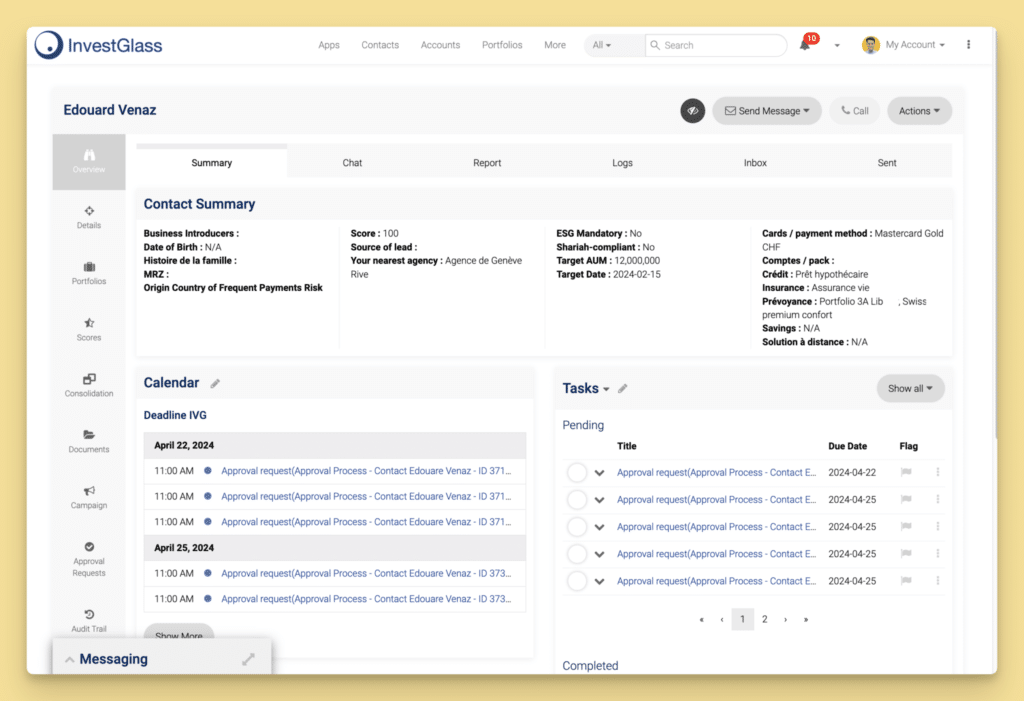
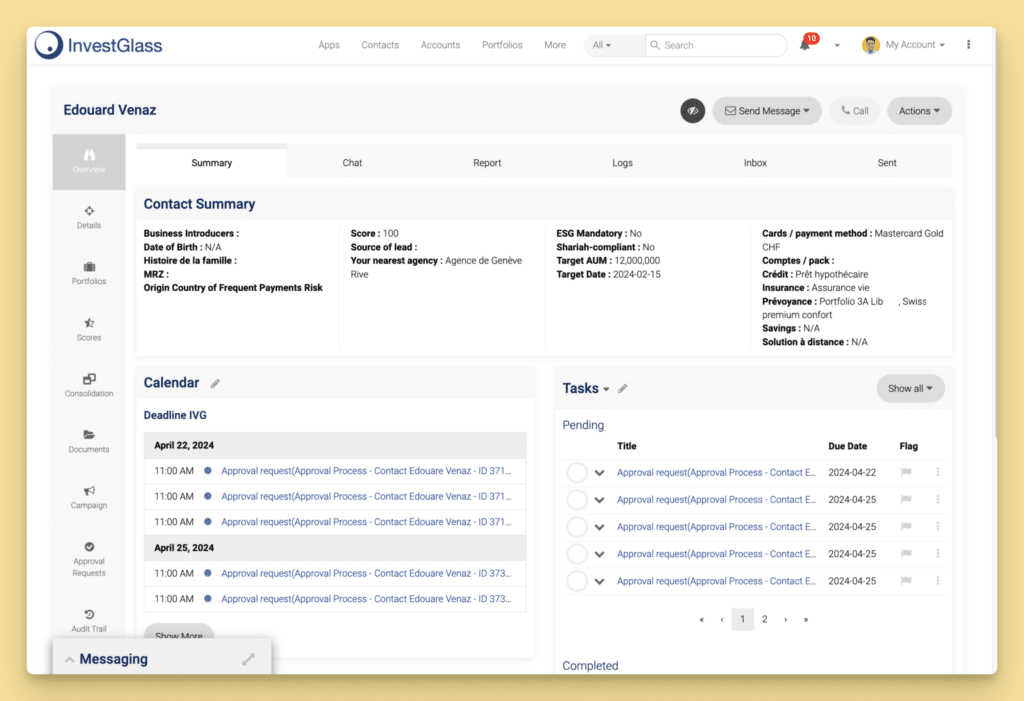
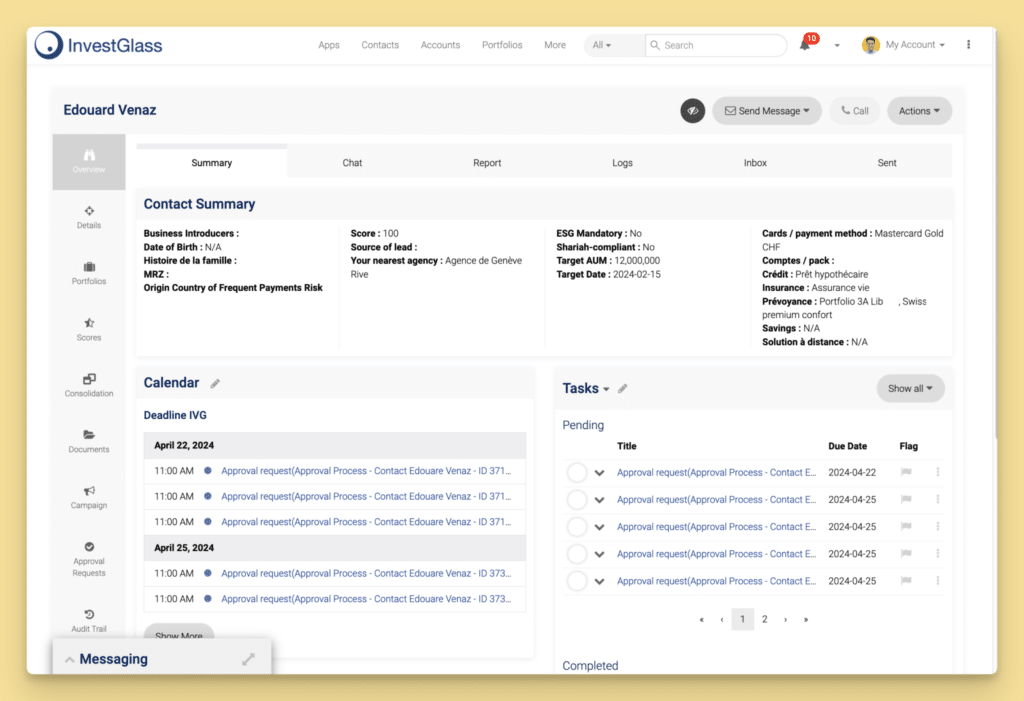
InvestGlass: A VC CRM with Relationship Mapping and Automation
InvestGlass is a modern CRM platform that caters to venture capital firms by combining relationship mapping with automation capabilities. It helps venture teams visualize complex networks of founders, LPs, co-investors, and advisors through intuitive relationship graphs. This relationship mapping feature allows users to identify warm introduction paths and understand the strength and frequency of communications within their network.
Beyond mapping, InvestGlass automates data capture from emails and calendars, reducing manual entry and ensuring that all interactions are logged accurately. Its AI-driven tools assist with deal tracking, pipeline management, and investor relations, enabling firms to streamline workflows and maintain consistent engagement with founders and LPs.
InvestGlass also supports customizable pipelines to reflect the non-linear nature of venture deals, allowing teams to move deals backward or forward without losing historical data. Integration with third-party data providers enriches contact and company profiles, enhancing due diligence and sourcing efforts.
By combining relationship intelligence with automation, InvestGlass empowers venture capital firms to manage their deal flow and investor relationships efficiently, making it a valuable option in the evolving VC CRM landscape.
Core Venture Capital Workflows a VC CRM Must Support
VC CRMs manage deal flow and limited partner fundraising as two sides of the same operational coin. A strong VC CRM mirrors the full spectrum of real venture capital workflows, from the first inbound pitch to portfolio exits and LP reporting years later. The main workflows fall into four categories: deal sourcing, evaluation and due diligence, portfolio management, and investor relations with LPs.
Deal Sourcing and Deal Flow Management
Centralised deal flow organises inbound pitches and tracks due diligence progress from the moment a startup enters the pipeline. VC CRMs streamline deal sourcing and diligence by consolidating opportunities from warm introductions, accelerator demo days (YC, Techstars, and regional programmes), founder referrals, banker decks, and scout programmes into a single view.
Research shows that 59% of VCs seek tools to improve deal sourcing, making this the most in-demand CRM capability. Typical deal flow stages in 2026 include:
- New / Inbound: initial submission or introduction received
- Screening: first review by an associate or principal
- Partner Review: deeper evaluation with a senior partner
- IC Ready: prepared for investment committee discussion
- Term Sheet Out: offer extended to the founder
- Closed Won / Closed Lost: final outcome
- Watching: parked for future re-engagement
Features such as automated email capture, calendar sync, and sector tagging remove manual data entry and ensure no deal falls through the cracks.
Due Diligence and Deal Management
Once a deal progresses beyond screening, diligence typically spans four to six weeks. A venture capital crm structures this process with checklists covering product, team, market, financials, references, and legal review.
VC CRMs streamline deal sourcing and diligence through:
- Task assignments and reminders that coordinate diligence across deal teams during compressed timelines
- Storage of term sheets, data room links, IC memos, and final investment committee decisions within the deal record
- Analytics on deal velocity, highlighting where deals most often stall (e.g., reference checks, legal review)
- Automated data entry that reduces human error in deal management
A practical workflow: an associate creates a diligence checklist, assigns reference calls to two partners, links the data room, and sets a deadline for IC submission. The CRM tracks progress, flags overdue tasks, and stores all the details in a single deal record accessible to the entire team.
Portfolio and Founder Relationship Management
Portfolio monitoring allows tracking of portfolio company performance over time. After an investment closes, the relationship intensifies rather than concluding. Venture capital firms track portfolio KPIs and board meeting cadences inside the CRM to maintain visibility across dozens of active companies, increasingly combining this view with AI-driven portfolio management and risk analytics to spot trends earlier.
Automated activity tracking helps maintain relationship histories by logging founder check-ins, board meeting notes, follow-up tasks, and support interventions. Consider tracking a 2022 Series A company through to its 2026 growth round: quarterly updates, board decisions, hiring support, and customer introductions all logged in a single timeline.
केपीआई | विवरण | आवृत्ति |
|---|---|---|
MRR | Monthly recurring revenue | मासिक |
मार्ग | Months of cash remaining | मासिक |
कर्मचारी संख्या | Total team size and growth rate | त्रैमासिक |
NRR | Net revenue retention | त्रैमासिक |
Burn Multiple | Net burn / net new ARR | त्रैमासिक |
Logging support activities (recruiting help, customer introductions, PR) for each portfolio company also creates valuable context for future fundraising decks and LP reporting. |
LP & Investor Relationship Management
Investor relationship management in the venture capital context refers to managing relationships with limited partners, fund-of-funds, family offices, endowments, sovereign wealth funds, and high-net-worth individuals. Fund managers using integrated investor-relation systems secure more limited partner commitments by maintaining disciplined communication and tracking engagement over time.
For a firm raising its 2026 Fund III, the CRM tracks:
- LP entities and contacts, with commitment amounts by fund vintage (2020 Fund I, 2023 Fund II, 2026 Fund III)
- LP pipeline stages: Exposed, First Call, Diligence, Term Sheet, Commitment, Closed
- Communication history: quarterly letters, annual meeting invitations, capital call notices
- LP responsiveness metrics: email open rates, reply times, and meeting frequency
Email sequences for capital calls, quarterly reports, and annual meetings can all be driven from the VC CRM, ensuring consistency and reducing the risk of miscommunication during a capital raise.
Key Features to Look For in a VC CRM
When evaluating venture capital crm software in 2026, the goal is to match capabilities with actual venture capital workflows rather than generic sales needs. A CRM for VC firms enhances relationship management capabilities only when the feature set aligns with how deal teams, IR professionals, and operations leads actually work. Below is a practical checklist of key features.
Customisable Pipelines for Non-Linear Deals
A VC CRM supports non-linear deal flow management through customisable pipelines that reflect the reality of venture investing. VC CRMs provide specialised tools for managing customised investment pipelines, and customisable pipelines reflect non-linear deal flows.
Firms should configure multiple pipelines: one for deals, one for LP fundraising, and one for portfolio support. Example deal stages might include “Introduced,” “Initial Meeting,” “IC Ready,” “Term Sheet Out,” and “Signed,” with the ability to move opportunities backward (e.g., from “Partner Meeting” back to “Watching”) via drag-and-drop boards. No coding or lengthy implementation projects should be required.
Automated Activity Capture and Data Enrichment
A CRM should automate data entry to save time, and automated data entry reduces human error in VC firms. Integration with email (Gmail, Outlook) and calendars automatically logs meetings, calls, and threads without requiring manual entry from partners or associates.
Automated activity tracking ensures a record of all communications, which is the single most important factor in preventing an “empty CRM” that nobody trusts. Data enrichment provides additional context for relationships by pulling company profiles from providers such as Crunchbase or PitchBook, including funding history, headcount, and sector classification. When a new founder introduction arrives, the CRM auto-populates company details in seconds, and firms operating in regulated sectors can extend this with automated KYC verification and compliant digital onboarding. Given that 42% of executives lack confidence in finding accurate data easily, this enrichment layer is essential.
Relationship Intelligence and Warm Introductions
Relationship intelligence algorithms provide insights into networks that go far beyond static contact lists. These features build relationship graphs showing who knows whom, the strength of each connection, prior co-investments, and board overlaps.
Scoring works by analysing email volume, meeting frequency, and recency. For example, a contact with five or more email threads in the past three months, two meetings, and a shared board seat receives a high “warmth” score. A VC associate can then quickly identify the best path to a target founder or LP using warm introduction paths suggested by the system. This network leverage is what separates a genuine relationship management platform from a simple address book.
Contact Management Across People, Companies, and Funds
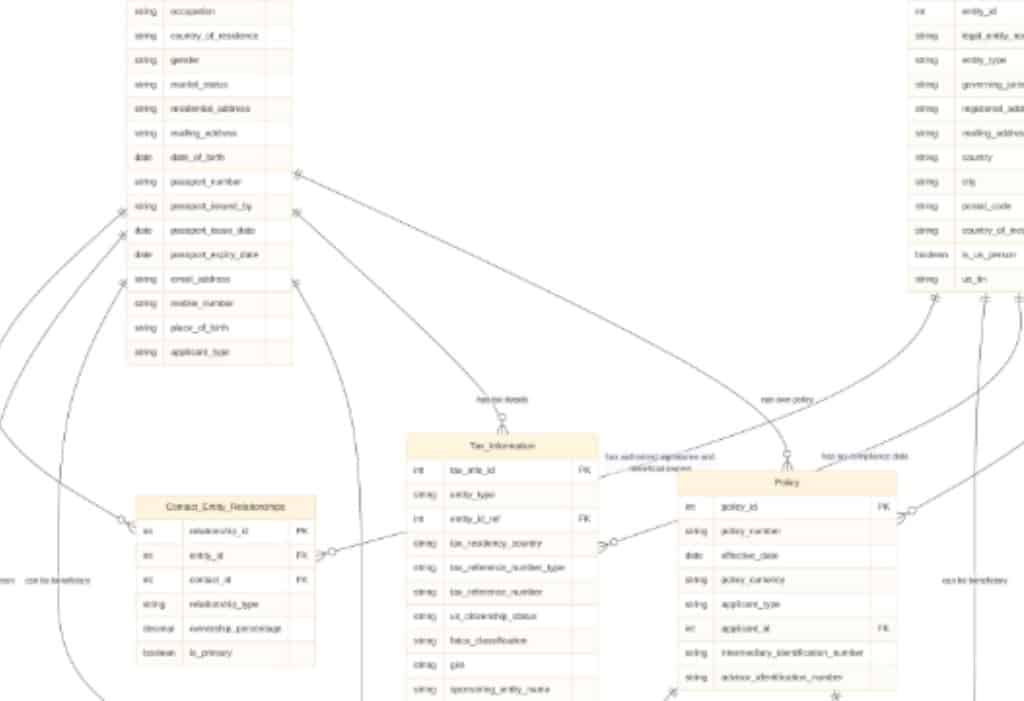
Effective contact management requires modelling people, companies, LP entities, and funds as separate but intelligently linked objects. One LP contact may be connected to multiple funds, advisory boards, and co-investments spanning a decade.
Core fields a VC CRM should track include:
- Roles and titles (current and historical)
- Fund commitments and ownership stakes
- Last interaction date and communication frequency
- Sector focus and geography
- Relevant contacts and referral sources
This structured contact management underpins accurate investor relations and deal tracking across the entire investment lifecycle.
Reporting, Analytics, and Deal Flow Insights
Dashboards should surface key metrics such as the number of new deals per quarter, conversion rates at each stage, and median time from first meeting to term sheet. Since 76% of investors use at least four data sources for deals, the CRM’s reporting layer must consolidate data from multiple inputs into coherent views, similar to how प्रभावी पोर्टफोलियो प्रबंधन के लिए एआई aggregates signals across markets and positions.
Practical KPI examples include the percentage of deals originating from warm introductions versus cold outreach, sectors with the highest win rate since 2022, and deal pipeline velocity by stage. LP reporting views should break down exposure by sector, geography, stage, and vintage year for each fund.
Security, Permissions, and Compliance
Venture capital firms handle sensitive financial and personal data across funds and portfolio companies. Role-based permissions, field-level access, and private notes for IC discussions and compensation-related items are non-negotiable, particularly when adopting Swiss-designed cloud CRM platforms for regulated financial institutions that emphasise security and compliance.
Concrete examples include limiting LP commitment data to partners only, hiding certain early-stage deals from external advisors, and maintaining audit trails for regulatory review. Compliance needs around GDPR, data retention policies, and SOC2 certification should be evaluated during vendor selection, particularly for firms operating across jurisdictions.
AI and Automation in Modern VC CRMs (2024-2026)
Between 2024 and 2026, AI features in venture capital crm solutions have matured from experimental add-ons to core capabilities. AI now assists with deal sourcing, email drafting, meeting summaries, and pipeline management risk signals. The important framing is that AI augments human judgement rather than replacing informed investment decisions.
AI for Deal Sourcing and Screening
AI models analyse email introductions, pitch decks, and news feeds to prioritise promising startups from a high volume of inbound deal flow. A practical example: a mid-sized fund receives 200+ inbound deals per month. AI ranks and surfaces the top 20 based on thesis fit, traction indicators, and sector alignment, enabling deal teams to focus their limited time on the most relevant data.
AI-based tagging classifies opportunities by sector (climate tech, fintech, AI infrastructure) and stage, reducing the manual processes that previously consumed associate hours. Firms like Presidio Ventures have deployed GPT-4 and embedding models for sourcing and risk analysis, demonstrating what is possible when AI is integrated directly into venture capital workflows.
AI for Meeting Notes and Follow-Ups
AI can summarise meetings and update deal records automatically. Automatic transcription and summarisation of founder calls and IC meetings transforms a 60-minute discussion into a one-page brief with action items within minutes.
The CRM then suggests next steps, assigns tasks, and drafts follow-up emails. This workflow automation ensures more consistent follow-through on both founder and LP interactions, and eliminates the risk of losing valuable context when notes are taken informally or not at all.
Predictive Insights for Portfolio and LP Management
AI-driven CRMs can identify signals for follow-on rounds before formal announcements. Predictive analytics flag portfolio companies at risk by detecting patterns such as reduced founder engagement, slipping key metrics, or shortened runway projections, similar to how agentic AI systems in banking enhance fraud detection and customer experience.
On the LP side, behaviour analytics track open rates on quarterly letters, response times to outreach, and meeting frequency before new commitments. These signals help IR teams prioritise their efforts during a capital raise and anticipate which LPs are likely to re-up for the next vintage.
How to Evaluate and Select a VC CRM
Choosing the right crm requires matching a tool’s capabilities to your firm’s size, strategy, and stage. The needs of a solo GP differ substantially from those of a multi-fund platform, and the best crm for one firm may be entirely wrong for another.
Identifying Your Firm’s Requirements
Start by mapping your current venture capital workflows across deal flow management, portfolio management, and investor relations. Document existing workflows and pain points from 2023 to 2025: spreadsheet chaos, lost founder emails, messy LP notes, and duplicated entries.
Specific requirements to consider include:
- Number of users and their roles (partners, associates, IR, operations)
- Multi-fund support and cross-fund reporting
- API access for integration with data warehouses and BI tools
- Advanced permissioning and field-level security
- Cloud versus on-premise hosting preferences
- Marketing automation and email sequence capabilities
This requirements mapping ensures you select software solutions that address real problems rather than theoretical feature lists.
Evaluating Total Cost of Ownership
Direct costs include per-user licences, implementation fees, data migration, and ongoing support. Some CRMs require long-term implementation partners for deployment, adding significant cost beyond the sticker price. Indirect costs include time spent configuring, training, and managing change across the partnership.
Consider a simple comparison. A low-cost system at £300 per user per year may save money upfront but require ten hours per week of manual entry and data cleaning across the team. A higher-cost automated VC CRM at £600 per user per year that eliminates manual processes may deliver a net saving within the first year when partner time is valued appropriately. Total cost of ownership over three to five years is a more meaningful metric than monthly subscription price alone.
Adoption, Change Management, and Training
A partially used CRM is worse than no system at all because it creates fragmented, unreliable crm data that nobody trusts. Appointing a CRM champion, whether a partner or operations lead, is the single most effective step for driving adoption, mirroring the way specialised CRM platforms for therapists with automated workflows and communication rely on clear ownership to become daily operating systems.
Concrete onboarding tactics include:
- 30-60-90 day rollout plans with defined milestones
- Internal SOPs for logging deals, meetings, and LP interactions
- Weekly pipeline review meetings using the CRM as the single source of truth
- Monthly audits to purge duplicates, fix tags, and update inactive records
Notably, Affinity can deploy a CRM in 72 hours, and Dialllog can migrate data in 7 days, demonstrating that implementation timelines need not be a barrier. Automated data capture reduces manual entry during integration, accelerating time to value.
Use Cases by Firm Type and Stage
Different venture capital firms use a VC CRM in fundamentally different ways depending on their scale, fund count, and team composition, just as specialised CRM solutions for dental practices with digital onboarding and automation are tailored to the workflows of healthcare teams.
Solo GPs and Micro Funds
A solo GP running a £10-25M seed fund launched in 2024 uses the VC CRM as a single source of truth. They typically manage 200-400 founder relationships, 50-80 LP prospects, and approximately 30 portfolio companies. The priority is lightweight setup, simple dashboards, and heavy reliance on email and calendar automation. Mobile access and flexible pipelines matter more than complex customisations. A tool like Attio or Folk, starting at roughly £25-40 per user per month, often fits this profile well.
Emerging Managers Raising Fund I and Fund II
A two- or three-partner firm raising a £50-150M venture capital fund between 2023 and 2026 faces a dual challenge: managing both LP pipelines and deal flow in parallel during active fundraising periods. They track investor meetings around major industry events (SuperVenture, SaaStr Annual), maintain LP communication consistency, and begin building institutional memory from the first fund onward. The CRM becomes the foundation for demonstrating operational maturity to prospective limited partners, directly supporting fundraising success.
Established Multi-Fund VC Platforms
A firm with multiple funds (e.g., 2018 Fund I, 2021 Fund II, 2024 Opportunity Fund) and 100+ portfolio companies requires advanced analytics, permissioning, and integration with fund administration, data warehouses, and BI tools. Cross-fund views of exposure by sector, geography, and stage, plus consolidated relationship histories, transform the VC CRM from a single team tool into an operational backbone. Enterprise solutions such as DealCloud by Intapp serve this tier, though at higher cost and complexity.
Best Practices for Getting Value from a VC CRM
The difference between a static database and a daily operating system comes down to habits and discipline. VC CRMs automate data entry to save time, but they cannot compensate for inconsistent usage.
Designing Fields and Workflows Carefully
Start with a minimal, well-considered set of fields: stage, ownership, target check size, sector, geography, and lead partner. Overloading the system with dozens of custom fields that nobody updates is a common failure mode. Research suggests that 76% of CRM features go unused in general business contexts, and the same risk applies to venture capital. Prioritise the fields that drive reporting, pipeline management, and portfolio tracking, and resist the temptation to add more until the core set is fully adopted.
Building a Culture of Relationship Logging
Automated activity tracking ensures accurate relationship histories, but the most valuable context often comes from brief notes added after meetings. Simple rituals make the difference: updating notes immediately after a founder call, tagging relevant contacts with consistent labels (e.g., “Tier 1 LP,” “Follow-on Candidate”), and using standardised stage definitions across the team.
The benefit is tangible. When a partner is travelling or unavailable, any colleague can step into a relationship with full context. When a team member departs, the firm retains its institutional memory. This discipline is what allows venture teams to manage relationships at scale rather than relying on individual recall.
Using Data to Inform Investment Strategy
Analyse crm data quarterly to identify which sourcing channels (conferences, accelerators, scouts, cold inbound) produce the best venture capital deals. Track win rates by sector, stage, and geography across 2022 to 2026 to refine fund theses. Since 76% of investors use at least four data sources for deals, the CRM should serve as the connective layer that unifies these inputs into a coherent analytical view.
CRM-generated insights can feed directly into annual LP letters and fundraising decks, demonstrating a data-driven approach that strengthens investor relationships and supports the next capital raise.
Frequently Asked Questions About VC CRMs
Do Venture Capital Firms Really Need a Dedicated VC CRM?
For a solo GP with ten portfolio companies and fifteen LPs, a spreadsheet may suffice temporarily. But once a firm manages more than 100 active founder relationships, 25 or more LPs, and multiple funds, the only crm approach that works is a dedicated venture capital crm. The complexity of tracking deal stages, LP commitments, portfolio performance, and relationship data across these entities exceeds what any generic tool or manual process can sustain reliably.
How is a VC CRM Different from Investor Relationship Management Software?
Investor relationship management software focuses primarily on LP communications and fundraising: tracking commitments, managing capital calls, and generating quarterly reports. A full VC CRM combines these investor relationship management capabilities with deal flow management, deal tracking, portfolio monitoring, and contact management. Using the same system to track both a 2026 Fund III raise and a new Series B investment eliminates data silos and ensures that relationship data flows across all workflows.
How Much Does a VC CRM Cost in 2026?
Pricing for venture capital crm solutions in 2026 ranges broadly. Lightweight tools suited for emerging managers start at roughly £25-40 per user per month. Mid-tier platforms with stronger relationship intelligence and pipeline management typically run £300-500 per user per year. Premium, enterprise-grade solutions for large venture capital funds can reach £500-800 per user per year or higher. Factor in onboarding, integrations, data migration, and ongoing administration when budgeting. A CRM should integrate with your existing system and tech stack without requiring a separate integration budget that rivals the licence cost.
What Integrations Should VC Firms Prioritise?
Core integrations include:
- Email and calendar (Gmail, Outlook) for automated data capture
- Document storage (Google Drive, OneDrive) for linking data rooms and pitch decks
- Data providers (Crunchbase, PitchBook) for enrichment
- Fund administration platforms for financial data
- Messaging tools (Slack, Teams) for internal notifications
Firms with more advanced data needs should consider API and data warehouse integrations from day one. A crm tool that cannot connect to your existing workflows and existing system creates friction rather than reducing it.
Conclusion: Turning Your VC CRM into an Edge
A VC CRM underpins every dimension of modern venture capital: deal sourcing, deal management, portfolio support, and investor relations. It manages the entire investment lifecycle from the first warm introduction to post-exit LP reporting, ensuring that no relationship data, founder insight, or LP interaction is lost along the way.
The real advantage does not come from the software alone. It comes from disciplined usage, clear workflows, and leveraging workflow automation and AI to remove manual processes and surface insights that inform investment strategy. Start small: build one pipeline, standardise your notes, and establish the habits that turn a centralised platform into a genuine operating system for your firm.
Looking ahead, the venture capital firms that compound their relationship data, refine their sourcing through analytics, and maintain strong investor relationships through consistent engagement will outperform those relying on memory and intuition. Data-driven relationship management is no longer optional. It is the foundation upon which top-performing vc firms will build their edge through the rest of the decade.

