
Money laundering stands as one of the most significant threats to the global financial system, enabling criminals to enjoy the proceeds of crime while undermining legitimate businesses and economies. For compliance professionals, risk managers, and decision-makers at regulated entidades financieras, understanding the precise money laundering definition is fundamental to building effective defences. This guide provides a comprehensive overview of what money laundering means, how it operates in practice, and how organisations can strengthen their controls while protecting data sovereignty.
What is money laundering? (core definition answered early)
Money laundering is the illegal process of disguising the origin, ownership, and destination of criminal proceeds so they appear to come from legitimate sources. This transformation of dirty money into clean money enables criminals to use their illegally gained money freely within the banca system without raising suspicion.
Under the United Kingdom’s Proceeds of Crime Act 2002, the offence encompasses converting, transferring, concealing, or otherwise dealing with property that represents the proceeds of crime. This definition captures both those who launder money from their own criminal activity and third parties who handle illicit funds on behalf of others.
The scale of this financial crime is staggering.According to the United Nations Office on Drugs and Crime, an estimated 2% to 5% of the world’s GDP is laundered each year, amounting to approximately 800 billion to 2 trillion U.S. dollars. Within the UK alone, estimates suggest over £100 billion flows through or via UK-registered structures each year.
Money laundering enables the profits from predicate offences including drug trafficking, corruption, fraud, cybercrime, and tax evasion to enter the legitimate financial system. It operates as a standalone federal crime in most jurisdictions worldwide, frequently intertwined with organised crime and terrorist financing networks.
Regulated financial institutions, including banks, insurers, asset managers, and fintechs, face strict legal obligations to implement customer due diligence, transaction monitoring, and suspicious activity reporting. Failures to prevent money laundering can result in severe penalties, reputational damage, and personal liability for senior managers.
Money laundering meaning in practice and emerging trends
Understanding the money laundering definition requires examining how criminals actually move and disguise illicit money through real-world channels. From traditional banking to cutting-edge digital platforms, money launderers continuously adapt their methods to exploit vulnerabilities across the financial system.
Traditional money laundering methods remain prevalent. Cash intensive businesses such as restaurants, car washes, and retail shops allow criminals to commingle dirty money with legitimate takings, inflating revenues to justify deposits into bank accounts. Shell companies registered in opaque jurisdictions obscure beneficiarios efectivos through layers of nominees, making it difficult for law enforcement agencies to trace criminal proceeds.
Trade based money laundering exploits international commerce through over-invoicing or under-invoicing of goods. A shipment of electronics worth £500,000 might be invoiced at £650,000, with the £150,000 difference representing laundered funds that the overseas buyer transfers to the seller’s offshore accounts. This method moves large quantities of illicit funds while creating apparently legitimate commercial documentation.
Emerging risks centre on digital currencies and decentralised finance. Cryptocurrencies and stablecoins enable rapid, pseudonymous transfers across borders. Chainalysis reported approximately 40.9 billion US dollars in illicit crypto activity for 2024, including laundering through mixing services that obscure transaction trails. Virtual asset service providers face increasing regulatory scrutiny as money launderers exploit virtual currencies for layering.
Online gaming platforms present another vulnerability, allowing criminals to purchase in-game items with illicit money and later withdraw clean cash or transfer value to other players. Non-fungible tokens and decentralised finance protocols provide unhosted wallets where funds can be layered without traditional intermediaries. Peer-to-peer payment applications facilitate micro-transfers that aggregate into significant sums across multiple accounts.
The Covid-19 pandemic accelerated remote onboarding and instant payments, which criminals exploit through synthetic identities and mule accounts. Group-IB reported 37 billion US dollars lost to cyber-enabled fraud in East and Southeast Asia in 2023. High risk sectors including luxury watches, fine art, and freeport storage continue to serve as integration points for illegitimate funds.
The 3 stages of money laundering
The classic three-stage model of placement, layering, and integration remains the foundational framework recognised by the Financial Action Task Force and compliance professionals worldwide. While real laundering schemes often overlap or skip stages, this model provides an essential analytical tool for identifying suspicious transactions and understanding how illicit activities flow through the financial system.
Colocación involves injecting illicit cash or value into the legitimate financial system. Criminals typically use structuring, also known as smurfing, where sums exceeding reporting thresholds are broken into smaller sums deposited across multiple bank accounts or over several days. A drug dealer with £50,000 in cash might make twenty deposits of £2,400 each to avoid currency transaction reports. Other placement methods include purchasing casino chips for later cashout, buying high-value assets like luxury watches or vehicles, or using cash intensive businesses to blend drug money with legitimate takings.
Capas employs a barrage of complex transactions designed to sever the audit trail from the predicate offence. Criminals move funds through cross-border wires via correspondent banking, convert currencies multiple times through foreign exchange trades, and route money through intermediary shell companies in different jurisdictions. In the digital realm, layering may involve transferring cryptocurrency through multiple virtual asset service provider accounts, using tumbling services to obscure origins, or exploiting decentralised finance protocols for rapid fund hops. This stage of financial system layering often involves dozens of transactions executed within hours.
Integración reintroduces cleansed funds into the economy as ostensibly legitimate income. Criminals may report laundered money as business profits, rental income from property investments, consultancy fees, or dividends from invested portfolios. At this stage, the funds appear clean and can be spent freely without raising suspicion.
Consider a practical example: a fraud ring diverts £5 million in corporate invoice payments through compromised business cuentas de correo electrónico. They place these criminal proceeds via UK shell companies into business accounts with falsified invoices. Layering occurs through transfers to Cayman Islands trusts, conversion to USDT stablecoins on decentralised exchanges, and movement through twenty or more transactions across many countries. Finally, the criminal enterprises integrate funds by purchasing London residential property through a legitimate mortgage, generating rental income reported as clean cash on tax returns.
Legal definitions and global AML framework
The legal definition of money laundering encompasses dealing with, concealing, converting, transferring, or using property known to represent proceeds of criminal conduct, with intent to disguise its illegal origin. This formulation appears across international conventions and domestic legislation worldwide.
Key international instruments established the foundation for modern anti money laundering legislation. The 1988 United Nations Convention against Illicit Traffic in Narcotic Drugs and Psychotropic Substances, known as the Vienna Convention, first mandated criminalisation of laundering drug proceeds. The 2000 UN Convention against Transnational Organized Crime extended coverage to all serious crimes, while the 2003 UN Convention against Corruption targeted corruption proceeds. Over 190 states have ratified these instruments.
The Financial Action Task Force, established in 1989 by the G7 following the Paris Summit, issues 40 Recommendations that serve as the global standard for combating money laundering and counter-terrorist financing. FATF conducts peer-reviewed mutual evaluations of member countries, with grey-listing imposing trade restrictions and reputational consequences for non-compliant jurisdictions.
In the European Union, six Anti-Money Laundering Directives since 1991 culminate in the forthcoming 2026 AML Regulation establishing unified rules across member states. The United States Department of the Treasury enforces the Bank Secrecy Act of 1970 and USA PATRIOT Act of 2001, which require suspicious activity reports and enhanced due diligence. The Financial Crimes Enforcement Network oversees compliance and enforcement.
The United Kingdom’s Proceeds of Crime Act 2002 and Money Laundering Regulations 2017, updated in 2025, impose strict obligations on regulated entities. Many countries now criminalise self-laundering, attempted laundering, and negligence in failing to report suspicious transactions. Penalties can include custodial sentences of up to fourteen years and confiscation of assets.
Common methods and red flags of money laundering
Compliance teams must recognise both established typologies and emerging patterns to identify potential money laundering risks effectively. Understanding common methods helps institutions calibrate their monitoring systems and train staff to spot suspicious behaviour.
Structuring or smurfing remains widespread, with criminals breaking large sums into smaller sums below reporting thresholds for deposit across multiple accounts. Shell companies and shelf companies with nominee directors obscure ownership through chains sometimes ten layers deep. Trade based laundering typically involves invoice manipulation of 10 to 20 percent on commodity trades, creating paper trails that appear legitimate while moving illicit funds internationally.
Charity misuse channels donations to criminal or terrorist organizations under the guise of humanitarian work. Real estate transactions allow criminals to flip properties for quick profits of 15 to 30 percent while converting illegitimate funds into legitimate assets. The National Crime Agency reported that 80 percent of UK suspicious activity reports in 2023 were linked to property transactions. Cash smuggling in luggage or vehicles moves funds across borders without engaging money service businesses.
Red flags that compliance teams monitor include frequent large cash deposits inconsistent with customer profiles, such as a retiree suddenly wiring £50,000 weekly. Sudden transfers to high-risk jurisdictions on FATF lists, convoluted ownership structures using bearer shares, and reluctance to provide standard KYC documentation all warrant enhanced scrutiny. Rapid account openings with minimal subsequent activity often indicate mule accounts used for layering.
High risk sectors requiring particular vigilance include banking with correspondent relationships, money service businesses handling trillions in annual remittances, casinos with significant cash turnover, and luxury goods dealers. Europol identified Rolex watches as among the most commonly laundered items in 2024. Professional gatekeepers including lawyers, accountants, and company formation agents who establish shell companies require robust due diligence.
Digital patterns of concern include rapid fund movements through neo-bank accounts, repeated small-value payments to unfamiliar foreign merchants that aggregate to significant sums, and NFT wash trading that artificially inflates values.
Anti money laundering measures and compliance obligations
Regulated entities face comprehensive obligations designed to prevent their services being exploited for certain crimes. These requirements have expanded significantly over the past decade, with penalties for failures reaching unprecedented levels.
Core AML obligations include customer due diligence verifying identity through passports and official documents, enhanced due diligence for politically exposed persons and high-risk customers including source of wealth enquiries, ongoing transaction monitoring, sanctions screening against lists maintained by bodies including OFAC and the European Union, record-keeping for five to ten years, suspicious activity reporting within required timeframes, and annual staff training.
Risk-based approaches promoted by FATF require firms to assess inherent risks across products, customers, geographies, and delivery channels. Private banking might receive a high-risk classification, while politically exposed persons trigger a 20 percent risk uplift. Grey-listed jurisdictions add additional scrutiny, and remote onboarding channels require enhanced verification controls.
Regulatory developments continue expanding AML coverage. FATF amended Recommendation 15 in 2019 to extend obligations to virtual asset service providers, mandating the Travel Rule for crypto transfers exceeding certain thresholds. The European Union’s AMLD5 and AMLD6 boosted propiedad efectiva data transparency, while Australia’s Tranche 2 reforms extending to lawyers and real estate agents commence around 2026.
Enforcement has escalated dramatically. HSBC paid 1.2 billion pounds in 2012 for AML failures. Deutsche Bank faced 4.2 billion pounds in penalties in 2017. Danske Bank settled for 3.5 billion pounds in 2022 following revelations that 200 billion pounds in suspicious funds flowed through its Baltic operations. NatWest paid 265 million pounds in 2025 for deposit monitoring gaps. These cases highlight weaknesses in transaction monitoring that detected less than 1 percent of actual schemes.

Ultimate beneficial ownership and transparency
The ultimate beneficial owner is the natural person or persons who ultimately own or control a legal entity or arrangement, such as a company, trust, or foundation, even when hidden behind layers of nominees or shell companies. FATF Recommendation 10 and EU regulations define this typically as ownership or control exceeding 25 percent through equity, voting rights, or other influence.
Opaque ownership structures facilitate money laundering by nesting shells within shells. A British Virgin Islands company might own a Delaware LLC, which holds a Cyprus holding company, which controls the operating entity receiving illicit funds. International standards now require KYC and CDD procedures to pierce these structures and identify beneficial owners regardless of complexity.
Specific regulatory measures have strengthened transparency. The European Union introduced central beneficial ownership registers under AMLD4 in 2015, strengthened by AMLD5 in 2018 with public access provisions. The United Kingdom’s People with Significant Control register, operational since 2016, requires disclosure of controllers with more than 25 percent ownership to Companies House. Singapore implemented its register in 2023, and Australia’s reforms requiring annual filings with substantial penalties commence around 2026.
High-profile leaks accelerated reforms. The Panama Papers in 2016 exposed 11.5 million documents revealing hidden wealth of over 140 current and former political figures. The Pandora Papers in 2021 contained 11.9 million files implicating 35 current and former world leaders in offshore structures. These revelations prompted G20 countries to accelerate ownership transparency requirements.
Compliance implications burden firms with increased onboarding complexity, though API integrations with commercial databases can reduce verification times significantly. Limitations persist where jurisdictions lack accessible registers or where false beneficial ownership data is submitted.
Money laundering, terrorist financing, and proliferation financing
Money laundering cleans criminal proceeds for legitimate use, but it shares financial channels with two related threats that require distinct understanding. Terrorist financing and proliferation financing use similar methods but serve fundamentally different purposes.
Terrorist financing channels funds, whether from illicit activities or entirely legitimate sources such as donations, to support terrorist organizations or specific acts. Unlike the large-value transactions typical of money laundering, terrorist financing often involves low-value, high-volume transfers through informal channels like hawala networks. The motivation is ideological rather than profit-driven, and even small amounts can fund devastating attacks.
Proliferation financing supports the development, acquisition, or spread of weapons of mass destruction, including nuclear, chemical, and biological weapons and their delivery systems. International sanctions regimes, including UN Security Council Resolution 1718 targeting the Democratic People’s Republic of Korea and European Union measures on Iran, aim to block financial flows supporting proliferation. These sanctions integrate with AML controls through screening requirements.
The same financial channels can serve all three purposes. Trade finance might facilitate invoice manipulation laundering drug proceeds, fund transfers to terrorist proxies, or enable procurement of dual-use technology for weapons programmes. Regulatory documents increasingly use the terminology AML/CFT/CPF to reflect this integrated approach to combating financial crime, terrorist financing, and proliferation financing.
How InvestGlass supports AML, KYC, and data sovereignty
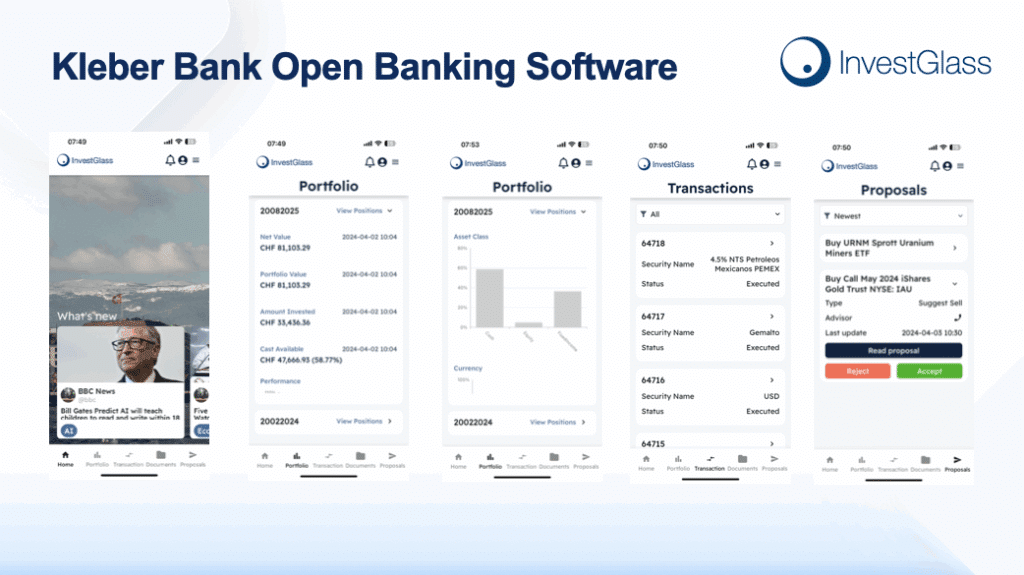
InvestGlass es una empresa suiza soberano CRM and automation platform built specifically for financial institutions and regulated organisations that must manage AML, KYC, and ciclo de vida del cliente processes within a secure and compliant environment. The platform addresses growing concerns among banks, wealth managers, insurers, and public sector bodies about maintaining control over sensitive financial data.
InvestGlass can be hosted in Switzerland or deployed on-premise, allowing organisations to retain full sovereignty over their client data and digital infrastructure. This approach avoids reliance on American cloud providers subject to the US CLOUD Act or Chinese platforms with their own jurisdictional considerations. For institutions prioritising European privacy expectations and regulatory alignment, Swiss hosting under the Federal Act on Data Protection provides a trusted foundation.
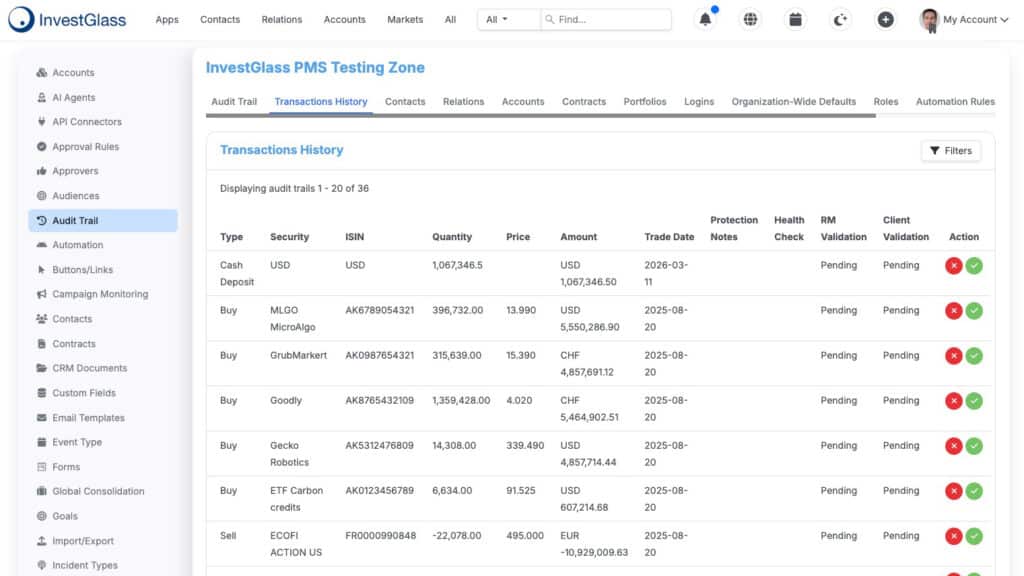
Incorporación digital tools within InvestGlass support KYC and AML processes by automating identity verification through biometric checks and passport scans, document collection, risk scoring with PEP y detección de sanciones, and workflow approvals with electronic signatures. The platform maintains comprehensive audit trails suitable for regulatory examination, helping compliance teams meet their reporting requirements efficiently.
The integrated architecture connects CRM, portfolio management, marketing automation, and client portal functionality within a single data model. This unified approach enables institutions to monitor financial transactions, client communications, and risk indicators consistently across the entire relationship lifecycle. Configurable compliance workflows can mirror local AML regulations including the UK’s Money Laundering Regulations 2017 and emerging requirements.
For organisations seeking a trusted European technology platform that protects data sovereignty while delivering robust AML capabilities, InvestGlass provides a strategic alternative to dominant American or Chinese software ecosystems.
Frequently asked questions on money laundering
Is money laundering always about cash? No, while traditional money laundering often involved physical cash, modern schemes frequently use electronic transfers, digital currencies, trade transactions, and high-value goods. Criminals transfer money through banking systems, virtual currencies, and informal channels without touching physical currency. The money laundering definition encompasses any method of disguising the illegal nature of proceeds.
Is money laundering a crime in every country? Money laundering is criminalised in over 190 countries that have adopted FATF-style recommendations. International conventions including the Vienna Convention and UNTOC created binding obligations for signatory states. However, enforcement capacity and legal frameworks vary significantly, with some jurisdictions maintaining weaker controls that criminals exploit for cross-border schemes.
What are typical penalties for money laundering? Penalties vary by jurisdiction but can be severe. In the United Kingdom, the maximum sentence under the Proceeds of Crime Act 2002 is fourteen years imprisonment plus confiscation of criminal proceeds. The United States imposes up to twenty years for specified unlawful activity involving money laundering. Many countries also impose substantial fines on institutions and personal liability on senior managers.
How do banks detect money laundering? Financial institutions use layered defences including customer due diligence at onboarding, ongoing transaction monitoring against rules-based scenarios, sanctions and watchlist screening, and suspicious activity reporting. Compliance teams investigate alerts generated by monitoring systems, though traditional approaches produce false positive rates exceeding 90 percent.
How are AI and machine learning used in AML programmes? Advanced analytics and behavioural models help identify suspicious patterns more effectively than rule-only systems. Machine learning algorithms can detect anomalies across millions of transactions, identify network connections between accounts, and reduce false positives by up to 70 percent. AI enables compliance teams to focus resources on genuinely suspicious transactions rather than clearing routine alerts.
How can financial institutions strengthen their AML controls while protecting data sovereignty? Organisations can deploy AML and compliance technology within sovereign infrastructure rather than relying on foreign cloud providers. Platforms like InvestGlass enable Swiss or on-premise hosting, ensuring sensitive client data remains within controlled environments while still accessing AI-powered automation, configurable workflows, and integrated compliance tools that meet regulatory expectations across multiple jurisdictions.


