
The banking industry is undergoing a massive transformation, driven by the need for greater efficiency, enhanced security, and superior customer experiences. As financial institutions navigate a highly competitive landscape, relying on manual, paper-based workflows is no longer sustainable. Automating key banking processes is not just a technological upgrade – it is a strategic imperative for survival and growth.
From our experience analysing digital transformation trends in the financial sector, we have seen firsthand how automation can drastically reduce operational costs, minimise human error, and free up valuable employee time for higher-level strategic tasks. In fact, research indicates that the robotic process automation (RPA) market is projected to reach $50.50 billion globally by 2030, with the banking sector leading the charge.
In this article, we will explore the top seven banking processes that should be automated to unlock significant ROI, improve compliance, and deliver a seamless experience for both employees and customers. Platforms like InvestGlass are purpose-built to help financial institutions implement these workflows without complex development cycles.
O que você aprenderá
•The core benefits of implementing automation in banking operations.
•Detailed insights into seven critical banking processes ripe for automation.
•How automation improves accuracy, compliance, and customer satisfaction.
•Real-world examples of how AI and RPA are reshaping financial services.
•How InvestGlass supports each of these automated workflows.
Quick Answer: What are the top banking processes to automate?
The top seven banking processes that should be automated include Customer Onboarding (KYC/AML), Loan Origination and Processing, Fraud Detection and Monitoring, Regulatory Reporting, Account Servicing and Closure, Bank Reconciliation, and Customer Service (via AI Chatbots). Automating these areas reduces manual errors, accelerates turnaround times, and significantly cuts operational costs.
Why Are Banks Embracing Automation?
Banking involves a remarkable volume of repetitive, rule-based tasks that consume enormous amounts of employee time and institutional resources. Companies lose an estimated 20–30% of their revenue to operational inefficiencies every year, and the banking sector is no exception. Manual workflows not only slow down service delivery but also introduce the risk of costly errors, compliance failures, and poor customer experiences.
The rise of agile fintech competitors has further intensified the pressure. Customers today expect instant loan decisions, frictionless onboarding, and 24/7 support – expectations that manual processes simply cannot meet. Automation, powered by a combination of Robotic Process Automation (RPA) and Artificial Intelligence (AI), addresses these challenges head-on by standardising workflows, eliminating redundancy, and enabling banks to scale their operations without proportionally increasing headcount.
The following seven processes represent the highest-impact areas where automation delivers measurable, immediate value.
1. Customer Onboarding and KYC/AML Compliance
How can banks streamline the complex customer onboarding process?
Customer onboarding is often the first significant interaction a client has with a bank, and a cumbersome, manual process can quickly lead to frustration and abandonment. Automating Know Your Customer (KYC) and Anti-Money Laundering (AML) checks is crucial for modern financial institutions seeking to balance regulatory rigour with a smooth client journey.
By leveraging intelligent automation, banks can instantly verify identities, cross-reference global watchlists, and extract data from submitted documents using Optical Character Recognition (OCR) and AI. This eliminates the need for manual data entry and physical document reviews, which are prone to delays and inconsistencies.

InvestGlass offers a dedicated KYC and digital onboarding module that guides clients through a fully digital journey – from document submission to identity verification – while automatically generating audit trails for compliance purposes. Automated KYC systems can reduce onboarding time from days to mere minutes, significantly improving conversion rates and reducing the operational burden on compliance teams.
For a deeper understanding of the regulatory framework underpinning these processes, InvestGlass has published a comprehensive guide on the key processes in the KYC compliance workflow and a detailed overview of AML strategies in banking.
| Integração manual | Automated Onboarding |
| Days to weeks for verification | Minutos a horas |
| High risk of data entry errors | Near-zero error rate with OCR/AI |
| Paper-based document storage | Centralised digital audit trail |
| Staff-intensive process | Self-service with bot-assisted checks |
2. Loan Origination and Processing
Why is manual loan processing holding banks back?
The traditional loan origination process is notoriously slow, involving mountains of paperwork, manual credit checks, and lengthy approval cycles. In today’s fast-paced market, customers expect rapid decisions, and manual processing simply cannot keep up with agile fintech competitors who can deliver approvals in minutes.
Automating loan processing involves digitising applications, integrating automated credit scoring models, and using RPA bots to seamlessly transfer data between various internal systems. This ensures that all necessary information is gathered, validated, and analysed without human intervention at each stage.
InvestGlass’s CRM for mortgage loan officers and its broader banking software platform are designed to streamline the entire lending lifecycle – from initial application capture to approval workflows and customer communication. Implementing AI-powered loan automation can accelerate approval times from weeks to hours, reduce the risk of transcription errors, and ensure more accurate risk assessments.
The InvestGlass blog also provides an in-depth look at how AI is revolutionising loan processing, covering the key technologies and implementation considerations for financial institutions of all sizes.
3. Fraud Detection and Transaction Monitoring
How does automation enhance a bank’s ability to detect and prevent fraud?
With the rise of digital banking, the volume and sophistication of fraudulent activities have increased exponentially. Relying on manual reviews or basic rule-based systems is no longer sufficient to protect financial assets and customer data. Every $1 of fraud loss costs U.S. financial services firms approximately $4 in total, making prevention a critical financial priority.
Automated fraud detection utilises advanced machine learning algorithms to continuously monitor transactions in real-time. These systems analyse vast amounts of data to identify unusual patterns, anomalies, or suspicious behaviours that a human analyst would likely miss, particularly at scale.
InvestGlass provides an AI-powered fraud prevention system that integrates directly with banking workflows to flag suspicious activity instantly. When a potential threat is detected, the automated system can freeze the account, generate an alert, or route the case to a compliance officer for review – all without manual intervention. This proactive approach minimises financial losses and builds lasting trust with customers.
4. Regulatory Reporting and Compliance
Can automation alleviate the heavy burden of regulatory reporting?
Financial institutions operate under strict regulatory frameworks that require frequent, detailed, and highly accurate reporting. Manually compiling these reports from disparate data sources is incredibly time-consuming and highly susceptible to errors, which can lead to severe penalties, reputational damage, and regulatory censure.
RPA and intelligent automation tools can automatically extract necessary data from various banking systems, standardise it, and populate regulatory report templates. This ensures that data is consistent, accurate, and submitted on time – without requiring finance teams to spend days on manual data gathering and formatting.
InvestGlass’s compliance and risk management tools are specifically designed to help regulated institutions manage their reporting obligations efficiently. The platform also supports streamlined AML reporting workflows, creating clear audit trails that satisfy regulators and reduce the risk of non-compliance.
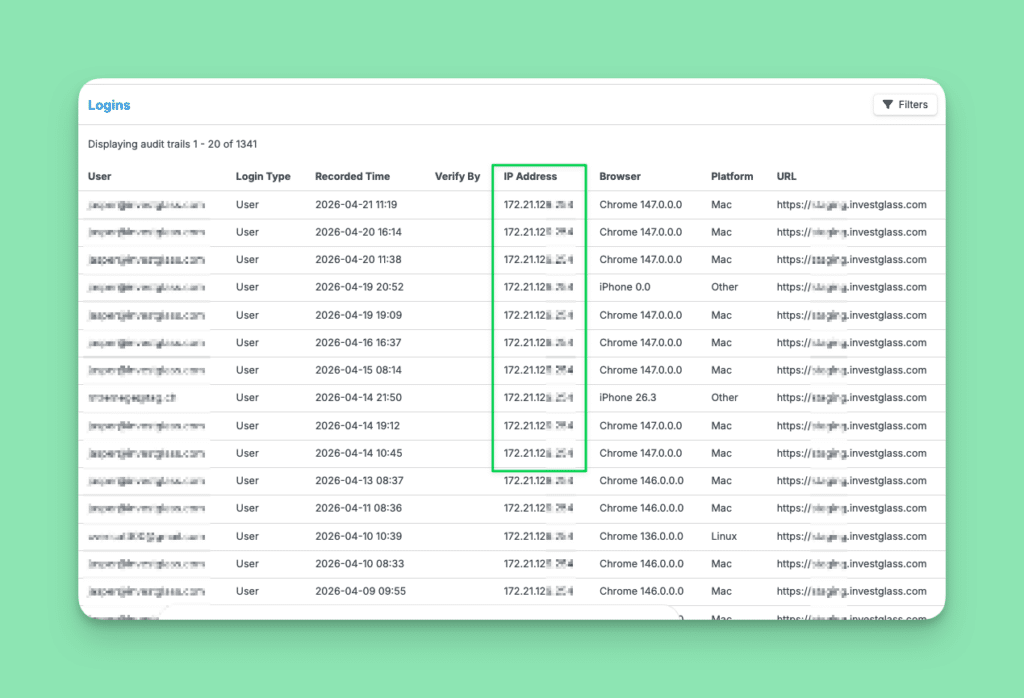
By automating regulatory reporting, banks can free up compliance teams to focus on strategic risk management rather than tedious data entry. For institutions navigating complex frameworks, InvestGlass also covers ferramentas automatizadas de monitoramento de conformidade in detail.
5. Account Servicing and Closure
What is the most efficient way to handle routine account maintenance?
Routine account servicing tasks – such as updating personal information, requesting new cards, changing account settings, or closing accounts – often require customers to visit a branch or wait on hold with a call centre. These manual processes are inefficient for the bank and deeply inconvenient for the customer.
Automation allows banks to offer robust self-service portals where customers can securely manage their accounts online at any time. For backend processes like account closure, RPA bots can automatically verify documents, check for outstanding balances, update system records, and send confirmation communications – all without staff involvement.
Ferramentas de automação da InvestGlass enable banks to build no-code workflows that handle these routine servicing requests end-to-end. The InvestGlass approval process automation feature further allows institutions to design customisable approval chains for account changes, ensuring that all actions are properly authorised and logged.
Automating these routine tasks significantly reduces the administrative workload on branch staff and contact centres, empowering customers to resolve their needs quickly and independently.
6. Bank Reconciliation
How can RPA eliminate the tedious process of manual bank reconciliation?
Bank reconciliation is a critical accounting process that ensures internal financial records match the bank’s statements. Traditionally, this involves finance teams manually comparing thousands of transaction entries across different spreadsheets and systems – a process that is both time-consuming and error-prone.
RPA bots can be programmed to automatically download bank statements, cross-reference transaction data against internal ledgers, and identify matching entries. They can handle high volumes of data with perfect accuracy and at a fraction of the time required by human analysts.
InvestGlass’s automation transaction features support automated transaction matching and workflow orchestration, reducing the manual effort required for reconciliation significantly. When discrepancies are found, the system flags them and routes them to a human analyst for review – a hybrid approach that ensures the vast majority of reconciliations are handled instantly, reserving human expertise for the genuinely complex exceptions.
For a broader view of how automation is transforming financial workflows, the InvestGlass article on what banks are doing with ChatGPT and RPA provides excellent context on the convergence of AI and process automation.
7. Customer Service and Support via AI Chatbots
How are AI chatbots transforming frontline customer support in banking?
Contact centres in the banking industry are frequently overwhelmed by high volumes of routine enquiries – balance checks, transaction history requests, password resets, and general product questions. Handling these manually leads to long wait times, frustrated customers, and high operational costs.
Deploying AI-powered chatbots and virtual assistants automates the handling of these common queries. These intelligent systems can understand natural language, access customer data securely, and provide instant, accurate responses 24 hours a day, seven days a week, without any human involvement.
InvestGlass has published a detailed guide on how chatbots are used in banking, exploring the key use cases and implementation considerations. The platform’s AI in customer service capabilities allow banks to deploy intelligent virtual agents that handle routine queries while seamlessly escalating complex issues to human advisors.
By automating routine customer service interactions, banks can drastically reduce call centre volume, improve first-contact resolution rates, and allow human agents to dedicate their expertise to high-value, relationship-driven conversations.
The InvestGlass Advantage: A Unified Automation Platform
One of the most significant challenges banks face when implementing automation is managing a fragmented ecosystem of point solutions. Each tool addresses a single process but creates new integration headaches and data silos. InvestGlass solves this by providing a unified, sovereign CRM and automation platform that covers the full spectrum of banking workflows – from KYC and onboarding to compliance reporting and customer service.
Built with the needs of regulated financial institutions in mind, InvestGlass offers no-code workflow automation, AI-powered tools, and deep compliance functionality in a single platform. Whether you are a retail bank, private bank, or fintech, InvestGlass provides the infrastructure to automate the seven processes described in this article without requiring a large development team or lengthy implementation cycles.
| Banking Process | InvestGlass Feature | Principais benefícios |
| Customer Onboarding & KYC | Digital Onboarding Module | Reduces onboarding time from days to minutes |
| Loan Processing | CRM for Loan Officers | Accelerates approvals and reduces data errors |
| Detecção de fraudes | AI Fraud Prevention System | Real-time monitoring and instant alerting |
| Relatórios regulamentares | Compliance & AML Tools | Automated audit trails and report generation |
| Account Servicing | Approval Workflow Automation | Self-service portals and no-code workflows |
| Bank Reconciliation | Automation Transaction Feature | Automated matching with exception flagging |
| Atendimento ao cliente | AI Chatbot Integration | 24/7 query resolution with human escalation |
Conclusão
The integration of automation in the banking sector is no longer a futuristic concept – it is a present-day necessity. By automating critical processes such as customer onboarding, loan processing, fraud detection, and regulatory reporting, financial institutions can achieve unprecedented levels of efficiency, accuracy, and cost savings.
As technology continues to evolve, the synergy between Robotic Process Automation (RPA) and Artificial Intelligence (AI) will only deepen, offering increasingly sophisticated solutions for complex banking challenges. Banks that proactively embrace these automated workflows will not only streamline their operations but also position themselves to deliver the superior, frictionless experiences that modern consumers demand.
If you are ready to begin your automation journey, InvestGlass offers a practical, sovereign-ready platform that financial institutions worldwide are already using to transform their operations. The time to automate is now, and the benefits are too significant to ignore.
Perguntas frequentes (FAQs)
1. What is Robotic Process Automation (RPA) in banking?
RPA in banking involves using software bots to automate repetitive, rule-based tasks.
These bots mimic human actions to interact with digital systems, handling tasks like data entry, transaction processing, and report generation. This technology significantly reduces manual effort and increases operational efficiency across both front-office and back-office functions.
2. How does automation improve the customer onboarding process?
Automation speeds up onboarding by instantly verifying identities and processing documents.
Using AI and OCR, automated systems can extract data from IDs and cross-reference it with global databases in real-time. This eliminates manual paperwork, reducing onboarding time from days to minutes and providing a seamless experience for new clients. InvestGlass’s digital onboarding platform is purpose-built for this use case.
3. Can automation really help in detecting bank fraud?
Yes, automated systems use advanced machine learning to monitor transactions in real-time.
These AI-driven systems analyse vast amounts of data to spot unusual patterns or anomalies that indicate fraudulent activity. They can instantly flag or block suspicious transactions, providing a much faster and more accurate defence than manual monitoring alone.
4. Will automating banking processes lead to job losses?
Automation is designed to augment human workers, not necessarily replace them.
By taking over tedious, repetitive tasks, automation frees up bank employees to focus on higher-value activities that require human judgement, empathy, and strategic thinking – such as complex customer relationship management, financial advisory, and risk analysis.
5. How does automation assist with regulatory compliance?
Automated systems ensure accurate data collection and timely report generation.
RPA bots can pull data from various internal systems, standardise it, and automatically populate regulatory reports without human error. This creates a reliable audit trail and ensures that the bank consistently meets strict compliance deadlines. InvestGlass covers this in detail in its guide to compliance and risk management in banking.
6. What are the cost benefits of automating loan processing?
Automating loan processing drastically reduces operational costs and accelerates approval times.
By digitising applications and automating credit checks, banks require fewer manual hours to process a loan. This efficiency not only cuts labour costs but also allows banks to process a higher volume of loans, increasing overall revenue and customer satisfaction.
7. Are AI chatbots secure enough for banking customer service?
Yes, modern banking chatbots are built with robust security protocols and encryption.
They are designed to securely access customer data to answer specific account queries while adhering to strict data privacy regulations. They provide safe, 24/7 assistance for routine enquiries without compromising sensitive information.
8. How difficult is it to implement RPA in an existing bank infrastructure?
RPA is generally non-invasive and can be integrated with existing legacy systems.
Because RPA bots interact with the user interface of existing applications just as a human would, they typically do not require complex backend system overhauls or extensive API integrations, making deployment relatively fast and cost-effective.
9. What is the difference between RPA and AI in banking automation?
RPA handles rule-based, repetitive tasks, while AI handles complex analysis and decision-making.
Think of RPA as the “hands” doing the heavy lifting of data entry and process execution, and AI as the “brains” analysing data for fraud detection or credit scoring. Together, they form Intelligent Automation – a comprehensive solution for modern banking operations. InvestGlass explores this convergence in its article on what banks are doing with ChatGPT and RPA.
10. How does automated bank reconciliation work?
Automated reconciliation uses bots to match internal ledger entries with bank statements.
The software automatically downloads statements, compares transaction amounts and dates, and reconciles matching records. It only flags discrepancies for human review, turning a tedious manual chore into a fast, highly accurate automated process that frees finance teams for more strategic work.
Artigos relacionados
Swiss Sovereign CRM: Construído com IA.
Pronto para agir.


