
When building tests, forms, or onboarding workflows, the phrase “can choose more than one answer” signals a fundamental design choice. This article explains what multiple-response questions are, when to use them, and how to manage security and compliance requirements in regulated industries.
The term typically refers to checkbox items or multi-select fields where respondents select two or more options from a list. This contrasts sharply with traditional multiple choice questions that limit the user to one answer. Aimed at educators, compliance officers, and product owners, this guide covers practical implementation across major tools.
InvestGlass, en tant que suisse souveraine CRM provider, supports multi-answer configurations in onboarding forms, suitability questionnaires, and client portals while preserving data sovereignty. We will explore when to allow more than one option, how platforms implement this question type, and how to manage the resulting assessment data securely.
Single-Answer vs Multi-Answer Questions: Core Definitions
A traditional multiple choice question presents a stem (the question prompt), several answer choices, one correct answer (the key), and plausible but incorrect options (distractors). A well-constructed multiple choice answer typically includes a clear stem and several alternative answers, with only one answer being correct in traditional formats. The respondent must select the best answer from the list.
The format of multiple choice questions is popular because they are easy to create, score, and analyse, making them a preferred choice for testing large groups in various classes and courses.
Multiple response questions change this model. Several options can be correct or applicable simultaneously, and the person must identify all relevant choices without selecting wrong answer options. In educational settings, multiple choice questions are often used to assess students’ knowledge, but they can also lead to confusion if not clearly defined, especially when more than one answer is correct. Par exemple, a risk-profiling question might ask clients to select all investment objectives that apply, allowing them to choose income, capital appreciation, and tax efficiency together.
Examination boards often use “best answer” terminology where only one option earns full credit, even when more than one seems plausible. The key difference is clear:
- Single-select: “Choose your primary investment objective” forces one answer
- Multi-select: “Select all investment objectives that apply” allows several correct responses
Multiple choice questions can assess lower-order skills effectively, but higher-order reasoning skills are better evaluated through other formats like essays or short answers.
Multiple choice tests are often preferred in educational assessments because they can be scored quickly and objectively, reducing the likelihood of teacher bias. This objectivity helps ensure that students in different classes and courses are evaluated fairly, regardless of the teacher.
When evaluating answer choices, scoring systems must account for how students select answers, and teachers should ensure clarity in the question to accurately measure knowledge. This is especially important in AP classes and other high-stakes courses, where formula scoring or partial credit may be used to account for guessing or partial knowledge.
When Should Respondents Be Able To Choose More Than One Answer
Allowing multiple answers should be a deliberate design choice, not an accident of form configuration. Typical use cases include:
- Interest surveys and preference capture
- KYC and AML onboarding questionnaires capturing multiple sources of wealth
- Complex risk-tolerance assessments under MiFID II
- Product eligibility checks listing held asset classes
- Wealth management preference capture for ESG themes
Compliance contexts often require capturing the full picture. A client with dual tax residencies must select both jurisdictions to trigger correct CRS/FATCA reporting. Limiting to a single answer would create misleading data. Allowing multiple answers ensures a fair assessment, and respondents should ensure all applicable answers are completed to avoid misleading or incomplete data.
Conversely, high stakes testing and summative exams typically prefer a single best answer for clarity and reliable scoring. In some exams, it is better to guess than to leave a question unanswered, as there is no penalty for wrong answers, but test developers ensure that the answer ‘C’ is not more common than others, so do not guess ‘C’ automatically. Decide in advance whether you want one best answer or all applicable answers before building any digital form or test.
How Common Platforms Implement “Can Choose More Than One Answer”
Interface labels differ across tools, but the logic remains consistent. Radio buttons enforce one answer through shared name attributes, while checkboxes or multi-select controls permit several selections.
Google Forms demonstrates this clearly. The default “Multiple choice” question type uses radio buttons, limiting respondents to a single choice. Switching to “Checkboxes” lets respondents select multiple answers, with optional validation such as “Select at least 2, at most 5.” In quiz mode, scoring applies all-or-nothing logic where respondents must tick every correct option and no distractors. Unlike Google Forms, Google Sheets uses drop-down menus for configuring multiple choice options, which function differently from checkboxes. SurveyMonkey offers checkboxes as a question type for multi-select questions, and Microsoft Forms allows users to set limitations on the number of answers in multi-select questions.
Learning tools like Articulate Storyline 360 distinguish between “Multiple Choice” (single key, graded) and “Multiple Response” (several keys, with partial credit options). Different slides can contain various question formats, such as graded questions or survey questions, and navigation between pages or posts in online forms can affect how users interact with multi-select questions. CRMs use multi-select dropdowns for fields like industries served or jurisdictions where a client is taxable.
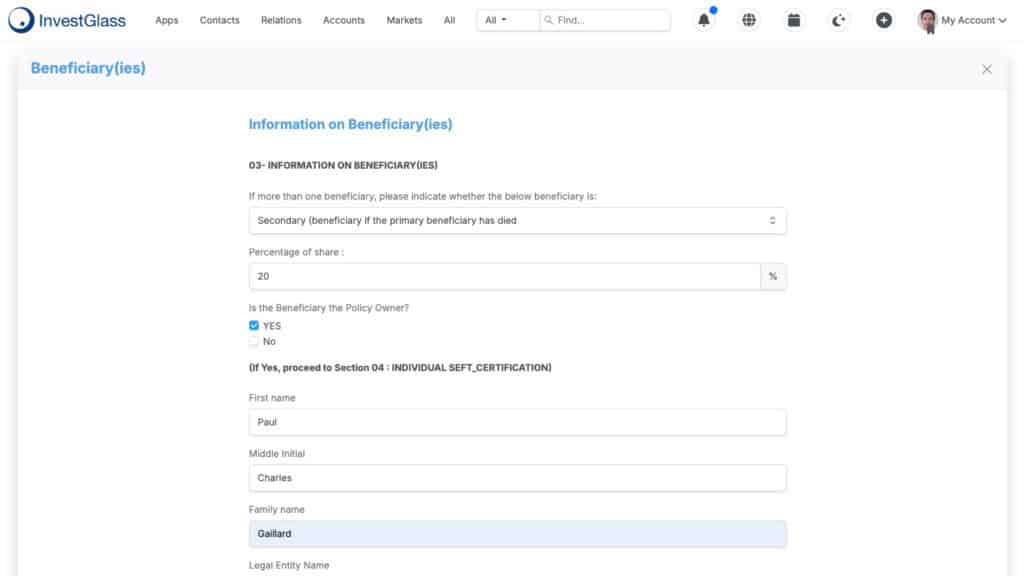
InvestGlass lets administrators configure fields as single-select or multi-select in l'embarquement numérique forms, risk questionnaires, and portefeuille preferences. All data remains stored in Switzerland or on-premise, providing full control over sensitive client information.
Designing Clear Multi-Answer Questions And Answer Keys
Multi-answer questions require especially clear wording to avoid disputes and compliance issues. Ambiguity rates run 15-30% higher than single-select items according to research in the British Journal of Educational Technology.
Best practice demands explicitly signalling that more than one answer can be chosen. Use stems such as:
- “Select all that apply”
- “You may choose more than one option”
- “Tick every option that matches”
Reading the question twice before looking at the answer choices can help clarify what is being asked, and negative questions should be read multiple times to ensure understanding. This approach is particularly important when the material includes complex vignettes, graphs, or detailed descriptions.
When building answer keys for exams and training courses, define which specific combinations earn full credit, partial credit, or no credit. Including a note or annotation within the answer key can help clarify the material and guide respondents to recognise the correct solution. Pilot multi-answer items with a small group to check if respondents interpret the wording consistently.
En les institutions financières, version control and audit trails are essential. Any change in scoring rules or correct combinations must be traceable to meet ISO 27001 requirements. InvestGlass embeds this in compliance modules, logging admin edits to multi-select scoring configurations.
Scoring Logic: Marking Questions With More Than One Correct Answer
Scoring multi-response items can be straightforward or sophisticated depending on the stakes. The most common approach is all-or-nothing scoring, where respondents must tick every correct option and no incorrect ones to receive full marks. This method appears in approximately 70% of e-learning platforms.
Partial-credit schemes offer alternatives. A typical formula awards +1 point for each correct selection, with negative marks or zero for incorrect selections, capped to discourage guessing. For example, negative marking is often used to discourage examinees from making random guesses. Scoring systems must account for both correct and incorrect selections, ensuring that points are awarded or deducted accordingly. For example:
Selection | Points |
|---|---|
Correct option chosen | +1 |
Incorrect option chosen | -0.25 |
Maximum score cap | 80% |
Compliance and professional training often requires employees to demonstrate mastery of all required options. A market abuse module might demand 100% on items covering insider trading, front-running, and pump-and-dump schemes. The use of multi-select questions reduces ‘Survey Scope Error’ by offering respondents the ability to express the complexity of their preferences.
InvestGlass can generate training reports and completion certificates based on responses to multi-answer compliance assessments, giving firms an auditable training trail that regulators can verify.
Technical Configuration In CRMs And Digital Onboarding Tools
Behind every multi-answer field lies a data model decision affecting reporting and integrations. Common technical patterns include:
- Storing multiple values as arrays (PostgreSQL JSONB)
- Comma-separated lists (legacy MySQL)
- Join tables linking clients to attributes such as risk factors or product interests
Consistency across systems prevents data mismatch errors. Use the same country codes, sector classifications, or MiFID II categories in your CRM, onboarding forms, and outils de gestion de portefeuille.
InvestGlass allows administrators to configure lists such as ESG preferences, sources of funds, or investor classifications as multi-select fields. Downstream reporting remains consistent because all systems reference standardised option lists with unique identifiers.
Data Sovereignty And Security When Collecting Multiple Answers
More answers often mean more sensitive data requiring strong governance. Multi-answer questions in financial services can capture sensitive combinations: political exposure plus multiple jurisdictions plus detailed income sources.

Regulatory frameworks in Europe and Switzerland demand strict control over where such data is stored, processed, and backed up. EU DORA and the Swiss Banque Act mandate geo-fenced storage for financial data.
InvestGlass offers a sovereign Swiss alternative to American and Chinese platforms. With Swiss hosting, optional on-premise deployment, and client-held encryption keys, organisations maintain full control. Concrete governance practices include:
- Access control by role
- Field-level permissions for sensitive multi-select attributes
- Regular audits ensuring data sharing aligns with client consent
- Seven-year audit log retention
Best Practices And Common Mistakes With “Can Choose More Than One Answer”
When writing exams, surveys, or onboarding forms, follow these good practices:
- Clearly mark “select all that apply” in the stem
- Limit option counts to 6-12 to avoid overwhelming respondents
- Align each answer choice with a single concept
- Eliminate overlapping options that create confusion
- Encourage respondents to maintain hope and confidence when answering challenging questions, as a positive mindset can improve performance
When evaluating answer choices, if two choices seem correct, choose the one that appears stronger and check for any inconsistencies.
Common mistakes include mixing “All of the above” with multi-answer logic (creating circular dependencies), using overlapping distractors, and forgetting to update scoring rules when options change. Mixing the same question type, such as combining single-select and multi-select formats within the same question, can also confuse respondents.
In financial services, confusing risk-preference items or product-eligibility checklists can inadvertently exclude valid combinations. A MiFID II question might confuse “willingness to take risk” with “capacity for loss,” requiring separate multi-select fields.
InvestGlass clients can use templates for KYC, MiFID II suitability, and ESG questionnaires that already apply these best practices, reducing configuration errors.
Using Multi-Answer Questions In Financial Services With InvestGlass
The concept of “can choose more than one answer” connects directly to real workflows in banks, asset managers, and insurers. InvestGlass implements multi-select fields for:
- Investor profile classifications (HNWI, Family Office, Institutional)
- Tax residencies across 100+ CRS jurisdictions
- Investment themes (technology, healthcare, green bonds)
- Communication preferences and marketing consent
These multi-answer responses feed into automated workflows. Suitability checks can block mismatches, portfolio alerts can trigger based on preference changes, and segmented campagnes de marketing can target specific combinations.
Unlike American or Chinese cloud platforms, InvestGlass lets organisations keep all sensitive preference and profile data inside Swiss infrastructure or their own servers. Regulated institutions can standardise multi-answer questions across client onboarding, advisory processes, and periodic reviews using InvestGlass as a single sovereign source of truth.
Conclusion: Choosing The Right Type Of Answer For Clarity And Control
Decide intentionally whether a question should have one best answer or allow several correct or applicable answers. Clear wording, thoughtful scoring, and solid data governance matter more than the specific label used by any tool.
Financial institutions benefit particularly from well-designed multi-answer questions in KYC, risk assessment, and preference capture processes. The ability to select multiple answers reflects real-world complexity where clients have multiple objectives, residencies, and interests.
InvestGlass provides the ideal Swiss, non-American, non-Chinese platform for implementing secure, compliant multi-answer workflows with full sovereignty over client data. To learn more about configuring multi-select fields for your compliance and onboarding needs, explore the InvestGlass platform today.

