
Principais conclusões
- A serviços bancários A solicitação de proposta (RFP) é um processo estruturado para comparar potenciais fornecedores de forma objetiva entre instituições financeiras.
- Uma solicitação de proposta (RFP) de um banco de médio porte em 2026 geralmente leva de 10 a 14 semanas desde o planejamento até a assinatura do contrato, enquanto muitos projetos levam de 10 a 12 semanas, dependendo da complexidade.
- Critérios de avaliação claros, fatores de ponderação e uma matriz de avaliação ajudam as organizações a escolher o provedor de serviços bancários certo, e não simplesmente o de menores tarifas.
- Soluções europeias e suíças, como o InvestGlass, ajudam bancos, gestores de patrimônio, fundações e órgãos públicos a proteger a soberania do cliente e a evitar a dependência de ecossistemas tecnológicos americanos ou chineses.
- Este artigo foca em governança prática, documentação, tomada de decisão e controles que as equipes de finanças, tesouraria, compras, TI, jurídico, gestão de riscos e recursos humanos podem aplicar imediatamente.
Introdução: Por que as RFPs bancárias importam em 2026
Órgãos públicos, empresas, uma organização sem fins lucrativos, planos de previdência e gestores de patrimônio costumam revisar os serviços bancários a cada 3 a 5 anos. O processo de RFP ajuda uma organização a reduzir os custos bancários, garantindo que os prestadores de serviços ofereçam tarifas competitivas e identificando o fornecedor que melhor se adapta à sua cultura, atendimento ao cliente, e necessidades tecnológicas.
Em 2026, pagamentos em tempo real, migração para a ISO 20022, segurança cibernética, GDPR, PSD2, DORA e residência de dados têm fez as operações bancárias as RFPs de serviços estão mais exigentes, especialmente na Europa e no Reino Unido. Este guia foi escrito em inglês britânico para diretores financeiros, tesoureiros, líderes de operações, membros de conselhos e instituições reguladas que buscam uma seleção transparente e auditável.
A InvestGlass é uma empresa suíça soberano Plataforma de CRM e automação. Ela apoia bancos e instituições financeiras antes, durante e depois de um RFP, centralizando comunicações, documentos, pontuação, integração, KYC, portfólio fluxos de trabalho e dados de clientes em infraestrutura hospedada na Suíça ou local.
Noções Básicas de RFP Bancária
Uma solicitação de proposta bancária é um questionário em Excel, Word ou PDF e um processo formal emitido para potenciais fornecedores por uma instituição que busca um produto bancário.
Gatilhos típicos incluem expiração de contratos, taxas mais altas, fusões, suporte deficiente, novas regras de pagamento, necessidades de várias moedas ou serviços transfronteiriços. Uma RFP de serviços bancários gerais pode abranger contas, pagamentos, liquidez e gestão de caixa. Uma RFP focada pode abordar câmbio, custódia, credenciamento de lojistas, contas de garantia (escrow), finanças comerciais ou canais digitais.
Para entidades do setor público e fundos de pensão, uma RFP é frequentemente exigida pelas regras de compras. O processo de RFP garante que os bancos tomem decisões transparentes e fiduciárias e cria uma trilha de auditoria para o conselho.

O que é uma RFP no setor bancário?
Uma solicitação de proposta (RFP) no setor bancário é um convite escrito estruturado enviado a bancos selecionados, solicitando uma proposta completa para serviços bancários específicos.
Geralmente pede por:
- Tabelas de preços e estrutura de taxas
- Planos de implementação e acordos de nível de serviço
- Arquitetura de tecnologia, APIs, conectividade host-to-host e prontidão para a norma ISO 20022
- Banking online, segurança, privacidade de dados e histórico de conformidade
- Estrutura de gestão de relacionamento, qualificações e suporte de escalonamento
Uma RFP melhora a comparabilidade porque os respondentes respondem às mesmas perguntas, usando as mesmas premissas, prazos e formatos. Uma RFI é usada para explorar o mercado, enquanto uma RFQ é mais restrita e focada em preços.

Por que as Organizações Emitem RFPs Bancárias
O processo de RFP é essencial para as organizações avaliarem periodicamente seu atual provedor de serviços bancários e garantirem que recebam o melhor valor e os melhores serviços disponíveis no mercado.
Os motivos geralmente são mistos:
- Financeiro: reduzir taxas de transação, comparar taxas, melhorar o rendimento e consolidar contas.
- Risco e conformidade: avaliar a solidez de capital, resiliência, controles cibernéticos, certificações de segurança e conduta regulatória.
- Estratégico: melhorar a digitalização, o processamento direto (straight-through processing), a integração de CRM, as conexões de ERP e gerenciamento de portfólio.
- Governança: documentar a tomada de decisões para fins de auditoria, dinheiro público, ativos de previdência, fundos de clientes e comitês de investimento.
Instituições financeiras também usam RFPs para selecionar bancos correspondentes, custodiantes, parceiros de tecnologia e provedores de serviços de investimento qualificados.
Planejamento de uma Solicitação de Proposta Bancária
Um planejamento cuidadoso nas 3 a 4 semanas anteriores à emissão reduz respostas ambíguas e retrabalho. Entreviste as partes interessadas que interagem regularmente com provedores de serviços bancários para coletar percepções e definir o escopo e as prioridades para a RFP.
Crie uma equipe diretiva composta por tesouraria, finanças, compras, TI, jurídico, risco, operações e usuários de front-office relevantes. Decida se a solicitação abrange todos os serviços em um único lote ou separa pagamentos, depósitos, empréstimos, câmbio e serviços especializados.
Definindo Escopo, Objetivos e Orçamento
Uma RFP bancária abrangente requer informações sobre o ambiente bancário atual, incluindo relacionamentos existentes e volumes de transações. Inclua o número de contas, moedas, saldos médios, taxas anuais pagas, tipos de transações e pontos problemáticos.
Uma RFP de finanças bem estruturada inclui metas financeiras organizacionais definidas e especificações detalhadas para as instituições candidatas. Defina objetivos mensuráveis, como uma meta de redução de taxas, limite de classificação de crédito, período máximo de implementação ou capacidade digital até 2027. Defina o prazo do contrato, geralmente de 3 a 5 anos, opções de extensão, limites de orçamento, subsidiárias no escopo e prioridades ESG.
Governança, Papéis e Responsabilidades
Nomeie um líder de projeto — geralmente um gerente de tesouraria ou um diretor de operações — para gerenciar o projeto, o cronograma, o controle de documentos, o registro de esclarecimentos e todas as comunicações.
O comitê de avaliação deve incluir pessoas com experiência nas áreas de finanças, TI, jurídica, compras, gestão de riscos e operações bancárias diárias. Estabeleça regras sobre conflitos de interesse, poderes de decisão, canais de escalonamento e quem apresentará a decisão final ao conselho. Uma plataforma segura e com controle de acesso, como o InvestGlass, é preferível a conversas dispersas por e-mail.
Como Elaborar um Documento de RFP para Serviços Bancários
A maior parte do valor é gerada durante a elaboração do documento. Uma solicitação de proposta (RFP) típica de serviços bancários de 2026 tem entre 25 e 60 páginas, além dos anexos, e é redigida em inglês britânico simples, com perguntas numeradas, planilhas de preços e diretrizes claras para o envio das propostas.
As solicitações de propostas (RFPs) apresentam uma visão geral do projeto, que consiste em uma breve descrição da organização e dos principais objetivos da RFP. A RFP deve fornecer informações sobre a organização, incluindo sua missão, estrutura, metas de longo prazo e quaisquer políticas ou relatórios de desempenho relevantes, a fim de ajudar os possíveis prestadores a compreender suas necessidades.
Seções Essenciais do RFP Bancário
Incluir:
- Resumo executivo: finalidade, datas, objetivos e pessoa de contato.
- Visão geral da organização: estrutura jurídica, história, locais de atuação, clientes, faturamento, ativos e prioridades.
- Panorama atual do setor bancário: bancos existentes, contas, volumes de transações e desafios.
- Serviços solicitados: contas correntes, pagamentos, liquidez, câmbio, cartões, financiamento comercial ou conta de garantia.
- Instruções para a proposta: confidencialidade, regras de formatação, número de cópias exigidas, portal de envio, prazos e formato das respostas.
Requisitos Técnicos, de Segurança e de Integração
O setor financeiro é fortemente regulamentado, o que exige que os fornecedores detalhem suas estratégias de segurança, políticas de privacidade de dados e histórico de conformidade nas solicitações de proposta (RFP). Os protocolos de segurança e conformidade são elementos essenciais que os bancos precisam abordar nas propostas apresentadas em resposta às solicitações de proposta.
Pergunte sobre autenticação multifatorial, controles de usuário, trilhas de auditoria, APIs, horários de corte, formatos de arquivo, SEPA, Faster Payments do Reino Unido, mensagens ISO 20022 (pain e camt), recuperação de desastres, locais de processamento de dados e subcontratados de nuvem. Na Europa, inclua as expectativas da DORA sobre riscos de TIC e supervisão de terceiros, orientadas pela Informações da Autoridade Bancária Europeia sobre o DORA.
Preços, Níveis de Serviço e Implementação
Solicite um modelo de preços detalhado por tipo de conta, tipo de transação, canal, serviço anexo e custos únicos de implementação. Isso apoia a comparação equivalente e ajuda a determinar o custo total.
Defina os níveis de serviço para disponibilidade do sistema, processamento de pagamentos, resposta do suporte, tratamento de incidentes e prazos finais para envio de arquivos. Peça a cada entrevistado que apresente um plano de implementação com marcos, recursos, testes, treinamento, documentação, pessoas de contato específicas e um prazo para entrada em operação, por exemplo 4º trimestre de 2026 a 2º trimestre de 2027.
Executando o Processo de RFP Bancário
As etapas típicas são: lançamento da solicitação, sessão de perguntas e respostas, recebimento das respostas, análise da integridade das propostas, lista preliminar, lista restrita, apresentações dos finalistas, negociação e recomendação. Reserve pelo menos 4 semanas para que os bancos respondam e de 2 a 3 semanas para a avaliação interna.
Emissão da RFP e Gerenciamento de Perguntas e Respostas
Convide de 4 a 8 instituições adequadas com base na solidez creditícia, localização geográfica, capacidades e, quando aplicável, se um licitante dos EUA for membro da FDIC. Envie a solicitação de proposta (RFP) por meio de um portal seguro ou canal criptografado.
Estabeleça um prazo para esclarecimentos de cerca de 10 dias após a emissão. Publique um resumo das perguntas e respostas para todos os bancos interessados. Evite conversas paralelas e mantenha um único registro de todas as respostas.
Avaliando Respostas e Pontuação
Faça uma verificação de integridade primeiro. O estabelecimento de critérios de avaliação claros e ponderação para propostas é crucial no processo de RFP, pois permite que as organizações pontuem e comparem respostas objetivamente, garantindo uma seleção justa de prestadores de serviços bancários.
Uma solicitação de proposta (RFP) para serviços bancários deve incluir uma matriz de avaliação com critérios de ponderação específicos para a pontuação das propostas. Ao desenvolver parâmetros de referência para avaliar as respostas às solicitações de propostas, as organizações devem partir de critérios que possam ser pontuados objetivamente e aplicados de forma consistente a cada banco proponente. Estabelecer a ponderação para cada critério de avaliação é fundamental, pois permite que as organizações priorizem o que é mais importante para elas, como custo, qualidade do serviço ou capacidades específicas.
Avalie custo, qualidade do serviço, tecnologia, segurança, suporte ao relacionamento, implementação e resiliência. O InvestGlass CRM pode armazenar pontuações, comentários, anexos e registros de auditoria com segurança.
Selecionando Finalistas e Conduzindo Entrevistas
Selecione de 2 a 4 finalistas. As entrevistas com os finalistas são uma parte importante do processo de seleção de fornecedores, permitindo que as organizações avaliem a expertise das equipes dos possíveis prestadores de serviços e sua adequação à organização.
Utilize a mesma lista de pontos a tratar para todos os prestadores de serviços bancários. Avalie a cultura, planejamento de contingência, procedimentos de escalonamento e estudos de caso de clientes semelhantes. Visitas ao local podem ser úteis em projetos de grande porte.
Escolha e Integração do Provedor de Serviços Bancários
Essa etapa transforma a análise em recomendação. A comissão deve recomendar um parceiro preferencial e explicar por que os demais foram rejeitados. Esse registro protege a organização caso a decisão seja contestada.
Recomendação Final e Aprovação de Governança
Elabore um documento para a diretoria abordando o processo, a avaliação, os critérios, as pontuações, os riscos, os custos e a justificativa. Anexe as matrizes de pontuação e os principais trechos das respostas. Os órgãos públicos podem precisar de deliberações formais, enquanto as empresas privadas registram a aprovação em atas.
Contratação, Migração e Monitoramento de Desempenho
Negocie taxas, SLAs, indenizações, direitos de rescisão, proteção de dados e cláusulas de auditoria. Elabore um plano de migração que abranja a abertura de contas, testes de arquivos de pagamento, treinamento de usuários, volumes em fases e comunicações com os clientes.
Acompanhe KPIs como disponibilidade, taxas de rejeição de pagamentos, tempos de resposta, incidentes e satisfação. Revise o desempenho trimestralmente e formalmente após 12 meses.

Tecnologia, Soberania de Dados e o Papel do InvestGlass
Os serviços bancários modernos são indissociáveis de dados, fluxos de trabalho e plataformas tecnológicas. Muitas instituições europeias agora questionam a dependência de empresas americanas ou chinesas nuvem e CRM prestadores de serviços para dados financeiros confidenciais.
A InvestGlass não é uma prestadora de serviços bancários. Trata-se de uma plataforma suíça soberana de CRM e automação que auxilia organizações regulamentadas a gerenciar o ciclo de vida das solicitações de proposta (RFP), dados de clientes, integração de novos clientes, fluxos de trabalho de conformidade, gestão de portfólio e portais seguros, ao mesmo tempo em que protege a soberania.
Protegendo a Soberania de Dados de Clientes em RFPs Bancárias
As solicitações de proposta (RFPs) cada vez mais perguntam onde os dados de clientes e de transações são armazenados, processados e copiados para backup. A InvestGlass oferece hospedagem na Suíça e implantação no local, ajudando as organizações a manter o controle sobre os dados de CRM e de interação com os clientes.
Inclua perguntas sobre a dependência de serviços em nuvem no exterior, chaves de criptografia, subcontratados, residência de dados e acesso extraterritorial. Isso é especialmente relevante para bancos privados, gestoras de ativos, seguradoras, órgãos públicos e qualquer instituição que gerencie registros confidenciais de clientes.
Usando o InvestGlass para Apoiar o Ciclo de Vida de RFP Bancário
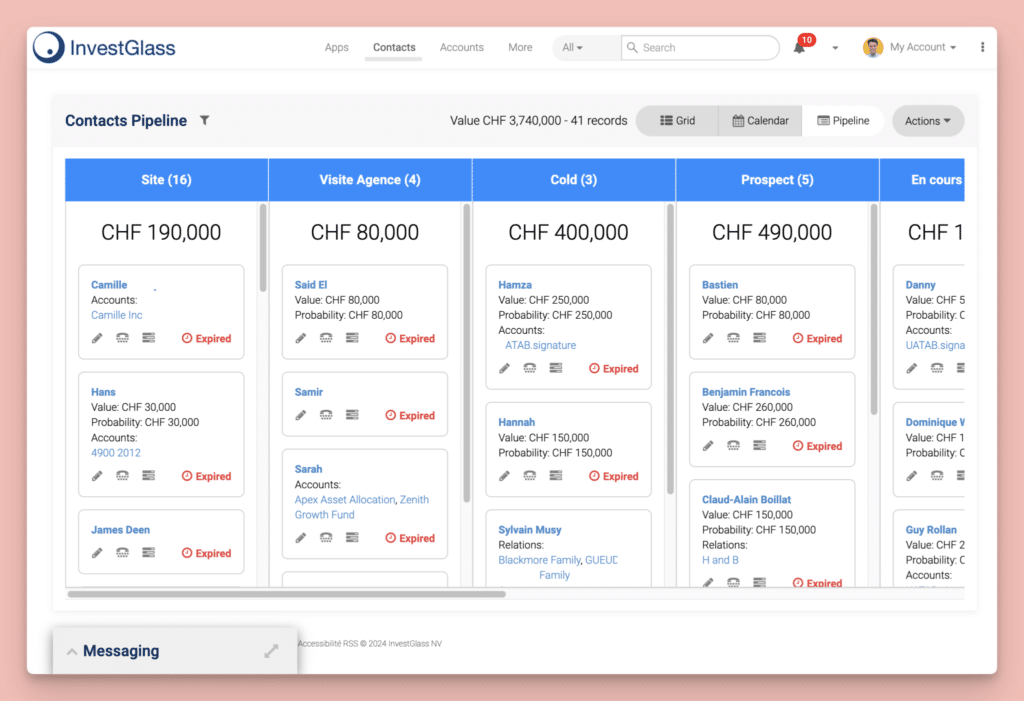
O InvestGlass permite armazenar contatos dos bancos participantes da licitação, acompanhar as comunicações, gerenciar pontuações de avaliação, preservar documentos e fornecer uma trilha de auditoria segura. Após a seleção, ele pode dar suporte a integração digital KYC, gestão de carteira, comunicação com o cliente e integrações com o banco selecionado.
Para organizações que buscam uma solução que não seja americana nem chinesa, a InvestGlass oferece uma base tecnológica soberana que protege a soberania do cliente e mantém os dados estratégicos em uma infraestrutura controlada.

PERGUNTAS FREQUENTES
Com que frequência uma organização deve realizar uma RFP de serviços bancários?
Muitas organizações revisam os serviços bancários essenciais a cada 3 a 5 anos, ou antes disso, após uma fusão, mudança regulatória, aumento de taxas, falha no serviço ou grande mudança tecnológica.
Quantos bancos devem ser convidados para uma RFP bancária?
Inviting 4 to 8 financial institutions is usually sufficient. Too many respondents can stretch internal resources and weaken engagement with the strongest providers.
Quais recursos internos são necessários para gerenciar um RFP bancário?
You need an RFP project lead, finance or treasury specialists, IT integration expertise, legal counsel, risk or compliance officers, and daily bank users. A medium-complexity project may require 60 to 100 combined staff hours.
Organizações menores conseguem realizar um RFP bancário sem consultores externos?
Yes. Many mid-sized companies, charities, and wealth managers can manage the process internally with templates, governance, clear scope, and disciplined evaluation. Advisers are helpful for complex, multi-country, or highly technical mandates.
Por que devemos considerar uma plataforma soberana como o InvestGlass junto com a nossa RFP bancária?
A sovereign CRM and automation platform helps keep client and portfolio data in Swiss or self-controlled infrastructure, independent of American or Chinese software providers. This improves resilience, regulatory confidence, and flexibility in future RFP cycles.

