
Chaque équipe commerciale a besoin d'un moyen fiable de suivre l'état des transactions, les prochaines étapes et la proximité de l'organisation par rapport à ses objectifs de chiffre d'affaires. C'est précisément ce que propose un pipeline de vente. Dans ce guide, nous explorons ce qu'est un pipeline de vente, en quoi il diffère d'un entonnoir de vente, quelles sont les étapes les plus importantes et comment en créer un de zero en utilisant un logiciel CRM moderne et des outils d'IA tels qu'InvestGlass.
Réponse rapide : qu'est-ce qu'un pipeline de vente et pourquoi il est important en 2026
Un pipeline de vente est une vue visuelle et traçable de chaque transaction en cours sur laquelle travaille votre équipe commerciale, organisée selon les étapes du pipeline de vente, du premier contact jusqu'à l'expansion post-vente. Chaque fiche de transaction contient généralement la valeur de la transaction, le nom de l'entreprise, les décideurs impliqués, la date de clôture prévue et le statut actuel. Un pipeline de vente suit visuellement la progression des acheteurs potentiels tout au long du processus de vente de votre entreprise afin que rien ne soit négligé.
Pourquoi est-ce important ? Parce qu'un pipeline de vente aide les professionnels de la vente à prévoir leurs revenus futurs avec bien plus de précision qu'au simple "pifomètre". Au lieu d'espérer que les commerciaux concluront suffisamment d'affaires, les responsables commerciaux peuvent examiner les valeurs pondérées par étape, les taux de conversion historiques et les repères d'âge des transactions pour prédire les résultats en toute confiance. Les pipelines de vente offrent une vision claire du chiffre d'affaires potentiel global et permettent des prévisions de ventes précises, ce qui signifie moins de surprises à la fin du mois ou du trimestre. Un pipeline de vente aide également à identifier les goulots d'étranglement dans le processus de vente, en vous montrant exactement où les transactions stagnent afin que vous puissiez allouer efficacement vos ressources.
Une distinction rapide qui vaut la peine d'être notée : le pipeline de vente se concentre sur ce que font vos représentants commerciaux (étapes des transactions, actions, valeur des transactions), tandis que l'entonnoir de vente représente le parcours de l'acheteur, de la prise de conscience à l'achat. Le pipeline répond à la question “ où en sont nos transactions ? ” et l'entonnoir répond à la question “ où les prospects abandonnent-ils ? ”
Considérez un fournisseur de technologie financière qui vend un outil de conformité aux banques de l'UE en 2026. Avec un cycle de vente typique de 6 à 18 mois et 6 à 12 parties prenantes par transaction, un pipeline de vente sain permet à l'équipe de voir quelle banque a terminé l'examen des risques, laquelle attend un pilote et laquelle a besoin d'une présentation au conseil d'administration. Sans cette visibilité, les longs cycles de vente deviennent imprévisibles. Les pipelines modernes sont mieux gérés dans un logiciel CRM comme InvestGlass plutôt que dans des feuilles de calcul, en particulier une fois que les équipes gèrent plus de 20 à 30 transactions actives.
Pipeline des ventes vs. entonnoir des ventes : comprendre la différence
Les deux concepts stimulent la croissance du chiffre d'affaires, mais chacun répond à une question stratégique différente. Comprendre cette distinction permet d'affiner la planification et l'exécution de votre équipe commerciale.
Un pipeline de vente est la vue interne, centrée sur le vendeur. Il suit les actions : réunion réservée, démonstration effectuée, proposition envoyée, contrat émis. Les pipelines de vente se concentrent sur les actions nécessaires pour faire progresser les prospects. Vous y voyez le nombre d'offres, leur valeur combinée et la façon dont elles progressent à travers des étapes de vente définies.
Un tunnel de vente est une vision centrée sur le client. Il cartographie la notoriété, la considération, l'évaluation et l'achat, en montrant le pourcentage de prospects qui abandonnent à chaque étape. Les tunnels de vente montrent comment les prospects progressent dans les étapes d'achat et mettent l'accent sur l'engagement client et la prise de décision tout au long du parcours d'achat.
Voici une comparaison concise. Le pipeline est géré par la direction des ventes ; l'entonnoir est géré conjointement par le marketing et les ventes. L'accent du pipeline : nombre de transactions, valeur, progression. L'accent de l'entonnoir : volume, taux d'abandon, coût d'acquisition. Les métriques du pipeline comprennent la couverture du pipeline, le taux de conversion et la longueur du cycle de vente. Les métriques de l'entonnoir comprennent le coût par lead, la conversion des prospects qualifiés par le marketing en prospects qualifiés par les ventes, et le coût d'acquisition client.
Concrètement, le service marketing peut optimiser l'entonnoir de conversion en améliorant le taux de conversion de la page d'atterrissage, par exemple en le faisant passer de 2% à 4%, ce qui permet de générer davantage de MQL. De son côté, l'équipe commerciale optimise le pipeline en renforçant les critères de qualification des prospects, en améliorant le taux de conversion et en raccourcissant le cycle de vente. InvestGlass relie les données de l'entonnoir et celles du pipeline, ce qui permet aux responsables de suivre l'influence des campagnes de notoriété sur le chiffre d'affaires généré par les ventes conclues.
Éléments clés dont vous avez besoin avant de construire un pipeline de vente
La conception du pipeline échoue lorsque les équipes font l'impasse sur le travail fondamental. Sans une stratégie de vente claire, un profil de client idéal et des objectifs de revenus, le pipeline induira en erreur plutôt qu'il ne clarifiera.
Un processus de vente documenté est le premier préalable. Cartographiez votre véritable parcours d'acheteur, y compris les points de contact réglementaires et départementaux. Pour les ventes interentreprises (B2B) dans des environnements réglementés, les étapes peuvent inclure la découverte, l'évaluation, l'examen juridique et des achats, l'approbation de la conformité, le projet pilote et l'intégration. Les processus de vente standardisés améliorent l'efficacité et l'efficience dans la conclusion des ventes.
Vient ensuite un profil de client idéal (ICP) clair. Définissez des critères firmographiques : secteur d'activité (par exemple, institutions financières réglementées par l'EEE), taille de l'entreprise (50 à 500 employés), région et environnement réglementaire. Identifiez les personas d'acheteurs et les rôles clés des décideurs tels que le responsable des risques, l'agent de conformité ou le directeur technique. Cela garantit que votre pipeline reflète le bon marché cible.
Les objectifs de chiffre d'affaires définis permettent de rétro-concevoir les besoins du pipeline. Si votre objectif annuel est de 5 millions d'euros de nouveau ARR pour 2026, vous devez calculer combien de propositions, d'opportunités qualifiées et de valeur totale du pipeline (généralement 3 à 5 fois le quota) sont nécessaires. Sans objectifs de revenus, il n'y a pas de point de repère pour la santé du pipeline.
Les métriques de base du pipeline de ventes sont essentielles : taux de conversion, durée du cycle de vente, taux de conversion entre les étapes et taille moyenne des transactions. Les données historiques fournissent des points de référence ; à défaut, utilisez des estimations sectorielles prudentes.
Enfin, une plateforme CRM relie le tout. Le logiciel CRM est essentiel pour gérer les pipelines de vente, et un pipeline de vente doit refléter les objectifs et les activités de l'équipe commerciale. Pour les entreprises réglementées, InvestGlass propose un hébergement cloud souverain, des outils de conformité modulaires et un partage de documents sécurisé. En tant que plateforme suisse tout-en-un pour l'automatisation des ventes, InvestGlass consolide le CRM, l'intégration numérique, la gestion de portefeuille et l'automatisation du marketing. Pour des conseils plus approfondis sur l'alignement de vos stratégie de vente et marketing avec l'IA ou en sélectionnant un Plateforme CRM pour 2026, explorez la bibliothèque de ressources d'InvestGlass.
Étapes typiques du pipeline de vente (du prospect au client fidèle)
La plupart des pipelines B2B utilisent 6 à 8 étapes, adaptées à la durée du cycle de vente et à la complexité du produit. Les étapes courantes d'un pipeline de vente comprennent la prospection, la qualification, la proposition, la négociation et la conclusion. Plus précisément, les pipelines de vente comprennent généralement sept étapes : la prospection, la qualification, la réunion, la proposition, la négociation, la signature du contrat et le service après-vente.
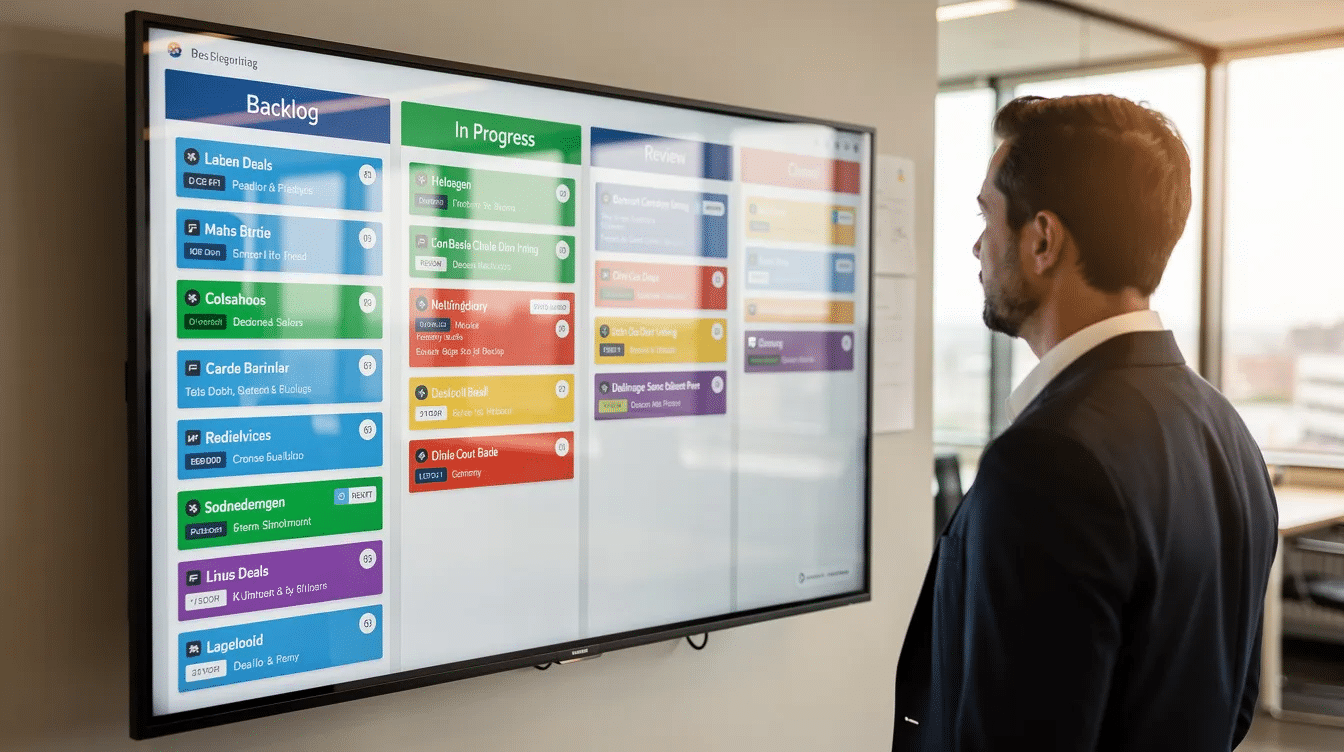
Voici un modèle de travail en sept étapes comprenant des objectifs, des activités de vente clés et des critères de sortie, illustré par un outil de conformité SaaS vendu à une banque de taille moyenne. Pour les gestionnaires de patrimoine et les banques privées, InvestGlass CRM pour la banque privée permet aux utilisateurs de personnaliser les étapes du pipeline de vente par secteur d'activité (gestion de patrimoine par rapport aux services crypto) et de visualiser les transactions sur des tableaux Kanban pour une visibilité instantanée du pipeline.
Étape 1 : Prospection
La prospection est la première étape où les clients potentiels sont identifiés. L'objectif est de trouver des acheteurs potentiels correspondant à votre profil de client idéal (ICP) et de générer de l'intérêt grâce à des canaux sortants et entrants : prospection sur LinkedIn, conférences, recommandations, demandes de démo entrantes et répertoires financiers réglementés. Les outils de génération de leads aident à trouver de nouveaux prospects pour le pipeline.
Plutôt que des conseils génériques, voici des activités de prospection quotidiennes concrètes pour un commercial ciblant les banques de l'UE : 30 e-mails ciblés, 10 appels et 5 messages LinkedIn. Un prospect sort de cette étape lorsqu'il manifeste un intérêt sincère et qu'un appel de découverte est planifié. Un pipeline de vente sain nécessite une génération et un nurturing réguliers de leads pour maintenir le haut de l'entonnoir plein.
InvestGlass capture automatiquement les nouveaux prospects provenant de formulaires Web, de campagnes marketing et de listes externes dans un seul pipeline. Les indicateurs clés à surveiller ici : les nouveaux prospects par semaine, le taux de réponse et le pourcentage de prospects qui deviennent des opportunités qualifiées.
Étape 2 : Qualification des leads
La qualification des leads est le processus qui consiste à décider si un prospect vaut la peine d'entrer dans le pipeline principal. À l'aide de cadres tels que le BANT ou le MEDDIC, les commerciaux évaluent l'adéquation en fonction du budget, de l'autorité, du besoin et du calendrier. La qualification des leads garantit que les prospects conviennent avant de faire une présentation, protégeant ainsi la santé du pipeline en éliminant les opportunités qui font perdre du temps.
Exemple concret : la qualification d'un prospect dans une banque privée suisse. L'affaire est qualifiée si le budget dépasse 200 000 CHF, si le pouvoir de décision revient à la direction de la conformité ou de la technologie, si la banque doit satisfaire aux exigences de la FINMA et si la mise en œuvre est requise dans un délai de six mois. Le suivi du nombre de prospects qualifiés est crucial pour la santé du pipeline, il faut donc saisir des points de données spécifiques dans votre logiciel CRM : la fourchette budgétaire, le calendrier, les contraintes réglementaires et les principales parties prenantes.
Étape 3 : Découverte et analyse des besoins
Les réunions de découverte clarifient les difficultés de l'entreprise, les mesures de réussite et le processus d'achat. Après cette étape, le commercial doit être capable de répondre à quatre questions : quel problème est résolu, que se passe-t-il s'il ne fait rien, qui signe et à quelle date il doit être opérationnel.
Pour les secteurs réglementés, maintenez les conversations commerciales concrètes. Une question utile pour un prospect bancaire pourrait être : “ Comment gérez-vous les examens de adéquation MiFID II aujourd'hui, et où votre processus actuel crée-t-il des risques ? ” Les outils de communication permettent des conversations en temps réel avec les prospects pendant cette phase critique. Suivez le taux de conversion de la phase de découverte à la proposition et le temps moyen passé dans la phase de découverte pour faire avancer le pipeline.
Étape 4 : Proposition et conception de la solution
Cette étape transforme les informations issues de la découverte en une solution sur mesure, une proposition commerciale et un plan de mise en œuvre. L'étape de la proposition consiste à faire une offre de vente officielle aux prospects. Les éléments tangibles comprennent la portée, la tarification, le calendrier de mise en œuvre, les fonctionnalités de conformité et les calculs de retour sur investissement (par exemple, le coût de la non-conformité par rapport au coût de l'outil).
Les outils tels que les logiciels de pipeline de ventes améliorent le suivi et la gestion des transactions à cette étape. InvestGlass prend en charge le partage sécurisé de propositions grâce à salles de données virtuelles et signature électronique capabilities. Les transactions ne doivent passer à cette étape qu'une fois que les décideurs ont confirmé l'adéquation et l'alignement du budget de base afin de maintenir des métriques de pipeline de ventes réalistes.
Étape 5 : Négociation et engagement
La négociation couvre les conditions commerciales, l'examen juridique et les approbations internes des deux côtés. La négociation et l'engagement permettent de lever toutes les objections avant de conclure l'accord. Dans les ventes B2B de 2026, les objections typiques incluent les préoccupations relatives à la souveraineté des données, les risques liés à l'IA, les exigences de sécurité et les coûts d'intégration. Les commerciaux doivent préparer des réponses documentées pour chacune d'elles.
InvestGlass permet de suivre les tâches entre les différentes parties prenantes (juridique, gestion des risques, informatique) grâce à des flux de travail, afin que les opportunités ne restent pas au point mort. À ce stade, les responsables commerciaux doivent surveiller les taux de conversion et l'ancienneté des dossiers. Si une négociation dépasse de plus de 30% la durée habituelle du cycle de vente, elle nécessite probablement une intervention directe.
Étape 6 : Clôture et intégration
Conclure ne se résume pas à l'obtention d'une signature. Cela signifie apporter une première valeur, qu'il s'agisse du premier portefeuille importé, du premier client intégré ou du premier audit de conformité exécuté. La signature du contrat finalise l'accord, transformant les prospects en clients, et un pipeline de ventes sain augmente les chances de conclure des ventes.
Raccourcissez cette étape grâce aux outils numériques : signature électronique, ouverture de compte automatisée, vérification KYC automatisée et modèles de contrats standard. Automatisation de la vérification KYC avec InvestGlass accélère l'intégration tout en maintenant de robustes contrôles de conformité. InvestGlass peut déclencher des flux d'intégration automatiquement lorsqu'une affaire passe au statut “ Gagnée ”. Les indicateurs concrets à suivre ici sont : le taux de conversion, la taille moyenne des transactions, la durée moyenne du cycle de vente et le nombre d'affaires perdues par code de motif.
Étape 7 : Post-achat, fidélisation et expansion
Un pipeline de ventes moderne et performant intègre les clients existants pour les renouvellements, les ventes additionnelles et les ventes croisées, et pas seulement les nouvelles acquisitions. Les activités post-achat comprennent les revues d'affaires trimestrielles, le suivi de l'utilisation, la vente croisée de modules supplémentaires (automatisation KYC, agents IA ou services crypto) et la gestion des renouvellements.
InvestGlass suit le cycle de vie des clients et peut faire surface à des opportunités d'expansion basées sur l'utilisation des produits et les commentaires des clients. Les équipes de réussite client devraient surveiller la rétention nette du chiffre d'affaires, le MRR d'expansion et le taux de résiliation dans le cadre d'une gestion plus large du pipeline de ventes.
Étape par étape : comment construire un tunnel de vente à partir de zéro
Construire un pipeline de vente suit un processus concret et ordonné qu'un responsable des ventes peut mener à bien en 2 à 4 semaines. Vous trouverez ci-dessous six étapes, illustrées par un exemple filé : une startup lançant un outil de conformité SaaS B2B ciblant les assureurs européens, avec une taille de transaction moyenne de 100 000 € et un cycle de vente de six mois, visant 3 millions d'euros de nouveaux revenus annuels récurrents (ARR).
Pour un traitement plus approfondi, consultez le guide dédié d'InvestGlass sur la construction d'un pipeline de vente pour les secteurs réglementés.
1. Traduire les objectifs de chiffre d'affaires en pipeline nécessaire
Partez des objectifs de chiffre d'affaires annuel et remontez en amont. Avec un objectif de 3 millions d'euros de chiffre d'affaires annuel récurrent (ARR), un montant moyen de contrat de 100 000 euros et un taux de réussite de 25%, vous devez remporter 30 contrats par an, soit environ 8 par trimestre. Avec un taux de réussite de 25%, cela correspond à 32 propositions par trimestre. Si 50% d’opportunités qualifiées débouchent sur des propositions, vous avez besoin de 64 opportunités qualifiées. Si le taux de qualification à partir de prospects bruts est de 20%, il vous faut 320 prospects par trimestre. La couverture du pipeline doit être d’environ 4 fois le quota, ce qui signifie un pipeline trimestriel de 3 millions d’euros pour atteindre l’objectif trimestriel de 750 000 euros. Utilisez les taux de conversion historiques lorsqu’ils sont disponibles ; sinon, appliquez des références prudentes pour les ventes B2B.
2. Cartographier votre processus de vente existant
Interrogez deux ou trois meilleurs commerciaux et reconstituez ce qui se passe réellement, du premier contact à la conclusion. Documentez les micro-étapes : e-mail d'introduction, appel de découverte, démo technique, révision de sécurité, phase pilote, présentation finale au conseil d'administration. L'objectif n'est pas d'inventer un processus de vente parfait et théorique, mais de saisir la réalité comme point de départ. InvestGlass peut enregistrer les activités historiques et aider à visualiser quelles étapes sont corrélées aux taux de réussite les plus élevés.
3. Concevoir des étapes de pipeline claires et axées sur l'action
Convertissez les étapes du processus en 6 à 8 étapes de pipeline claires, où chaque étape représente un changement significatif dans l'engagement de l'acheteur. Évitez les étapes trop granulaires qui ajoutent de la complexité sans apporter de perspicacité, ainsi que les étapes trop larges qui obscurcissent la situation réelle des transactions.
Une règle utile : fondez les étapes sur les décisions de l'acheteur, et non sur les tâches administratives internes. Pour les secteurs réglementés, envisagez d'ajouter une étape dédiée à l'approbation des risques ou de la conformité avant la conclusion.
4. Définir des critères objectifs d'entrée et de sortie
Écrivez des règles explicites pour déterminer quand une affaire peut passer à l'étape suivante. Utilisez des actions d'acheteur observables plutôt que le jugement subjectif du représentant. Exemple de liste de contrôle de “ Découverte ” à “ Proposition ” : décisionnaire identifié, fourchette budgétaire discutée, calendrier convenu et problème quantifié. Lorsque tous les représentants utilisent les mêmes critères, les mesures du pipeline de ventes et la précision des prévisions s'améliorent considérablement. InvestGlass permet des champs obligatoires et des automatisations pour imposer des changements d'étape cohérents.
5. Configurez le pipeline dans votre CRM
Créez un nouveau pipeline dans votre CRM, ajoutez des étapes et définissez des probabilités de clôture par défaut (par exemple : Prospection 5%, Qualifié 15%, Découverte 30%, Proposition 50%, Négociation 70%, Conclu 100%). Renseignez les champs clés pour chaque opportunité : valeur de la transaction, date de clôture prévue, contact principal, gamme de produits et source du prospect.
Pour les équipes qui ont besoin de souveraineté des données, InvestGlass propose un déploiement sur site ou hébergé en Suisse. Explorez le gestion du pipeline et plateforme d'engagement commercial pages de conseils de configuration.
6. Alimenter, tester et affiner
Importez des affaires existantes depuis des tableurs ou des outils existants et placez-les dans les bonnes étapes. Menez une période de test de 30 à 60 jours au cours de laquelle les responsables examinent chaque semaine les métriques du pipeline : taux de conversion, durée dans les étapes et couverture du pipeline. Des améliorations concrètes peuvent inclure la fusion d'étapes qui se chevauchent, l'ajout d'une étape de fidélisation ou le renforcement des règles de qualification. Les tableaux de bord et rapports personnalisés d'InvestGlass mettent en évidence les goulots d'étranglement pendant cette phase de raffinement.
Principaux indicateurs du pipeline de ventes à suivre
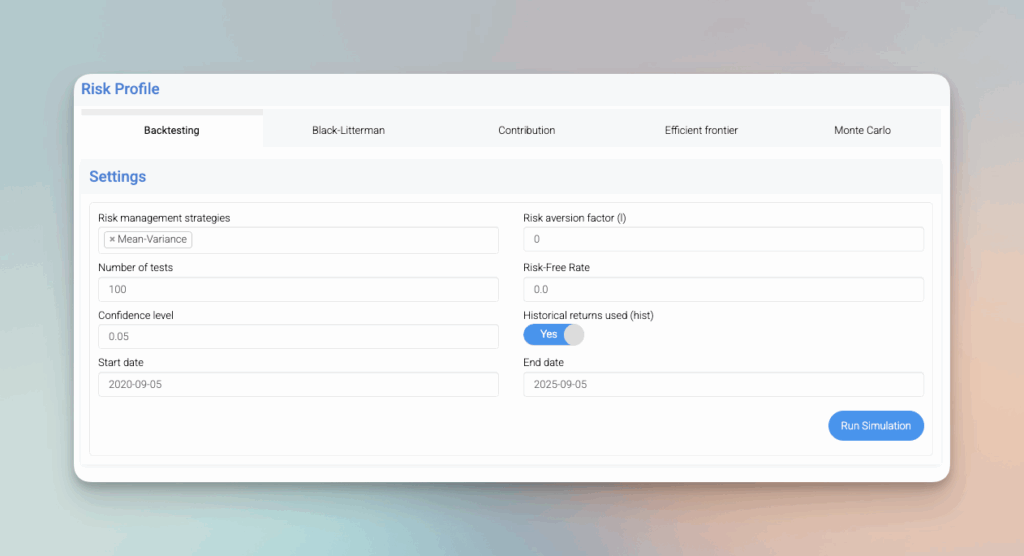
Les métriques transforment un pipeline, qui n'est qu'une simple liste de tâches, en un outil de prévision et de coaching. Les outils d'analyse des ventes aident à suivre les métriques clés du pipeline et fournissent aux responsables commerciaux les informations précieuses dont ils ont besoin pour agir.
Voici les indicateurs essentiels que tout responsable des ventes devrait surveiller :
Métrique | Définition |
|---|---|
Nombre de transactions | Total des opportunités ouvertes à toutes les étapes |
Valeur totale du pipeline | Revenu potentiels combinés de toutes les transactions actives |
Taux de conversion par étape | Pourcentage d'opportunités passant d'une étape à la suivante |
Taille moyenne des transactions | Valeur moyenne des transactions conclues et gagnées |
Durée du cycle de vente | Jours entre le premier contact et le contrat signé |
Couverture du pipeline | Ratio de la valeur du pipeline par rapport aux objectifs de vente (viser 3 à 5 fois) |
Taux de victoire | Pourcentage d'opportunités qui se traduisent par des contrats gagnés |
Vélocité de l'offre | Temps nécessaire pour qu'un prospect devienne une vente conclue |
Performance des sources de prospects | Quels canaux génèrent les transactions avec le taux de conversion le plus élevé et le cycle le plus court |
Exemple chiffré : si vous avez besoin de 500 000 € par trimestre et que la valeur moyenne de vos contrats est de 50 000 €, vous devez remporter 10 contrats. Avec un taux de réussite de 25%, vous aurez besoin d’environ 40 propositions et 80 opportunités qualifiées. Les taux de conversion par étape permettent de suivre le parcours des prospects entre les différentes étapes de vente, tandis que la valeur totale du pipeline correspond au chiffre d'affaires potentiel cumulé de toutes les affaires en cours. Un outil spécialisé Système CRM suisse pour les services financiers facilite le calcul et le suivi de ces indicateurs tout au long de cycles de vente complexes et réglementés. |
Segmentez les métriques par gamme de produits, territoire ou commercial afin d'identifier les besoins en formation ou les différences de marché. InvestGlass propose des rapports prédéfinis pour les entreprises réglementées, incluant des vues filtrées par statut KYC, niveau de risque du produit et gestionnaire de patrimoine.
Bonnes pratiques pour la gestion continue du pipeline des ventes
Construire un pipeline n'est que la première étape. Le maintenir en bon état nécessite des routines rigoureuses et une attention constante. Les pipelines de vente aident à identifier les goulots d'étranglement et à améliorer les prévisions de ventes, mais seulement lorsque les données sont à jour et que les actions sont cohérentes.
Examens et hygiène réguliers du pipeline
Établissez une routine simple : les commerciaux examinent leur pipeline chaque jour, en metant à jour les prochaines étapes et en clôturant les opportunités mortes. Les managers dirigent des revues d'équipe chaque semaine, en se concentrant sur des transactions spécifiques et des transitions d'étape. La direction mène des revues stratégiques chaque mois ou chaque trimestre.
Les règles de nettoyage comptent. Clôturez les affaires stagnantes après un nombre défini de contacts infructueux et enregistrez des motifs de perte clairs. Des revues régulières du pipeline aident à identifier les affaires bloquées, et un examen régulier du pipeline des ventes peut améliorer la précision des prévisions. Suivez les rapports de vieillissement du pipeline pour trouver les affaires bloquées plus longtemps que la durée typique du cycle de vente. InvestGlass peut signaler les affaires “ pourrissantes ” et envoyer des rappels automatisés lorsqu'aucune activité n'a eu lieu pendant une période choisie.
Équilibrer l'attention entre le haut et le bas du tunnel de conversion
Se concentrer excessivement sur les grosses affaires en phase avancée tout en négligeant la prospection entraîne des cycles de chiffre d'affaires irréguliers, alternant entre périodes d'abondance et de pénurie. Voici un modèle pratique de répartition hebdomadaire du temps : 40% pour la prospection et la démarchage téléphonique, 40% pour faire avancer les dossiers en cours, et 20% pour les tâches administratives et la formation. À adapter en fonction du poste et de l’ancienneté.
Utilisez des mesures du pipeline de ventes, telles que le nombre de nouveaux prospects qualifiés par représentant et par mois, pour surveiller si le haut du pipeline reste sain. Les tableaux de bord d'InvestGlass visualisent les étapes initiales et finales côte à côte, aidant les responsables commerciaux repérer les déséquilibres avant qu'ils n'affectent les ventes futures.
Aligner le marketing et les ventes autour du pipeline
Les campagnes marketing doivent être planifiées en fonction des volumes d'opportunités requis et des objectifs de revenus, et non simplement sur la base du nombre de prospects. Par exemple, une série de webinaires pour les gestionnaires d'actifs au troisième trimestre devrait viser 30 SQL (leads qualifiés par les ventes) à l'étape “ Qualifié ”, et non simplement 300 inscriptions. Les outils d'aide à la vente (sales enablement) contribuent à former et à améliorer les compétences des commerciaux pour gérer efficacement les prospects issus de ces campagnes.
Des définitions partagées (MQL, SQL, opportunité) et des données CRM intégrées permettent aux deux équipes de visualiser les taux de conversion, de la campagne à la conclusion gagnée. Découvrez InvestGlass conseil en flux entrant services pour des stratégies d'alignement marketing plus approfondies.
Comment les outils de CRM et d'IA tels qu'InvestGlass dynamisent les pipelines de vente modernes
Les feuilles de calcul manuelles ne peuvent pas prendre en charge les ventes B2B complexes de 2026, en particulier dans les secteurs réglementés tels que la banque, l'assurance ou les services cryptographiques. Un pipeline de ventes efficace exige des outils qui organisent les données clients, automatisent le travail répétitif et font surface aux risques avant qu'ils ne se transforment en pertes.
Fonctionnalités CRM essentielles pour la visibilité du pipeline
Les fonctionnalités clés pour la visibilité du pipeline comprennent des vues Kanban et en liste, des champs personnalisés, des filtres, des tâches et rappels automatisés, des modèles d'e-mails et un historique complet des interactions. Un gestionnaire de relation utilisant InvestGlass peut voir toutes les affaires par étape pour ses 50 meilleurs clients HNWI, y compris les opportunités de vente croisée, en une seule vue, tandis qu'un cabinet dentaire peut compter sur CRM InvestGlass pour dentistes pour suivre les plans de traitement, les rendez-vous et le suivi des patients à travers une structure de pipeline similaire.
Intégration étroite entre le CRM et des outils tels que signature électronique, le stockage de documents et les portails clients réduisent les frictions dans les dernières étapes. InvestGlass propose un hébergement sur site ou basé dans l'UE, répondant à des exigences strictes de conformité en matière de banque et de gestion de patrimoine. Pour les équipes qui évaluent leurs options, le créateur de pipeline de vente la page offre un aperçu détaillé, et le guide du logiciel de gestion des transactions couvre la configuration avancée.
Utiliser des agents d'IA et l'automatisation pour maintenir le pipeline en bonne santé
Un agent de tunnel de vente IA peut trier les nouveaux prospects à l'aide de la qualification des leads, suggérer les prochaines étapes, signaler les risques lorsque les transactions ralentissent et pré-remplir les données clients à partir des e-mails et des documents. Ces fonctionnalités vont au-delà du simple reporting pour entrer dans le domaine de l'analytique prescriptive.
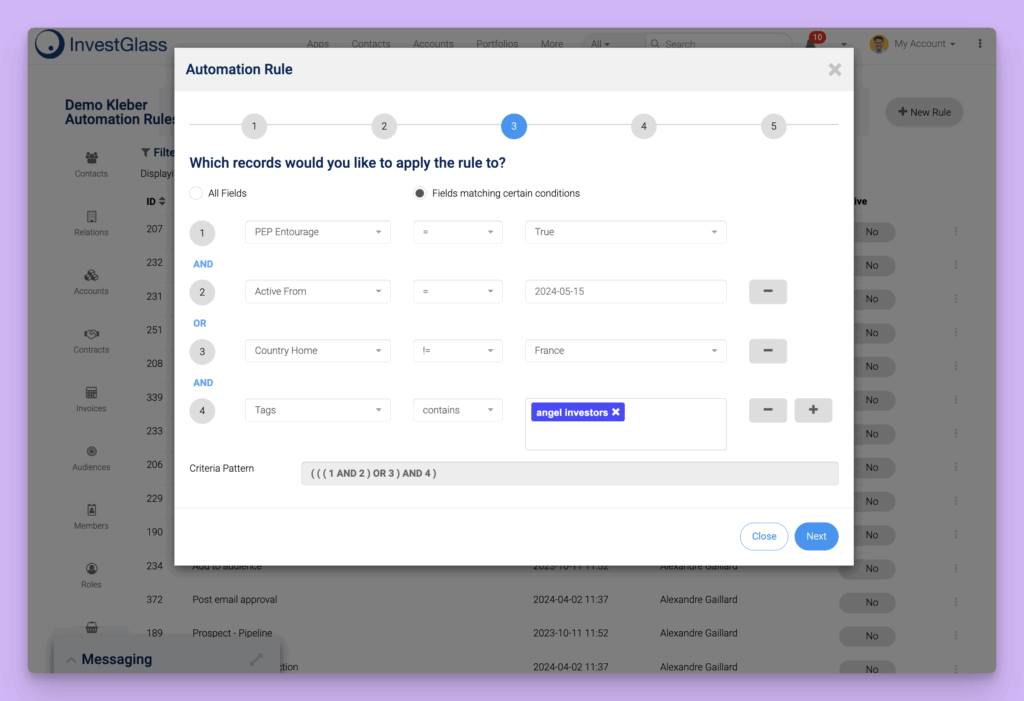
Exemples d'automatisation concrets : création automatique d'une tâche de suivi après la fin d'une démonstration, envoi d'un e-mail de rappel si aucune réponse ne parvient dans les trois jours suivant une proposition, ou transmission des transactions importantes à un responsable des ventes lorsque les dates de clôture glissent. Les mêmes principes s'appliquent dans le secteur de la santé, où un InvestGlass CRM pour thérapeutes Le pipeline peut automatiser les rappels, les flux de travail d'intégration et les tâches de suivi. Celui d'InvestGlass Agent IA pour le pipeline de ventes préserve la souveraineté des données tout en offrant ces capacités. L'automatisation doit soutenir, et non remplacer, le jugement humain, en particulier dans les négociations B2B à haute valeur ajoutée où les relations clients et la confiance sont primordiales.
Calendrier réaliste : créer et optimiser votre premier pipeline en 90 jours
Une feuille de route pratique de 90 jours se divise en trois phases.
Pendant les 30 premiers jours, concentrez-vous sur la cartographie du processus de vente, la définition des étapes avec des critères d'entrée et de sortie clairs, et la configuration d'InvestGlass ou du CRM de votre choix. Interviewez les meilleurs commerciaux, mettez-vous d'accord sur les définitions du profil client idéal (ICP) et établissez les probabilités de clôture initiales.
Durant les jours 31 à 60, formez les professionnels de la vente au nouveau pipeline, migrez les affaires existantes des feuilles de calcul ou des anciens outils, et commencez les revues hebdomadaires du pipeline. C'est à ce moment-là que l'équipe commence à acquérir de la discipline concernant le nombre d'affaires à chaque étape et pour déterminer si les acheteurs potentiels progressent ou stagnent.
Entre le 61e et le 90e jour, affinez les critères de classification des étapes en vous appuyant sur des données réelles, ajustez les règles d'automatisation et utilisez les indicateurs du pipeline commercial pour accompagner l'équipe. Un gestionnaire de patrimoine européen de taille moyenne qui passerait des tableurs à InvestGlass au cours de cette période pourrait raisonnablement s'attendre à des prévisions de chiffre d'affaires plus précises en l'espace d'un trimestre, l'erreur de prévision passant d'environ ±40% à environ ±12% lorsque les étapes et les critères de sortie sont appliqués de manière cohérente.
FAQ : questions courantes sur les tunnels de vente
Combien d'étapes un pipeline de vente devrait-il comporter ?
La plupart des organisations B2B utilisent 6 à 8 étapes. Moins de cinq ont tendance à être trop vagues pour des prévisions significatives ; plus de huit ajoutent de la complexité sans perspective proportionnelle. Choisissez les étapes en fonction de véritables changements dans l'engagement de l'acheteur.
Quelle est la différence entre un CRM et un pipeline de vente ?
Un CRM est la plateforme logicielle qui stocke et organise les données clients, gère les contacts et automatise les flux de travail. Un pipeline de vente est une fonctionnalité ou une vue spécifique au sein de ce CRM, qui permet de suivre la progression des transactions à travers les étapes d'un processus de vente. Vous avez besoin d'un logiciel CRM pour gérer efficacement un pipeline de vente à grande échelle.
À quelle fréquence devons-nous nettoyer notre pipeline de vente ?
Les représentants individuels doivent mettre à jour les transactions quotidiennement. Les responsables doivent examiner le pipeline de l'équipe chaque semaine. Toute transaction sans activité depuis 30 jours ou plus doit être examinée et soit réengagée, soit clôturée comme perdue avec un motif clair enregistré.
Quels sont les taux de conversion réalistes pour les ventes B2B ?
Les indicateurs de référence varient, mais les chiffres types dans le secteur B2B sont les suivants : du prospect au prospect qualifié, 15 à 25% ; du prospect qualifié à l'analyse des besoins, 50 à 60% ; de l'offre à la négociation, 40 à 50% ; et taux de réussite global, 20 à 30%. Ces chiffres dépendent fortement du secteur d'activité, de l'importance de la transaction et de la durée du cycle de vente.
Les petites équipes ont-elles vraiment besoin d'un logiciel CRM, ou peuvent-elles utiliser Excel ?
Les feuilles de calcul fonctionnent pour une poignée de transactions, mais elles montrent leurs limites au-delà de 20 à 30 opportunités actives. Les erreurs de saisie de données, le manque d'automatisation et l'absence de visibilité du pipeline en temps réel rendent Excel peu fiable pour les prévisions de ventes. InvestGlass convient même aux boutiques en croissance et s'adapte à mesure que l'organisation se développe.
Comment dois-je calculer la couverture de pipeline nécessaire ?
Divisez vos objectifs de chiffre d'affaires trimestriels par votre taux de réussite moyen. Si votre quota est de 500 000 € et que votre taux de réussite est de 25%, vous devez disposer d'un portefeuille de prospects d'une valeur de 2 millions d'euros. La plupart des responsables commerciaux visent une couverture de 3 à 5 fois ce montant afin de tenir compte des retards et des contrats perdus, ce qui vous permet d'atteindre vos objectifs de chiffre d'affaires en toute fiabilité.
Comment InvestGlass peut-il nous aider à concevoir un pipeline de ventes sain ?
InvestGlass provides customisable pipeline stages, Kanban and list views, AI-driven deal risk flags, sovereign data hosting, and integrated compliance workflows. It connects pipeline data with portfolio management, KYC, and onboarding tools in a single platform. Explore the InvestGlass pipeline management page to see how it works for regulated institutions.
Conclusion : transformez votre pipeline de vente en un moteur de revenus prévisible
A sales pipeline is not merely a reporting tool. It is the backbone of your sales strategy, connecting daily sales activities to future revenue with clarity and accountability. When built properly, it tells you exactly how many deals you need, where each deal stands, and what action comes next. Sales pipelines work best when they are treated as living systems, not static documents.
Three principles make the difference: define clear stages with objective entry and exit criteria, measure the right sales pipeline metrics consistently, and use CRM plus AI to maintain a strong sales pipeline over time. Together, these turn hope into forecast and effort into results.
Audit your current pipeline this week. Identify one or two weak spots, whether that is a low qualification rate, stalled negotiations, or insufficient new customers entering the top of the funnel, and implement one improvement immediately. For organisations that need both advanced sales tools and strict data control, InvestGlass offers a sovereign, long-term alternative to legacy CRM platforms. Start with the créateur de pipeline de vente or explore how an Agent IA pour le pipeline de ventes can keep your pipeline healthy and your sales performance predictable.


