
Biometric authentication has moved from science fiction to everyday reality. Since the mid-2010s, smartphones, border control systems, and online banking platforms have increasingly relied on biometric data to verify who is accessing a service. Rather than asking users to recall a string of characters, biometric authentication verifies identity using unique physical or behavioral characteristics. This shift towards passwordless access has accelerated across finance, healthcare, government, and workforce security. The promise is compelling: stronger digital security, smoother user experiences, and more effective fraud detection. Yet the technology also raises legitimate questions about privacy concerns, demographic bias, and what happens when sensitive data is compromised. This article examines how biometric authentication work unfolds in practice, what methods are available, and what organisations must consider before and after deployment.
What Is Biometric Authentication and How Does It Work?
At its core, biometric authentication is an authentication process that captures, converts, and compares unique physical characteristics or behavioural traits to a stored biometric template. Biometric systems operate on the principle of who you are rather than what you remember. The authentication method begins with enrolment: a sensor captures biometric data (a fingerprint scan, a face image, a voice sample), specialised software extracts distinguishing features, and the system creates a compact mathematical template. This template is encrypted and stored. When the user returns, a fresh sample is captured, its features are extracted, and a similarity score is computed against the stored template. If the score crosses a predefined threshold, identity is confirmed.
Critically, biometric authentication relies on similarity scoring rather than pixel-by-pixel image comparison. Advanced algorithms compute distances in high-dimensional feature space, making the process both fast and robust. Modern biometric authentication systems run on commodity hardware, including phone cameras, fingerprint scanners, microphones, and webcams, paired with AI models that handle feature extraction and matching. Biometric systems require specialised hardware for certain recognition processes, but the barrier to entry has lowered significantly as consumer devices now ship with capable sensors.
From Raw Biometric Data to Encrypted Templates
Raw biometric data, whether an image, audio recording, or motion trace, is never stored in its original form in a well-designed system. Instead, it is transformed into biometric templates: compact, irreversible mathematical representations. For instance, a face scan processed by a modern recognition model produces a 512-dimensional embedding vector. That vector is then encrypted (commonly with AES-256 or within a hardware secure element) and stored either locally or centrally. These templates are not photographs or sound files and cannot be trivially reverse-engineered into a recognisable face or fingerprint.
Biometric systems often rely on partial data for authentication, extracting only the most discriminating features from a scan. Partial fingerprint data or a subset of facial features is sufficient for reliable matching while reducing the amount of sensitive data held. Templates may reside on a device secure enclave, in a centralised server, or across privacy-preserving decentralised architectures, a distinction explored in later sections.
How Liveness Detection and Anti-Spoofing Fit In
Accurate biometric authentication methods depend on liveness detection to confirm that the biometric sample originates from a real, present human rather than a photograph, video replay, mask, or synthetic recording. Common techniques include micro-movement analysis (detecting eye blinks or lip motion), 3D depth sensing via structured light or time-of-flight cameras, and challenge-response prompts such as asking the user to turn their head or speak a specific phrase.
Fraud trends since 2022 have made anti-spoofing mandatory for high-risk sectors. Deepfake faces and synthetic voices have appeared in real fraud cases: engineering firm Arup lost approximately $25.6 million in 2024 through a video-call deepfake attack combining synthetic faces and voices. On the defence side, Pindrop’s 2024 report claims up to 99.2% detection accuracy for deepfake voice attacks via layered liveness detection. Strong presentation attack detection is what makes biometric authentication work reliably for remote, high-value transactions.
Main Biometric Authentication Methods
The various types of biometric authentication fall into two broad groups: physiological biometrics, based on bodily traits, and behavioral biometrics, rooted in how a person interacts with technology. Biometric recognition includes fingerprint, facial, eye, voice, and behavioral recognition. In practice, these are often combined in multimodal systems. No single method is universally superior; each involves trade-offs in accuracy, user convenience, hardware requirements, and privacy impact.
Physiological Biometric Authentication (Face, Finger, Iris, Voice, Veins)
Physiological biometrics use relatively stable bodily biometric characteristics to confirm identity.
التعرف على الوجه analyses geometric measurements and unique facial landmarks, mapping distances between eyes, nose shape, and jawline contours. Facial recognition systems gained mainstream visibility after smartphone manufacturers integrated front-facing cameras with infrared sensors from around 2017. Facial recognition technology performs well under controlled lighting and pose, though accuracy can degrade with significant appearance changes, poor illumination, or low-resolution sensors.
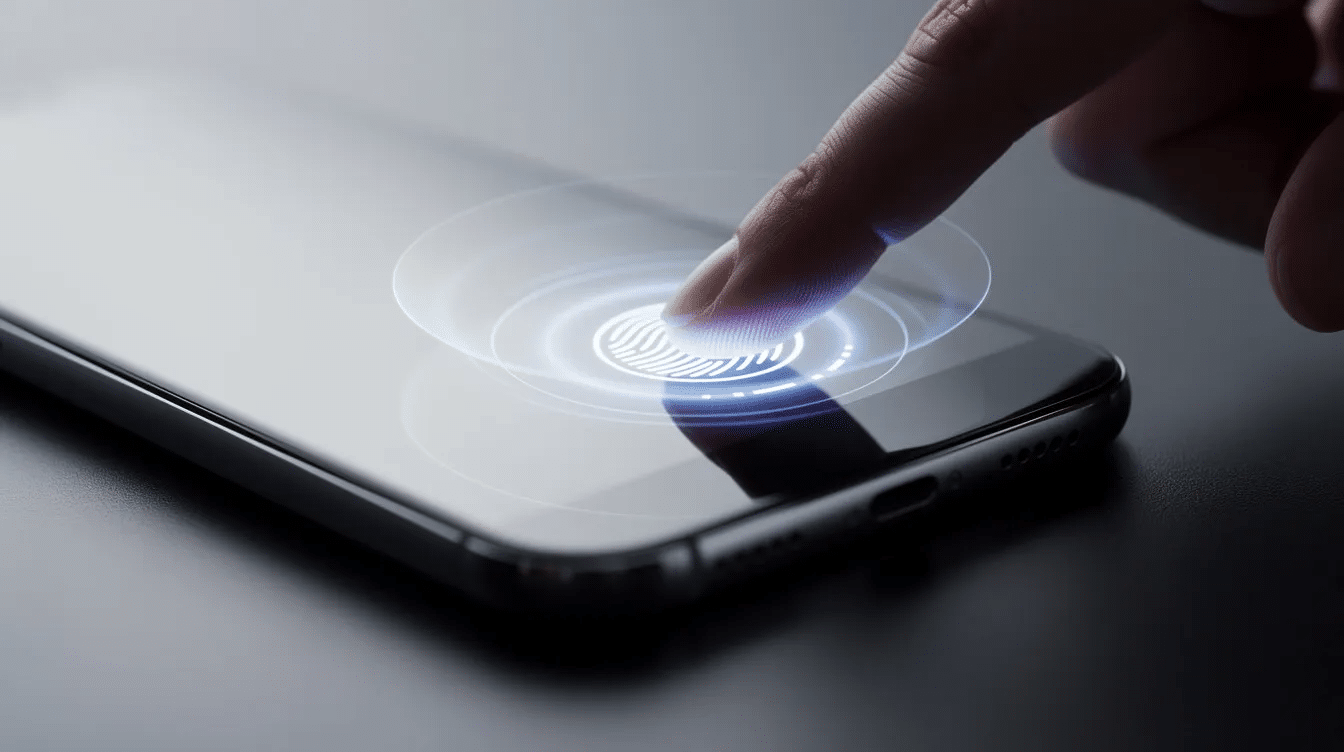
Fingerprint recognition is the most widely used biometric method, with a history stretching back to 20th-century law enforcement and now ubiquitous in mobile devices. Modern capacitive and ultrasonic fingerprint scanners include liveness detection to guard against silicone replicas. Fingerprint authentication offers a remarkable statistical assurance: biometric authentication has a 1 in 64 billion chance of false fingerprint matches.
Iris recognition is one of the most accurate biometric methods, with equal error rates as low as 0.1% in laboratory settings. However, the cost of specialised optics limits iris scans to high-security environments such as borders and secure facilities rather than everyday applications. Iris patterns remain stable throughout life, making them highly reliable biometric identifiers.
التعرف على الصوت uses unique vocal traits for authentication, capturing both the physical properties of the vocal tract and behavioural speaking style. It is widely deployed in call centres and voice assistants but can be affected by background noise, illness, or channel distortion. The growing accessibility of voice synthesis tools has elevated its risk profile.
Vein recognition maps blood vessel patterns beneath the skin for biometric identification. Palm and finger vein sensors offer strong security but remain niche due to hardware cost and user familiarity.
Behavioral Biometrics and Continuous Authentication
Behavioral biometrics evaluates unique learned habits such as gait and keystroke dynamics, as well as touchscreen swipe patterns, mouse movements, and how a person holds or moves their device. Gait recognition identifies individuals by their walking patterns, captured via accelerometers in phones or wearables.
Unlike one-time login checks, behavioral biometrics powers continuous authentication. Machine learning models build a behavioural profile over days or weeks, then flag anomalies, such as a login from an unfamiliar location combined with typing patterns that diverge from the norm. This makes it powerful for detecting account takeover or insider threats. However, behavioural signals are typically used alongside other authentication methods rather than as a sole decisive factor, especially in banking and fintech where error rates must remain low.
Multimodal Biometric Systems
Multimodal biometric authentication uses multiple biometric traits for verification, combining two or more modalities (such as face plus voice, or fingerprint plus keystroke dynamics) into a single decision. This approach significantly reduces the risk of spoofing attacks because an attacker would need to imitate multiple biometric signals simultaneously, making unauthorised access much harder.
Combining physical and behavioral biometrics enhances security effectiveness. For example, some 2026 mobile banking applications use facial recognition with passive liveness plus keystroke dynamics for high-value transfers. Multimodal systems can detect anomalies in user behaviour during authentication, adding a layer of ongoing scrutiny. The trade-offs are real, however: more integration effort, a larger data protection surface, and potential user friction if the process is not designed with care. A unimodal biometric system, relying on a single trait, is simpler to deploy but inherently more vulnerable.

Biometric Data, Templates, and System Architectures
Understanding the distinction between biometric data (raw scans such as images or audio) and biometric templates (processed, encrypted representations) is essential, both technically and legally. Where and how stored biometric data resides determines privacy exposure, breach severity, and regulatory obligations. Biometric data storage must be highly secured to prevent breaches, and the architectural choice shapes the organisation’s risk profile.
Local (Device-Native) Biometric Systems
Local biometric systems store biometric templates only on the user’s device, typically within a secure enclave or trusted platform module. Apple’s Face ID and Android fingerprint unlock are well-known examples. Privacy benefits are strong: no central biometric database exists to be targeted. Performance is fast, with on-device matching working even offline. Physical biometrics cannot be shared easily with unauthorised individuals in this model because the template never leaves the device.
The limitations are notable. Losing or replacing a device requires re-enrolment. Cross-device identity portability is limited. Security depends on the integrity of the device itself.
Centralized Biometric Databases
Centralised systems store biometric templates on organisation-controlled servers or cloud platforms. This enables unified identity across applications, devices, and locations, along with easier lifecycle management such as revocation, auditing, and analytics. National identity programmes and border control systems typically rely on centralised biometric databases.
The risk, however, is substantial. A centralised repository is a high-value target. If compromised, biometric data cannot be reset like passwords. The scale of a potential privacy violation is large, and stored templates from millions of individuals could be exposed in a single incident.
Privacy-Preserving and Decentralised Biometric Architectures
Decentralised and privacy-preserving designs represent the future direction for large-scale biometric systems. These architectures split biometric templates, use secure multiparty computation, or store encrypted templates across multiple locations. Techniques such as homomorphic encryption and zero-knowledge proofs, which have entered commercial products since approximately 2023, allow matching without exposing raw templates.
For instance, Oloid’s 2025 FaceVault architecture offers edge-only deployment, zero-image modes, and bring-your-own-keys controls. Academic research on quantum-proof biometric frameworks reports recognition accuracy of approximately 99.5% under privacy-preserving constraints. The challenges are real: complex implementation, performance overhead, and the need for specialised cryptography expertise. For most organisations today, these remain aspirational rather than default, but adoption is accelerating.
Benefits of Biometric Authentication for Organisations and Users
The benefits of biometric authentication span stronger identity assurance, reduced password burden, better fraud detection, operational savings, and improved user experience. These advantages, however, materialise only when biometric systems are designed with security, privacy, and fairness as foundational principles.
Stronger Identity Assurance Than Passwords
Biometric authentication provides faster access and phishing resistance by tying verification to a living person rather than a secret string that can be guessed, phished, or shared. Unlike passwords, biometric traits are difficult to replicate, which reduces fraud risk from credential stuffing, password reuse, and social engineering. This person-level assurance is especially valuable in sectors with know-your-customer and anti-money-laundering obligations, where accurate identity verification is critical and where automated KYC verification platforms can orchestrate biometric checks at scale. Biometric authentication helps banks meet KYC and AML regulations by confirming that the individual presenting themselves is who they claim to be.
Better User Experience and Less Password Fatigue
Users do not need to remember complex codes with biometric authentication. The result is a passwordless experience that is faster than typing credentials. Employees clock in with a fingerprint, customers authorise mobile payments with a face scan, patients access telehealth portals by voice. Recognition typically takes under a second, making it feel nearly invisible and driving higher adoption of security best practices. User convenience is a core driver. Accessibility matters too: responsible deployments offer backup methods (passcodes, hardware tokens) for users unable to provide certain biometrics.
Fraud Detection, Compliance, and Operational Efficiency
Biometric systems, especially those incorporating behavioral biometrics, flag suspicious access patterns and account-takeover attempts in real time. One large U.S. credit union reduced Zelle impostor fraud by up to 95% using voice and behavioural intelligence. Financial institutions also benefit from clear audit trails supporting regulatory compliance.
Cost savings follow: fewer password reset tickets, reduced call-centre volume for verifying identity, and streamlined onboarding. In one deployment, biometric identification during customer onboarding cut manual deduplication from 20% of cases to 4%, with identification taking roughly four seconds for 92% of applicants.
Risks, Challenges, and Limitations of Biometric Authentication
Biometric authentication is powerful but not a silver bullet. It introduces new security risks around privacy, irreversibility, bias, and system design. These challenges do not mean organisations should avoid biometric technology; they mean deployment must be responsible, with robust technical and policy safeguards.
Irreversible and Sensitive Nature of Biometric Data
Biometric data is sensitive and raises privacy concerns if breached. Unlike passwords, biometric data cannot be reset if compromised. Once fingerprints or facial features are exposed, the same biometric traits cannot be revoked or replaced, and biometric data breaches pose permanent security risks. Biometric systems can be hacked, exposing irreplaceable personal data. Data minimisation, encryption, strict access controls, and short retention periods are therefore critical. Many biometric information privacy laws now treat biometric identifiers as highly sensitive data requiring explicit consent and clear user rights.
Accuracy, False Matches, and Demographic Bias
Biometric systems can generate false negative or false positive results. The false acceptance rate (FAR) measures how often an impostor is wrongly admitted; the false rejection rate (FRR) measures how often a legitimate user is turned away. Tightening the threshold lowers FAR but raises FRR. False rejections and positives can occur in biometric systems due to environmental factors such as poor lighting, sensor quality variation, background noise, injuries, or ageing.
Many biometric systems show bias against women and people of colour, with facial recognition systems historically exhibiting higher error rates for these groups. Facial recognition may fail if users change their appearance significantly. Many biometric systems exhibit demographic bias in recognition accuracy, making diverse training data and regular independent audits essential. Vendor transparency on accuracy across demographic groups is not optional; it is a baseline requirement.
Spoofing, Deepfakes, and Attack Vectors
Attack methods range from printed photos and silicone fingerprints to replayed voice recordings and sophisticated AI-generated deepfakes. Modern biometric security measures mitigate these through liveness detection, challenge-response protocols, secure hardware, and anomaly detection, but no system is entirely immune. Research benchmarks such as Deepfake-Eval-2024 show that detection performance drops by 45 to 50% when models encounter real-world, in-the-wild deepfakes versus laboratory data. The threat surface includes not only sensors but also templates and integration points such as poorly secured APIs.
Multi factor authentication, combining biometrics with device possession or risk-based signals, remains best practice for critical systems.
Privacy, Consent, and Legal Compliance
Key privacy concerns include mass surveillance, function creep (using biometrics beyond their original purpose), and opaque data sharing with third parties. Biometric data collection must be governed by clear policies. Under the EU’s GDPR, biometric data is a special category requiring explicit consent and purpose limitation. In the United States, state-level laws such as Illinois’ BIPA impose strict requirements on consent, storage, and deletion of biometric information.
Privacy-by-design principles, collecting only what is needed, keeping data on device where possible, and implementing strict retention and deletion policies, significantly reduce regulatory and reputational risk.
Biometric Authentication Myths vs. Reality
Misconceptions about biometric authentication myths can slow adoption or create misplaced confidence. The following corrections address the most persistent misunderstandings about how biometric authentication work unfolds in practice.
“Biometrics Are Easy to Fake”
While basic systems can be fooled, modern biometric authentication solutions pair biometrics with liveness detection, sensor quality checks, and behavioural signals. Attacks require significant resources and access, making them far less scalable than mass password phishing. There is a meaningful difference between academic proof-of-concept spoofing and what is realistically feasible at scale. Combining biometrics with other secure authentication methods further raises the bar.
“Biometric Systems Are Perfect and Infallible”
No authentication method is infallible. Biometric authentication fails under certain conditions: wet fingers on sensors, major appearance changes, or excessive background noise in voice calls. Biometric models expire in relevance if not updated. Fallback options such as passcodes, hardware tokens, and recovery flows are essential. Good security design assumes occasional failure and builds graceful, auditable recovery paths.
“Biometric Data Is Stored as Photos and Can Be Stolen Easily”
Reputable biometric authentication systems store encrypted biometric templates, not raw images. Stored templates are significantly harder to misuse than photographs. However, they remain sensitive data; a breach can still enable cross-matching and long-term tracking. The nuanced reality is that storage is safer than many assume but still demands strong cryptography, access controls, and careful architectural choices. Some newer privacy-preserving designs avoid central storage of full biometric templates entirely.
“Biometric Authentication Is Too Expensive and Only for Big Players”
Widespread deployment in smartphones, laptops, and cloud platforms has driven costs down considerably since the late 2010s. Many organisations can now leverage built-in device biometrics via standards like WebAuthn and FIDO2 rather than purchasing custom hardware. Modern biometric authentication solutions are accessible to small and mid-sized organisations through SDKs and cloud services. The main investments today are often in integration, policy, and user communication. Cost-benefit analysis should factor in reduced fraud losses, fewer password resets, and faster onboarding, not just upfront tooling costs.
Real-World Biometric Authentication Use Cases
Biometric authentication use cases extend well beyond device unlocking, spanning finance, healthcare, travel, government, workforce management, and more. Different industries choose different biometric authentication options based on risk, regulation, and user context.
Financial Services and Fintech
Financial institutions use biometric authentication on mobile devices (face and fingerprint), web channels (WebAuthn with local biometrics), and call centres (voice biometrics). Combining biometrics with device reputation, behavioural signals, and agentic AI for real-time fraud detection and customer experience increases resistance to account takeover and authorised push payment fraud. Biometric checks are embedded into KYC onboarding flows and step-up authentication for high-risk transactions. Regulatory drivers such as AML rules push financial institutions towards accurate biometric identity verification.
Healthcare and Patient Identity
Healthcare providers deploy facial biometrics, fingerprints, and iris recognition to ensure correct patient matching and protect electronic health records. Hospitals use biometrics to prevent patient mix-ups, a persistent source of medical error. Typical scenarios include patient check-in at clinics, staff access to medication cabinets, and telemedicine login with biometric checks. Given the sensitivity of medical records, strict data-protection controls are non-negotiable.
Travel, Border Control, and Government Identity
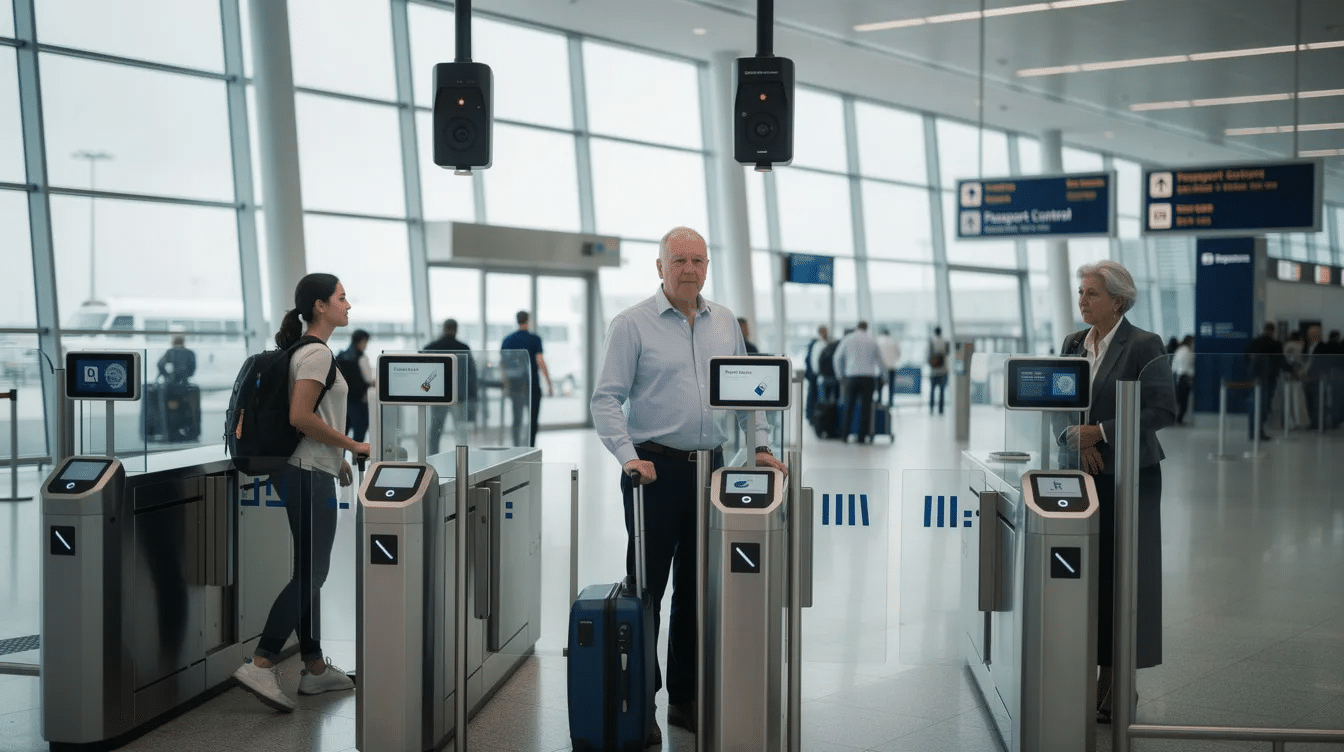
Electronic passports store biometric data for identity verification, enabling automated border control gates and trusted traveller programmes that use facial recognition and fingerprints. Government digital identity programmes rely on biometric templates for secure access to e-government services. Law enforcement agencies use biometrics for quick identification. Public concern about surveillance is legitimate, and clear governance, oversight, and limited-use policies are essential. These deployments often use multimodal biometric authentication and centralised biometric databases with rigorous security systems.
Enterprises, Workforce, and Everyday Devices
Organisations use biometrics for employee access control (doors, data centres), workstation login, time and attendance, and secure printing. Biometric systems enhance security in manufacturing and logistics, where identity assurance at access points protects both people and assets. On consumer devices (phones, laptops, tablets), biometric authentication is now an expected default. In hybrid and remote work scenarios, biometrics combined with behavioural signals support zero-trust and adaptive access policies. Advanced biometric technology continues to raise user expectations for enterprise applications.

Implementing Biometric Authentication Responsibly
Successful deployment extends beyond technology selection. Organisations that implement biometric authentication responsibly address governance, communication, and ongoing monitoring alongside technical design.
Choosing the Right Biometric Methods for Your Use Case
Match biometric modalities to the environment. High-assurance methods such as iris scans suit critical security zones; faster, more convenient methods like face and fingerprint suit everyday access on mobile devices. Factors to weigh include risk level, user population, device availability, regulatory landscape, and cultural acceptance. Piloting with representative users helps uncover practical issues such as lighting, sensor quality, or accessibility needs. In many cases, starting with device-native biometrics via WebAuthn and FIDO2 provides a low-friction path toward passwordless access and modern biometric authentication solutions.
Security, Privacy, and Governance Best Practices
Key technical controls include strong encryption for biometric templates, secure hardware where available, liveness detection, rate limiting, logging, and regular audits. Privacy-by-design means collecting minimal biometric data, keeping it local if feasible, and implementing strict retention and deletion policies. Governance essentials include clear policies, data protection impact assessments, vendor due diligence, and training for staff handling biometric systems. Transparent communication with users about what biometric data collection occurs, how the authentication process works, and what rights and recourse they have is fundamental to trust.
Future-Proofing Your Biometric Strategy
Biometric technology, regulations, and attack techniques evolve rapidly. Designs should be flexible and standards-based. Alignment with open standards (FIDO2, WebAuthn) and modular architectures allows swapping algorithms or vendors without full redesign. Emerging trends worth monitoring include privacy-preserving computation, decentralised identity wallets, and stronger behavioural biometrics. Continuous testing, red-teaming, and periodic reassessment of risk ensure that security measures remain effective as biometric systems age and adversaries grow more sophisticated.
Conclusion: Is Biometric Authentication the Future of Secure Access?
Biometric authentication captures unique biometric traits, converts them into secure encrypted templates, and compares them to confirm identity. The advantages are substantial: stronger identity assurance than passwords or PINs, reduced credential fatigue, improved user experience, and powerful fraud detection capabilities across sectors from finance to healthcare.
The caveats are equally real. Biometric data is irreplaceable and raises privacy implications that demand careful handling. Bias and accuracy issues persist across some facial recognition systems, and the spoofing landscape continues to evolve alongside generative AI. Robust data security controls, independent audits, transparent governance, and compliance with biometric information privacy laws are prerequisites, not optional extras.
Adopting biometric authentication is not a question of replacing all other security measures. It is most effective as a cornerstone of a layered strategy, combined with behavioural signals, risk-based policies, and transparent, user-centric design. Organisations that invest in responsible deployment today, with clear data governance and modular, standards-based architectures, will be well positioned to adapt as both the technology and the regulatory landscape continue to mature.


