
Profitability for advisory firms in 2025 will rely less on increasing fees and more on effectively reducing costs without compromising client service. With shrinking margins due to fee compression and growing regulatory demands, the most successful firms will be those that achieve operational efficiency while still delivering the high-quality advice their clients expect. These decisions should be made with a comprehensive understanding of personal finance, as managing costs is vital for both firms and their clients.
It is crucial to understand the different fee structures and payment models that financial advisors use, such as asset-based fees, fixed fees, or hourly charges, to optimise expenses and maintain transparency.Another common fee structure is the annual retainer fee, which serves as an alternative to commission-based or hourly fees and can help clients better manage their expenses. Ensuring fee models align with clients’ best interests not only promotes regulatory compliance but also fosters trust and satisfaction, which are essential for achieving sustainable cost reductions in financial advisory firms. The average fee for financial advisors is typically around 1% of assets under management (AUM), providing a useful benchmark for comparing costs and evaluating different pricing models.
主要收获
- The profitability of advisory firms in 2025 will rely more on systematically cutting costs without compromising client service than on seeking higher fees
- e
- 最快的节约通常来自于入职和合规任务的自动化、技术堆栈的合理化以及投资和财务规划流程的标准化
- 采用 InvestGlass 等集成平台的公司可同时降低重复软件成本、人工成本和监管风险
- 降低成本应该是一项持续的纪律,有明确的衡量标准,而不是市场下跌后的一次性项目
- 本文重点介绍中小型咨询公司的合伙人、首席运营官和合规主管应采取的实际行动
成本控制为何对当今的财务咨询公司至关重要
Fee pressure, regulatory demands, and rising staff salaries are compressing profit margins in wealth management and independent advisory firms in 2025. The economic environment has shifted considerably, forcing many advisors to exert greater effort just to sustain the profitability levels they enjoyed five years ago.The economic landscape has changed significantly, causing many advisors to work harder just to maintain the profitability levels they had five years ago.
To put it in perspective: numerous firms operate with operating margins below 20 percent, even though they charge financial advisor fees around one percent of assets under management. The AUM fee model, also called asset-based fees, involves charging a fixed percentage of client assets annually, a defining feature of this approach. In 2020, the median annual advisor fee for an AUM of $100,000 was 1%, yet some advisors charge fees as low as 0.15%, well below the industry norm. However, advisors who charge AUM fees may face conflicts of interest, as they are motivated to grow assets under management rather than focus solely on the client’s overall financial wellbeing. This model has evolved, with some firms blending or separating AUM fees with other service charges to optimise revenue. When accounting for compliance staff costs, technology subscriptions, office rent, and senior advisor pay, the actual profit margin can be surprisingly slim. This situation poses new challenges for firms aiming to grow while preserving service standards.
Advisory firms often have fixed cost structures. Expenses like rent, essential systems, and senior staff salaries are hard to reduce quickly during market downturns. If a portfolio loses 20 percent in value, AUM fees decrease accordingly, but lease payments and compliance officer salaries remain fixed. This imbalance between variable income and fixed costs makes many firms vulnerable in tough markets. Employing alternative fee structures, such as flat fees, hourly rates, annual retainers, or fee-for-service models, can help firms better align revenues with costs, enhancing profitability management. Fee-only advisors do not earn commissions from product sales, enabling them to provide impartial advice. Conversely, commission-based advisors might receive incentives from selling certain insurance or financial products, which could affect their objectivity.
Reducing the cost of serving each client enables firms to offer competitive fees, invest in improved services, and better withstand market fluctuations. Delivering comprehensive financial planning at a lower internal cost provides flexibility: firms can either lower fees to attract clients or maintain fees and reinvest savings into superior tools and talent. Negotiating advisory fees, charging based on client value, and exploring alternative fee structures like hourly rates or flat annual retainers can also help lower client costs while ensuring firm sustainability.
This article offers a detailed roadmap rather than generic cost-cutting advice. Each section focuses on specific areas where advisory firms can achieve significant savings without compromising the quality of financial advice clients rely on. We also discuss fee calculation and the importance of choosing fee structures that support both firm profitability and client value.
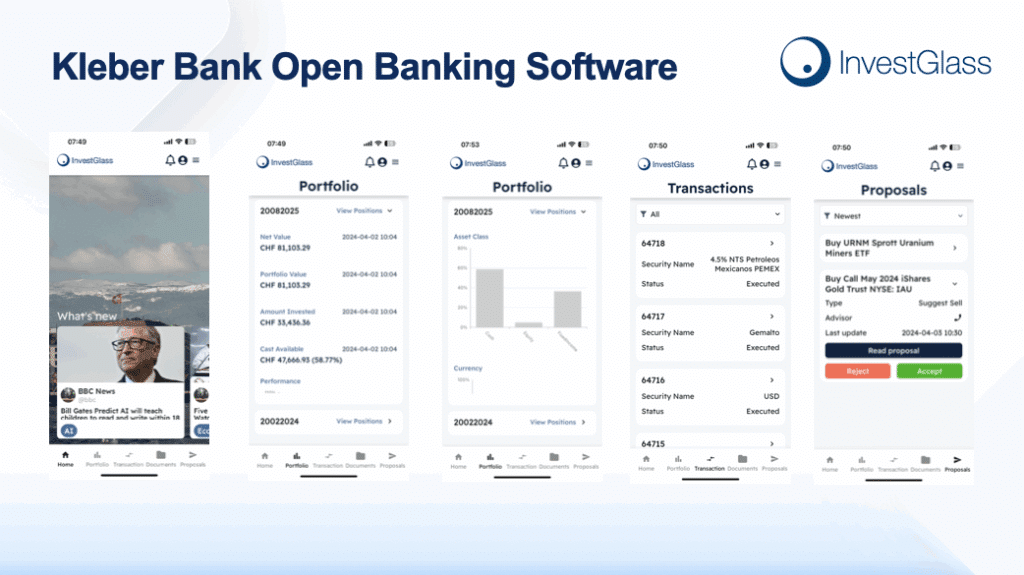
绘制您当前的成本结构和客户盈利能力图
Initiating any cost reduction efforts must start with a thorough understanding of current expenditures. Many firms make the mistake of cutting costs without fully grasping which reductions will genuinely enhance profitability and which could negatively impact their ability to serve clients effectively.
财务咨询公司的主要成本通常包括
费用类别 | 占总支出的典型百分比 | 主要组成部分 |
|---|---|---|
工作人员报酬 | 50% 至 65 | 顾问工资、奖金、员工福利、伤残保险、工资税 |
技术 | 8%至15 | 客户关系管理、投资组合管理、报告工具、网络安全 |
合规性 | 5%至10 | 工作人员、培训、监管备案、法律审查 |
第三方研究 | 3% 至 6 | 市场数据、投资研究订阅 |
托管和交易 | 2% 至 5 | 平台费、交易成本 |
办公室开支 | 5%至12 | 房租、水电、用品、保险 |
Investments | Varies | Investment management fees, due diligence, performance monitoring |
Creating a straightforward client-level profitability model involves assigning time spent, technology usage, investment, and regulatory efforts to each client relationship. This requires tracking the annual hours advisors dedicate to each client, the compliance activities triggered by each client, the technology tools each relationship utilizes, and how investment-related expenses affect overall profitability. Precise fee calculation and awareness of how different fee structures influence costs are crucial for charging fees that accurately reflect the true cost of servicing each client. |
Utilise historical data from 2023 and 2024 to observe how costs have shifted through market fluctuations and regulatory changes, such as new ESG reporting requirements in the European Union. Examining existing obligations can uncover hidden expenses that do not affect client experience. This analysis often reveals unexpected trends regarding which tasks consume the most resources relative to the revenue generated.
For instance, many firms discover that clients holding less than one million Swiss francs or dollars in assets consume forty percent of service time but generate only fifteen percent of revenue. This does not necessarily mean these clients should be dropped, but it underscores the importance of implementing differentiated service tiers or adopting more efficient methods for managing smaller accounts. Concentrating on a niche market with tailored fee structures can improve profitability for both the firm and its client base.
Streamline Digital Onboarding and KYC to Reduce Operational Expenses
Onboarding and know-your-client (KYC) procedures are among the most labour-intensive tasks within advisory firms. Each new client engagement starts with gathering personal information, verifying identity, assessing risk tolerance, understanding financial goals, and ensuring compliance with anti-money laundering regulations.
Traditionally, a manual onboarding process in 2020 involved clients receiving paper forms by mail or in person, signing and scanning documents to email back, followed by manual data entry into the CRM and then again into portfolio management and custodian systems. Compliance officers would review all documents, request missing items via email, await responses, and finally approve accounts for trading. This process often took three to four weeks and involved five or more staff members.
In contrast, a fully automated digital onboarding process in 2025, utilising a platform like InvestGlass, collects client information once via a secure online form, triggers automated KYC checks against sanctions lists and politically exposed persons databases, creates client profiles in the CRM, and opens custodian accounts without re-entering data. Documents can be electronically signed and stored automatically with complete audit trails.
Automation can cut onboarding time from weeks to days and frees senior advisors from administrative tasks, allowing them to focus on revenue-generating client meetings. Instead of chasing signatures and completing forms, financial planners can dedicate time to delivering financial planning services.
We recommend tracking the cost per new client both before and after implementing digital onboarding. Firms adopting this approach typically see a 20 to 30 percent reduction in costs within the first year. Key metrics to monitor include total hours spent per client, the number of interactions required, and the duration from the initial advisor meeting to account funding.
Efficient onboarding and KYC processes also support the use of alternative fee structures such as flat fees or annual retainers for ongoing advisory services. By lowering administrative expenses and enabling more predictable billing, firms help clients avoid unexpected large charges and increase transparency around service costs.
Reduce Technology Expenditure Through Platform Integration
Between 2015 and 2022, numerous firms accumulated overlapping tools for CRM, email marketing, document management, risk profiling, and portfolio reporting. Each vendor claimed to offer best-in-class features within their specific area.
Today, multiple systems raise license fees, complicate integration, increase training demands, and heighten security risks. Hosting data across different countries and platforms complicates compliance. Staff spend more time transferring data than serving clients. New hires require training on numerous platforms before becoming productive.
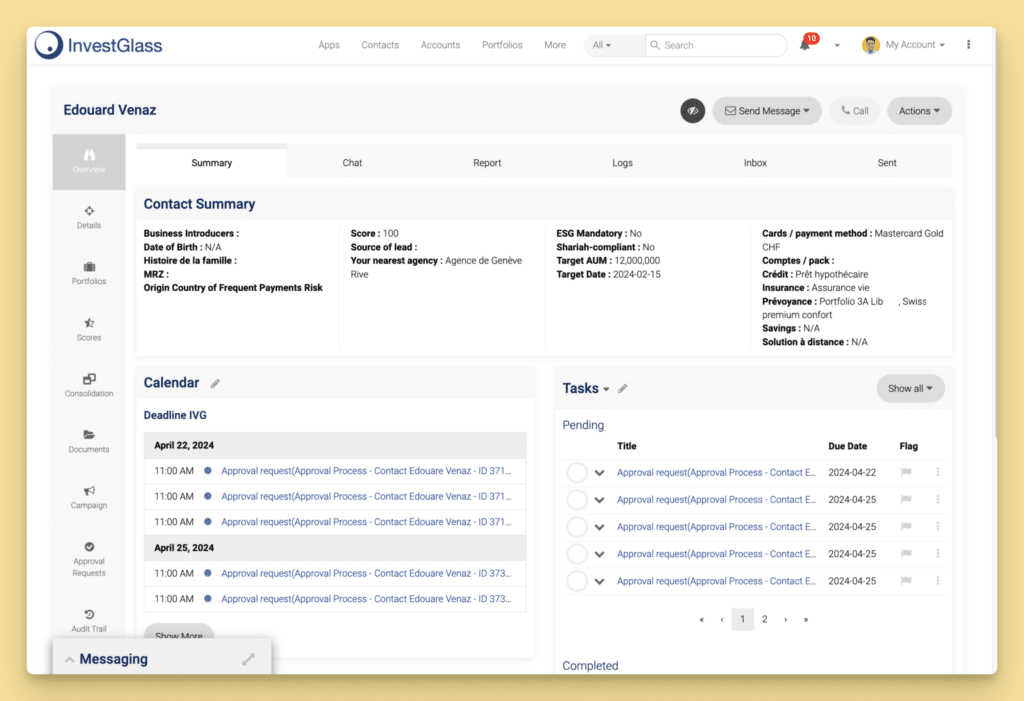
Consolidating onto a single integrated platform such as InvestGlass, hosted in Switzerland or on-premise, can replace several separate subscriptions. A unified platform managing CRM, digital onboarding, portfolio management, marketing automation, and client portals removes data transfer friction and reduces vendor management overhead. Integrated technology simplifies implementing fee-based, flat fee, or fee-for-service pricing by streamlining billing and reporting.
To identify consolidation opportunities, create an inventory listing:
- Each tool currently used
- 包括所有用户和层级在内的年度费用
- Features actively used versus available
- 活跃用户数量
- Data location and sovereignty considerations
- Integration dependencies
Evaluate each system to decide whether to keep, replace, or retire it. Focus on eliminating tools with significant feature overlap. For a mid-sized wealth management firm, consolidating multiple marketing and CRM applications into a single compliant Swiss platform like InvestGlass could reduce monthly software expenses by around twenty percent.
Standardise Investment and Planning Procedures to Decrease Service Expenses
Highly customised portfolios and plans for each client significantly increase research, trading, and review work without necessarily improving outcomes. When portfolios are constructed on a security-by-security basis, investment management costs tend to rise proportionally with the number of clients.
Implementing model portfolios tailored to risk profiles, tax residency, and investment horizons reduces the time spent on portfolio construction and trading expenses. Advisors can then select an appropriate model and make specific adjustments to accommodate client-specific needs such as concentrated stock holdings or estate planning considerations. This standardisation streamlines portfolio management and monitoring, resulting in lower costs.
Consider this asset allocation approach:
风险简介 | 股票分配 | 固定收入 | 替代品 | 现金 |
|---|---|---|---|---|
保守派 | 百分之二十五 | 55 | 10% | 10% |
中度 | 百分之四十五 | 40 | 10% | 5% |
增长 | 百分之六十五 | 百分之二十五 | 8% | 2% |
侵略性 | 百分之八十 | 12% | 6% | 2% |
Standardised planning templates for retirement, succession, and corporate liquidity events enable junior staff to manage more cases with consistent quality. Well-designed templates ensure no critical elements are overlooked while reducing time per plan. This approach allows firms to serve more investors with limited staff. Standardisation also supports flat fee, annual retainer, or fee-for-service pricing structures, which are effective when targeting niche markets. Streamlining processes enables transparent and scalable pricing tailored to specialised client segments. The trend of advisors charging fixed fees for financial planning has risen from 33 percent in 2013 to nearly 50 percent in 2017. Flat fees commonly range from $1,000 to $10,000 annually. | ||||
Portfolio management tools integrated within InvestGlass or connected systems can automatically rebalance portfolios against target models and generate client-ready reports quickly. Automation, including 人工智能驱动的投资组合管理, reduces errors and ensures consistent client treatment regardless of the managing advisor. |
Standardisation enhances efficiency without sacrificing personalised advice. It shifts the focus of personalisation from selecting individual securities to aligning investments with clients’ financial goals and strategies. Clients continue to receive tailored guidance on matters such as retirement timing, estate planning, and tax optimisation. The difference lies in executing these recommendations more efficiently through standardised investment vehicles like mutual funds and model portfolios.
Automate Compliance and Reporting to Avoid Hidden Expenses
Regulatory demands have increased annually since regulations like MiFID II in Europe and FinSA in Switzerland were introduced. Each new rule adds work for compliance teams: additional forms, checks, and reports. Compliance has become one of the fastest-growing cost centres in wealth management.
Many firms still rely on spreadsheets and email reminders to manage suitability checks, cross-border restrictions, and document retention. This method is risky and time-consuming. When compliance depends on manual reminders, errors and omissions occur.
Compliance workflows within a CRM system tailored for financial institutions, such as InvestGlass, can automatically initiate tasks based on client categories, jurisdictions, or product types. This system maintains comprehensive audit trails without requiring manual input. When regulatory authorities request compliance documentation, reports can be generated within minutes instead of days.
Examples of time-saving automation include:
- Alerts for missing or outdated risk questionnaires
- Flags for politically exposed persons requiring enhanced due diligence
- Reminders for periodic reviews based on client tier and regulations
- Cross-border restriction checks before investment recommendations
- Automated document requests when client circumstances change
Automated reporting to regulators and internal committees reduces last-minute quarter-end work. Compliance teams generate reports with a few clicks, limiting the need for additional hires as the client base grows. Reducing compliance overhead supports competitive advisory fees and facilitates fee-based models, ensuring transparency and cost-effectiveness.
Optimise Staffing, Outsourcing, and AI Utilisation
Personnel costs are typically the largest expense in advisory firms, often exceeding half of total operating costs. This includes advisor salaries, support staff wages, benefits, and payroll taxes. Optimising staffing is vital for meaningful cost reduction.
Begin by mapping tasks among senior advisors, junior advisors, relationship managers, assistants, and operations staff. Identify routine duties that can be reassigned to lower-cost roles or outsourced. Many firms find that highly paid advisors spend significant time on activities that do not require their specialised expertise or licences.
Consider this task reallocation:
任务类别 | 现任业主 | 最佳业主 | 每年可能节省的费用 |
|---|---|---|---|
会议安排 | 高级顾问 | 虚拟助理 | 每位顾问工作 100 小时以上 |
数据录入和客户关系管理更新 | 初级顾问 | 业务人员 | 每位顾问工作 150 小时以上 |
编制季度报告 | 分析员 | 自动化系统 | 公司范围内 200+ 小时 |
文件收集 | 关系经理 | 数字化入职 | 公司范围内 300+ 小时 |
Optimising staffing this way allows firms to offer lower-fee services and save money for both firm and clients, making advisory services more accessible and competitive. | |||
Outsourcing suits specialised tasks that do not require in-house expertise, such as US tax reporting for clients with American ties, back-office reconciliation, or document translation for cross-border business. External providers often deliver these services more cost-effectively than building internal teams. |
Modern AI tools help summarise meeting notes, draft client emails, and generate initial investment commentary. Advisors can quickly review and personalise AI-generated content, reducing preparation time from hours to minutes. Advisors can swiftly review and personalise AI-generated content, reducing preparation time from hours to minutes. Advisors can quickly review and personalise AI-generated content, cutting down preparation time from hours to minutes. Advisors can review and personalise AI-generated content in minutes instead of hours. Leveraging 投资组合管理中的人工智能 and client communication focuses staff on high-value activities, improving efficiency and client satisfaction. Human advisors maintain ultimate responsibility, ensuring that the advice provided retains the personalised attention and care that clients expect.
Firms should establish clear AI usage policies. Data processed through secure platforms such as InvestGlass’s AI modules, hosted in Switzerland, ensures client confidentiality while enhancing productivity. This approach saves time without compromising data sovereignty required by regulated institutions and aligns with how central banks are adopting AI securely.
Enhance Client Self-Service to Lower Advisory Fees
Digital client portals enable clients to access routine information through secure online platforms available around the clock. When clients can independently check account balances, transactions, and tax documents, staff spend less time on non-revenue-generating calls and emails.
Valued portal features include:
- Interactive performance charts showing portfolio growth
- Downloading statements, tax documents, and contracts
- Electronic document signing without printing or mailing
- Secure messaging instead of regular email
- Updating personal details and preferences
- Scheduling meetings with advisors
These features reduce costs by lowering manual support needs and focusing on delivering client value such as time savings and immediate information access without extra advisory fees.
Post-implementation, firms report 20 to 40 percent declines in routine client inquiries, enabling support teams to manage more clients without proportional staffing increases.
Client segmentation ensures service levels match client needs. Ultra-high-net-worth individuals may still expect personalised phone access, while mass affluent clients benefit from faster digital responses powered by 银行数字化差异化策略. Both receive value from the service approach that suits their preferences.
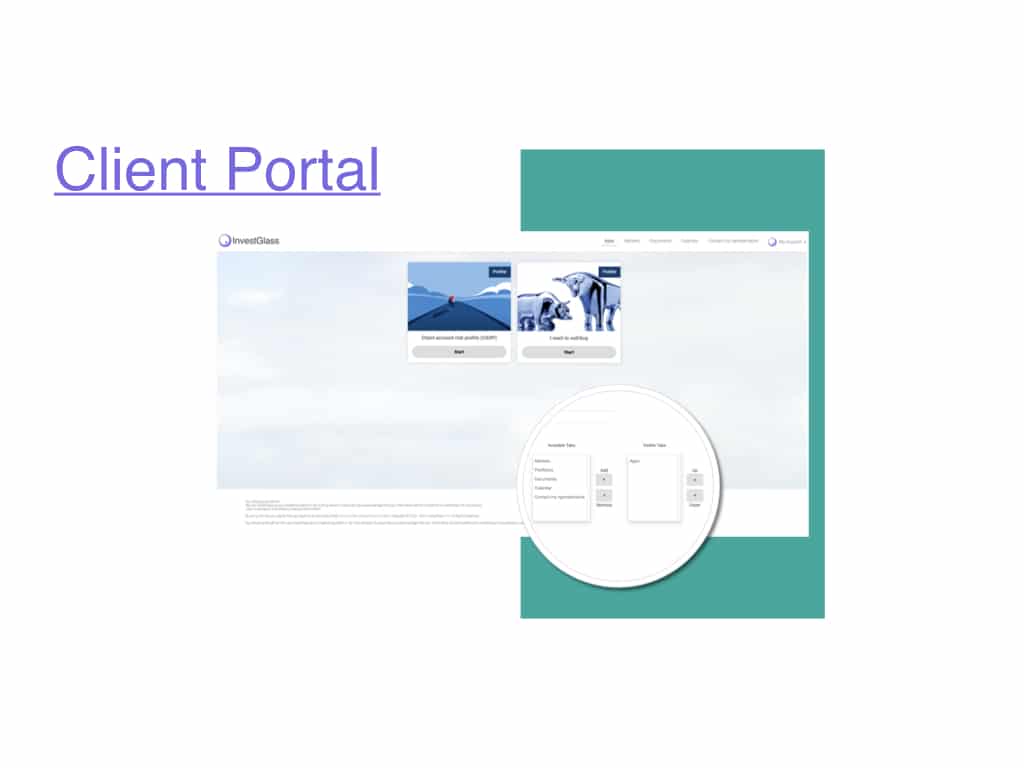
InvestGlass’s branded client portals maintain data sovereignty within Switzerland or on client servers, combining convenience with compliance and cost reduction.
Track Outcomes and Foster Continuous Cost Management
One-off cuts are less effective than ongoing measurement and incremental improvements over years. Firms that treat cost optimisation as a one-time project rather than a continuous discipline often find that expenses creep back up within two to three years as new tools accumulate and processes deteriorate.
Key metrics for cost management include:
公制 | 定义 | 目标方向 |
|---|---|---|
营业利润率 | 净收入除以收入 | 随时间推移而增加 |
每位客户的成本 | 总运营成本除以客户数量 | 减少或稳定 |
雇员人均收入 | 总收入除以员工人数 | 随时间推移而增加 |
上岗时间 | 从第一次会议到账户资金到位的天数 | 减少 |
每位顾问的技术成本 | 年度软件支出除以顾问人数 | 减少或稳定 |
每个客户的合规小时数 | 每种关系用于监管任务的小时数 | 减少 |
咨询费 | 向客户收取的咨询服务费用总额 | 减少或稳定 |
Regularly reviewing advisory fees and fee structures, such as flat rates, tiered pricing, hourly charges, or project billing, helps keep pricing competitive and aligned with delivered value, supporting effective cost control. | ||
Set clear goals with deadlines, such as reducing onboarding time by 30 percent and cutting technology expenses per advisor by 15 percent between January 2025 and December 2026. Specific targets promote accountability and enable progress tracking. |
Involve advisors, operations, and compliance teams in frequent evaluations. Those closest to the work offer valuable efficiency insights and can flag if cost reductions harm client experience or compliance. Monthly or quarterly reviews keep cost management visible without overwhelming staff.
Embed cost optimisation into firm culture.Use platforms like InvestGlass to continuously refine workflows as regulations and client expectations change. Embedding cost optimisation into the firm’s culture enables sustained improvements. Firms that prioritise operational efficiency consistently outperform those that only react to cost pressures. Firms that prioritise operational efficiency outperform those reacting only to cost pressures.
How InvestGlass Helps Advisory Firms Cut Costs
InvestGlass is a Swiss CRM and automation platform tailored specifically for private banks and regulated financial institutions. Unlike generic business software adapted for the financial sector, InvestGlass is purpose-built from the ground up to meet the stringent regulatory requirements faced by banks, wealth managers, and advisory firms.
The platform integrates digital onboarding, portfolio management, and marketing automation as well as KYC and client portals into one system, eliminating data silos and integration challenges.
Hosting data in Switzerland or on client premises addresses data sovereignty concerns among regulators and clients. This reduces overhead related to managing multi-country cloud solutions, where data governance complexities and compliance validation challenges are significant.
InvestGlass delivers practical savings by:
- Consolidating CRM, email marketing, document signing, and portfolio reporting subscriptions
- Eliminating manual data transfers between disconnected systems
- Reducing compliance risk with automated workflows and audit trails
- Accelerating onboarding from weeks to days with digital document collection and e-signatures
- Lowering training costs by having staff learn one integrated platform instead of many tools
The platform supports diverse fee models, including flat fees, tiered pricing, AUM-based fees, and subscription models, simplifying fee management and billing aligned with client needs and regulations.
Starting with a pilot in one team or office allows firms to measure onboarding, compliance, and communication time before and after InvestGlass adoption, validating savings before full rollout.
Pricing scales with firm size and requirements, enabling smaller firms to access enterprise-grade features without enterprise-level costs, and the same CRM framework underpins specialised solutions such as 牙科诊所客户关系管理系统 和 CRM for therapists, alongside core financial-services CRM deployments.

常见问题
How soon can firms expect to see cost savings after implementing an integrated platform?
Visible time savings in onboarding and reporting typically appear within three to six months after staff training and process mapping. Changes in fee structures, such as adopting flat, tiered, or subscription-based models, can accelerate cost reductions by streamlining billing and lowering administrative overhead.
More significant reductions in overall operating expenses usually occur within twelve to eighteen months as legacy systems are phased out and new workflows become standard. The full financial benefit depends on the firm’s commitment to retiring old systems and embracing new processes rather than running parallel ones.
Can small advisory firms with fewer than ten employees benefit from these strategies?
Yes, small firms often benefit more from automation since partners frequently juggle advisory and administrative roles. Eliminating twenty hours of monthly paperwork through automation frees time for client engagement and growth.
Additionally, small firms can adopt flexible fee models like flat fees, hourly rates, or fee-for-service pricing, especially when focusing on niche markets. These approaches improve transparency and align services with client needs.
Starting with targeted projects such as digital onboarding and client portal deployment provides quick wins and demonstrates value before full process overhauls. The focus should be on freeing advisor time for revenue-generating activities.
How can firms reduce costs without negatively impacting client relationships?
Most improvements focus on enhancing back-office efficiency, standardising processes, and leveraging technology rather than cutting client interactions. In fact, many changes improve the client experience by enabling quicker responses, easier access to documents, and more consistent service delivery.
Communicate changes openly, presenting new portals or digital signature processes as service improvements enabling quicker responses and clearer reporting. Clients generally appreciate innovations that make interactions more convenient, especially when paired with fair pricing. Maintaining transparent advisory fees, adopting fee-based models, and prioritising client value further strengthen relationships while lowering costs.
实施成本削减计划的主要风险是什么?
Rapid cuts to staff or compliance resources without automation can increase regulatory and reputational risks. Firms reducing headcount before automating tasks may become overwhelmed or face compliance failures.
A phased rollout with clear documentation and regular advisor and client feedback is advisable. Watch for early warning signs such as increased client complaints, slower responses, or near misses in compliance, which may indicate overly aggressive or misplaced cuts. Also, be mindful of potential sticker shock if clients are not well informed about fee structure or billing changes, as unexpected large fees can harm satisfaction.
How critical is data sovereignty when choosing tools to reduce costs?
For banks and wealth managers operating under stringent privacy regulations, it is vital to choose platforms that guarantee clear data residency. Solutions hosted in Switzerland, such as InvestGlass, offer reliable assurances about data location and legal safeguards. Swiss-hosted solutions like InvestGlass provide assurance regarding data location and legal protections.
Ignoring data sovereignty risks fines, forced data migrations, or loss of client trust. Compliance and legal team approval is crucial before adopting new technology, regardless of promised cost savings.


