
Choosing the right service centre software is no longer optional for repair shops that want to grow. Whether you run a single mobile phone repair counter or a multi-city appliance service network, the platform you use to manage tickets, parts, technicians, and customers determines your speed, margins, and reputation. This guide breaks down what to look for, how AI is reshaping workflows, and why InvestGlass deserves a place on your shortlist.
What Is Service Centre Software? (Fast Answer for Busy Repair Shop Owners)
Service centre software is a centralized digital platform for managing customer inquiries, repair jobs, parts, payments, and reporting within a single environment. Unlike a generic CRM or help desk, it is built around the specific lifecycle of a repair: intake, diagnosis, parts sourcing, bench work, quality check, billing, and customer pickup.
Service centre software includes ticketing systems that track customer interactions across channels, but it goes further by linking those tickets to physical assets (devices, vehicles, appliances), serialised parts, technician schedules, and warranty records. Generic customer service software handles contacts and conversations well, yet it rarely supports bench status workflows, IMEI or VIN tracking, or RMA processes that repair businesses depend on daily.
Typical users include electronics repair shops, computer and laptop repair depots, mobile phone service centres, appliance repair businesses, automotive service advisers, and authorised warranty centres. The post-2020 surge in device repairs over replacements, driven by sustainability concerns and rising hardware costs, has accelerated demand. The repair and auto software market is projected to reach approximately US$3.4 billion in 2026, with a compound annual growth rate of roughly 14.2% through 2033.
Consider a smartphone repair shop in 2026 using InvestGlass to manage every job. A customer walks in with a cracked screen; the front desk enters the IMEI, the system creates a repair ticket, checks warranty eligibility, alerts the technician, verifies screen stock, and sends the customer an SMS when the device is ready. The core modules that make this possible are ticket management, inventory management, scheduling, point of sale, and reporting.
Why Modern Repair Shops Can’t Rely on Spreadsheets Anymore
In 2020, a small repair business in Birmingham tracked every job in Excel. Customer names lived in one tab, parts stock in another, and technician schedules on a whiteboard by the door. Within months, the problems compounded: lost tickets meant devices sat unrepaired for days, stock counts drifted from reality because parts went unlogged, and technicians were double-booked because no one updated the whiteboard. Repair shop software can streamline operations and improve efficiency, but only when it replaces these fragmented approaches entirely.
The pain points are predictable and costly:
- Lost paperwork and no real-time visibility into whether a job is in diagnosis, awaiting parts, or ready for pickup.
- Over-ordering parts that lock up cash, or under-ordering that delays repairs and frustrates customers.
- Scheduling conflicts between technicians handling walk-ins and pre-booked appointments.
- Slow checkout because the estimate, invoice, and payment live in separate systems.
Customer expectations have shifted dramatically between 2024 and 2026. Customers now expect SMS status updates, online tracking links, contactless payments, and same-day quotes. These are standards set by e-commerce and on-demand services, and repair shops that fail to meet them lose business to those that do.
Generic best customer service software tools, such as standard help desks, do not fully solve these problems. They lack serial number tracking, bench status workflows, and warranty claim processes. The result is fragmented data, redundant entry, and gaps in accountability. Specialised service centre software, such as InvestGlass, is now essential for any repair shop targeting growth and profitability.
Core Features of Service Centre Software (What Your Platform Must Include)
This section breaks down the must-have modules for any repair business choosing software in 2026. If a platform you are evaluating is missing more than two of these, keep looking. Choosing service centre software should prioritise omnichannel communication and robust analytics alongside repair-specific workflows.
Platforms like RepairQ® are designed specifically for repair shops, while RepairDesk integrates ticketing, point of sale, and inventory management into a single tool, with over 1000 reviews highlighting RepairDesk’s effectiveness in repair management. Zendesk offers over 1,700 apps for integration, making it highly extensible. Yet the real question is whether a platform can cover all core modules without forcing you to stitch together multiple tools. Effective service centre software integrates with existing CRM tools for contextual customer engagement, and data analytics in service centre software provides insights on team performance and customer trends.
InvestGlass can centralise these features in one secure cloud environment, eliminating the need for separate tools for CRM, ticketing, and reporting, similar to its broader role as an all‑in‑one platform for sales automation and customer management. Integration with accounting tools, payment gateways, and email or SMS providers ensures the system connects to the wider business stack.

Ticket Management Built for Real-World Service Desks
A service ticket in a repair shop is more than a support request. It links a customer to an asset (a device or vehicle), an issue description, a current status, a history of diagnostic steps and parts used, and a financial record. Centralized ticketing systems are essential in service centre software for effective issue management.
Powerful ticket management features include fast job creation at the front desk with template intake forms, unique ticket numbers with barcode or QR labels, SLA timers for warranty-committed response times, and multi-status workflows covering diagnosis, awaiting parts, in progress, quality check, and ready for pickup. For multi-location repair businesses, centralised ticket views across branches let managers track workload company-wide.
Freshdesk provides advanced ticket management functionality for general support environments, and Freddy AI in Freshdesk analyzes tickets for efficient routing. In repair-specific contexts, ai powered automation in ticketing can auto-categorise issues based on device type and symptoms, suggest diagnostic checklists, and flag recurring failures across the same model. InvestGlass can route repair tickets to the right agent, tag priority cases such as warranty or VIP jobs, and surface repeat issues to managers through automated alerts.
Inventory Management That Keeps Parts and Accessories Under Control
Margins in phone, computer, and electronics repair shops depend heavily on parts management. Among heavy-duty repair shops, finding affordable parts is cited by up to 46% as a top challenge. Effective inventory management can enhance repair shop efficiency by preventing both overstock waste and out-of-stock delays.
Essential functions include tracking stock by SKU and location, low-stock alerts with reorder thresholds, purchase order generation, supplier records with lead times, and serialized inventory for high-value or warranty-tracked components. Software can help track inventory levels in real-time for repair shops, ensuring that the front desk knows instantly whether a screen, motherboard, or compressor is available.
Repair shop software can streamline inventory management processes significantly. Innoventry software allows efficient inventory management for repair shops, and RepairDesk integrates inventory management with point-of-sale features. When inventory is tied directly to tickets and POS, technicians avoid starting jobs without parts in hand, and ghost stock disappears from the system.
InvestGlass can show real-time part availability inside a ticket so technicians know immediately whether they can begin a repair, trigger purchase orders when stock falls below threshold, and track cost versus resale for margin analysis.
Integrated Point of Sale and Billing
In a repair context, point of sale covers walk-in repairs, deposit payments, accessory sales, extended warranties, and follow-up services. The POS must handle multiple tax rates, discounts, bundled items (repair plus screen protector), card and digital wallet payments, and printed or electronic receipts.
Linking POS with ticket history and customer profiles creates immediate value. At checkout, staff can view past interactions, suggest maintenance or accessories, and convert an approved estimate into an invoice without re-entering data. InvestGlass can turn an approved estimate into an invoice in one click and record payments against the right ticket and customer, ensuring billing accuracy and faster pickup cycles.
Customer Experience and the “Best Customer Service” Standard
In 2026, the best customer service is transparent, proactive, and personalised, even for small local repair shops. Over 60% of repair shops are expected to use some form of AI by late 2026, much of it directed at improving customer communication and trust.
Omnichannel support allows consistent service via phone, email, chat, and social media messages. Unified communication ecosystems manage calls, emails, and texts in one place, while omnichannel routing preserves customer context across interactions. Modern platforms unify voice, chat, email, and messaging into a single workspace. Intelligent call routing and Interactive Voice Response enhance service efficiency in service centre software, ensuring customers reach support agents who have quick access to their records.
Customer service software enables self-service capabilities through knowledge bases and FAQ pages. Customer self-service tools empower users to resolve issues independently without contacting support. Innoventry software allows real-time job updates for customers, giving customers the transparency they now expect. Well-crafted customer service email templates for support, renewals, and refunds, alongside automated status notifications, digital estimate approvals, remote payment options, and feedback collection after each job all contribute to customer satisfaction.
InvestGlass unifies customer interactions and customer history so staff can answer customer queries quickly without putting callers on hold. Beyond day-to-day support, the platform supports long-term relationship management through service reminders, upsell campaigns, and loyalty programmes.
How AI-Powered Automation Transforms Service Centres
Between 2022 and 2026, AI moved from a buzzword to an everyday tool in service centres. The repair and auto software market, now valued at US$3.4 billion, reflects this shift. AI-powered automation improves response times and service quality across the repair process, making life easier for technicians and service advisers alike.
Concrete AI use cases in repair workflows include auto-triaging tickets by urgency and device type, suggesting diagnostic paths based on historical patterns, predicting parts demand to enable pre-stocking of popular SKUs, summarising long ticket conversations for service advisors, drafting customer updates at appropriate stages, and flagging tickets likely to breach SLAs. AI assists agents with suggested responses and relevant knowledge, acting as a freddy ai copilot style assistant that learns from data to improve suggestions over time. AI-powered automation reduces customer wait times significantly by handling repetitive tasks that previously required manual intervention.
Automated workflows in service centre software simplify repetitive tasks for agents, but there is an important distinction between basic rules and AI-driven automation. Rules are fixed: “If status equals awaiting parts for more than three days, escalate.” AI is adaptive: it learns that orders of a certain part type are historically delayed and auto-notifies staff, or suggests an alternative supplier. An answer bot can handle routine customer queries about repair status, freeing support agents to focus on complex issues.
InvestGlass can embed AI in service cloud style workflows while keeping managers in control through approvals, audit trails, and override options, extending the same approach it uses to automate KYC verification and digital onboarding in regulated environments. AI is there to assist technicians and service advisors, not replace them, especially for complex diagnosis and customer trust building.

From Help Desk to Full Service Cloud for Repair Businesses
A service cloud is a unified environment where support, sales, inventory, and reporting share one data model. Compared to a standalone help desk tool, a service cloud approach means fewer logins, consistent customer data, and a single source of truth. Unified platforms improve handle times and reduce agent fatigue by eliminating constant switching between applications. Research shows that repair shops use on average nearly seven different technologies for inventory, parts ordering, repair orders, and customer communication, leading to fragmentation.
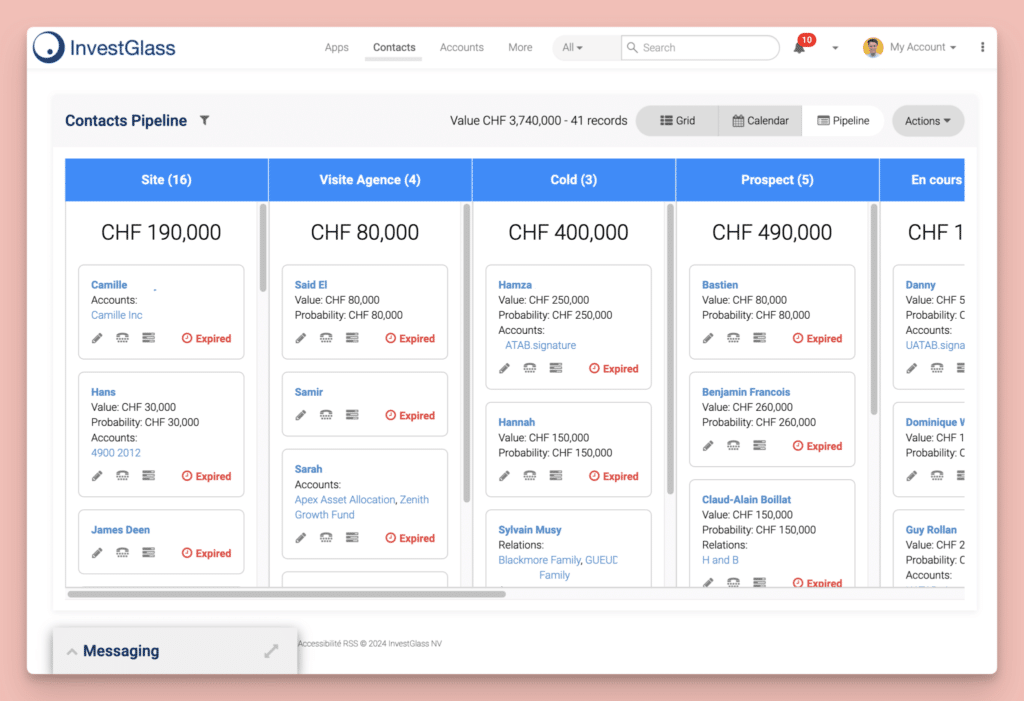
An InvestGlass-based service cloud supports not only ticketing but also quotes, approvals, invoices, and post-repair follow-ups on a single platform, building on the same foundations that make it a service cloud and CRM for private banks and financial services. A realistic scenario: a customer books a repair online, receives automated status notifications by SMS, pays via a secure link, and leaves a review. Every step is tracked in the same system, keeping everyone on the same page.
Matching Service Centre Software to Your Business Goals
A small single-location repair shop and a regional chain have different business goals and requirements. The key is to map goals to features before selecting a platform. Customization and scalability are important features in choosing service centre software.
Business Goal | Key Features Needed |
|---|---|
Faster turnaround time | Strong ticket workflow, SLA timers, real-time parts availability |
Higher first-time fix rate | Knowledge base, device history, diagnostic data |
Increased accessory sales | Integrated POS, marketing tools, customer history |
Warranty compliance | Serial tracking, RMA flows, proof-of-purchase capture |
Opening new branches | Central inventory, role-based access, location-based pricing |
Salesforce Service Cloud pricing starts at $25/user/month, positioning it as an enterprise option within the salesforce ecosystem. Freshdesk provides a free plan for up to 10 agents, making it accessible for smaller teams. InvestGlass can be configured for different sizes of repair shop, from boutique computer repair to multi-city appliance service networks, with flexible workflows and custom data models similar to those used in its CRM for financial institutions and marketing teams. |
Before implementation, document current key metrics: average repair time, repeat visits, NPS or CSAT, part shrinkage, and revenue per technician per day. Then customize reports to track improvements after go-live.
Single-Location vs Multi-Location Repair Shops
Needs evolve rapidly when a business grows from one repair shop to multiple locations or franchises. Required capabilities include central inventory visibility, location-based pricing and taxes, shared customer records, and role-based access controls. Innoventry software allows seamless job management across multiple departments, which is particularly valuable for businesses operating across several sites, just as specialised CRM for therapy practices shows how configurable workflows can adapt to different service environments.
InvestGlass can offer a unified dashboard for head office while still letting each location manage local queues and technicians. Consistent processes across branches protect brand reputation and customer experience, ensuring every customer receives the same quality of service regardless of which location they visit.
Field Service and On-Site Repairs
Not all repair work happens at a counter. On-site appliance repair, B2B IT service contracts, and industrial equipment maintenance all require field service capabilities. Technicians on the road need mobile access to tickets, manuals, photos, and digital signature capture. Route planning, job scheduling, and offline capabilities are essential when connectivity is limited.
InvestGlass can support field technicians with access to repair tickets, asset data, and customer history from a mobile device. Storing geolocation, job duration, and parts used on-site enables accurate billing and reporting. This extends the platform from a shop-based tool to a complete operations solution.
How InvestGlass Helps Different Types of Repair Business
InvestGlass is a flexible platform that can act as the backbone service centre software across multiple repair verticals. By consolidating CRM, tickets, automation, and reporting, it helps businesses stay organised and avoid the app sprawl that drains operational efficiency. The following examples illustrate how different repair shops can configure workflows in InvestGlass.
Electronics and Mobile Repair Shops
Cracked screen repairs, water damage diagnostics, board-level work, and accessory upsells define daily operations. InvestGlass can track IMEIs and serial numbers, warranty status, and previous repairs for each device, similar to how its Diş hekimliği muayenehaneleri için özel CRM manages patient records and appointments. Inventory challenges include fast-moving SKUs and frequent model updates, requiring accurate forecasting of popular parts. Automated SMS updates (“Your device is ready for collection”) and payment links accelerate pickup cycles and improve customer experience.
Computer and Laptop Repair Businesses
Services range from OS installs and data recovery to hardware upgrades and managed service contracts for SMB clients. InvestGlass can manage long-running diagnostic tickets with detailed notes and attachments such as logs and screenshots. Recurring jobs for business clients, such as quarterly maintenance or security checks, can be automated with recurring tickets or reminders. Linking tickets to contracts or SLAs ensures response and resolution times are met, helping you assign tasks to the right technicians.
Appliance and Home Repair Service Centres
Fridge repairs, washing machine servicing, out-of-warranty work, and manufacturer-authorised warranty jobs each have distinct requirements. InvestGlass can handle scheduling home visits, recording model numbers and installation dates, and managing spare parts in vans. Handling warranty versus non-warranty jobs, including capturing proof of purchase and submitting claims, is straightforward within the platform. Job status visibility for call centre agents answering “Where is my technician?” questions is critical and fully supported.
Automotive and Specialised Repairs
While many automotive shops use dedicated DMS tools, smaller garages and niche repairers benefit from a flexible platform like InvestGlass. Alloy wheel repair, bodywork specialists, electronics diagnostics, and classic car restoration all require vehicle tracking by VIN and detailed service history. InvestGlass supports estimates, approvals, staged invoices, and photo documentation for insurance-related work, all within a standard ticket structure.

Implementation Roadmap: Rolling Out Service Centre Software Without Chaos
Implementing new software in an existing repair business requires a structured approach. The key phases are:
- Discovery and requirements. Map current workflows, pain points, and the customer journey. Identify KPIs such as reducing average repair turnaround from seven days to three.
- Vendor selection. Evaluate platforms against must-have features. Demo with a real use case. RepairQ® is a trusted management software for repair shops; RepairDesk integrates ticketing, point of sale, and inventory management. Compare these against InvestGlass on flexibility and total cost.
- Configuration. Set up custom fields for serial and asset data, status workflows, POS and tax settings, inventory thresholds, user roles, and notification triggers.
- Data migration. Import customers, past tickets, and inventory from spreadsheets or legacy tools. Clean and normalise data to ensure mapping of serials and job histories.
- Staff training. Deliver role-based sessions using real tickets rather than generic demos. Security features like encryption and role-based access controls are vital for customer data protection, so ensure staff understand permissions.
- Go-live. Start with one pilot location before rolling out across all repair shops. Set a clear go-live date, ideally within 60 to 90 days for a single location.
- Optimisation. Review performance at 30 and 90 days. Adjust workflows, fine-tune inventory thresholds, and iterate on automation rules.
InvestGlass can provide templates, onboarding support, and automation recipes to speed up deployment. For multi-site operations, expect a timeline of two to four months.
Change Management and Staff Adoption
Technicians and front-desk staff may resist change if they feel tools slow them down. Involve key technicians and service advisors early to gather requirements and act as champions. Short, role-based training sessions of one to two hours, built around real tickets, are far more effective than generic demos.
InvestGlass’s interface can be customised to reduce clicks for common workflows, improving adoption. Its user friendly features mean that task management becomes intuitive rather than burdensome. Review feedback at 30 and 90 days after go-live and adjust workflows to save time and maintain speed.
Service Centre Software FAQ (2026 Guide for Repair Shops and Service Leaders)
This FAQ addresses the most common questions repair business owners ask when evaluating service centre software and InvestGlass.
Q1: What is the difference between generic customer service software and dedicated service centre software?
Dedicated service centre software supports repair-specific workflows: device tracking by serial number or IMEI, bench status workflows, parts inventory linked to tickets, warranty and RMA processes, and estimate-to-invoice conversion. Generic platforms focus on contacts, communications, and ticketing but lack the asset, parts, and technician management that a repair business requires.
Q2: Is InvestGlass suitable for small repair shops, or only for large enterprises?
InvestGlass is scalable. For single-location shops, core features like ticketing, customer history, POS, and inventory management can significantly streamline operations. For multi-branch networks, it supports branch-level management, shared records, role-based permissions, and central dashboards. Configuration and pricing can start small and grow with your business.
Q3: How does InvestGlass handle inventory management for parts and accessories?
InvestGlass supports tracking stock by SKU and location, integrating with tickets to reserve parts automatically, low-stock alerts, supplier and purchase order management, and real-time visibility within repair orders. This ensures technicians and front-desk staff always know what is available.
Q4: Can InvestGlass replace my existing point of sale and CRM tools?
In many cases, yes. InvestGlass can serve as an integrated service cloud, combining CRM, ticketing, POS, payment and invoicing workflows, and reporting. This reduces reliance on separate systems and keeps all customer data and operational data in one place, eliminating the need to connect disparate tools.
Q5: What role does AI play in InvestGlass for repair businesses?
AI-powered automation in InvestGlass supports ticket routing, diagnostic suggestions, conversation summaries, parts demand forecasting, and automated customer updates. It functions under human supervision, with approvals, audit trails, and override options ensuring that managers maintain control. This focus on automation helps free technicians to concentrate on what they do best.
Q6: How long does it take to implement InvestGlass in a typical repair shop?
For a single-location shop, basic configuration, data import, and staff training can typically be completed within four to eight weeks. Multi-site deployments with more complex workflows and integrations may require two to three months. A pilot implementation with one branch helps avoid disruption before scaling.
Q7: Is my customer and device data secure in InvestGlass?
InvestGlass is built on modern cloud infrastructure with access controls, audit logs, secure APIs, and encryption at rest and in transit. It supports compliance with data protection regulations such as GDPR where applicable. Role-based permissions restrict staff access to sensitive data, and the platform’s approach to data sovereignty ensures organisations retain control of their infrastructure.
Conclusion: Turning Your Service Centre Into a Growth Engine with InvestGlass
The right service centre software transforms a repair shop from a reactive, paper-driven operation into a data-driven, scalable business. Features like ticket management, inventory management, point of sale, and AI-driven automation are now baseline requirements for any repair business that wants to compete on speed, quality, and performance.
InvestGlass provides the strategic platform to unify support, sales, and operations in a service cloud designed to meet modern business goals. It eliminates app sprawl, improves efficiency across the repair process, and delivers the transparency that customers now demand.
Start by auditing your current workflows. Identify where you lose time, where customer experience suffers, and where data falls through the cracks. Map those bottlenecks to the capabilities available in InvestGlass. The best customer service in 2026 starts with the right software foundation. Book a demo or consultation with InvestGlass and take the first step toward creating a repair business built for growth.


