
Giriş
Düzenlemeye tabi finansal kuruluşlar için yeni müşteri entegrasyonuna (onboarding) yönelik bu kapsamlı kılavuza hoş geldiniz. Bu kılavuz; bankalardaki, özel bankalardaki, varlık/portföy yönetim şirketlerindeki, sigorta şirketlerindeki, aracı kurumlardaki, ödeme kuruluşlarındaki ve diğer düzenlemeye tabi finansal kurumlardaki yönetici sponsorlar, entegrasyon ve operasyon liderleri, uyum görevlileri/MLRO'lar, müşteri ilişkileri yöneticileri (RM'ler), müşteri başarı yöneticileri (CSM'ler), veri koruma görevlileri (DPO)/güvenlik, teknoloji ve destek ekipleri için tasarlanmıştır.
Yeni müşteri katılımı, kullanıcıları hoş geldin, eğitim ve hedef belirleme yoluyla ilk farkındalık anlarına yönlendiren ve hızlı ürün benimsenmesini sağlayan stratejik bir süreçtir. Düzenlemeye tabi finans sektöründe etkili müşteri katılımı; uyumluluğu sağlamak, güven inşa etmek ve müşteri sadakatini desteklemek için esastır. Kötü bir müşteri katılımı süreci, müşteri kaybının en önemli nedenlerinden biridir; bu nedenle baştan itibaren hem mevzuata uyumlu hem de müşteri odaklı bir süreç tasarlamak kritik önem taşır.
Bu kılavuz şunları kapsamaktadır:
- Yeni müşteri onboarding süreci nedir ve neden önemlidir
- Düzenlenmiş ortamlarda işe alıştırma (onboarding) sürecinin ana aşamaları ve en iyi uygulamaları
- Uyum, elde tutma ve operasyonel verimlilik için oryantasyon (adaptasyon) süreci nasıl yapılandırılır
- Sürekli iyileştirme için pratik kontrol listeleri, şablonlar ve KPI'lar
Özet: Yeni Müşteri Adaptasyonu Nedir ve Neden Önemlidir?
Yeni müşteri adaptasyon süreci, hoş geldiniz, eğitim ve hedef belirleme yoluyla hızlı ürün benimsenmesini teşvik ederek yeni kullanıcıları ilk kavrayış anlarına yönlendiren stratejik bir süreçtir. Müşteri adaptasyonu, müşteri sadakati ve müşteri kayıp oranlarının azaltılması için çok önemlidir. Yapılandırılmış bir adaptasyon süreci şu aşamaları içerir:
- Hoş geldiniz ve hesap kurulumu
- Başlangıç ve hedef uyumu
- Hızlı kazanım formülasyonu
- Ürün tanıtımı ve eğitimi
- İlişki kurma ve proaktif destek
- Sürekli optimizasyon
Bu aşamaları takip ederek, düzenlemeye tabi finansal firmalar, yeni müşterilerin başarı için hazırlanmasını, uyum gereksinimlerinin karşılanmasını ve uzun vadeli ilişkilerin teşvik edilmesini sağlayabilir.
Önemli Çıkarımlar: Ne Öğreneceksiniz
- Sorumluluğu net devirler oluşturun: Satış/MÇY → MÇY/Kurulum → Uyum/MLRO → Operasyonlar → Destek yaşam döngüsünü adlandırılmış sahiplere, kanıt paketlerine ve kabul kapılarına dönüştürün.
- Bağımsız kararları koruyun: Hizmet segmentasyonunu finansal suç risk değerlendirmesinden ayırın ve aktivasyonu gerekli onay koşullarının arkasında tutun.
- Dijital yolculukları gözden geçirilebilir hale getirin: Otomasyonu onay olarak değerlendirmeden; hedeflenmiş alım, kimlik ve tarama sinyallerini, istisna yönetimini, rol erişimini ve erişilebilir kayıtları birleştirin.
- Başlatmayı kontrollü bir değişiklik olarak çalıştır: Ön lansman, lansman ve lansman sonrası kontrol listelerini kullanarak veri akışlarını, erişimi, kanıtları, yedek rotaları, eğitimi ve güvenceyi test edin.
- Değerli kontrol sonuçlarını ölçün: Sadece hızı değil; döngü süresinin yanında ilk doğrulanan değeri, kanıt kalitesini, istisna eskitmesini ve devir başarı oranını da takip edin.
- Egemenliği hassasiyetle değerlendirin: Sadece barındırma etiketine güvenmek yerine sözleşmesel dağıtımı, alt işleyenleri, desteği, yedeklemeleri, telemetriyi ve transferleri inceleyin.
Bu temel çıkarımları göz önünde bulundurarak, düzenlemeye tabi finansal firmalar için işe alım sürecinin detaylarına dalalım.
Müşteri Alıştırma Süreci Nedir?
Genel Bakış
Yeni müşteri adaptasyonu, yeni kullanıcıları ilk farkındalık anlarına yönlendiren, hoş geldin, eğitim ve hedef belirleme yoluyla hızlı ürün benimsenmesini sağlayan stratejik bir süreçtir. Müşteri adaptasyon süreci, meşru bir ihtiyacı karşılar, tarafı belirler, politika tarafından tanımlanan kanıtları toplar ve doğrular, yetkili kararlar alır, onaylanmış hizmeti kurar ve güvenli kullanımı sağlar. Başarılı bir müşteri adaptasyon süreci aynı zamanda müşterilerin ürün veya hizmetten en yüksek değeri elde etmesine ve bunu günlük süreçlerine entegre etmesine yardımcı olmalıdır. Süreç, olağan iş sahipliği ve sürekli inceleme faaliyete geçtiğinde sona erer.
İyi yapılandırılmış bir başlangıç süreci, müşteri memnuniyetini ve etkileşimi artırarak ürünün daha güçlü bir şekilde benimsenmesini sağlayabilir.
Yaşam Döngüsü Aşamaları
Yapılandırılmış bir oryantasyon süreci şu aşamaları içerir:
- Hoş geldiniz ve hesap kurulumu
- Başlangıç ve hedef uyumu
- Hızlı kazanım formülasyonu
- Ürün tanıtımı ve eğitimi
- İlişki kurma ve proaktif destek
- Sürekli optimizasyon
Birleşik Krallık MLR (Kara Para Aklamayla Mücadele Düzenlemeleri) kapsamındaki ilgili kişiler için Müşteri Durum Tespiti (CDD) proje yönetimi değildir. Düzenleme 27; ilişki kurulması, belirlenen işlemler, şüphe, kuşkular ve belirli ilişki değişikliklerini içerirken; düzenleme 28; kimlik tespiti, doğrulama, amaç/nitelik, sahiplik/kontrol ve sürekli izlemeyi kapsar.
Yararlı bir operasyonel tasarım; politikayı neyin istendiği, kontrol edildiği, kararlaştırıldığı, etkinleştirildiği ve gözden geçirilmek üzere planlandığının ve bunların kimler tarafından yapıldığının bir vaka kaydına dönüştürür.
Önemli Roller
İşe alıştırma yaşam döngüsü birkaç önemli rol içerir:
- Satış/RM: Vaadi, tarafları, kullanım durumunu ve bağımlılıkları yakalar.
- CSM: Teslimat planını oluşturur ve çıktıları, ara hedefleri, benimsenmeyi ve iletişimi koordine eder.
- Uyum/MLRO: Risk rotasına/kararına sahip.
- İşlemler: Koşulları üretime uyarlar.
- Destek ve İade/Değişim: Yetkili kullanımı ve yönlendirme sorunlarını sürdürün.
- DPO/güvenlik ve yönetici desteği: Bağımsız tasarım ve sürüm kontrolü sağlayın.
Müşteri katılım yolculuğu, daha geniş müşteri yolculuğu içinde aşamalı bir çalışma olarak yürütülmelidir:
- Hoş geldiniz ve hesap kurulumu
- Başlangıç ve hedef uyumu
- Hızlı kazanım formülasyonu
- Ürün tanıtımı ve eğitimi
- İlişki kurma ve proaktif destek
- Sürekli optimizasyon
Sonuçları, ara aşamaları, benimsemeyi ve iletişimleri koordine etmek üzere her bir katılım kohortuna özel bir Müşteri Başarı Yöneticisi (CSM) atayın. CSM, CDD riskini onaylamaz, mali suçlarla ilgili bir karar vermez, EDD istisnasına izin vermez veya bir kontrolü ortadan kaldırmaz.
Aşama ve devir | Sorumlu sahip | Devir teslim kanıtı | Kapı veya durdurma koşulu | Müşteri odaklı yönetici |
|---|---|---|---|---|
Yönetişim ve rota tasarımı | Yönetici sponsor/Süreç sahibi | Varlık, yetki alanı, ürün ve kanal haritası; RACI; veri haritası; risk kaydı | Kontrol, gizlilik, güvenlik ve operasyon sahipleri atanmıştır | Satış/CSM kapsamı açıklar, onay sonucunu değil |
Satış/RM → CSM/Uygulama | Gerçeksel eksiksizlik için Satış/RM; teslimat kabulü için CSM | Sözleşmeli kullanım durumu; tüzel kişiler; kişiler; ürünler; yetki alanları; taahhütler; entegrasyonlar; veri varsayımları; açık eylemler | CSM, kullanılabilir kapsamı ve bağımlılıkları kabul eder; bu bir CDD onayı değildir | Satış ekibi CSM'i tanıtıyor |
CSM/Uygulama → Uyum/MLRO ve DPO/Güvenlik | Yapılandırma paketi için CSM; kararlar için işlevsel sahipler | Politika-iş akışı haritası; kanıt matrisi; istisna rotası; rol matrisi; veri akışı ve test planı | Uyumluluk, gizlilik ve güvenlik koşulları kaydedilir | CSM, aşama durumu sağlar |
Uyum/MLRO → Operasyonlar | Vaka kararı için Uyum/MLRO; Canlıya geçiş (operasyonel hazırlık) için Operasyon | Dava dosyası; risk gerekçesi; karar; EDD/istisna koşulları; onaylayan; inceleme tetikleyicisi | Etkinleştirilmeden önce gerekli koşullar karşılanmıştır | Operasyon/CSM onaylı statü sağlar |
Operasyonlar → CSM/Destek/RM | Mutabık kalınan kurulum işlemleri; kabul için servis ekibi | Aktivasyon kaydı; haklar; eğitim planı; destek rotası; bilinen kısıtlamalar | Kurulum onay ile mutabık durumda ve kritik sorunların sahipleri var | CSM karşılar; RM ilişki bağlamını korur |
Destek/CSM geri bildirimi → kontrol sahipleri | İlgili kontrol sahibi | Bilet, erişim anomalisi, kanıt boşluğu, değişiklik talebi, şikayet veya olay inceleme tetikleyicisi | Destek rotaları politika, AML, veri ve olay sorunlarını destekler; bunlarla ilgili karar vermez | Destek, olgusal durum ve yardımlı yardım sağlar |

Şekil 1. Kontrollü bir işe alım (onboarding) işletim modeli: paylaşılan bağlam, ayrı karar alma yetkileri ve sorumlu kontrol sahibine yönelik bir geri bildirim döngüsü.
Paylaşılan bir kayıt, olayları birbirine bağlayabilir ancak ayrı karar alanlarını, sürüm geçmişini ve en az ayrıcalıklı izinleri koruyabilir.
Genel süreci anladığımıza göre, müşteri alım sürecinin (onboarding) neden düzenlemeye tabi firmalar için özellikle kritik olduğunu inceleyelim.
Düzenlemeye Tabi Kurumlar İçin İşe Alıştırma Süreci Neden Önemlidir
Onboarding, risk iştahını, müşteriye verilen taahhüdü ve veri yönetişimini operasyonel bir gerçekliğe dönüştürür. Bunlar birbirinden saparsa, yinelenen talepler, belirsiz kararlar, güvenli olmayan erişim ve zayıf veri erişimi ortaya çıkar. Onboarding süreci çok karmaşık olursa, yaklaşık 75% müşteri başka bir çözüme geçebilir; işte bu yüzden sorunsuz bir onboarding deneyimi büyük önem taşır.
Net talepler ve sorumluluğu belirlenmiş devirler yeniden iş yapma ihtiyacını sınırlayabilir; onaylanmış erişim ve yetkilendirme, yetkili kullanımı destekleyebilir; inceleme tetikleyicileri istisnaları ortaya çıkarabilir. Bu mekanizmalar ticari bir sonucu garanti etmez, ancak müşteri onboarding sürecinin uygulamada neden önemli olduğunu gösterir: bir ürünün değerini erken göstermek, onboarding deneyimi sırasında dönüşüm oranlarını artırabilir ve güveni güçlendirebilir; bu nedenle yerel kohort verilerini test edin.
Alıştırma sürecinin elde tutma oranını mutlaka artırdığını iddia etmeyin. Bir taban çizgi oluşturun ve yerel kohortları ilk doğrulanmış değer, tekrar eden temaslar, kalite bulguları, yenileme bağlamı ve müşteri kontrolündeki duraklatmalar üzerinden karşılaştırın.
Birleşik Krallık MLR kapsamındaki firmalar için 19 numaralı yönetmelik; yeni teknoloji, ürün ve uygulamalardan kaynaklanan risklere hazırlık dahil olmak üzere orantılı, üst yönetim tarafından onaylanmış, gözden geçirilmiş ve kayıt altına alınmış AML/CTF (Suç Gelirlerinin Aklanması ve Terörizmin Finansmanıyla Mücadele) politikalarını, kontrollerini ve prosedürlerini şart koşmaktadır. Bu nedenle iş akışı tasarımı ve sürüm testi, müşteri edinme yönetişimine aittir.
FCA'nın 8 Nisan 2026 tarihli çoklu firma Müşteri Durum Tespiti (CDD) bulguları, daha güçlü belgelendirilmiş Artırılmış Durum Tespiti (EDD) ve bağımsız testlerin yanı sıra versiyon kontrolü, bağımsız inceleme ve inceleme düzenlemelerinde zayıflıklar olduğunu açıklamaktadır. Bunlar evrensel bir yapılandırma standardı değil, denetim gözlemleridir.
Aktarılan, ancak finansa düzenleme getirmeyen dersler
- Kurumsal SaaS İlk değere kadar geçen süreye, grup sahipliğine ve resmi devre katkıda bulunur. Finansta değer, bir oturum açma veya otomatik onay değil; kontrol edilebilir, incelenebilir bir sonuç olmalıdır.
- Telekomünikasyon: Şeffaf sonraki adımlar, anlaşılır durum ve erişilebilir insan yardımı sunar. Tasarım kalıbı aktarılabilirdir, ancak Ofcom finans firmalarını değil, iletişim sağlayıcılarını düzenler.
- Sağlık Hizmetleri: Minimizasyon, tabanlı rol erişimi ve yaşam döngüsü yönetimine katkıda bulunur; kuralları finansı yönetmez.
- Sigorta Ürüne özel kanıt ve hizmet sürekliliği sağlar. Başka bir sektörün düzenlemesi, finansal bir sonuca varmanın kestirme yolu değildir.
İşe alıştırma sürecinin neden önemli olduğundan hareketle, düzenlemeye tabi kurumlarda bu süreci şekillendiren bağlayıcı gerekliliklere ve denetim rehberliğine bakalım.
Bağlayıcı Gereklilikler, Denetim Rehberliği ve Faaliyet Önerileri
Kuralı, denetim rehberliğini ve şirketin faaliyet kontrolünü birbirinden ayırın. Bir platform özelliği yasal bir güvence değildir.
Kategori | Ne söylemeli ve ne yapmalı | Sınır |
|---|---|---|
MLR kapsamının geçerli olduğu bağlayıcı Birleşik Krallık hukuku | İlgili kişi, 27. düzenlemedeki durumlarda MÖT uygulamak ve 28. düzenlemedeki tedbirleri almak zorundadır; kapsam, risk duyarlıdır. | Bu, dünya çapındaki her firma için tek bir küresel iş akışı veya bir kural değildir. |
Güçlendirilmiş önlemlerin geçerli olduğu bağlayıcı Birleşik Krallık yasası | İlgili kişi, 33üncü yönetmelikte belirtilen durumlarda artırılmış MŞD ve artırılmış sürekli izleme uygulamalıdır. | Özel tedbirler geçerli hükme, politikaya ve olgulara bağlıdır; her ilişkiye tek bir genişletilmiş liste uygulamayın. |
Bağlayıcı Birleşik Krallık hukuku, kayıt tutma kapsamı | 40 Numaralı Yönetmelik, genel olarak belirtilen müşteri durum tespiti (CDD) ve işlem kayıtlarının, silme gereklilikleri ve istisnalarıyla birlikte, belirtilen ilişki veya işlem bitiş noktasından itibaren beş yılı öngörür. | Bu, her günlük için evrensel beş yıllık bir ayar değildir ve süresiz saklama için bir gerekçe de değildir. |
FCA kurulları ve denetim materyalleri | Tüketici Görevi kapsamındaki firmalar ve perakende müşteriler için müşteri ihtiyaçları ve sonuçları etrafında destek tasarlayın; FCA CDD bulgularını bir meydan okuma istemi olarak kullanın. | Bulgular ve rehberlik, mevzuat veya belirlenmiş bir RACI değildir. |
AB, İsviçre ve uluslararası malzeme | İlgili olduğu durumlarda yargı yetkisine göre etiketlenmiş girdiler olarak EBA uzaktan işe alım rehberliğini, İsviçre FADP ve FATF materyallerini kullanın. | Durum ve uygulanabilirlik değişiklik gösterebilir; yerel danışmanlık alın. |
İşletme önerisi | Kapılar, şablonlar, kanıt getirme testleri, bir kohort CSM'i, destekli hizmet rotası ve lansman sonrası güvence oluşturun. | Bu seçenekler kontrolü destekler; güvenli bir liman veya sorumluluğun otomatik olarak devredilmesi değildirler. |
Gerekli Müşteri Durum Tespiti (CDD) tamamlanamıyorsa, Birleşik Krallık Para Aklamayı Önleme Düzenlemeleri (MLR) kapsamındaki bir firma, ticari bir istisnayı değil, geçerli yasal ve politika sonucunu izlemelidir. Düzenleme 31, denetime tabi etkinleştirme kapılarını destekler.
MLR kapsamındaki roller için 24. yönetmelik, işletmenin niteliğine, büyüklüğüne ve riskine uyarlanmış uygun, düzenli eğitim ve yazılı bir kayıt gerektirir. Eğitimin tamamlanmış olması, sonraki her kararın doğruluğunun kanıtı değildir.
Düzenleyici ortamı ele aldığımıza göre, şimdi Müşteri Başarı Yöneticisinin (CSM) müşteri kazanımı stratejisindeki rolünü inceleyelim.
Müşteri Uyum Stratejisi ve Müşteri Başarı Yöneticisi Rolü
YKSM, mevzuat uygunluğunun değil, kohort koordinasyonunun ve benimsemenin sahibidir. Satış, kurulum ve hizmet ekiplerinin her biri bir sonraki eylemin diğerine ait olduğunu varsaymasın diye, her bir katılım (onboarding) kohortu için özel olarak bir YKSM atayın.
CSM, ticari kaydı kontrol bilincine sahip bir plana dönüştürür: kapsam, sahipler, bağımlılıklar, onaylanmış iletişim, eğitim, ilk doğrulanan değer ve devir tarihi. Müşteri uyum sürecinde (onboarding), daha güçlü müşteri ilişkilerini ve sürekli etkileşimi desteklemek için CSM düzenli iletişim ve takipler sürdürmelidir. CSM, CDD riskini onaylamaz, kontrollerden feragat etmez, bir EDD istisnasına karar vermez veya MLRO'nun yerini almaz.
Müşteri Başarı Yöneticisi (CSM) KPI'ları, yalnızca hızı değil, müşteri adaptasyonunun başarısını ölçmek için kaliteyi, kontrolü, ilk doğrulanmış değeri ve devir teslim başarısını ödüllendirmelidir. Yalnızca hıza odaklanan bir hedef, eksik kanıtları gizleyebilir veya çözülmemiş koşulları ileri aşamalara taşıyabilir; buna karşın tutarlı kontroller müşteri desteği memnuniyet ve müşteri sadakati.
CSM sorumluluğu | Güçlü kanıt | Sınır / eskalasyon |
|---|---|---|
Kohort planı ve Satış devir teslim onayı | Kabul edilen kapsam, varlıklar, ürünler, vaatler, veri varsayımları, kilometre taşları ve müşteri iletişimleri | Eksik bilgileri geri döndürün; politika, kaynak ve teslimat risklerini tırmandırın |
Yapılandırma ve test | Normal, başarısız, yinelenen, manuel ve yedek yollar test edildi | Uyumluluk karar kriterlerine sahiptir; DPO/güvenlik ise onaylarından sorumludur |
İlk doğrulanan değer | Yetki verilmiş bir kullanıcı tarafından tamamlanan, önceden üzerinde anlaşmaya varılmış, kontrol edilen ve gözden geçirilebilir sonuç | Bunu asla otomatik MДT (Müşteri Durum Tespiti) onayı veya bir oturum açma olarak tanımlamayın |
Etkinleştirme ve devir | Eğitim, destek güzergahı, kısıtlamalar ve yeni sahip kaydedildi | Gizli kontrol borcu veya politika istisnalarını Destek ekibine iletmeyin |
Bir vekil ve bir eskalasyon yolu, özel CSM'in tek bir arıza noktası haline gelmesini engeller. Karmaşık bir kohort için, CSM operasyonel kaydı tutarken yönetici bir sponsor yönetişime başkanlık edebilir.
İçerik yükseltmesi — KPI skor kartı: Teslim alma onayı, kontrollü lansman, ilk doğrulanmış değer, kanıt kalitesi, istisna eskimesi, erişim hijyeni ve destek temaları için bir skor kartını uyarlayın. Hedefleri yalnızca yerel taban çizgileri oluşturulduktan sonra belirleyin; bir pano yasal kanıt değildir.
CSM rolü netleştiğine göre, yeni müşteri ilişkilerini başlatmanın ve devretmenin pratik adımlarına geçelim.
Yeni Müşteri Başlangıç ve Devir Teslimi
Kickoff, imzalanmış ticari bir konuşmayı sınırlı bir teslimata dönüştürür. CSM devir teslim kabulünden sonra ve yapılandırma, varsayımları tasarıma dönüştürmeden önce gerçekleştirilmelidir. İlk karşılama genellikle kayıttan hemen sonra gönderilmelidir veya Anlaşma sağlandı ekip çalışmasına başlamak ve net beklentiler belirlemek için.
Satış/Yatırım Yönetimi (RM)—alıcı, tüzel kişiler, yetki alanları, taahhüt, yetkili kişiler, veriler, entegrasyonlar ve belirsizlikler gibi somut kayıtları sağlar. Satış ekibi, genellikle CSM devralmadan önce, ilk iletişimi çoğunlukla bir hoş geldin e-postası ile başlatır. CSM, kontrol açısından kritik gerçekleri kendisi çıkarmak yerine, eksik devirleri iade eder.
Başlangıç toplantısı gündemi | Kurşun | Çıktı | Kontrol sorusu |
|---|---|---|---|
Hoş geldiniz, roller ve karar alma yetkileri | KSM | Katılımcı ve RACI kaydı | Kapsamı, risk kriterlerini, erişimi ve sürümü kim onaylayabilir? |
Sözleşmeli sonuç ve istisnalar | Satış/Müşteri İlişkileri Yönetimi + Müşteri Başarı Yöneticisi | Başarı planı | Ne satıldı ve ne söz verilmedi? |
Varlık, ürün, yetki alanı ve kanal kapsamı | Süreç sahibi | Kapsam haritası | Hangi yasal ve politik çevre geçerlidir? |
Kanıt, CDD ve istisna rotası tasarımı | Uyum / MLRO | Politika-iş akışı haritası | Which facts trigger standard, assisted or escalation routes? |
Data, integrations and access | DPO/security/IT | Data-flow and role matrix | Where do production, backups, support and telemetry process data? |
Test, release, enablement and service | CSM/Operations/Support | Milestones and go/no-go plan | What proves readiness; what is the manual fallback? |
Risks, communications and next actions | KSM | Dated action log | What may be communicated to customers and who owns each dependency? |
Content upgrade — kickoff and handoff template: Use a one-page record containing commercial facts, promised outcomes, entity/product/jurisdiction scope, authorized contacts, data assumptions, dependencies, accepted exclusions, open risks, and named approvers; customer onboarding templates can also include a welcome email format that sets clear expectations for new clients. Require CSM acceptance and version the record after every material change.
A handover is complete when the receiver can act without rediscovering Sales context. Activate only after approved conditions reconcile to account, product, and access set-up.
With the kickoff and handover process established, let’s look at how onboarding can be personalized for different customer segments.
Farklı Müşteri Segmentleri İçin Kişiselleştirilmiş Karşılama Süreci
Değere Göre Segmentasyon
Personalize the service model, not the control outcome. Expected value or AUM, relationship complexity, and team capacity can determine CSM coverage, workshop format, communications, integration sequence, and support intensity; keep the documented ML/TF risk assessment separate. A customer centric onboarding process should adapt delivery without changing the compliance standard.
Many organizations report strong demand for personalized onboarding, while 74.1% say the biggest barrier to consistency is managing a wide range of customer needs.
Regulation 28 permits transaction size and asset values among several risk factors, alongside purpose, regularity, and duration. AUM is therefore neither a statutory risk band nor a reason to skip evidence.
Segment lens | Illustrative service design and evidence | It does not decide |
|---|---|---|
AUM/expected value | Standard group enablement and assisted route, or a dedicated CSM, executive checkpoints and tailored training for strategic cohorts; record promises | CDD sufficiency, AML risk or privileged approval |
Karmaşıklığa Göre Segmentasyon
Segment lens | Illustrative service design and evidence | It does not decide |
|---|---|---|
Entity/relationship complexity | Standard evidence plan for simple cases; guided entity map, tailored document plan and specialist checkpoints for multi-entity, trust/foundation or cross-border cases | An automatic low- or high-risk legal conclusion |
Takım Büyüklüğüne Göre Segmentasyon
Segment lens | Illustrative service design and evidence | It does not decide |
|---|---|---|
Team size/capacity | Shared CSM, templates and backup approvers for lean teams; regional sessions and administrator networks for distributed teams | A substitute for segregation of duties or independent challenge |
Use approved role, segment, language, progress, and support data recorded in InvestGlass to assign the relevant training path and reminders. Apply minimization and purpose controls: when companies tailor onboarding within those limits, they can better meet diverse needs and improve engagement, satisfaction, and loyalty, rather than create a hidden risk decision or unnecessary profile.
Use standard, guided, and enhanced/escalation only as operating lanes. The enhanced lane routes a case to the firm’s policy-defined EDD and onay süreci̇ where law or policy requires it; it is not a risk decision made by the CSM.
Açıklayıcı senaryo — müşteri talebi değil
A private bank implements a cross-border cohort for a family-office group with several entities, representatives in two time zones, an investment service, and a separate portal administrator. Sales/RM records scope, booking-centre assumption, entity map, training promise, and an unresolved integration; the dedicated CSM accepts delivery ownership but not financial-crime risk.
The CSM coordinates a guided evidence plan and tests failed uploads, duplicate entities, and role access. Compliance/MLRO determines the CDD/EDD route and conditions; DPO/security reviews data flow, support access, and retention; Operations enables only reconciled approved service. During hypercare, Support routes an ownership change and access anomaly to their separate control owners. This is an illustration, not an InvestGlass customer, testimonial, or outcome claim.
With segmentation strategies in place, let’s examine how digital onboarding, KYC, and compliance workflows support the process.
Dijital Müşteri Edinimi, KYC ve Uyum İş Akışları
Dijital işe alım reduces ambiguity, not accountable judgment: use targeted, policy-approved requests; identify and verify relevant parties; record purpose and intended nature; and route the file through the documented risk method. AI can help streamline workflows and improve the customer experience when it supports, rather than replaces, controlled review.
For a UK MLR in-scope relevant person, electronic identification can be a reliable independent source only where it is secure from fraud and misuse and capable of providing the required level of assurance. A digital identity result is therefore an input to a controlled workflow, not automatic approval.
Preserve source, version, provider response, reviewer, timestamp, authority, and exception rationale. Before launch, test failed documents, duplicates, mismatches, provider outage, suspect data, inaccessible portal, and manual review. The initial login is a customer’s first real impression of the product or service, so setup and access flows should be tested carefully.
For institutions assessing InvestGlass as a Swiss-egemen CRM alternative, use these tests to validate the subscribed workflow rather than a generic product description.
Route high-risk, inconsistent, PEP/sanctions, unusual, or failed cases through controlled EDD/escalation where law or policy requires it. Regulation 33 requires enhanced CDD and monitoring in specified cases; the applicable measure depends on provision, facts, and policy. Do not expose internal screening or suspicious-activity logic.
InvestGlass describes digital onboarding forms and document uploads with targeted data, documents, and identity/fraud API integrations, plus KYC and KYB workflow context for collection, tasks, approvals, and communication. Concise onboarding materials such as a product setup guide and knowledge-base links can help new users familiarize themselves with the product and find immediate answers within existing tools. Validate public product descriptions in the subscribed deployment; they do not prove a firm’s CDD design.
InvestGlass describes automation and approval workflows that can trigger approvals, lock material under review, and route notifications. They make assigned actions visible; they do not waive controls, approve exceptions, or transfer responsibility.
Saklama, silme ve sürekli izleme
After activation, regulations 27 and 28 cover risk-based existing-customer CDD, changes in circumstances, and ongoing monitoring. Use scheduled/event-driven tasks, owners, escalation, and retrievable decisions.
For UK MLR in-scope relevant persons, regulation 40 generally specifies five years from the prescribed endpoint for certain CDD and transaction records, then deletion unless an exception applies; relationship transaction records need not be kept beyond ten years under that provision. Reconcile other duties, holds, and privacy obligations; do not retain everything indefinitely.
With digital onboarding and compliance workflows in place, let’s move to the practical onboarding checklist for new customers.
Yeni Müşteriler İçin Uyum Süreci Kontrol Listesi
The checklist is a design and assurance tool, not a compliance certificate: it gives each release an evidence gate and exposes missing ownership. A structured checklist helps streamline client onboarding by standardizing customer interactions, reducing avoidable errors, and improving overall satisfaction.
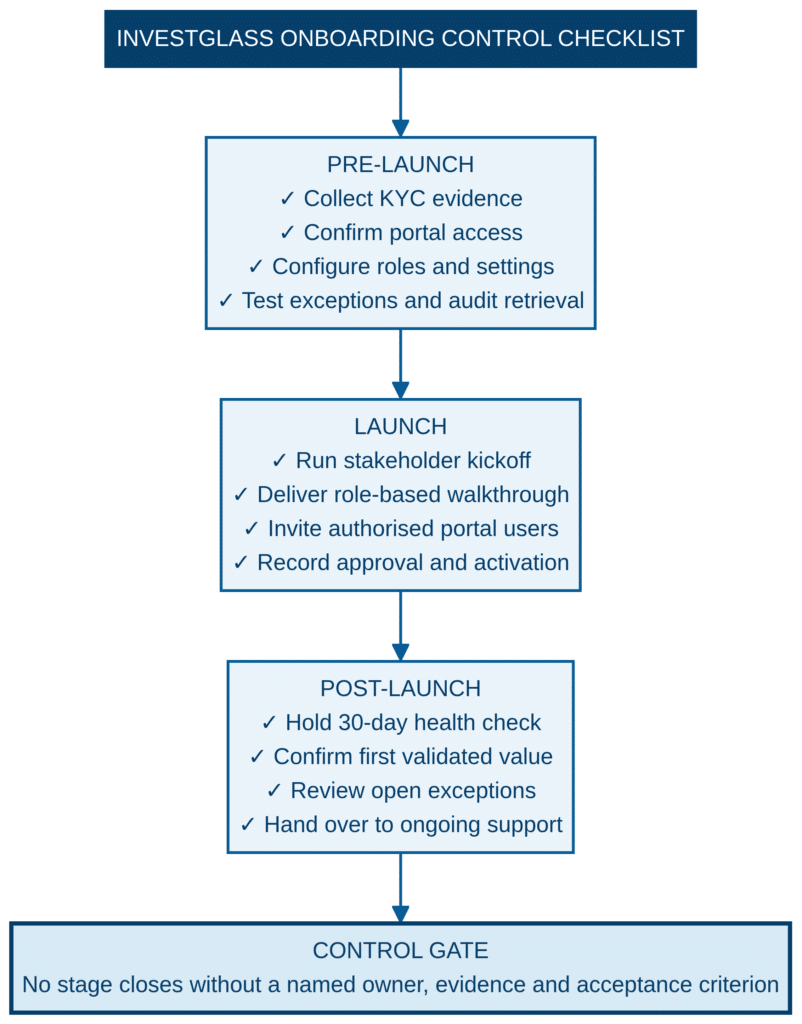
Figure 2. Use pre-launch, launch, and post-launch evidence gates to make onboarding a controlled change rather than a one-off project.
Kayıt Kontrol Listesi: Lansman Öncesi Görevler
Control area | Detailed checklist | Primary owner | Evidence | Gate |
|---|---|---|---|---|
Scope and governance | Entity, jurisdiction, product, customer-type and channel map; RACI; change authority; residual-risk route | Yönetici sponsor/Süreç sahibi | Approved scope and decision log | Design approval |
CDD and risk design | Policy-to-workflow mapping; evidence matrix; standard/assisted/escalation criteria; no-proceed and review triggers | Uyum / MLRO | Approved control map and test cases | Compliance approval |
Data and sovereignty | Data inventory; purpose/lawful-basis review; DPA/processor review; DPIA decision where high risk is likely; data locations | DPO/security | Data-flow, risk assessment and contract pack | Privacy/security approval |
Identity and integrations | Provider diligence; data mapping; reconciliation; failed-match, outage, duplicate and manual-review tests | IT/CSM/Compliance | Test results and defect log | Operational-readiness test |
Access and evidence | Role matrix; privileged approval; joiner/mover/leaver process; retrieval, version and deletion tests | Security/Operations | Entitlement test and retrieval sample | Access/evidence gate |
Portal, resilience and enablement | Approved copy; assisted route; fallback; incident contacts; training curriculum; content ownership | CSM/Support/Operations | Runbook, content approval and training plan | Release readiness |
Using onboarding templates for this pre-launch work helps teams prepare resources for new customers, standardize handoffs, reduce the risk of errors, and support effective onboarding through a reliable process aligned with customer goals and expectations.
Müşteri düzeyinde lansman öncesi görevler
The program-level gate above should translate into three customer-level actions before the kickoff, often guided by customer onboarding templates that include checklists, timelines, communication plans, and resources tailored to different customer segments, with alignment between the sales team and customer success team on project timelines and key stakeholders.
- Collect KYC documents before kickoff: Operations with Compliance oversight. Policy-approved request sent through the approved channel; received files are legible, correctly associated and recorded, with missing or alternative evidence routed rather than guessed.
- Verify access to the secure client-portal route: CSM/Support with Security. Authorized contact completes the configured authentication step, sees only permitted workspace content and knows the assisted-support route; revoke test access that is no longer required.
- Configure account settings in InvestGlass: CSM/administrator with control-owner approval. Agreed fields, roles, permissions, notifications, templates, and review tasks are configured in the contracted workspace and tested against the approved design.
These actions prepare the kickoff; they do not constitute CDD approval or permission to activate the relationship.
İşe Alıştırma Kontrol Listesi: Başlangıç Görevleri
Launch moment | Detailed checklist | Owner | Evidence | Gate |
|---|---|---|---|---|
Customer kickoff | Confirm contacts, scope, milestones, approved document route, escalation and accessible alternative | KSM | Dated success/evidence plan | Shared understanding |
Personalised setup walkthrough | Demonstrate only the workflows, data and actions relevant to each role; explain boundaries and escalation, keeping the walkthrough interactive so new users understand the value of the product or service | CSM/administrator | Attendance, role path and open questions | Role-relevant understanding |
Portal workspace invitation | Invite authorized client users to the configured workspace and verify the intended access path | CSM/Support | Invitation, authentication and entitlement record | Authorized access confirmed |
Evidence request | Send role-appropriate, policy-approved requests with reason, format and secure route | Operations/CSM | Request version and status | Complete request |
Verification and screening | Execute configured checks; route failures, anomalies and manual cases | Compliance/Operations | Provider result, source, reviewer and timestamp | Decision-ready file |
Compliance decision | Record risk rationale, route, conditions, authority and next review | Uyum / MLRO | Linked decision record | Authorized decision |
Operational activation | Reconcile approved conditions to account, product and portal set-up | Operasyonlar | Activation and reconciliation checklist | Conditions satisfied |
Enablement and triage | Issue approved roles; train users; review blocks, defects and repeat contacts daily, using interactive training to support successful onboarding and long-term retention | CSM/Support | Entitlement, training and issue log | Supervised launch |
For Consumer Duty-scope retail activity, necessary friction can allow understanding of risk, while unnecessary information or evidence requests may be an unreasonable barrier. Explain requests and provide assistance without lowering standards.
Uyum Kontrol Listesi: Lansman Sonrası Görevler
Timing or trigger | Detailed checklist | Owner | Evidence | Gate / output |
|---|---|---|---|---|
Hypercare | Review stalled files, exceptions, integration failures, portal themes and workarounds, gathering customer feedback to continuously improve the process | CSM/Operations/Compliance | Prioritized issue log | Remediation owner and date |
Quality assurance | Sample completeness, source/version, rationale, approval, activation and retrieval | Compliance QA/independent reviewer where proportionate | Pass/fail and root cause | Improvement plan |
Access/configuration review | Recertify roles, privileged users, templates and workflow changes | Security/administrator | Access-review and change log | Corrected permissions |
Relationship event | Assess ownership, purpose, activity, risk alert, product or representative change | Compliance/RM | Event-review decision | Updated route or monitoring |
30-day health check | Confirm access, adoption, support themes, unresolved control issues and progress against first validated value | CSM with control owners | Recorded call, actions and owners | Continue, remediate or escalate |
First-value confirmation | Confirm that the pre-agreed, controlled and reviewable milestone was achieved without bypassing a condition | CSM/customer sponsor | Milestone evidence and acceptance | Value validated |
Onboarding close and support handover | Close the initial plan only when open items have owners and Support/RM accepts the operating context | CSM/Support/RM | Closure record, service cadence and escalation map | Business-as-usual ownership accepted |
Governance review | Review 30/60/90-day equivalent delivery, adoption, support, training and controls, using onboarding metrics | Executive sponsor/CSM | Closure or improvement plan | Business-as-usual handover |
Material change | Reassess a new provider, integration, jurisdiction, product, field or hosting/access route | Control owners | Approval and test evidence | Controlled release |
After launch, monitor key performance indicators such as onboarding completion rate and early churn rate to identify friction points.
Content upgrade — onboarding control checklist: Turn the three phases above into a controlled worksheet with owner, evidence link, due date, exception route, and gate status. Do not mark the whole journey complete until the accountable owner accepts the evidence for its own gate.
With onboarding checklists in place, let’s look at how ongoing support and knowledge resources can further improve the onboarding experience.
Bilgi Bankası ve Sürekli Destek
Self-service is assisted service, not customer deflection: show approved requests, status, and authorized tasks, with accessible human help for questions and failures. Build a searchable knowledge base around common onboarding issues, link approved articles contextually inside the client portal, and offer proportionate multi-channel support through portal messaging, email, scheduled calls, or another governed channel. Manageable onboarding materials and a strong knowledge base can reduce repeat demand on the support team while improving adoption; some SaaS teams have cut support tickets by 30% by refining onboarding content.
Separate the portal from the knowledge base. Do not expose screening rules, EDD rationale, SAR/tipping-off considerations, unapproved notes, or another customer’s data; maintain policy-approved SOPs, templates, escalation, dates, and versions internally.
Surface | Permitted purpose | Minimum governance |
|---|---|---|
Müşteri portalı | Approved requests, status, authorized documents, messages, permitted self-service and help | Entitlements, revocation, accessibility, content approval, support ownership and access testing |
Staff knowledge base | Current SOPs, FAQs, escalation routes, incident contacts and templates | Content owner, jurisdiction/product label, review date, change log and access classification |
Controlled case record | Evidence, decisions, approvals, exceptions, communications and review tasks | Least privilege, actor/time/version history, retrieval test and retention/deletion rules |
Support system | Status communication, technical triage, complaint/vulnerability signals and routing | Ticket taxonomy, escalation SLAs, restricted fields and quality review |
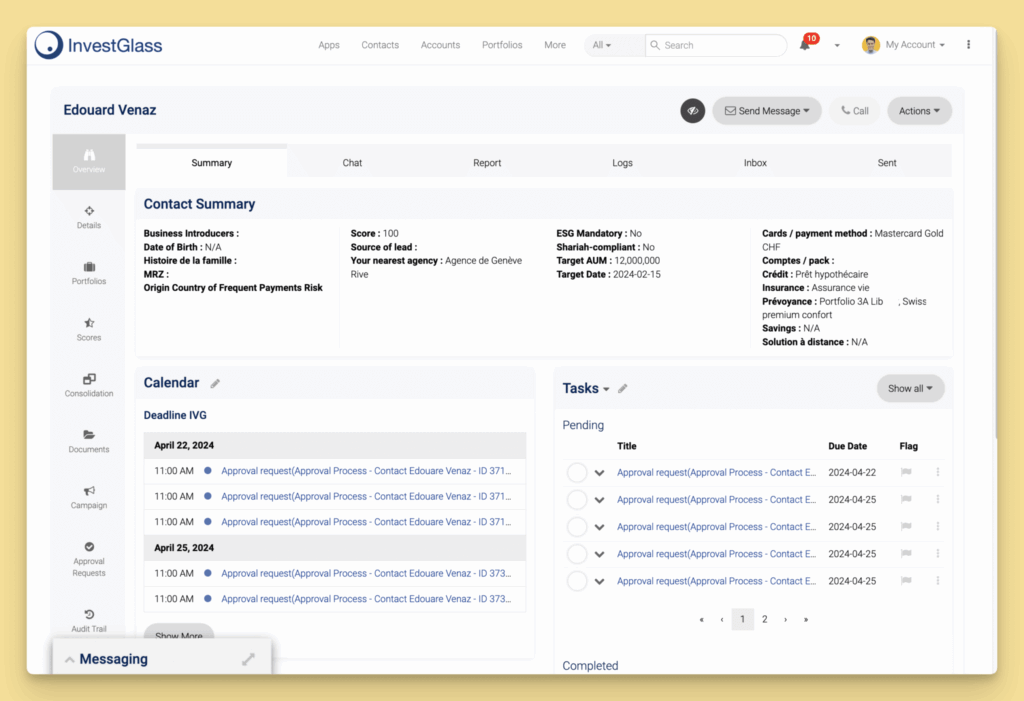
InvestGlass describes a collaborative client and employee portal with messaging, document management, access, and two-factor-authentication language. Validate features, permissions, storage, testing, contract, and support process; this is not a default assurance.
The same discipline applies when assessing InvestGlass as a Swiss-sovereign CRM alternative for a controlled portal journey.
Support records recurring questions without becoming a risk-decision channel. Route access anomalies, ownership/risk changes, and data incidents to their control owners; the CSM can coordinate communication, not decide by workaround.
With support and knowledge resources in place, let’s focus on training and enablement for all roles involved in onboarding.
Eğitim, Müşteri Portalı Erişimi ve Yetkilendirme
Role Göre Eğitim
Training is control design: users operate the workflow, explain requirements, and grant access. Keep it role-based and evidence competence or attestation where policy requires.
Dedicated training sessions can be built around small, achievable actions to maintain motivation and momentum.
Rol | Learning focus | Evidence to retain or verify |
|---|---|---|
Sales/RM | Accurate scope, permitted promises, factual handoff, expectation setting and escalation | Handoff-quality check; policy-required training record |
CSM/Implementation | Cohort plan, configuration evidence, controlled change, enablement and exception routing | Project, test and change records |
Operations/onboarding | Evidence handling, activation prerequisites, reconciliation, fallback and triage | Completion/competence and queue evidence |
Uyum / MLRO | CDD/EDD route, rationale, authorized approvals, review and QA | Decision, training and sampling records |
Administrators/privileged users | Roles, permissions, integrations, audit retrieval and controlled configuration | Privileged approval, administrator training and change log |
Support/service | Clear status, accessible assistance, red flags and escalation—not CDD decision-making | Ticket-routing and escalation evidence |
Customer users | Approved upload route, portal tasks, deadlines, limitations and help | Invitation/acknowledgement where appropriate; not risk approval |
InvestGlass states its role-based Learning Plans are online/self-paced and include deployment, security, automation, integration, and administrator topics. They are implementation context, not proof of regulatory-training compliance or a replacement for the firm’s curriculum.
Eğitim Sunum Yöntemleri
- Blend live webinars for complex questions and cross-team alignment with short, on-demand microlearning for repeatable tasks.
- Assign each module by role, version it with the live process, and provide an assisted path where accessibility or complexity makes self-service unsuitable.
- In one onboarding program, a professional training business raised course completion rates by 50% with light gamification and certification incentives.
Firms selecting InvestGlass as a Swiss-sovereign CRM alternative should map available learning material to their own role curriculum, policy, and competence evidence.
Grant least-privilege access, test revocation, record privileged approvals, reconcile customer entitlements, and review access after material changes. The ICO supports documented, risk-based security and governance.
With training and enablement addressed, let’s look at how playbooks, templates, and internal checklists can standardize onboarding best practices.
İşe Alıştırma Kılavuzları, Şablonlar ve Dahili Kontrol Listeleri
A playbook combines approved content, decision boundaries, current versions, and controlled exceptions; used as onboarding best practices, these assets standardize work and reduce the risk of errors rather than make every case identical.
Template | Required contents | Owner | Review trigger |
|---|---|---|---|
Sales/RM handoff | Parties, entities, products, jurisdictions, promise, contacts, data assumptions, dependencies and open risks | Sales leader/CSM | New product, region or material commercial change |
Kickoff and success plan | Roles, scope, milestones, first validated value, customer communications, risks and escalation | KSM | Scope or timeline change |
Evidence request | Policy-approved request, reason, format, approved channel, deadline and help route | Compliance/Operations | Policy or document-standard update |
Exception/escalation memo | Facts, evidence, route, authority, conditions, rationale and outcome | Uyum / MLRO | Policy, regulatory or QA finding |
Release/go-no-go | Test coverage, defects, fallbacks, data/access approval, training and decision | Süreç sahibi | Material configuration change |
Portal and support copy | Status definitions, accessibility language, support route and permitted disclosures | CSM/Support/Compliance | Customer-outcome or content review |
Welcome and milestone emails | Approved welcome, evidence reminder, access confirmation, first-value and closure messages with role, status and support route | CSM/Support/Compliance | Journey, policy or tone-of-voice change |
QA/review worksheet | Sample basis, evidence/retrieval checks, findings, owner and corrective action | Compliance QA | Control finding or methodology change |
Data-sovereignty diligence pack | Contract, DPA, locations, access, transfer, retention, exit and audit evidence | DPO/security/procurement | Vendor/deployment or subprocessor change |
Maintain a register with owner, jurisdiction/product scope, approved version, effective/review date, training link, and retirement status; a client onboarding checklist and related templates also support a repeatable client onboarding process for consistent client onboarding. FCA findings make version control a practical discipline.
Where the contracted configuration permits, store the controlled playbooks in InvestGlass—or store governed links to the authoritative repository—so teams can reuse the current approved version from the client workflow. Restrict editing and retirement rights, and never let a copied local file become the untracked source of truth.
With standardized playbooks and templates, let’s examine how to measure onboarding success through KPIs.
KPI Çerçevesi: Sadece Hız Değil; Kalite, Kontrol ve Benimseme
Define starts, ends, denominators, segments, and exclusions before reporting. For key customer onboarding metrics, set them as Temel Performans Göstergeleri ve success metrics early in the engagement to support customer onboarding success. Separate customer-controlled pauses from internal delay and compare like-for-like route, product, entity, jurisdiction, and complexity cohorts.
Domain | KPI | Proposed internal definition and use |
|---|---|---|
Handoff | First-time handoff acceptance | Accepted Sales→CSM/Compliance handoffs ÷ submitted handoffs; identifies incomplete commercial context |
Delivery | Time to kickoff; time to approved launch | Approved start to joint kickoff or controlled release, with customer pauses separately reported |
Değer | Time to first validated value | Start to a pre-agreed, evidenced, controlled outcome—not a login |
Evidence/control | First-pass completeness; pre-activation control completeness | Complete first-review files; activated sampled records with retrievable evidence, rationale, approval and versioned decision |
Risk/assurance | EDD/exception ageing; file-quality pass rate | Count, age, owner and result of escalations; sampled evidence, decision, access and retrieval pass rate |
Access | Access-control hygiene | Review completion, privileged reconciliation, leaver removal and unauthorized-change count |
Enablement/support | Role completion; ticket themes and repeat contact | Assigned/completed competence and recurring query taxonomy |
Automating repetitive administrative onboarding tasks frees teams to focus on relationship-building and issue resolution rather than rote work. Those measures should also be read alongside downstream indicators such as customer lifetime value and broader customer lifetime trends.
These are proposed internal definitions, not regulatory thresholds or promised results. For Consumer Duty-scope activity, monitoring should help identify and act on poor outcomes; a dashboard alone does not demonstrate compliance.
With KPIs in place, let’s address data sovereignty, outsourcing, and due diligence for onboarding technology.
Veri Egemenliği, Dış Kaynak Kullanımı ve InvestGlass Durum Tespiti
Data sovereignty is a design and contractual question. Map collection, production, integration, copies, backups, DR, administration, support, analytics/AI, deletion, export, and audit access against the firm’s requirements.
InvestGlass positions itself as a Swiss-sovereign CRM alternative for regulated institutions. It states it is Swiss owned and hosted, and says customers can choose Swiss cloud hosting or their own servers/local data centers. These are deployment-option statements, not universal residency, compliance, or foreign-access guarantees.
The public InvestGlass privacy policy says service hosting is in Plan-les-Ouates, Switzerland and personal information is kept on Swiss servers managed by STACK Infrastructure and Exoscale SA. It also says some providers can be US-located and some uses/disclosures may involve other-country processing; last revised 19 November 2019.
Do not say InvestGlass data never leaves Switzerland, a deployment is CLOUD Act-proof, or Swiss hosting makes a firm GDPR-, FINMA- or FCA-compliant. The regulated firm remains responsible for risk assessment, outsourcing governance, configuration, and evidence.
Swiss FADP requires risk-appropriate security and conditions processor use and foreign disclosure. An FCA firm should assess SYSC 8.1 where outsourcing a critical/important function; it remains fully responsible.
Due-diligence item | Questions to ask before a customer-specific statement | Evidence to request |
|---|---|---|
Contract and roles | Who is controller, processor, subprocessor and support provider for this use? | Current contract, DPA, service schedule and confidentiality terms |
Locations | Where are production, replicas, backups, DR, logs and exports processed or stored? | Deployment architecture and data-location schedule |
Support and administration | Who can access data, from where, under which approval and logging model? | Support/admin access model, role matrix and audit-log description |
Telemetry, analytics and AI | What data enters telemetry, diagnostics, analytics or AI-processing flows? | Data-flow map, feature configuration and subprocessor disclosure |
Security and keys | How are identity, entitlement, encryption and key management designed? | Security architecture, access-review process and assurance scope |
Transfers | Which countries, providers and transfer mechanisms can apply? | Current subprocessor list and transfer documentation |
Lifecycle and exit | How are retention, legal holds, deletion, export, backups and exit assistance handled? | Deletion/export terms, backup schedule and exit plan |
Assurance and rights | What audit rights, incident terms and independent assurance apply to this deployment? | Audit clause, incident process and current certifications/attestations if offered |
Request InvestGlass’s current DPA, subprocessor list, architecture, backup/DR geography, support model, telemetry/AI flows, keys, transfers, deletion/export, and audit rights. The dated public policy and international-processing qualification make contract- and deployment-specific review essential.
InvestGlass founder Alexandre Gaillard’s company-story mantra is: “Another private banking is possible, inclusion financing is possible thanks to Fintech.” It is an ambition, not workflow certification or transferred accountability.
For related implementation context, see InvestGlass’s customer-onboarding strategy resources, as input to a firm-owned validation process.
Closing CTA — validate the operating model: Discuss InvestGlass as a Swiss-sovereign CRM alternative for your regulated institution, with the right stakeholders in the room: Compliance/MLRO, DPO, information security, operations, technology, and the accountable business owner. Confirm scope, deployment, and controls before any customer-specific claim or go-live.
Sonuç: Sorumluluğu Görünür Kılın
A strong strategy joins service design to decision rights and sets the tone for the entire relationship, not just the first implementation phase: accurate Sales/RM promise, one CSM per cohort, independent Compliance/MLRO decisions, Operations reconciliation, and Support escalation.
Technology can make the chain legible across the broader müşteri yaşam döngüsü. InvestGlass can be assessed as a Swiss-sovereign CRM alternative for onboarding, workflows, portal, and deployment options; it does not remove policy, privacy, outsourcing, or regulatory responsibility.
Before publishing or release, obtain Compliance/MLRO, DPO/privacy, security, Operations, and product-counsel review. Every gate needs an owner, evidence, authority, retrieval path, communication, and change route.
Yazar ve editör notu
Prepared by the InvestGlass Editorial Team. This article was checked against current primary legislation, regulator guidance, cross-industry sources, and current official InvestGlass pages on 4 September 2026. It distinguishes source-backed obligations, supervisory observations, and operating recommendations.
Transparent update note: Legal position, regulator guidance, product pages, contracts, and subprocessor arrangements can change. Route this page through Compliance/MLRO, privacy/DPO, information security, and product-counsel review before publication, and repeat that review for jurisdictional or deployment-specific use.
Sıkça sorulan sorular
- What is the customer onboarding process in a regulated financial firm?It connects commercial context, policy-defined evidence and CDD, authorized decisions, approved activation, enablement, and ongoing review. It is important because it standardizes early interactions and helps new users reach value safely. The legal sequence depends on the firm’s jurisdiction, activity, product, and customer facts.
- How long should regulated customer onboarding take?There is no defensible universal duration. Measure comparable cohorts from kickoff through approved launch and first validated value, separating customer-controlled pauses and escalation.
- What does a CSM do during financial-services onboarding?The CSM coordinates the cohort plan, implementation, enablement, communications, and business-as-usual handover. The CSM does not approve CDD risk, waive a control, or decide an EDD exception.
- Is KYC the same as the whole onboarding process?No: KYC/CDD is one control component within scope, data, set-up, access, training, support, and review. UK MLR CDD is risk-sensitive and applies in defined circumstances for in-scope firms.
- Can digital ki̇mli̇k doğrulama automatically approve a customer?No. It can support a policy-defined workflow, but it is not the final risk decision; under the cited MLR rule, electronic identification must be secure from fraud/misuse and provide the necessary assurance.
- How long should onboarding records be retained?For UK MLR in-scope relevant persons, regulation 40 generally specifies five years from the prescribed endpoint for certain CDD and transaction records, subject to exceptions and deletion duties. It is not a universal setting for every data type or log.
- Does Swiss hosting guarantee data sovereignty or compliance?No. Assess contract, deployment, backups, DR, subprocessors, support access, telemetry/AI processing, transfers, deletion, and audit rights. InvestGlass’s public policy also contemplates US-located providers and international processing.
- What should a customer onboarding portal do?It should present approved requests, intelligible status, authorized tasks or documents, and an assisted route. Onboarding templates and a client onboarding checklist help keep the experience consistent and reduce errors. Its suitability depends on access, governance, testing, and contract, not its label.
- How should onboarding be personalized without weakening controls?
Adjust CSM coverage, training, and assistance to value, complexity, and capacity. This applies to user onboarding as well, where knowledge resources and guided support can improve adoption without weakening control standards. Keep the AML/CTF risk route independent of AUM, Sales priority, or customer preference. - When is onboarding complete and ready for handover?
Completion requires accepted evidence, conditions reconciled to activated service, authorized user enablement, and recorded Support/RM ownership. Onboarding tasks are complete only when owners, evidence, and support routes are accepted, reflecting established best practices. Hypercare, access review, quality assurance, and event-driven monitoring should already operate.
Referanslar
[1] MLR 2017 regulation 27 — CDD triggers
[2] MLR 2017 regulation 28 — CDD measures
[3] MLR 2017 regulation 33 — enhanced CDD
[4] MLR 2017 regulation 40 — record-keeping
[5] MLR 2017 regulation 19 — policies, controls and procedures
[6] MLR 2017 regulation 24 — training
[7] FCA Handbook PRIN 2A.6 — Consumer Duty support
[8] FCA — Firms’ customer due diligence processes and controls: our findings
[9] EBA — Guidelines on remote customer onboarding
[10] Swiss Federal Act on Data Protection
[12] PowerMetrics — What is Time to Value? With Donna Weber, Customer Onboarding Expert
[13] Ofcom — General Conditions of Entitlement
[14] ICO — What is special category data?
[15] InvestGlass — Digital Onboarding
[16] InvestGlass — KYC and KYB
[17] InvestGlass — Automation Tools
[18] InvestGlass — Collaborative Portal
[19] InvestGlass — Select Your Data Sovereignty
[20] InvestGlass — Our Learning Plans
[21] InvestGlass — Privacy Policy
[22] MLR 2017 regulation 31 — cease transactions etc.
[23] ICO — Guide to accountability and governance
[24] FCA Handbook ICOBS 5 — identifying client needs and advising
[25] FCA Handbook SYSC 8.1 — outsourcing

