
Managing investment portfolios and strategic project портфели has never been more complex. With global assets under management surpassing $120 trillion and organizations facing unprecedented volatility, inflation regimes, and geopolitical uncertainty, the demand for executives who can navigate both financial markets and corporate capital allocation has intensified.
Portfolio management is the process of creating and managing your investment account, which serves as the foundation for building a successful investment strategy and financial planning. A Portfolio Management Program is a strategic, continuous process used to select and oversee a group of assets to meet specific long-term financial or strategic goals while balancing risk against performance.
A portfolio management program offers a unique opportunity to develop the expertise required to excel in this environment. This five-day intensive executive education experience blends academic rigor with practical application, equipping participants with frameworks used by professional money managers and PMO leaders at leading institutions worldwide.
The program runs three times annually in 2026, March, July, and November, at university campuses in New York, London, and Singapore. The curriculum focuses on advanced asset allocation, risk-adjusted performance measurement, and strategic alignment of project portfolios with corporate objectives.
Key benefits at a glance:
- Master modern portfolio theory and multi-factor models
- Build skills in stress-testing and scenario analysis
- Integrate ESG factors into investment decisions
- Align project portfolios with organizational strategy
- Network with peers from global finance and industry
Введение в управление портфелем
Portfolio management is the disciplined process of constructing and overseeing investment portfolios to achieve specific financial objectives. At its core, portfolio management involves selecting the right mix of assets, such as stocks, bonds, mutual funds, and hedge funds, while balancing risk and return through strategic asset allocation. Professional money managers and portfolio managers leverage their expertise in investment strategies and risk management to make informed decisions that align with clients’ goals and market conditions.
For individuals and organizations alike, effective portfolio management is essential for successfully completing financial plans and navigating the complexities of today’s investment landscape. Whether managing your own investments or overseeing large institutional funds, a deep understanding of asset management principles and ongoing planning is crucial. With the growing availability of online courses and educational resources, aspiring investors and professionals can develop the skills needed to manage portfolios, evaluate investment opportunities, and plan for a secure financial future. By mastering these concepts, you can make confident decisions that add value and resilience to your investments.
Key Learning Outcomes
By successfully completing this program, participants gain practical skills they can immediately apply to their own investments and organizational responsibilities. The curriculum moves beyond foundational concepts to address the complexities portfolio managers face in today’s markets.
Upon completion, you will be able to:
- Analyze portfolio construction using modern portfolio theory, Black-Litterman models, and multi-factor frameworks that explain over 90% of equity variance
- Дизайн equity, fixed income, and multi-asset portfolios that balance risk and return across market cycles, using data from 2010–2025
- Evaluate external managers through peer-universe comparisons, fee benchmarking, and performance attribution using the Brinson-Fachler model
- Реализовать stress-testing via Monte Carlo simulations and historical scenarios including the 2008 financial crisis and 2020 COVID shock
- Интегрируйте ESG considerations using frameworks like MSCI’s seven ESG pillars to assess sustainability factors
- Prioritize project portfolios by optimizing strategic initiatives against budget constraints and capacity limits
Program Format & Schedule
The program follows a structured five-day format designed for working professionals. Sessions run Monday through Friday, 9:00–17:30 local time, with morning lectures and afternoon case workshops that allow you to apply concepts immediately. Participants can determine the most suitable session and location for their needs based on their schedule and professional commitments. (Similar programs, such as the one at Chicago Booth, are offered three times a year at global campuses including Chicago, London, and Hong Kong.)
Sample day-by-day flow:
- Day 1 – Foundations & Asset Allocation: Strategic vs. tactical allocation, эффективная граница construction, and establishing investment policy statements
- Day 2 – Risk Management & Factor Investing: GARCH volatility modeling, factor regressions, and smart beta strategies capturing momentum and value premiums
- Day 3 – Alternative Assets & ESG: Private equity, hedge funds, real assets, illiquidity premiums, and sustainable investing standards
- Day 4 – Project Portfolio Management & Governance: PMO structures, gate reviews, earned value management, and balanced scorecards
- Day 5 – Capstone Simulations & Action Planning: Team-based portfolio construction, committee presentations, and personal action plans
The program delivers in person at all three locations with identical core content. Region-specific case studies and guest speakers address local market dynamics, Fed policy impacts in New York, yuan internationalization in Singapore, and Brexit implications in London.
Participants receive access to pre-program online courses and primers released four weeks before the start date. Optional evening discussion sessions and networking receptions provide additional opportunities to explore ideas and build professional relationships.
Faculty & Practitioner Insights
The teaching team combines academic expertise with practitioner experience from 2015–2025, offering a deep understanding of both theory and market reality. Faculty members bring credentials in asset pricing, institutional investing, and strategic project governance.
Faculty specialties include:
- Asset pricing extensions incorporating human capital risks and multi-factor models
- Institutional portfolio strategy for pensions, endowments, and sovereign wealth funds
- Risk management frameworks tested during recent volatility episodes
- Project portfolio optimization for $10B+ capex decisions
Practitioner sessions feature:
- Heads of portfolio strategy from leading asset management firms
- Private equity partners discussing illiquidity premiums and exit strategies
- PMO directors from multinational companies managing cross-border initiatives
- CIOs navigating inflation persistence, geopolitical risk, and AI-driven analytics
These sessions focus on current challenges such as inflation regimes post-2020, supply chain disruptions, ESG reporting standards under EU SFDR regulations, and the integration of artificial intelligence in portfolio management into investment operations.
Advisory Board
The advisory board is a cornerstone of the portfolio management program, ensuring that the curriculum remains relevant and aligned with the evolving needs of the finance industry. Composed of seasoned professionals, faculty members, and industry leaders, the board brings together a wealth of expertise from diverse backgrounds in finance, business, and academia. Their collective guidance helps shape the program’s direction, keeping it at the forefront of best practices in portfolio management.
Advisory board members regularly review course content, provide strategic input, and mentor both students and participants. Their involvement guarantees that the program delivers the skills and knowledge necessary for participants to succeed in competitive roles within asset management and related fields. By drawing on real-world experience and academic insight, the advisory board ensures that graduates are well-prepared to meet the challenges of modern portfolio management.
Participant Profile & Admission
This program serves professionals responsible for managing investment portfolios, allocating capital, or overseeing project portfolios within their organizations. Whether you work in asset management, corporate finance, or strategy, the curriculum addresses the competencies required to succeed in senior roles.
Typical participants include:
- Portfolio managers and senior investment analysts at mutual funds, hedge funds, and insurance companies
- CIO office staff at pensions and sovereign wealth funds
- PMO leaders and executives accountable for strategic initiative prioritization
- Finance directors and CFOs overseeing capital allocation across business units
Experience and background:
- 5–20+ years of professional experience in relevant fields
- Industries represented: asset management, insurance, pensions, банки, energy, technology
- Global diversity with recent cohorts (2023–2025) including participants from North America, Europe, the Middle East, and Asia-Pacific
- Comfort with financial concepts such as DCF analysis and basic optimization
- English fluency required for full participation
Admission process:
- Submit online application with CV and objectives statement
- Optional manager endorsement strengthens applications
- Decisions provided within two weeks
- Review prioritizes strategic impact potential
If you have an interest in the portfolio management program or would like more information, please contact our admissions team to discuss your goals and next steps.
Pre-Program Preparation
To maximize the benefits of a portfolio management program, participants should come prepared with a foundational understanding of finance, investing, and risk management principles. Before the program begins, it is recommended to clarify your financial goals and familiarize yourself with key investment strategies through online courses, seminars, or self-study. This preparation will help you engage more deeply with advanced topics and case studies during the program.
Participants should also be ready to dedicate time to reading, research, and analysis, as the program is designed to be rigorous and immersive. By investing in pre-program preparation, you will be better equipped to grasp complex portfolio management concepts, actively participate in discussions, and apply new skills to real-world investment and risk management scenarios.
Curriculum Highlights
The curriculum addresses six core thematic modules, each incorporating tools, case studies, and performance measurement frameworks drawn from market events spanning 2008–2024.
Стратегическое распределение активов Covers endowment models like Yale’s 60% alternatives approach yielding 11% annualized returns (1985–2025), mean-variance optimization, and liability-driven investing for defined benefit plans.
Factor & Smart Beta Strategies Explores Fama-French models, momentum factors capturing 8% premiums per AQR research, low volatility tilts, and quality factor implementations.
Fixed Income & Credit Risk Addresses duration matching, CDS spread analysis, credit risk budgeting, and lessons from the 2011 Eurozone crisis when peripheral bond spreads spiked 1,000 basis points.
Alternatives: Private Equity, Hedge Funds, Real Assets Examines illiquidity premiums of 3–5% in private equity, hedge fund Sharpe ratios, and real asset performance during the 2022–2023 inflation episode when REITs delivered positive real returns while long-duration bonds fell 15%.
ESG & Sustainable Investing Reviews MSCI ESG pillars, Article 8/9 SFDR classifications, carbon pricing futures at $50–100/ton, and the shift of $40T+ AUM toward sustainable mandates.
Project Portfolio Governance Covers scoring models balancing NPV, strategic fit, and risk scores; maturity models from ad-hoc to optimized; and PMI research showing mature PPM organizations complete 35% more programs successfully.
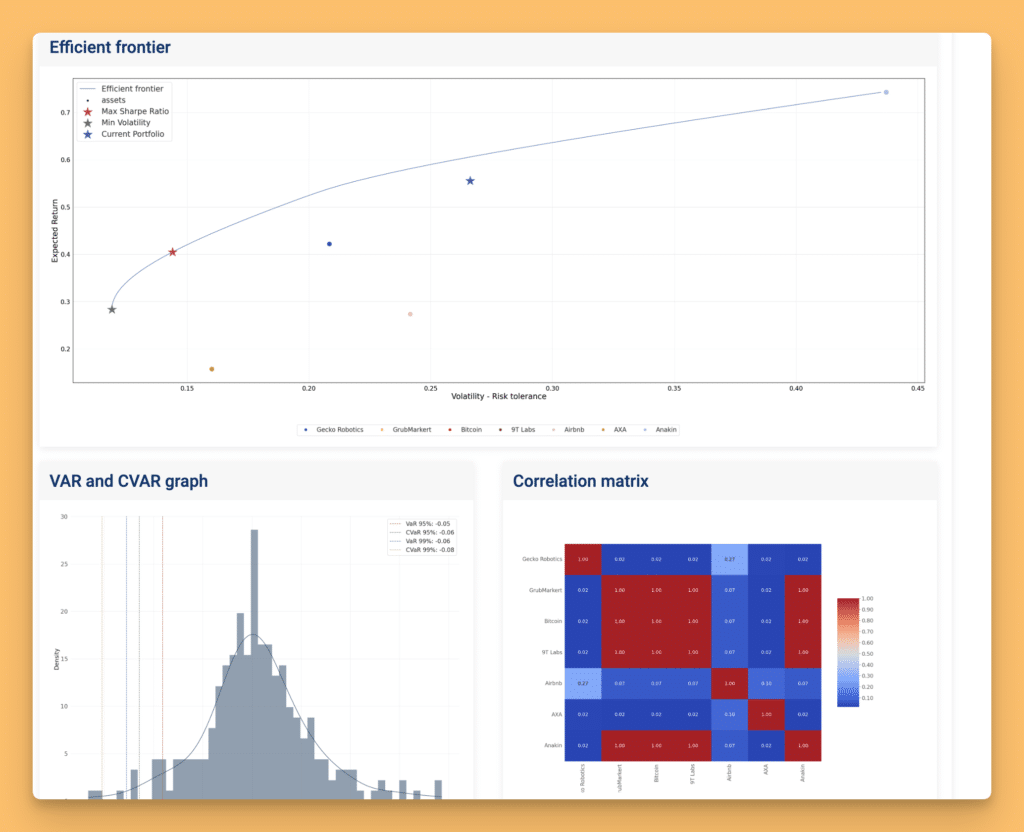
Spreadsheet-based simulations and dashboards allow participants to practice asset allocation decisions, Value-at-Risk calculations, and project prioritization under resource constraints, illustrating how AI-powered portfolio management strategies can enhance data-driven decision-making.
Graduate Certificate and Degree Pathways
Earning a graduate certificate in portfolio management offers a focused and flexible way to build specialized expertise in the field. These certificate programs, often available through leading universities, provide targeted training in portfolio construction, asset allocation, and risk management, skills highly valued in finance and asset management careers. Completing a graduate certificate can also serve as a stepping stone toward a full degree in finance or a related discipline, with many programs allowing credits to be transferred toward a master’s degree.
For students and professionals seeking to advance their careers, a graduate certificate demonstrates a commitment to continuous learning and mastery of portfolio management principles. This credential can enhance your resume, open doors to new opportunities, and provide a solid foundation for further academic or professional pursuits in the dynamic world of investment management.
Hands-On Projects & Capstone
The capstone simulation challenges small teams to construct and manage a multi-asset portfolio using data from 2014–2024, encompassing the oil crash, COVID rebound, and inflation pivot.
Capstone components:
- Build a 40/30/20/10 equity/fixed income/alternatives/cash allocation targeting 8% returns at 12% volatility
- Design a project portfolio for a fictional multinational, ranking 20 initiatives by strategic fit, NPV, and risk to optimize a $500M allocation
- Produce a written investment policy statement and risk report with sensitivity analysis
- Present to a mock investment committee, defending allocation decisions and attribution analysis
Deliverables mirror real-world requirements, ensuring participants leave with work-ready skills and templates applicable to their organizations.
Locations, Dates & Logistics
The program operates at three global financial centers, providing convenient access for participants worldwide.
2026 Program Schedule:
- Март – New York (proximity to Wall Street and IFC)
- July – London (Canary Wharf and City access)
- Ноябрь – Singapore (Marina Bay financial district)
Campus facilities include:
- Modern conference centers with breakout rooms for team exercises
- Technology-enabled classrooms for portfolio simulations
- Walking distance to major финансовые учреждения
Included in tuition:
- All program materials and resources
- Selected meals during program days
- Networking receptions and optional evening sessions
Travel and accommodation are arranged separately by participants.
Tuition, Funding & Group Enrollment
Tuition for the five-day program in 2026 ranges from approximately $15,000–$25,000 USD, with currency equivalents of GBP 12,000–20,000 for London and SGD 20,000–35,000 for Singapore deliveries.
Funding and enrollment options:
- Corporate invoicing available for employer-sponsored participants
- Early registration incentives for applications submitted 10+ weeks before start
- 10–15% team discounts for organizations enrolling three or more participants
- Cross-functional teams (finance, strategy, PMO) benefit from shared frameworks and joint capstone projects
Organizations sending multiple participants often report accelerated implementation of new practices upon return.
How to Convince Your Organization
Securing employer approval requires demonstrating clear value. Participants receive a customizable justification letter template to support their request.
Key arguments for your letter:
- Improved strategic alignment of capital allocation across investments and projects
- Enhanced ability to evaluate and manage external managers, reducing fees and improving returns
- Stronger risk control through stress-testing frameworks and scenario planning
- Application of new methods to current portfolios and 2026–2027 strategic project cycles
- Networking with peers facing similar challenges across industries and geographies
Emphasize expected ROI from immediately applicable skills and frameworks that translate to measurable performance improvements.
Alumni Feedback & Career Impact
Past participants report concrete organizational and career changes following the program.
What alumni say:
- Redesigned asset allocation frameworks, shifting 20–25% toward alternatives for improved risk-adjusted returns
- Revised risk limits and implemented new stress-testing protocols using scenarios from program cases
- Reshaped project portfolio governance, improving strategic alignment scores by 25%+
- Gained confidence presenting to investment committees and boards with clearer scenario narratives
- Improved collaboration between finance, strategy, and PMO teams through shared vocabulary and practices
Many graduates advance into broader leadership roles, CIO, Head of Portfolio Strategy, or PMO Director, within 12–24 months of completing the program.
Application Process & Next Steps
Applying to the portfolio management program is straightforward and designed to respect your time.
Steps to apply:
- Submit the online application form with your current CV
- Include a short statement of objectives explaining what you hope to achieve
- Optionally provide a manager endorsement to strengthen your application
Applications are reviewed within two weeks. Deadlines typically fall 6–8 weeks before each program start date, and seats are limited to 30–40 participants per cohort.
There are over 1.5 million PMI certification holders worldwide, including those with the PfMP certification. The PfMP certification requires passing an exam consisting of 170 questions to be completed in 240 minutes. To maintain their certification, PfMP holders must earn 60 professional development units (PDUs) every three years through continuing education. This ongoing commitment to professional development is essential for staying current in the field and retaining your credential. The global economy is projected to need 25 million new project professionals by 2030, highlighting the increasing demand for certifications like PfMP.
The Graduate Certificate in Project, Program & Portfolio Management at Boston University requires a total of four courses (16 units) for completion.
We encourage you to schedule a consultation with our program advisor to discuss fit, timing, and potential team enrollment. Whether you manage investment portfolios, oversee project portfolios, or guide capital allocation strategy, this program provides the guidance and tools to advance your practice.
Take the next step. Explore the upcoming 2026 sessions and submit your application to join a cohort of peers committed to excellence in portfolio management.
Сопутствующие статьи
Swiss Sovereign CRM: Создано на базе ИИ.
Готов действовать.


