
Introduction: Why Capital Markets Need a Different Kind of CRM
Capital markets teams in 2024 through 2026 face a convergence of pressures that generic customer relationship management tools were never designed to handle. Macro volatility, regulatory tightening under MiFID II, MAR, and heightened SEC scrutiny, and deal cycles that move intra-day rather than over weeks have exposed the limits of spreadsheets and standard crm systems. ECM, DCM, syndicate, and research/sales desks need more than a contact database with a pipeline view. They need a platform where relationship intelligence, deal management, and compliance controls operate within one platform.
A capital markets CRM, in practice, combines three core functions: deep relationship mapping across issuers, sponsors, and institutional investors; structured deal pipelines that track mandates from origination through allocation and stabilisation; and embedded compliance features with audit trails, access controls, and regulatory readiness. Capital Markets CRM is tailored for investment banks and asset managers who operate under these exact constraints. Real-time information sharing is crucial for closing deals when roadshow feedback reshapes price guidance overnight or when a leveraged loan syndication requires reconciling commitments across co-underwriters, tranches, and jurisdictions.
Consider the concrete scenarios this article addresses:
- A 2025 IPO bookbuild where investor indications of interest must be tracked by price, quantity, and geography in real time, with feedback feeding directly into pricing decisions.
- A 2024 leveraged loan syndication where multiple co-underwriters, fee splits, documentation, and investor commitments must be managed and reconciled across desks.
- Daily investor coverage for secondary trading, where research/sales teams log PM attention, track research consumption, and optimise outreach based on engagement signals.
This article will walk through what to look for in a capital markets crm, how it differs from generic alternatives, the core capabilities to prioritise, and how front-office CRM pairs with back-office systems.
What Is a Capital Markets CRM?
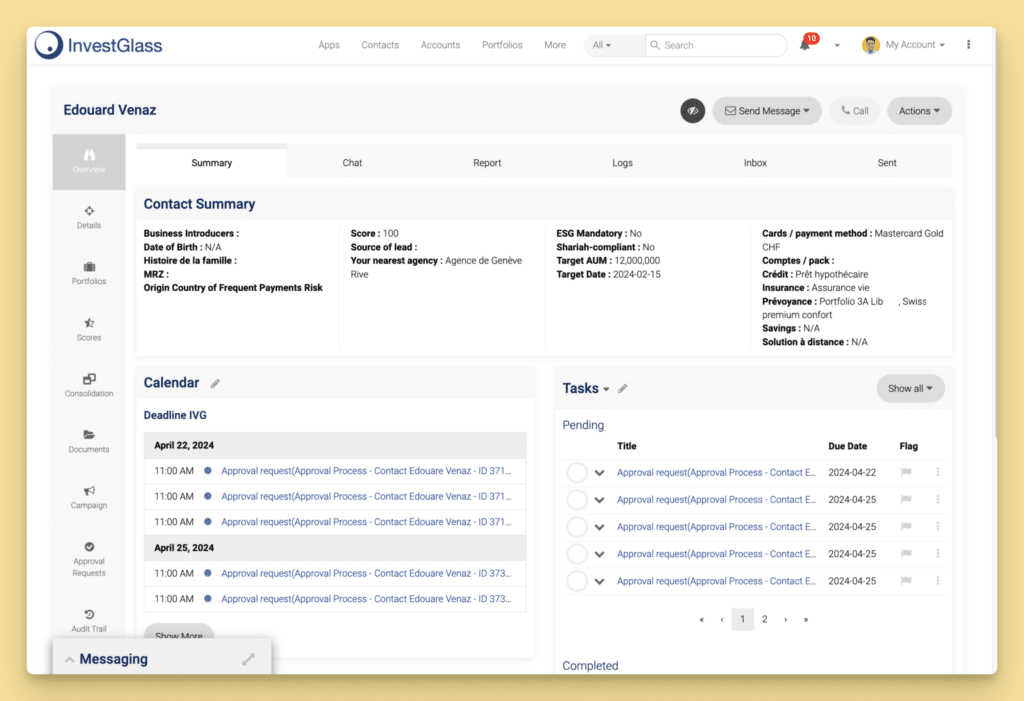
A capital markets crm is a specialised platform designed to manage client relationships, deal pipelines, and investor engagement across ECM, DCM, leveraged finance, syndicate, and research/sales desks. Unlike generic, B2C-oriented customer relationship management crm tools focused on marketing funnels and simple lead-to-close opportunities, it handles the structural complexity of securities issuance, mandate tracking, and allocation workflows. Capital markets CRM solutions manage relationship-driven deal flow, serving as a single source of truth for managing relationships across every desk.
A key feature of capital markets CRMs is a 360-degree client view that spans the following core objects:
- Issuers (companies issuing securities), sponsors (private equity firms, underwriters), investors, and fund entities (LPs, mutual funds, hedge funds).
- Deals with structure: mandates, tranches, co-managers, and bookrunners.
- Roadshows, pre-marketing events, and feedback capture tied to specific dates and desks.
- Transactions including allocations, pricing, and order book quantities.
- Institutional account hierarchies mapped to detail corporate structures, sub-accounts, and portfolio manager relationships.
In a multi-desk context, the same buyside client might appear in equity sales, credit sales, and syndicate books simultaneously. Capital markets CRMs track complex buyer lists and issuer coverage with shared but permissioned views, so that only those with appropriate clearance see sensitive deal-level data.
Capital Markets CRM vs Standard CRM: Key Differences
The gap between a standard crm and a specialised crm for capital markets becomes apparent across several dimensions:
- Speed of cycles. Generic sales CRMs assume weeks or months of nurturing. In capital markets, many decisions move intra-day. Roadshow feedback can drive pricing decisions overnight, and bookbuild windows may close within hours.
- Regulatory intensity. Capital markets firms operate under MiFID II, MAR, GDPR, SEC recordkeeping rules, and FCA expectations. Standard CRMs require manual data entry for logging interactions and lack built-in compliance features for wall-crossing, restricted lists, or MNPI handling.
- Organisational complexity. Clients are not simple accounts. They are funds with PMs, traders, and analysts; issuers with boards and sponsors; and hierarchical entity chains with subsidiaries and parent companies. Basic crms with flat account structures fall short here.
- Data model differences. Generic CRMs track “opportunities” through stages like qualification, proposal, and close. Capital market workflows demand deal stages such as mandate, pre-marketing, roadshow, bookbuild, pricing, allocation, and stabilisation, along with support for tranches, co-manager roles, and syndicate structure.
Compare managing a 2026 retail sales pipeline, which involves leads, product demos, and quarterly contracts, with managing a 2026 bond issuance book involving dozens of institutional investors across jurisdictions, each with different yield requirements, tranche preferences, and compliance constraints. Capital markets CRMs track intricate capital raising and M&A processes that generic crms simply cannot model. Relationship mapping in this context means householding entities, tracking personnel changes (a new CFO, analyst rotations), and maintaining network graphs between sponsors, issuers, and investors.
Core Capabilities Every Capital Markets CRM Should Include
For capital markets professionals evaluating platforms in 2024 through 2026, the following capabilities are non negotiable. According to industry surveys, nearly 86% of capital markets firms have adopted CRM technology, yet many still rely on generic systems that do not address their unique workflows.
- Relationship intelligence: rich profiles, network graphs, engagement tracking, and relationship mapping across issuers, investors, and funds.
- Deal and pipeline management: custom pipelines per desk with support for mandates, tranches, bookrunners, and deal stages from origination to stabilisation.
- Client engagement tracking: automated capture of emails, calls, meetings, roadshows, and research distribution data.
- Integrations: sync with email, market data feeds, document management, and BI tools.
- Compliance features: role-based access controls, information barriers, audit trails, and data encryption.
- Analytics: dashboards covering pipeline health, fee projections, engagement metrics, and actionable insights.
A crm built for capital markets must balance usability with strict security features. Advanced contact management features are essential in capital markets CRM, as is support for the distinct needs of origination/coverage, execution, syndicate, and research/sales trading teams. These CRMs support deal tracking and compliance monitoring simultaneously. Capital Markets CRM enhances operational efficiency by automating workflows, and workflow automation reduces manual interventions in capital markets processes. Centralised workflows in CRMs enhance operational efficiency across teams, while Capital Markets CRM automates routine tasks and alerts for efficiency.
Relationship & Coverage Management in Capital Markets CRM
Capital markets teams do not work from generic “lead lists.” They rely on structured coverage lists: the top 50 ECM targets in EMEA 2025, DCM frequent issuers by country, or priority buyside accounts ranked by fee potential. A capital markets crm should centralise contact and organisation records across issuers, private equity sponsors, sovereigns, and institutional investors, ensuring that data centralized in this way drives better decision-making.
Capital markets CRMs improve client relationships through personalised communication grounded in complete interaction histories. Data-driven pitches strengthen client relationships across markets because bankers can reference specific prior discussions, feedback, and deal participation. Advanced contact management ensures up-to-date client information in CRMs, and centralised data management enhances team collaboration in capital markets. Centralised data enables better collaboration among capital markets teams by removing information silos between desks.
Key elements of relationship and coverage management include:
- Coverage views showing sorted lists of top issuers and investors, filterable by sector, region, revenue potential, and recent touchpoints.
- Activity timelines displaying recent interactions: emails, calls, meetings, roadshow attendance, and research distribution engagement.
- Relationship maps visualising connections across entities, internal owners, and coverage responsibilities.
- Internal team mapping: each issuer or investor linked to a lead banker, junior team members, sales coverage, syndicate lead, and research analyst, with clear ownership fields for accountability.
For example, suppose in February 2026 there was a pre-marketing meeting for a rights issue. The CRM should record which bankers attended, which investors, what feedback was received on price sensitivity and governance concerns, and how that intelligence feeds into allocation decisions.
Deal & Pipeline Management for ECM, DCM, and Leveraged Finance
Capital market pipelines are structured around mandates, live deals, and post-deal stabilisation rather than generic “sales stages.” Capital Markets CRM tracks deal pipelines and stages with granularity that matches the actual deal process.
Example pipelines by desk:
- ECM: idea generation, early engagement, mandate secured, pre-marketing, roadshow, pricing, allocation, stabilisation.
- DCM: market sounding, mandate, documentation, investor calls, bookbuild, pricing, closing, settlement.
- Leveraged finance: initial term sheet, underwriting commitment, syndication phases, documentation, allocation, and secondary market handover.
Key deal fields a capital markets crm must store include currency, deal size, tenor, fees (underwriting, management, co-manager splits), bookrunners and co-managers, syndicate structure, closing dates, issuer ratings, sector, jurisdiction, legal counsel, and documentation status. Customisable dashboards enhance decision-making in deal tracking, allowing deal teams to view pipelines by sector, region, desk, or expected fee income.
Capital markets CRMs streamline workflows to accelerate deal closure. Research indicates that automated workflows accelerate deal closure rates by 15 to 25%, a material advantage in competitive mandates. Real-time pipeline visibility supports morning meeting reviews where senior management can identify bottlenecks, assess probability-weighted fee forecasts, and track deal velocity across desks.
Client Engagement & Activity Capture Across Desks
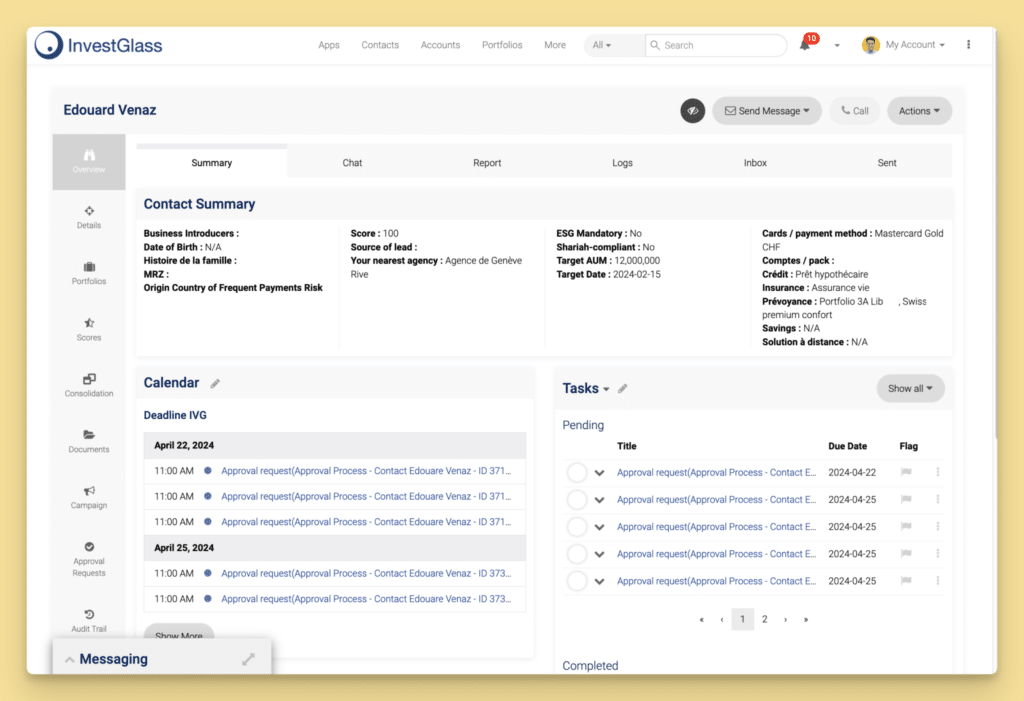
Client engagement in capital markets extends far beyond simple email tracking. It encompasses research distribution, sales calls, roadshows, non-deal roadshows, investor feedback post-transaction, and ongoing secondary coverage. The breadth of activity data that must be captured makes automated data capture essential.
Capital markets CRMs integrate with tools like Microsoft Outlook and Google Workspace to ensure that key meeting notes and communications are not trapped in personal inboxes. Automated data entry replaces manual data entry, which is a persistent source of incomplete records and poor adoption. Automated contact management saves capital markets teams 226 hours annually by eliminating repetitive data tasks. Similarly, automated contact management saves capital markets professionals 226 hours annually across logging, updating, and enriching records. Deal teams using Affinity save an average of 226 hours annually through automated contact management. Automated contact management updates crm data in real time, and automated updates ensure all team members access accurate information.
Capital markets CRMs automatically enrich data with information from external partners, pulling in firmographic details, personnel changes, and market signals. Capital markets CRMs provide actionable insights into client behaviour by connecting research interactions (reads, clicks on research reports), calls, meetings, and deal participation into a single engagement score per account.
Practical scenarios include:
- Tracking investor feedback during a 2025 IPO roadshow: each meeting logs price sensitivity, sector concerns, and allocation preferences, feeding directly into pricing decisions.
- Logging buyside responses to a November 2024 bond re-opening to guide tranche allocation based on yield preferences and participation history.
- Engagement heatmaps highlighting accounts with frequent recent interactions versus those showing declining activity, prompting targeted follow-ups.
Mobile access allows team members to collaborate away from their desks, which is particularly valuable for bankers travelling on roadshows who need to record call notes and view pipelines on the move.

Compliance, Security, Access Controls, and Audit Trails
Capital markets teams operate under strict MNPI and wall-crossing rules, making security design non negotiable. Capital markets CRMs manage Material Non-Public Information compliance through layered controls that prevent unauthorised access to sensitive deal data. Capital markets CRMs offer advanced security features for compliance, and regulatory management within capital markets CRMs enforces restricted lists to prevent conflicts.
Key mechanisms include:
- Role-based access controls down to deal and document level, ensuring that only those users who have been wall-crossed can see certain notes and allocations. Access controls limit data visibility to authorised personnel only.
- Information barriers between public and private sides: separating research from banking, sales from corporate advisory, to prevent leaks or conflicts of interest.
- Audit trails that record user actions for compliance reporting, creating immutable logs showing who viewed or edited deal notes, updated allocations, or changed investor targeting lists, with timestamps. Automated audit trails reduce the risk of regulatory violations.
- Data encryption protects sensitive financial information in CRMs, both in transit and at rest. SSO and multi-factor authentication are table-stakes for secure access in any modern capital market CRM operating across EU, UK, and US jurisdictions.
Capital markets CRMs ensure data privacy and adherence to regulations. Compliance tracking features help firms meet regulatory requirements across multiple frameworks. Capital Markets CRM ensures compliance with regulations like KYC and anti money laundering rules. Capital markets CRMs must comply with SOC 2 and GDPR standards, and firms should verify these certifications during vendor evaluation.
From a regulatory perspective, SEC Rule 17a-3 and 17a-4 require broker-dealers to maintain communications and order records with retention of up to six years. Recent amendments allow an audit-trail alternative to traditional WORM storage, but enforcement actions continue against firms that fail to preserve electronic communications properly. In the EU and UK, MiFID II and MAR impose parallel requirements for maintaining compliance with communications recording and market abuse prevention. Financial regulations across jurisdictions demand that customer data is handled with full traceability and that audit trails support regulatory audits in 2025 and 2026.
Data, Integrations, and Analytics for Capital Markets Teams
A capital markets crm rarely operates in isolation. It must integrate with the broader technology stack to deliver a comprehensive view of client activity, market data, and deal performance.
Priority integrations include:
- Microsoft Outlook, Exchange, or Google Workspace for automated email and calendar capture.
- Market data feeds providing issuance histories, league tables, ratings, comparable deals, and yield curves.
- Research distribution platforms with click and readership tracking, connecting research reports consumption to client engagement scores.
- Data warehouses or BI tools (Power BI, Tableau) for advanced analytics and investor reporting.
- Integration with LinkedIn Sales Navigator or similar tools for contact enrichment and relationship discovery.
Analytics use cases for capital markets teams are rich: league table performance by sector for 2023 through 2025, wallet share analysis by investor, hit rates on DCM pitches in specific currencies, and time-to-mandate metrics. Dashboards showing fee pools, win/loss ratios, and client engagement trends help in closing deals more predictably. Real-time information sharing through integrated analytics ensures that critical data flows to the right people at the right time.
Data governance is equally important. Firms must establish data stewardship roles, naming conventions, and deduplication processes. Without disciplined crm data hygiene, even the best platform degrades into unreliable records and fragmented views.
Capital Markets CRM by Team Type: Origination, Execution, Enterprise Governance
다음과 같은 플랫폼 프라이빗 뱅킹 및 금융 기관을 위한 InvestGlass CRM illustrate how a single, configurable system can serve diverse capital markets teams without forcing one-size-fits-all workflows.
Different capital markets teams prioritise different CRM capabilities, and the right crm must serve all of them without forcing static workflows on any single group.
Origination and coverage-driven teams prioritise relationship intelligence, idea tracking, and early-stage pipeline visibility. They need views that rank issuers or investors by recent engagement and fee potential, helping them identify where to focus outreach. Capital markets CRMs support Limited Partner fundraising activities alongside issuer coverage, making these tools valuable for investment firms engaged in both primary issuance and fund placement.
Execution-driven teams, including syndicate, trading, and sales desks, focus on workflow checklists, task management, and live bookbuild views during pricing windows. Coordination between syndicate, trading, and sales desks in volatile markets, such as during rate hikes in 2025, demands flexible workflows and real time sharing of order book data. A specialized crm designed specifically for execution must support these rapid, multi-party processes.
Enterprise and governance-driven organisations stress standardised data models, data stewardship roles, and global governance committees overseeing CRM usage. For a CIO or COO, the priorities are security certifications (SOC 2, ISO 27001), data residency compliance, and ensuring that the platform scales across regions without compromising operational efficiency.
Implementation Timelines and Best Practices for Capital Markets CRM
For a mid-size investment bank, a realistic MVP can be delivered in three to six months: core client records, basic deal pipeline, email and calendar sync, and key dashboards for management reporting. Broader desk integration, advanced workflow automation, and mobile app rollout follow in subsequent phases.
A minimum viable launch should include:
- Core contact and organisation records across issuers and investors.
- A basic deal pipeline with configurable deal stages per desk.
- Email and calendar integration for automated activity capture.
- Two to three dashboards covering pipeline status and fee forecasting.
Data migration is often the most underestimated challenge. Cleaning historic deal lists, mapping legacy spreadsheets, aligning issuer and investor hierarchies, and deduplicating contacts across desks require significant effort. Many capital markets firms discover that the same investor appears under multiple names with different historic job titles, and past allocations may be inconsistent or ambiguous.
Over-engineering in phase one leads to delayed launches and user fatigue. Under-scoping risks leaving core unique workflows unsupported, driving users back to informal tools. Change management is critical: engaging front-office users, compliance, IT, and the COO early, and ensuring that data capture is as frictionless as possible through automated data entry and quick-access mobile interfaces.
Why CRM Alone Is Not Enough: Pairing Front Office CRM with Back-Office Systems
Even the best capital markets crm does not replace accounting, general ledger, risk, or regulatory reporting engines. CRM is the front-office command centre: capturing mandates, deal pipelines, investor contacts, and provisional allocations. Back-office systems, including portfolio accounting and loan origination system platforms, are the single source of truth for financials: executed allocations, fee income recognised, interest accruals, settlement, and investor statements.
Consider a 2024 syndicated loan where the CRM tracked investor commitments, provisional allocations, and documentation status. A separate system handled interest accrual, accounting entries, and investor statements. Without integration between front and back office, there is risk of mis-stated commitments, mis-communication with the issuer, and regulatory issues. CRM should feed into or consume data from these systems so that term sheets, mandate fees, and final allocations reconcile with the books. This pairing also improves downstream reporting, fee totals, bonus pool calculations, and the ability to reconcile planned versus actual deals.
How to Choose the Right Capital Markets CRM
Selecting the right crm begins with clarity on the primary optimisation goal: stronger client relationships, faster closing deals, stricter governance, or better analytics. From there, firms should build a structured requirements list:
- Which desks are in scope (ECM, DCM, leveraged finance, syndicate, research/sales)?
- Geographic coverage and data residency requirements across US, EMEA, and APAC.
- Regulatory regime differences and which financial regulations must be supported natively.
- Required integrations: email, market data, document management, research distribution, and BI tools.
- Security certifications: SOC 2, ISO 27001, and local equivalents.
- Mobile access and AI capabilities where relevant.
Top CRM solutions for capital markets include Intapp DealCloud and Salesforce, though each involves trade-offs between configurability and speed of deployment. Firms should also evaluate venture capital crm variants and investment banking crm platforms to ensure alignment with their specific deal process and coverage model.
Running a pilot programme with a selected desk, say ECM in one region, using concrete success metrics (increase in logged meetings, pipeline visibility improvement, reduction in time to produce league table reports) is the most reliable way to validate a platform before full rollout. Stakeholder alignment is essential: front-office heads, the COO, compliance, IT, and finance must all participate in the selection process.
Future Trends in Capital Markets CRM (2025 to 2028)
AI-driven capabilities are rapidly maturing. By 2026 and 2027, expect automatic call note summarisation, suggested investor targets for new issues based on proprietary algorithms analysing past participation patterns, and next-best-action prompts for coverage bankers. These features move CRM from passive record-keeping to active deal intelligence.
Behavioural data is becoming more central to investor prioritisation. How investors interact with research (reads, downloads, clicks), how they respond to roadshow communications, and their conference attendance patterns all feed into engagement scoring and wallet share strategies. This transforms crm software from a logging tool into a strategic asset.
Real-time collaboration tools, including embedded chat, co-editing of call notes, and mobile-first workflows, will become standard. With bankers increasingly travelling, mobile access to pipelines, dashboards, and contact records is no longer optional. Blockchain-based data verification for allocation records or investor onboarding remains experimental, but may gain traction by 2027 to 2028 in specific niches. Regulatory trends continue to tighten, particularly around off-channel communications and the expectation of maintaining compliance with ever more granular audit and traceability requirements.
Conclusion: Building a Modern Capital Markets Tech Stack Around CRM
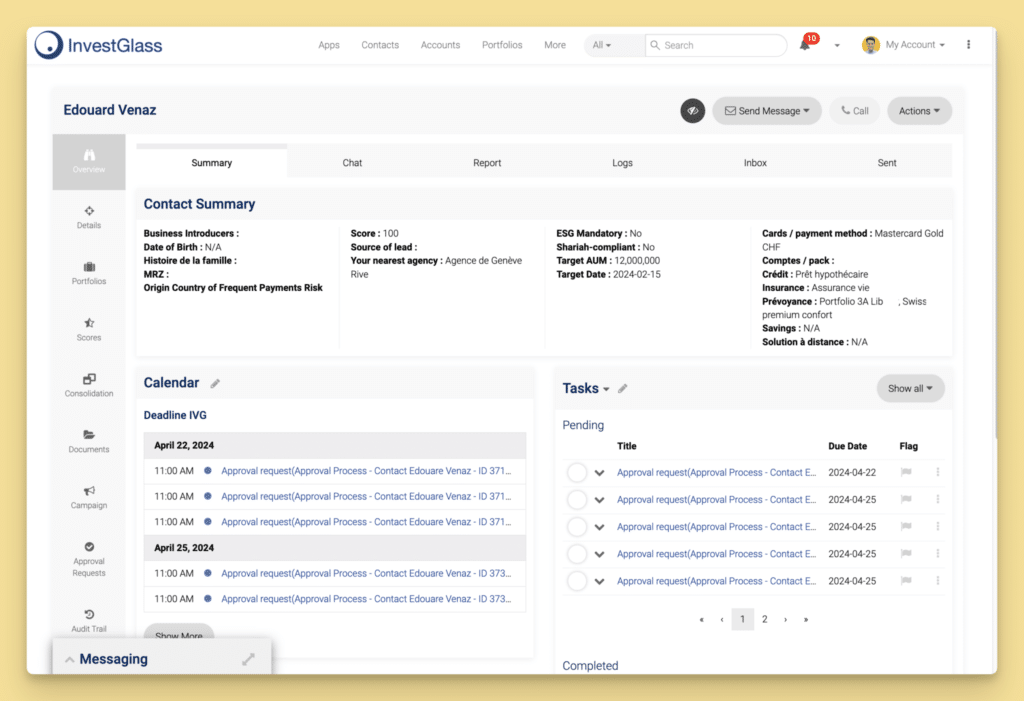
A crm for capital markets is the front-office backbone for client relationships, pipelines, and client engagement data, but it must be complemented by secure back-office and reporting systems. The firms that close more deals, maintain stronger client relationships, and navigate regulatory complexity with confidence are those that invest in purpose-built platforms with flexible workflows, strong access controls, rich audit trails, and deep integrations tailored to capital markets teams.
Capital markets professionals in 2024 through 2026 should assess their current tools, whether spreadsheets, generic crms, or fragmented databases, against the demands of modern deal flow, regulatory scrutiny, and investor expectations. The practical next step is straightforward: conduct a brief internal audit of coverage management, deal tracking, and reporting gaps, then map those requirements against what a dedicated capital markets crm delivers. The difference between closing a mandate and losing one increasingly comes down to the quality of your systems.
자주 묻는 질문(FAQ)
What is the main advantage of using a capital markets CRM over a generic CRM?
Capital markets CRMs are tailored to the unique workflows, regulatory requirements, and complex relationship structures of capital markets firms. They provide specialized deal tracking, compliance controls, and relationship intelligence that generic CRMs lack.
How do capital markets CRMs help with regulatory compliance?
These CRMs include built-in compliance features such as role-based access controls, audit trails, data encryption, and information barriers to manage sensitive information and ensure adherence to regulations like MiFID II, MAR, KYC, and AML.
Can capital markets CRMs integrate with existing tools?
Yes, they commonly integrate with email platforms like Microsoft Outlook and Google Workspace, market data feeds, research distribution systems, BI tools, and document management platforms to provide a seamless workflow.
How long does it typically take to implement a capital markets CRM?
Implementation timelines vary but typically range from three to six months for a minimum viable product, including core contact records, deal pipelines, and basic integrations. More advanced features and wider rollouts may take longer.
What future technologies will impact capital markets CRM?
AI-driven analytics, automatic call note summarisation, behavioural engagement scoring, mobile-first collaboration, and potentially blockchain integration for data verification are expected to shape the future of capital markets CRM.

