
Choosing the right crm software for brokers is one of the highest-leverage decisions a brokerage firm can make. This guide walks through what a broker crm actually does, why it matters in 2026, which features to prioritise, and how to implement a system your team will use every day.
What Is CRM Software for Brokers?
Customer relationship management software built for brokers differs from generic crms in one fundamental way: it handles dual-sided relationships. Business brokers manage buyers and sellers simultaneously. Commercial real estate brokers juggle tenants and landlords. Freight brokers coordinate shippers and carriers. A broker crm is designed specifically to keep both sides visible, linked and moving through overlapping pipelines inside one platform.
Where a standard crm tools suite might offer a single linear sales funnel, a broker crm centralises contacts, deals, listings and mandates, communication logs, NDAs and documents into a single command centre. Effective CRM systems provide a central repository for client interactions, replacing scattered spreadsheets, email threads and physical files. A CRM centralizes buyer and seller relationships for brokers, so nothing slips through the cracks during months-long deal cycles.
Consider a concrete example. A business broker sends an NDA to a prospective buyer in January 2026 for a mid-market company valued at $8 million. Over the following 11 to 18 months, the broker uses the crm to log every touchpoint: CIM distribution, LOI receipt, management calls, due diligence requests and closing documents. Brokers can manage client interactions and history in one place, ensuring continuity even when team members change or workloads shift. This article focuses on practical use cases rather than abstract theory, helping you choose, implement and optimise the best crm for your brokerage model.
Why Every Business Broker and Commercial Broker Needs a CRM in 2026
The average sale timeline in business brokerage ranges from 9 to 18 months for deals valued between $1 million and $25 million. Rising interest rates, tighter financing and more thorough buyer due diligence in 2025 and 2026 have only extended these cycles. Managing hundreds of relationships and follow ups from memory, Outlook or Excel is no longer sustainable when a single missed callback can cost a six-figure commission.
CRM software connects directly to revenue. A good CRM helps brokers prioritize high-value opportunities and ensures that no mandate quietly dies in a forgotten inbox. Whether you are a solo business broker, part of a growing brokerages network, or leading a commercial real estate team, the shared problems are the same: disorganization, missed callbacks and scattered documents. The best crm is the one busy brokers actually use daily, not necessarily the one with the longest feature list.
Key Benefits of a Dedicated Business Broker CRM
Business brokerage is uniquely complex. Dual-sided pipelines, confidential processes and intense document management make a specialised business broker crm essential. A CRM centralizes buyer and seller relationships, storing NDAs, CIMs and due diligence packs in one secure location. Document management offers secure storage for files and contracts, removing the need for separate file-sharing services.
The ability to track both buy-side and sell-side mandates with separate but connected pipelines is a game changer for deal management. Compliance and confidentiality benefit as well. Data security and compliance are crucial for protecting sensitive client information, and proper permissions, audit trails and encrypted storage ensure that seller information remains visible only to authorised parties. One broker avoided losing a mid-market deal because an automated reminder triggered 30 days after a buyer went silent, re-engaging competition and ultimately securing a higher offer.
Why Commercial Real Estate Brokers Benefit from CRM Tools
A typical day for commercial real estate brokers involves prospecting landlords, touring tenants, tracking lease expirations and negotiating renewals. A broker crm links properties, spaces, owners, tenants and lease terms together for fast retrieval during calls and tours. Mobile CRM ensures access to client data on the go, so brokers pulling up stacking plans or lease comparables on site never miss a beat.
Tenant rep and landlord rep pipelines, lease renewal alerts and option period reminders protect recurring commission streams through automation. CRMs provide real-time dashboards for tracking deals, giving principals instant visibility into marketing activity and inquiry volumes. Email marketing and campaign management nurture prospects, enabling brokers to send targeted campaigns to tenants with specific space and rent profiles stored in the system.
InvestGlass Platform: An All-in-One CRM Solution for Brokers
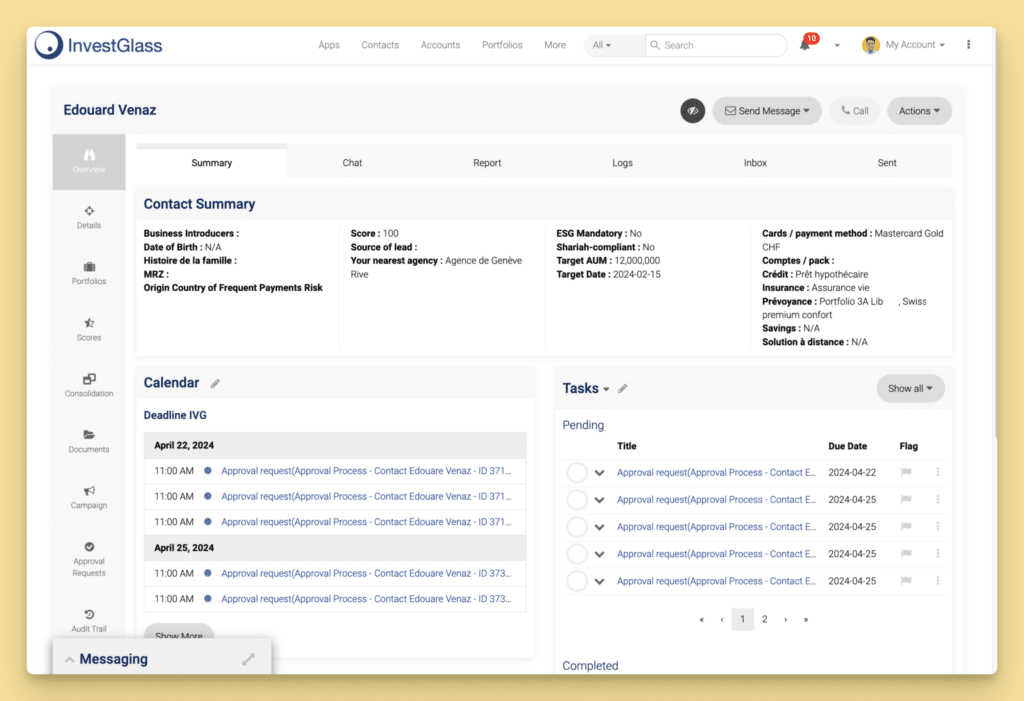
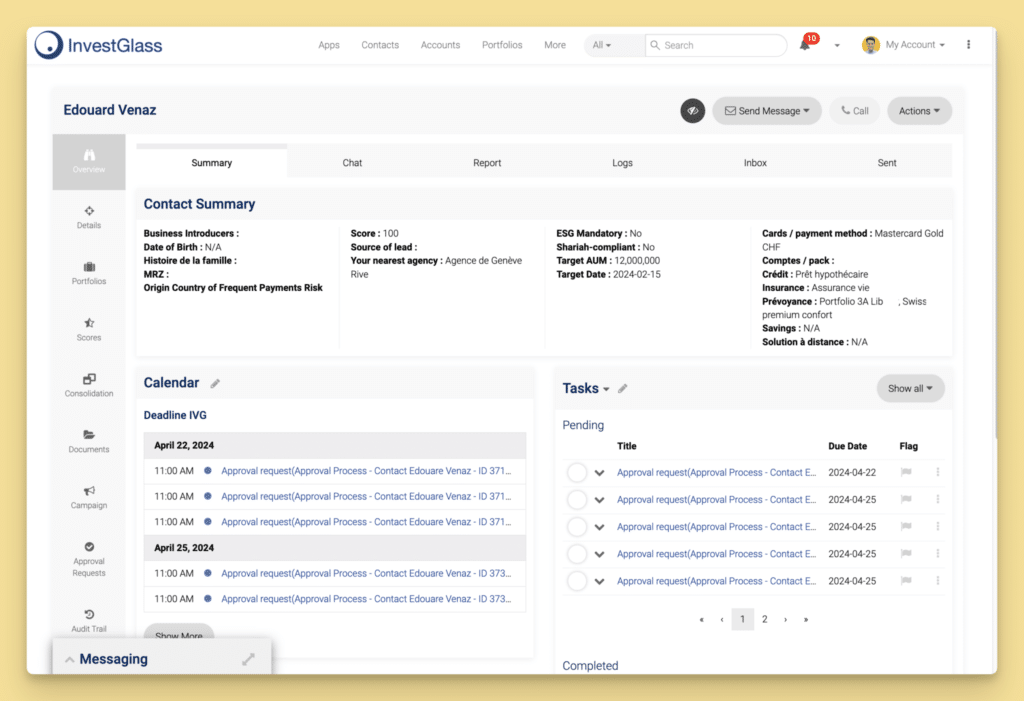
InvestGlass is a comprehensive all in one CRM platform designed to meet the unique needs of brokers across industries. It offers a user friendly interface that simplifies managing client relationships, listings, and deals. The platform integrates financial analysis tools and robust crm data management for financial services, helping brokers gain deeper insights into buyer preferences and deal performance.
With InvestGlass, brokers can efficiently manage listings and automate workflows such as sending NDAs, scheduling follow-ups, and tracking deal progress. Its digital marketing capabilities support lead generation and nurture qualified buyers through personalized campaigns. The platform also provides advanced analytics and reporting features, enabling brokers to make data-driven decisions and optimize their sales pipelines.
InvestGlass’s mobile accessibility ensures brokers can update client information and track new listings anytime, anywhere, enhancing responsiveness and client service. Its security features protect sensitive data, ensuring compliance with industry regulations. For small businesses, private banks, and growing brokerages, InvestGlass offers scalable pricing plans and customization options to fit diverse workflows, making it a versatile choice for brokers seeking to close more deals efficiently.
Core Features Brokers Should Look for in CRM Software
The following checklist maps directly to daily broker workflows: prospecting, listing intake, marketing, negotiation, closing and post-close follow ups. Use it to build an internal requirements document before speaking with any crm sales team, especially if you plan to leverage automated KYC verification and digital onboarding as part of your client intake.
Contact and Relationship Management
Brokers need full customer relationship management across buyers, sellers, landlords, tenants, investors, carriers and referral partners. Unified profiles should display contact details, deal history, communication timelines, NDAs signed and preferences such as sector, ticket size or geography. Robust contact management helps maintain detailed interaction logs, so every call, email and meeting is recorded, much like vertical-specific CRMs that support end-to-end patient relationship management for dental practices.
Tagging and segmentation allow filtering by categories like “private equity buyer”, “strategic acquirer” or “1031 exchange”. Mobile accessibility allows brokers to access client histories remotely before walking into a meeting. Building relationships and relationship building both depend on having this data at your fingertips.
Deal and Pipeline Management
Visual pipelines, typically in Kanban or board view, let brokers track deal stages from lead through to closing: Valuation, Mandate Signed, Marketing, LOI, Due Diligence, Closing. A CRM can track complex deals across multiple pipelines, which is vital when running sell-side, buy-side, leasing and capital-raising mandates concurrently. Sales opportunity and pipeline management track active deals and potential leads in parallel.
Customizable fields allow adaptation to unique workflows, so each brokerage can define its own stages, probabilities and required data points. Sales pipeline and deal tracking enable real-time monitoring of deals, and forecasting features project expected commissions by month or quarter. Drawing on techniques used in AI-driven portfolio management and forecasting, brokers can apply data-driven insights to refine stage probabilities and expected outcomes. Alerts for stalled opportunities let brokers intervene before prospects quietly disappear.
Document Management and E-Signatures
Business brokerage and CRE deals are document-heavy: NDAs, listing agreements, CIMs, term sheets, leases and closing packs. The best crm includes integrated document management with secure online document storage, version control and quick sharing from inside a deal record. Document management capabilities eliminate tool-switching, keeping brokers focused.
E-signature workflows for mandates, NDAs and offers, ideally with templates that auto-fill data from CRM fields, accelerate execution. Activity tracking shows who viewed or signed which document and when, supporting both negotiation and compliance. Clear folder structures and permission controls separate internal notes from client-facing documents.
Automation and Follow Ups
Workflow automation removes manual tasks like sending standard NDAs, scheduling reminders and dispatching status update emails. A CRM automates repetitive tasks like follow-up emails: trigger an email and task when a new inquiry form arrives, then schedule follow ups at 3, 7 and 30 days after a first call. Automated workflows can create new deals from form fills, ensuring no lead sits unattended.
CRMs automate repetitive tasks to save brokers time, and automation can eliminate hours of manual work each week. Workflow automation reduces time spent on tedious tasks so brokers can focus on clients. CRM software should prioritize automation and secure data management in equal measure. Some modern broker crm tools include AI to suggest the next best action or draft personalised emails based on history, similar to how specialised platforms support automated workflows and client communication for therapists. However, over-automation risks feeling robotic. Keep broker personalisation on critical deal milestones and client interaction points.
자주 묻는 질문(FAQ)
What is CRM data and why is it important for brokers?
CRM data refers to all the information stored within a CRM system about clients, deals, communications, and transactions. For brokers, maintaining accurate and comprehensive crm data is crucial to managing relationships, tracking deal progress, and making informed decisions.
How does Zoho CRM compare for brokerage firms?
Zoho CRM is a versatile and affordable option that offers customization and integration capabilities suitable for brokers of all sizes. It supports automation, contact management, and analytics, making it a strong contender for brokerages seeking scalable crm software for brokers.
What are some key features to look for in broker CRM software?
Key features include dual-sided pipeline management, document management with e-signatures, workflow automation, robust contact and deal tracking, mobile access, and real-time analytics dashboards. These features help brokers streamline operations and close deals faster.
Can new users adopt broker CRM software easily?
Many modern CRM platforms prioritize user-friendly interfaces and offer onboarding support to help new users get up to speed quickly. Features like customizable dashboards and templates reduce the learning curve for new users.
How does pricing typically work for broker CRM software?
Pricing varies by vendor and can be based on per-user monthly fees, tiered plans, or custom enterprise pricing. Some platforms like Nimble CRM start at around $24.90 per seat per month, while others offer scalable plans to fit different organization sizes and needs.
How do broker CRMs help advisors and brokers stay organized?
CRMs consolidate client information, deal documents, and communication histories into one platform, improving organization. Automated reminders, task management, and centralized data storage help advisors and brokers manage their workload efficiently.
결론
Selecting the best crm software for brokers involves balancing specialized broker features with usability, automation, and security. Platforms like InvestGlass and others provide comprehensive solutions that centralize crm data, automate workflows, and support both new users and experienced advisors. By investing in the right crm software, brokerages can improve organization, enhance client relationships, streamline complex deal cycles, and ultimately increase revenue. Implement your chosen system thoughtfully, train your team effectively, and leverage key features like automation and real-time analytics to maximize your brokerage’s success in 2026 and beyond.


